Sports — Neymar was shown a straight red card before the second half even kicked off at Vila Belmiro on Saturday, October 24, 2026, after a VAR review caught him covering his mouth while speaking to Bahia midfielder Rodrigo Nestor — an automatic dismissal under football’s new “Vini Jr law.” Santos played the entire second half with ten men, still rescued a 1-1 draw through Luan Peres in stoppage time, and now lose their No. 10 for the derby against Palmeiras and the match after it.
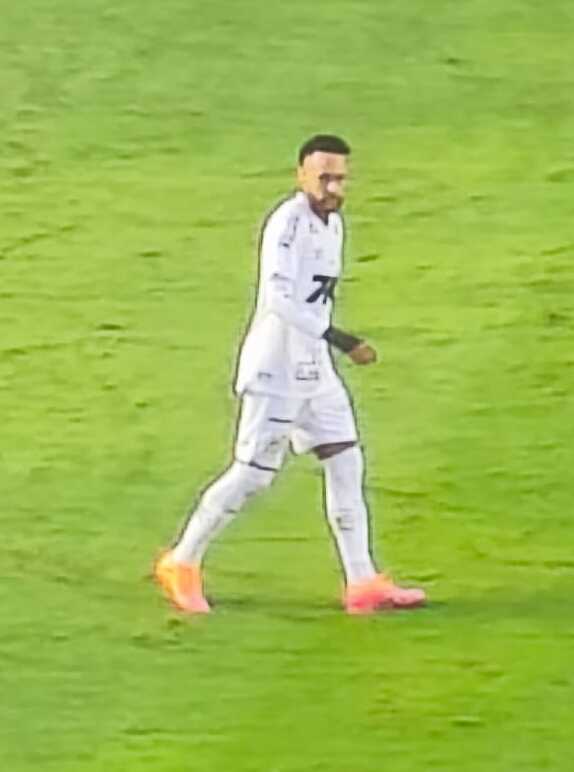
The Neymar red card will be replayed for days, and almost nobody will be arguing about the football around it. Santos and Bahia drew 1-1 in the 32nd round of the Brazilian Serie A at Vila Belmiro on Saturday, but the match turned on a few seconds in the centre circle before the restart: Neymar, already booked, leaned toward Rodrigo Nestor with his left hand over his mouth. Nestor immediately alerted the officials. Referee Sávio Pereira Sampaio, who had been facing away, was called to review the footage by the VAR, watched the gesture back, and sent Neymar off — before a ball had been kicked in the second half.
How the night unravelled, minute by minute
The dismissal was the end of a feud that had been building all evening. In the 31st minute, after being pushed down from behind by Nestor near the goal line, Neymar got up and threw the ball at the Bahia midfielder, sparking a scuffle between both sets of players and earning a yellow card. Bahia then took the lead in the 39th minute through defender Luciano Juba, and the arguments between Neymar and Nestor continued up to the interval and beyond it.
Speaking to Sport TV at half-time, Nestor gave his version: he said he had gone to shake Neymar’s hand, that Neymar fired the ball at his body, and that he then heard, in his words, “a series of words” he described as a lack of respect for him and for the Bahia shirt. “He is a role model for everyone as a player, but he failed today on a personal level because of the way he spoke,” Nestor said. He declined to repeat the exact words he says he heard.
What is established is the gesture, not the words. The match footage reviewed by the VAR shows the hand over the mouth; it does not establish what Neymar said in that moment, and no finding has been published that he used abusive or discriminatory language on Saturday. The red card was issued for the act of covering his mouth during a confrontation — which, under the rule now applied in Brazil, is itself the offence.
Neymar’s answer: “We were joking”
Neymar disputed the entire reading of the incident as he left the pitch. He acknowledged covering his mouth but insisted the exchange with Nestor had been joking and laughing between them, that putting his hand up was a mistake, and that he had not even opened his mouth to say anything when Nestor raised his hand and drew the officials’ attention to it. He called the sequence “one of the dirtiest tricks in football” and, in remarks reported after the match, said he would “deal with Nestor.” Reports also described him confronting Nestor again on the touchline as he went off, triggering a further clash between the two benches’ players before he finally left.
Santos, reorganised at the break, played the second half with ten men and chased the game relentlessly — piling up corners and forcing a series of saves from Bahia goalkeeper Ronaldo, who denied Gabriel Barbosa more than once. The equaliser finally arrived in the third minute of stoppage time: Luan Peres rose to head in a corner from Benjamín Rollheiser for 1-1, a point that kept Santos and Bahia next to each other in the table, seventh and eighth on the night’s reporting.
The suspension is two matches, not one
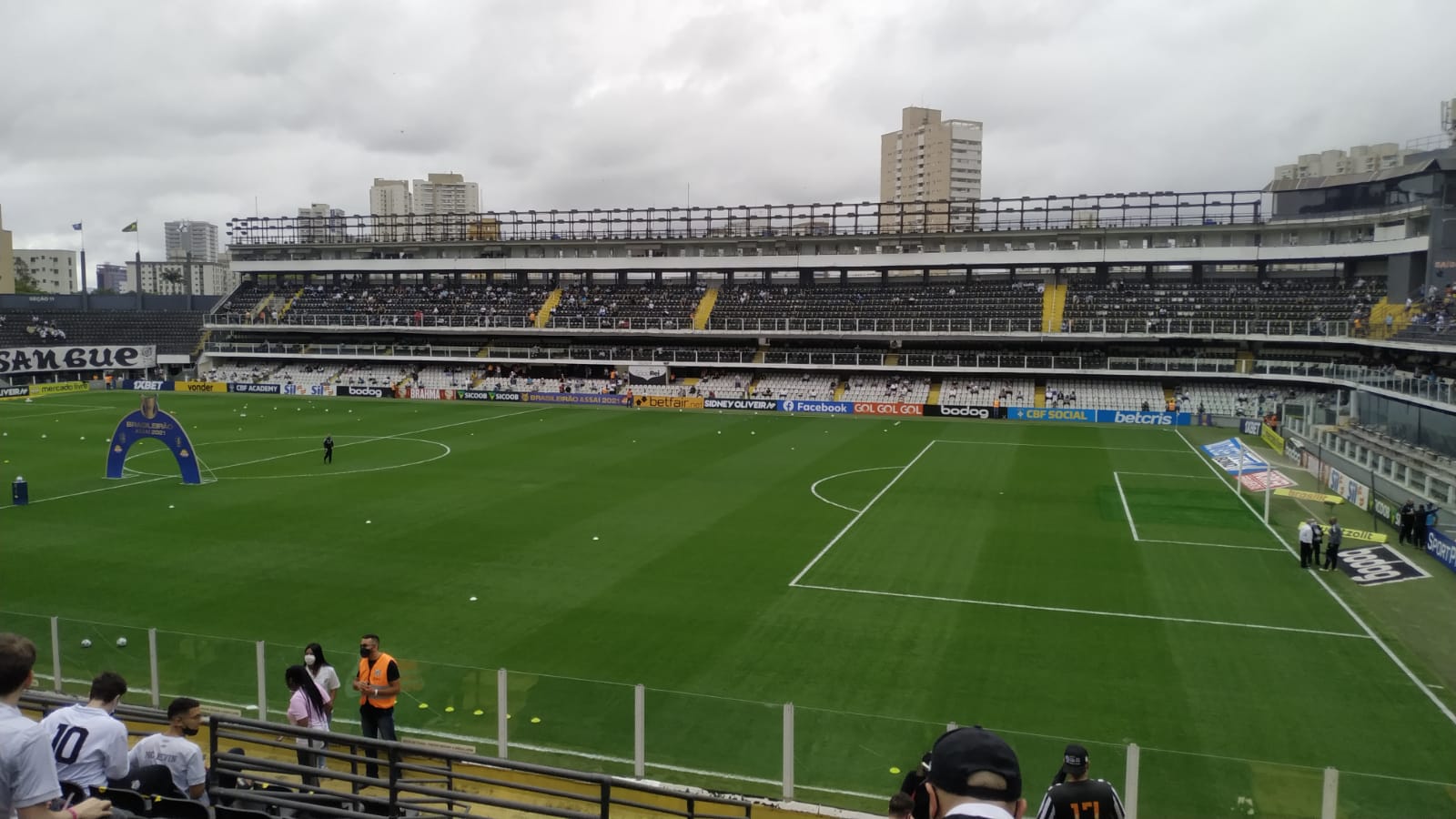
The first reports focused on the derby, and they were right as far as they went: Neymar misses Santos’s home game against Palmeiras on Wednesday, October 28. But the full disciplinary picture is worse for Santos. His first-half yellow card was his third of the current accumulation cycle, which carries its own one-match suspension, and the straight red carries another. The two sanctions stack, so he is also set to miss the following match, away to Red Bull Bragantino on Monday, November 2 — with the possibility of further punishment still open if the disciplinary authorities take up his conduct after the dismissal.
Why this matters: a rule that punishes the hiding, not the words
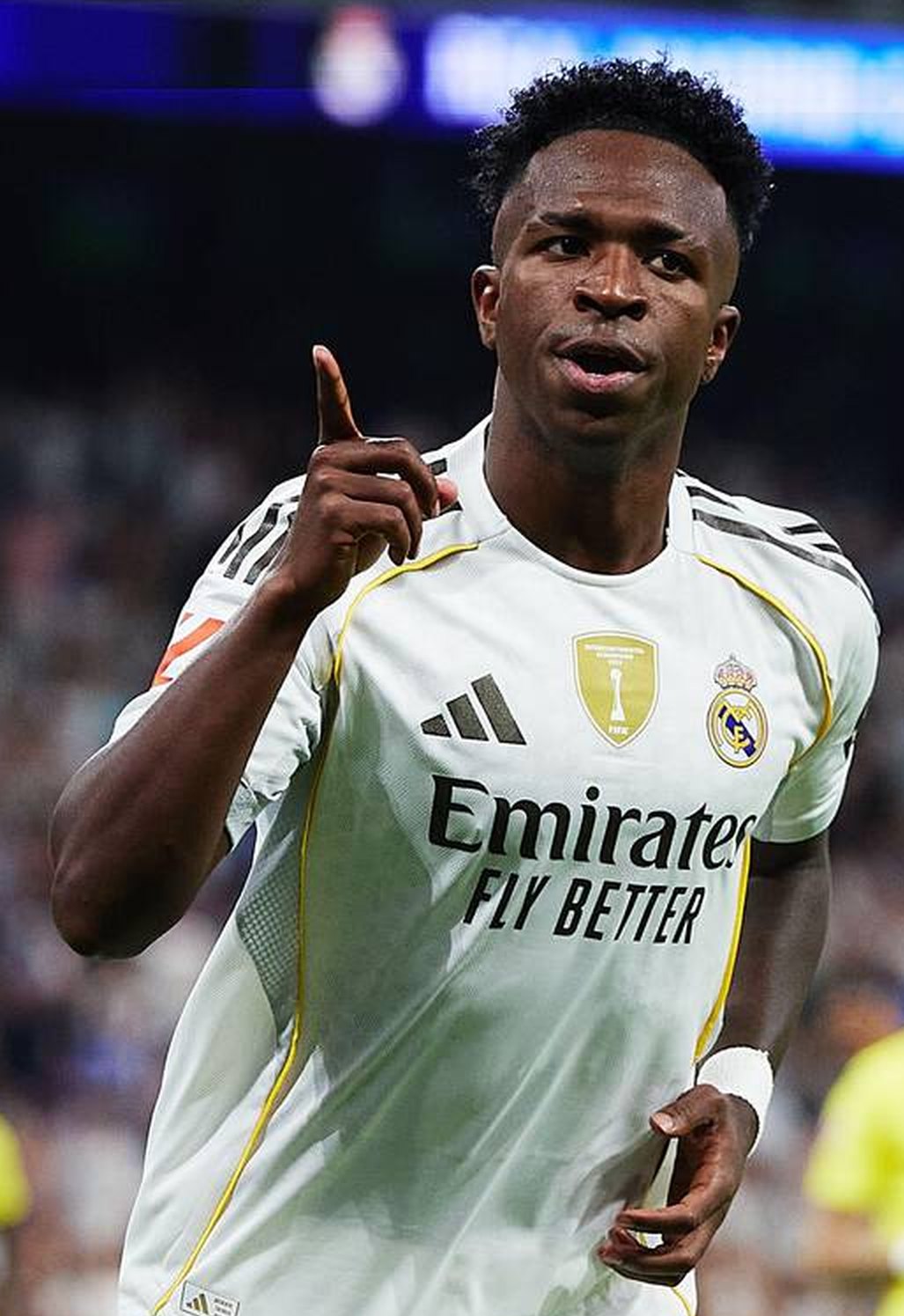
This is why a mid-table league match in October is now a worldwide story. The “Vini Jr law” is football’s newest and most contested rule, and Neymar is its most famous case yet in domestic football. It was born on February 17, 2026, in Lisbon, when Real Madrid’s Vinícius Júnior accused Benfica’s Gianluca Prestianni of directing discriminatory abuse at him while covering his mouth with his shirt — a gesture that made what was said almost impossible to prove from the footage. Prestianni was suspended, but the case exposed the loophole plainly: hide your mouth, and abuse becomes one player’s word against another’s.
The lawmakers’ answer, approved by the IFAB in April 2026 and applied from the 2026 World Cup, was to move the offence upstream: a player who covers his mouth with a hand, arm or shirt while confronting an opponent receives a straight red card, whether or not anyone can prove what was said. FIFA president Gianni Infantino stated the logic bluntly: “If you do not have something to hide, you don’t hide your mouth when you say something.” The rule was used at the World Cup itself — Paraguay’s Miguel Almirón was sent off for mouth-covering against Türkiye after a VAR review in June — and Brazil’s league is among the competitions that have adopted it. UEFA, notably, has declined to apply the automatic red in its own competitions, saying a referee may treat the gesture as unsporting behaviour and leave the rest to disciplinary process.
The case for the rule — and the case against it
Supporters of the law say it finally removes the shield. Players have covered their mouths for years — some innocently, to hide tactics from lip-readers, some, on the evidence of repeated racism cases, to hide abuse. A bright-line rule is easy to referee, impossible to argue with on the night, and it changes incentives instantly: after Saturday, every player in Brazil knows that a hand drifting up mid-argument can end his evening and cost him two matches.
Critics make two points that Saturday’s case puts sharply. First, the rule punishes a gesture that is sometimes habitual and provable in itself, while the actual words — the thing football says it cares about — may never be established; Neymar’s insistence that he said nothing at all cannot be disproved by the same footage that convicted him. Second, a rule triggered by an opponent’s complaint invites gamesmanship: Nestor’s instant alert to the officials was, on Neymar’s telling, a tactic, and referees will now have to judge not only the gesture but the confrontation around it — the law’s own text is meant to spare friendly exchanges, such as former teammates chatting, which means context still has to be refereed after all.
What happens next
For Santos, the immediate cost is concrete: no Neymar for the Palmeiras clásico on Wednesday or at Bragantino on November 2, in a season where his availability has already shaped the club’s year since his return in January 2025. For the league, the case is a stress test that will be cited in every refereeing briefing from here on — the biggest star in Brazilian football, sent off at half-time, for a gesture millions of viewers could see but whose meaning two dressing rooms describe in opposite ways. Expect Santos to contest whatever they can, expect the disciplinary tribunal to be asked whether the post-dismissal confrontation adds to the ban, and expect the debate UEFA reopened in August — automatic red, or yellow and a hearing? — to get louder, not quieter.
Read more on Signal Post News: the Madrid derby and the Mourinho era it reopened and Brazil’s other Sunday story, election day.
Sources
Match data (score, scorers, cards, venue): SportRadar match centre, Santos v Bahia, October 24, 2026. Incident, VAR process, referee identity and the Vini Jr protocol: NowLivo match report; LiveScore (via Marca reporting); LatestLY (via ge Globo / Sport TV). Nestor’s half-time remarks: Sport TV, via LiveScore and LatestLY. Neymar’s response: post-match remarks reported by SportsGoln / GOLN and NowLivo. Suspension stacking (Palmeiras + Bragantino): NowLivo; The Bull Post. Rule background: IFAB / FIFA law amendments for the 2026 World Cup (April 2026); FIFA match post on the Almirón dismissal, June 20, 2026; UEFA refereeing briefing, August 2026.