NewsChopper4 crash NTSB report
The preliminary investigation narrows attention to a 29-second sequence of changing rotor and engine sounds—but leaves the cause of the fatal Chatsworth crash unresolved.
LOS ANGELES — Warning horns sounded inside NewsChopper4 during the final 29 seconds before the Airbus AS350 B2 plunged into a Chatsworth parking lot on September 15, according to a National Transportation Safety Board preliminary report released October 6. Aerial reporter Eliana Moreno, 38, pilot George Marciniw, 70, and bystander Edy Gutierrez Mejia, 29, were killed. The new evidence is important, but it is not a finding of cause.
Why this matters: 29 seconds at the edge of the safety margin
The horns give investigators a timeline. They establish that the cockpit's aural-warning system was reacting to conditions associated with high or low main-rotor rpm and other advisories while the sound signature of the rotor and engine was changing. That sequence helps the NTSB decide what to test in the wreckage, avionics and audio spectrum. It may eventually distinguish among a power loss, rotor-speed excursion, control problem or a combination of events.
Yet the same evidence imposes a limit on what can responsibly be said now. A horn identifies a condition; it does not, by itself, identify the failure that produced it. The warning could be a consequence rather than the initiating event. The preliminary report is deliberately factual, and the NTSB has not assigned probable cause.
The aircraft's position makes those seconds especially consequential. At about 800 feet above the ground and only 6 knots over the surface, NewsChopper4 was close to a hover. Helicopter pilots use a height-velocity diagram—sometimes called the “dead man's curve”—to identify combinations of low altitude and low forward speed that leave fewer options after a loss of power. Forward speed helps preserve rotor energy and opens room to maneuver; altitude buys time to lower the collective and establish autorotation. Some aviation experts use about 1,000 feet as a rough point at which a clean transition may become more achievable, though the precise margin depends on aircraft weight, wind, pilot response, terrain and the type of malfunction. At roughly 800 feet, every second and every foot mattered.

What the warning horns mean—and what they do not prove
The phrase “NTSB warning horns helicopter” can make the evidence sound more conclusive than it is. In the AS350 family, different aural alerts can call attention to rotor rpm outside the desired range and to other aircraft conditions. Rotor speed is fundamental: too little can erode lift and reduce the stored rotational energy needed for autorotation, while too much can threaten structural limits. A pilot confronting either condition must diagnose and respond under extreme time pressure.
The recording captured intermittent and continuous horns, along with a shift in engine and rotor frequency. Those are measurable clues. Sound-spectrum analysis can compare frequencies, timing and harmonics with known signatures from the engine, main-rotor system and warning circuitry. Investigators can then compare the audio with ADS-B movement, physical evidence, maintenance records and surviving avionics.
What the audio cannot do alone is tell investigators whether the initiating event was mechanical, fuel-related, aerodynamic, electrical, maintenance-related or something else. Nor does it establish whether the crew could have recovered from the specific sequence. Moreno is heard asking, “You can't pull up?” shortly before impact. That records the urgency of the moment, not a technical diagnosis.
The numbers: 1 hour 24 minutes, 800 feet, 6 knots, 29 seconds
Taken separately, each number seems ordinary or survivable. News helicopters routinely orbit for extended periods. Eight hundred feet can look high from the ground. Six knots is controlled, not fast. Twenty-nine seconds is longer than an instant. Together, however, the numbers describe an aircraft spending a long assignment near the scene, then slowing almost to a hover at a relatively low operating height immediately before its warning sequence began.
The 1 hour 24 minutes over the bus crash does not prove that time aloft caused the accident. It does tell investigators to examine fuel state, engine and drivetrain temperatures, workload, flight profile and maintenance history in context. The 800-foot altitude and 6-knot ground speed explain why the crew's recovery window may have been narrow. The reported descent rate—about 38 knots at the last recorded point—shows how rapidly the situation developed after the right turn began.
This is also why early certainty is dangerous. A clean narrative—“an engine failed,” “the pilot flew too low,” or “the aircraft ran out of fuel”—may be emotionally satisfying, but none has been established. The disciplined reading is that the flight entered a rapidly deteriorating state while operating with little speed and limited altitude, and the available evidence has not yet shown why.
AS350: the workhorse behind aerial news
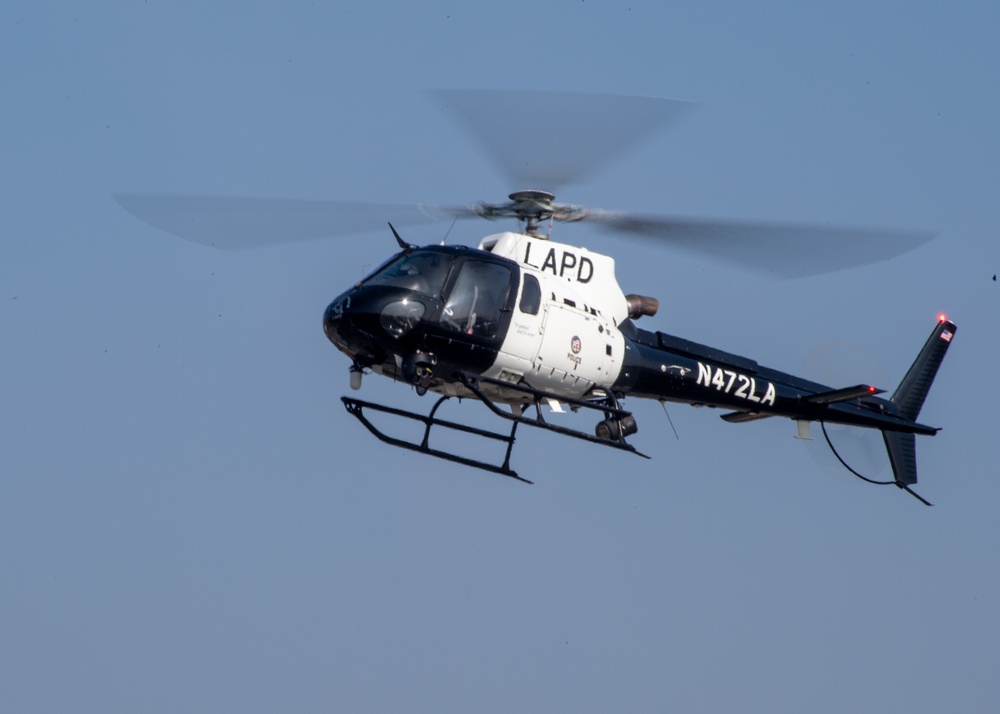
The Airbus AS350, now marketed in its evolved form as the H125, became a workhorse for electronic news gathering, policing, utility flights and mountain operations because it combines visibility, useful payload and strong performance. Thousands of aircraft in the family have served worldwide. Its prevalence means the type is familiar to pilots and maintenance crews, but familiarity does not make a specific accident self-explanatory.
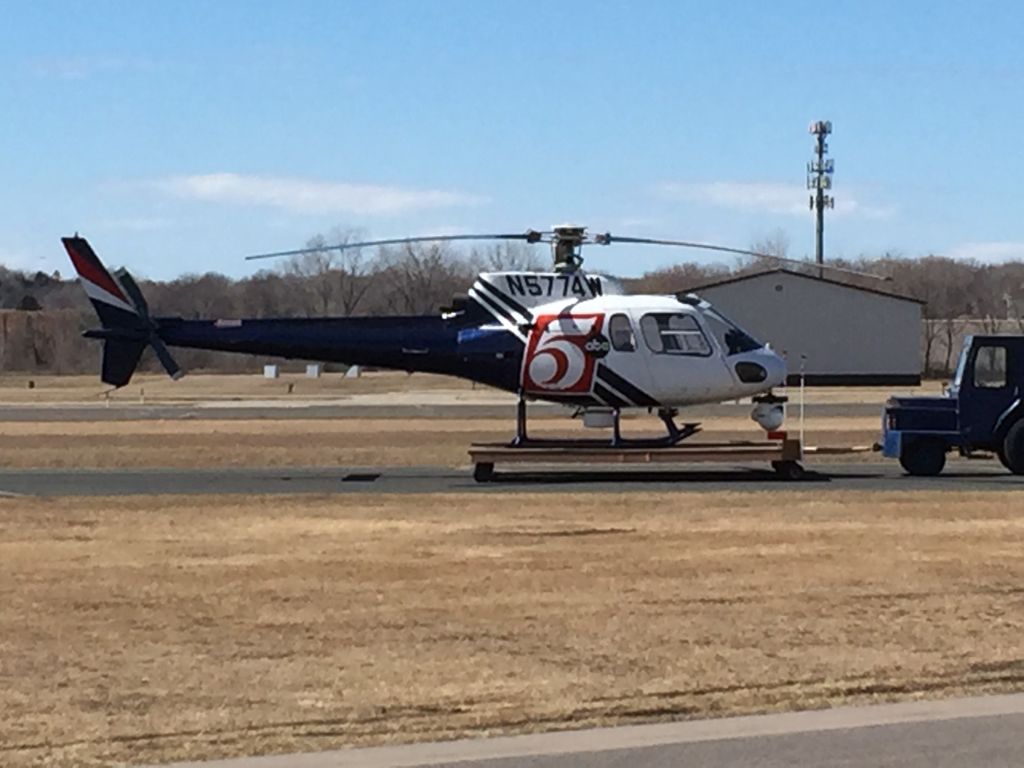
NewsChopper4 was an Angel City Air helicopter contracted to serve NBC4 Los Angeles and Telemundo 52. That distinction matters: television stations often depend on specialist operators for aircraft, pilots and maintenance while newsroom crews direct coverage priorities. The arrangement separates editorial decisions from flight operations on paper, but both meet in the cockpit when an aircraft must hold a camera position over a breaking scene.
On September 15, Moreno and Marciniw had been covering an earlier tragedy: an SUV struck a Metro bus near De Soto Avenue and Nordhoff Street, killing two bus passengers and injuring six people. NBC4 said the pair had flown together for three years. Their assignment illustrates the pressure built into aerial journalism—the public expects immediate images, while safe flight still depends on fuel, weather, traffic, mechanical condition, crew coordination and escape options.
Getting the shot versus preserving an escape route
Aerial news works because a helicopter can remain over a fixed point and provide a view no ground crew can match. The same low-speed stability that helps a camera hold a scene can reduce the kinetic-energy cushion available if power or rotor speed suddenly changes. This is not an argument that hovering for news is inherently reckless. It is a reminder that operationally normal work can still sit close to a boundary where one malfunction has outsized consequences.
Past disasters forced similar reckonings. In Seattle in 2014, a KOMO-TV helicopter crashed near the Space Needle after takeoff, killing two people and injuring a motorist. In Phoenix in 2007, two news helicopters collided while covering a police pursuit, killing all four people aboard. Those accidents had different sequences and causes, so they should not be treated as templates for Chatsworth. Their relevance is institutional: each prompted scrutiny of how aircraft, news deadlines, coordination and urban operating environments interact.
The comparison with Signal Post News's earlier report on the Catalina Island medical helicopter crash reinforces the same point. Helicopter missions differ sharply, but low-altitude work gives crews little room when a problem compounds quickly. The recent Avianca Flight 042 turbulence diversion offers a contrasting lesson: altitude and forward speed can provide transport-aircraft crews more time and more options, even during a violent event.
What happens next
The wreckage and avionics are at an NTSB secure facility for forensic examination. Investigators can inspect the engine, fuel system, drivetrain, rotor assemblies, warning system and maintenance history; synchronize the audio with flight-path data and surveillance video; and test whether the recorded frequencies match known operating states. The sound-spectrum work may be particularly valuable because small helicopters are not always equipped with the same crash-protected recorders required on large airliners.
A final report is expected to take roughly 18 months. That delay can feel unsatisfying, especially to the families of Moreno, Marciniw and Gutierrez Mejia, but probable cause requires more than the most vivid clue. The NTSB must rule evidence in and out, distinguish initiating failures from downstream warnings and explain not only what happened but why.
The operational consequences could arrive sooner. News organizations and helicopter contractors may reassess minimum loiter altitudes, near-hover time, fuel and systems callouts, camera-position requests and abort criteria. Regulators or operators could also review whether electronic news-gathering aircraft need stronger recording capabilities. The responsible lesson is not that one rule would have prevented this crash; it is that a mission built around staying close to a scene should preserve as many recovery options as possible.
For now, the clearest conclusion is narrower. The preliminary report has turned a frightening recording into a structured timeline: normal-sounding operation, changing frequencies, alarms, a rapid turn and descent, then impact. It gives investigators a sharper path forward. It does not yet give the public a cause.
Sources
- USA Today — NTSB: Warning horns sounded before deadly LA news helicopter crash (October 6, 2026)
- MyNewsLA — NTSB Releases Initial Report on Helicopter Crash That Killed 3 in Chatsworth (October 6, 2026)
- National Transportation Safety Board preliminary report on the September 15, 2026, Chatsworth accident.