World · Europe · Elections
The Bulgaria presidential election results give Iliana Iotova — the vice president who has run the presidency since January — a full five-year term of her own, won on a promise of peace and dialogue, and on a turnout so low that roughly one registered voter in six chose her.
Track it live: Ukraine war map — the war whose course split this election, and the Black Sea security fight that follows it
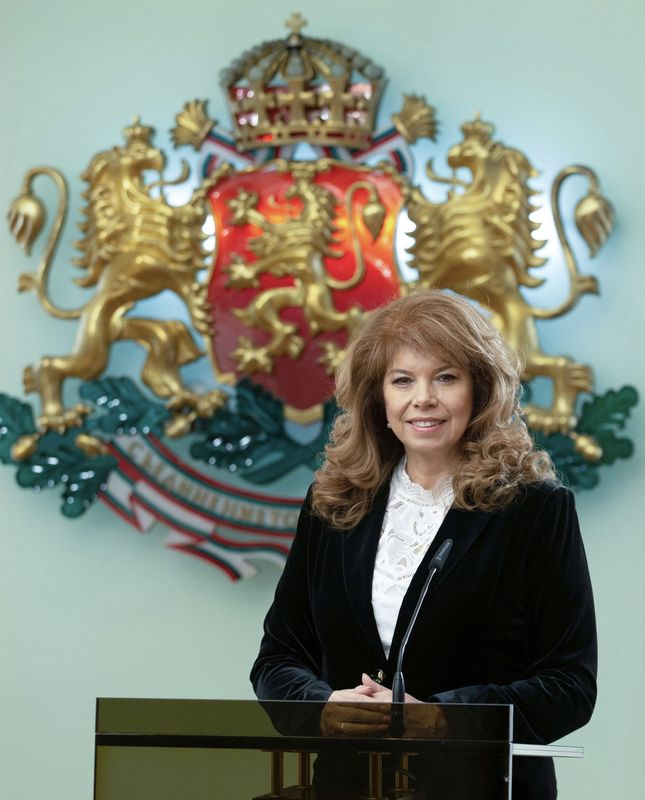
SOFIA, Bulgaria — The Bulgaria presidential election results are in, and they make history: Iliana Iotova has won the presidential runoff with 57.58 percent of the vote, according to the Central Election Commission's near-final count, defeating the banker and former caretaker prime minister Andrey Gyurov and becoming the first woman ever elected president of Bulgaria. With 99.95 percent of precinct protocols processed, the Iotova–Valchev ticket stood at about 1.1 million ballots, against 39.47 percent — roughly 749,500 votes — for the Gyurov–Kandev ticket, Reuters reported. Another 2.95 percent of voters marked the ballot for no candidate at all, choosing the "I support no one" option.
The margin — more than 18 percentage points — was not close, and it was not contested for long. Gyurov conceded on election night, saying that "this is how the Bulgarian citizens have voted" and that the results must be accepted. European Commission President Ursula von der Leyen congratulated Iotova on X on November 1. Official results are expected by November 4, and Iotova's full five-year term begins on January 22, 2027, with Kiril Valchev as her vice president. Until then, she continues in the role she has held all year: she has been acting president since January, when her predecessor — and former running mate — Rumen Radev resigned the presidency to enter parliamentary politics, a gamble that has now placed his allies in control of both the government and the presidency.
The result in numbers
| Ticket | Share | Votes (approx.) |
|---|---|---|
| Iliana Iotova – Kiril Valchev | 57.58% | ~1,100,000 |
| Andrey Gyurov – Georgi Kandev | 39.47% | ~749,500 |
| "I support no one" | 2.95% | — |
Central Election Commission figures with 99.95% of precinct protocols processed, as reported by Reuters and Bulgarian National Radio. Official results are due by November 4.
The runoff was forced by the first round on October 25, in which no candidate won a majority. Iotova and Valchev led that round with between 34.6 and 34.76 percent, depending on the count stage, while Gyurov and Kandev took about 32 percent (31.95 percent). The rest of the field fell away, and the second round became a straight choice between the two camps that have defined Bulgarian politics this year: the movement built around Radev, and the pro-Western reformist parties — We Continue the Change and Democratic Bulgaria — that backed Gyurov. In the end, the first-round order held, and widened. Iotova added more than 20 points to her first-round share; Gyurov added about seven. The voters who had backed eliminated candidates in round one, and the voters who stayed home in round one and came out in round two, broke decisively toward the acting president.
After casting her own ballot, Iotova said she had voted "for national consensus through dialogue, for institutions that work for citizens, for a strong state with its own foreign policy in a strong Europe." Her victory message, delivered as the count settled, focused on "incomes, peace and the challenges that lie ahead" — the same three themes, in the same order of priority, that ran through her campaign.
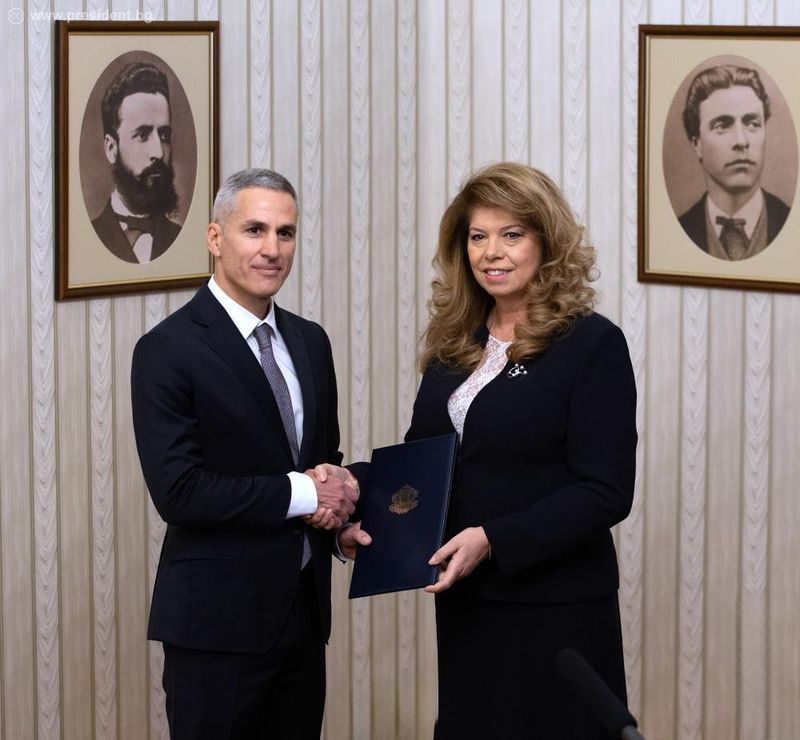
Why this matters
Bulgaria's presidency is, on paper, a largely ceremonial office. In practice, this election matters well beyond Sofia for three reasons. First, it completes a transfer of power that began in January: Radev left the presidency, his Progressive Bulgaria movement won 131 of the National Assembly's 240 seats in April's parliamentary election, Radev himself became prime minister — and now his former vice president holds the presidency in her own right. One political camp now holds the government, a commanding parliamentary majority and the head of state's office, in a country whose modern politics have been defined by fragmentation and collapse.
Second, the election was a referendum on Bulgaria's place in the West's confrontation with Russia. Bulgaria, a Black Sea state of about 6.4 million people, joined NATO in 2004 and the European Union in 2007, and it sits on the alliance's southeastern flank, across the water from the war in Ukraine. Iotova campaigned as a self-described "president of peace," calling for a diplomatic end to the war and dialogue with Moscow. Gyurov campaigned for closer EU and NATO integration and continued support for Ukraine. The result tells Brussels, Washington and Kyiv which of those two arguments currently commands a majority of voting Bulgarians — even if, as the turnout figures below show, it is a majority of a strikingly small electorate.
Third, the presidency is not powerless. The Bulgarian president is commander-in-chief of the armed forces, can veto legislation passed by the National Assembly, signs international treaties and appoints ambassadors. In a system where the same camp controls both the legislature and the presidency, those powers stop functioning as a check and start functioning as an accelerant — which is precisely the debate now opening in Sofia, examined below.
How Bulgaria got here
To understand Sunday's vote, start with the country's two decades of political instability. Since the late 2010s, Bulgaria has cycled through repeated parliamentary elections, short-lived coalitions and caretaker governments, as corruption scandals and reform promises alternately mobilised and exhausted the electorate. Radev, a former air force commander first elected president in 2016 and re-elected in 2021, built his standing as an outsider to the party system — a head of state who repeatedly positioned himself against the governments of the day, and whose popularity survived the churn around him. Iotova, 62, served as his vice president from 2017 to 2026, after a career that included time as a member of the European Parliament.
The decisive break came in January 2026, when Radev resigned the presidency — an office with prestige but limited power — to compete for the office that actually governs: the prime ministership. Under Bulgaria's constitution, the vice president succeeds in that situation, and Iotova became acting president. The bet paid off twice over. In April, Radev's Progressive Bulgaria won 131 of 240 National Assembly seats, an outright majority almost unheard of in Bulgaria's fragmented recent parliaments, and Radev became prime minister. The presidential election that followed was, in effect, the second half of the same transaction: the camp that had vacated the presidency to win the government now asked voters to hand the presidency to Radev's own former deputy — and voters agreed.
That sequence is what gives this result its double edge. Supporters describe it as the end of instability: for the first time in years, Bulgaria has a government with a working majority and a president who will not spend five years fighting it. Critics describe the same facts as a concentration of power: the institutions designed to check each other are now held by political allies, and the habits of accountability that a veto-wielding, independently elected president provides will be tested precisely when they are least likely to be exercised. Both descriptions are built from the same election results. Which one Bulgaria gets depends on how the two offices behave when they first seriously disagree.
Two campaigns, two Bulgarias
The policy divide at the centre of the runoff was foreign policy, and within it, the war in Ukraine. Iotova and Radev call for a diplomatic end to the war, favour dialogue with Moscow and oppose sending more Bulgarian military aid to Ukraine. Iotova proposed a Black Sea security meeting bringing together all six littoral countries and a moratorium on hostilities in the sea, and she paired the peace message with a domestic one: a pledge to tackle poverty in what remains the European Union's poorest member state, where low incomes have driven years of emigration and protest. Her framing — a "president of peace" — was built to speak to voters who fear that a Black Sea war could reach Bulgaria's own coast, a fear given substance in October when drone attacks struck commercial vessels in the Black Sea.
Gyurov offered the opposite orientation. A banker and former caretaker prime minister, backed by the pro-Western reformist parties We Continue the Change and Democratic Bulgaria, he argued for anchoring Bulgaria more firmly in the EU and NATO and for continued support to Ukraine. His campaign's case was that Bulgaria's security and prosperity run through its alliances, that the country joined NATO in 2004 and the EU in 2007 by choice, and that drifting toward neutrality in a war on its maritime doorstep would leave it exposed rather than safe. In the runoff, that argument won two voters in five. It was not enough — but at 39.47 percent, it was also not a fringe position, and the parties behind it remain the core of the parliamentary opposition to Radev's majority.
The Black Sea election
No issue hung over this vote like the Black Sea. Bulgaria's coast is its economic lifeline — ports, tourism and shipping — and through October the war arrived on that water in the most literal way: in our reporting on the drone attack that struck two ships off Bulgaria, sinking one and leaving crew missing, and on the sea-drone strike on the container ship Contship Jet, after which Turkey warned both sides to stop attacking civilian vessels. For Bulgarian voters, the question of the election was therefore not abstract alliance theory. It was whether their country should arm the side fighting Russia, press for a negotiated stop to the fighting on its sea, or try to stand apart from the war altogether.
Iotova's answer — a six-country Black Sea security meeting and a moratorium on hostilities — is a proposal, not a policy: it requires agreement from Russia, Ukraine and Turkey, among others, none of which has signed on. Gyurov's answer pointed the other way, toward collective defence: the same logic behind the European Union's move to open €21.3 billion in leftover defence loans and urge capitals to spend them with Ukraine. Bulgaria's voters have now chosen the first argument. What that choice can actually deliver will be decided less in Sofia than in Moscow, Kyiv and Ankara — a point worth holding onto as the new presidency opens.
The number that shadows the victory: turnout
Every figure in this election comes with an asterisk, and the asterisk is turnout. The first round on October 25 drew about 23 percent of registered voters — a record low for Bulgaria. The runoff was projected to do only slightly better, at around 27 percent. Run the arithmetic on the near-final count and the shape of the mandate becomes precise: 57.58 percent of roughly 27 percent turnout means Iotova was actively chosen by about one in six of all registered voters — roughly 15 to 16 percent of the electorate. Five in six registered Bulgarians either voted for someone else or, in the overwhelming majority of cases, did not vote at all.
That is not a Bulgarian peculiarity so much as a Bulgarian extreme. Turnout has been falling across the country's repeated elections, ground down by the cycle of collapsed governments and unfulfilled reform campaigns; when parliaments fall every year or two, the rational voter response is eventually to stop showing up. But a presidential runoff at 27 percent does something specific to the winner's authority. Iotova's 18-point margin is real, her opponent conceded within hours, and her legal title to the office is unquestioned. Her political mandate, though, rests on the active support of about a sixth of the electorate — and both she and Radev's government will govern a country in which the largest single bloc, by far, is the people who declined to choose anyone. Her victory speech's emphasis on "national consensus through dialogue" reads, in that light, less like ceremony and more like a recognition of the numbers.
Checks, balances — or stability at last?
The sharpest criticism of the result came from observers quoted by the Associated Press, who warn that holding both the government and the presidency weakens Bulgaria's checks and balances. The concern is structural, not personal: a president who can veto legislation, appoint ambassadors and command the armed forces is a meaningful counterweight only if she is willing, at some point, to say no to the government. A president elected as the former deputy and political ally of the prime minister may rarely find that moment — and if the veto is never used and no appointment is ever blocked, the constitutional design quietly converts from a system of separated powers into a single chain of command.
The counter-argument, made by the winning camp and by voters who backed it, is that Bulgarians have already run the experiment with divided power — and it produced two decades of instability, caretaker governments and elections on repeat. On this view, alignment between the presidency and a majority government is not a defect but the point: it is what a functioning state looks like, and the check on it is the next election, not institutional friction. Both arguments are honestly held, and both can point to Bulgarian history for evidence. The test that will distinguish them is concrete and near-term: the first time a Radev government bill, appointment or foreign-policy move meets real resistance, observers will learn whether the presidency intends to be a partner, a referee — or a rubber stamp.
What happens next
The formal steps are quick. The Central Election Commission is expected to announce the official results by November 4. Iotova continues as acting president in the meantime, and her elected five-year term — the constitution allows a maximum of two — begins on January 22, 2027, with Kiril Valchev as vice president. Three scenarios then define her opening year. In the first, the alignment holds: the presidency and government move together, Bulgaria presses its Black Sea meeting proposal in European and NATO forums, and military aid to Ukraine stays off the agenda — a course that will draw pressure from allies who backed the other vision of Bulgaria's role, and from the two-fifths of voters who chose Gyurov. In the second, the presidency asserts itself on a specific file — a veto, an appointment, a treaty — and Sofia learns whether the system still has friction in it. In the third, the turnout problem becomes the story: a government and president resting on a sixth of the electorate face a protest movement or a crisis in which the silent five-sixths suddenly matter more than the count that elected them.
For now, the fact of the night is simple. A woman who spent nine years as vice president, and ten months as acting president, has been elected president of Bulgaria in her own right — the first woman to win the office — with 57.58 percent of the vote, an opponent's clean concession, and a compliment from the president of the European Commission. What she and the movement behind her do with a country that mostly stayed home is the question her term will answer. What did you make of Bulgaria's choice — a mandate for peace, or a warning about power in too few hands? Tell us in the comments, and follow Signal Post News for the official results and the January inauguration.
Sources
Reuters, reporting on the near-final count of November 2, 2026 — the Central Election Commission figures with 99.95 percent of precinct protocols processed (Iotova–Valchev 57.58 percent, about 1.1 million votes; Gyurov–Kandev 39.47 percent, about 749,500 votes; 2.95 percent "I support no one"), the official-results timetable and the January 22, 2027 term start. Associated Press, November 1, 2026 — Gyurov's election-night concession, von der Leyen's congratulations, the first-round results and record-low turnout, and observers' checks-and-balances concerns. Bulgarian National Radio (BNR) — election-night reporting, Iotova's statements after voting and her victory message. Central Election Commission of Bulgaria — the official count and protocols. Related Signal Post News coverage: the October Black Sea drone attacks on shipping off Bulgaria and the EU defence-loans decision, linked in the text above.