Qatar defence production hub: Qatar will soon announce a local defence production hub built with a regional partner and with the United States, the United Kingdom and France, its minister of state for defence affairs told the Global Security Forum in Doha on Monday — a plan to build air defence, counter-drone and cyber capability at home after a war that shut much of its main LNG complex and left parts of it damaged for years.
Track it live: Middle East war and energy tracker
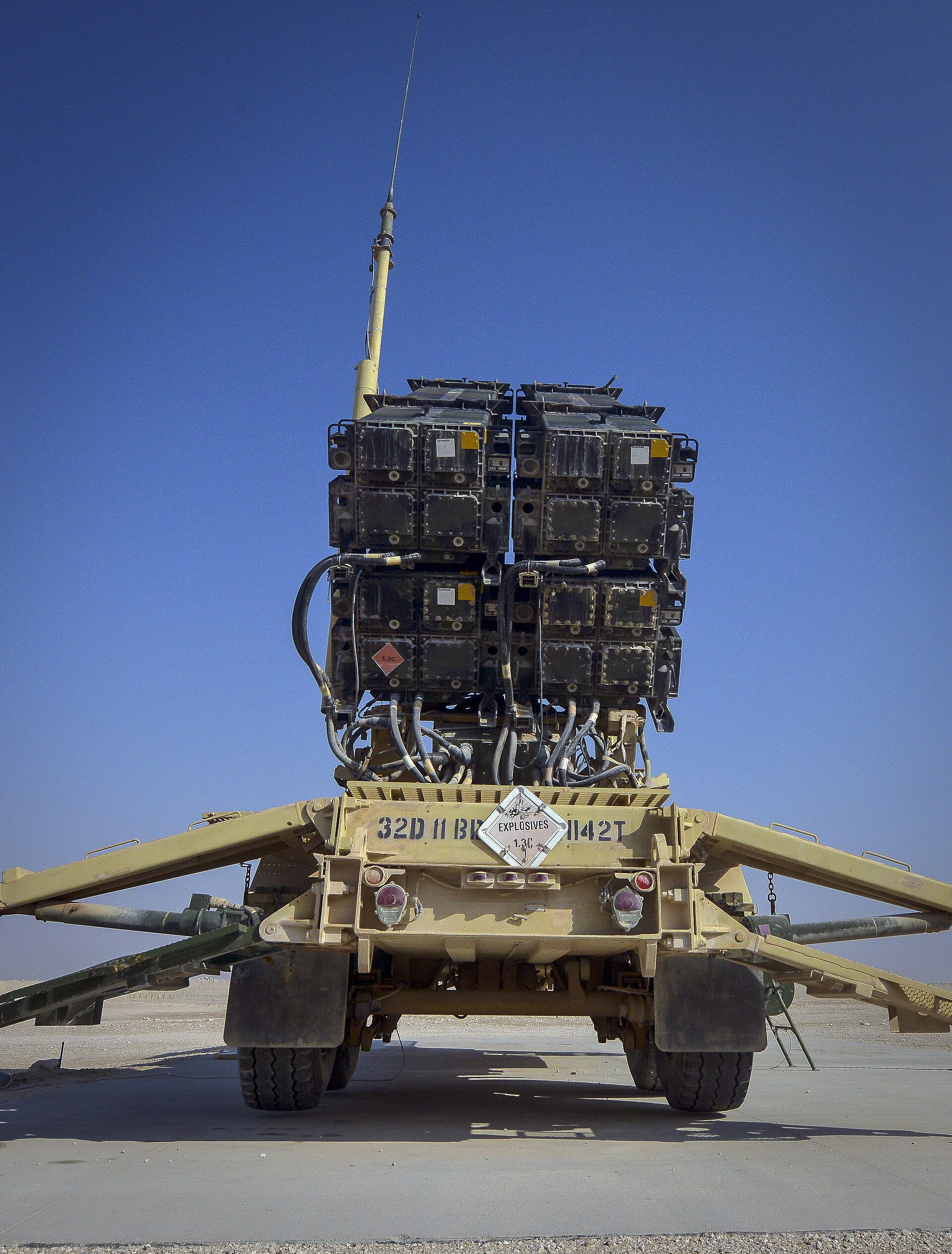
What was announced at the Global Security Forum Doha 2026
Speaking at the Global Security Forum in Doha on Monday, Sheikh Saoud bin Abdulrahman Al Thani said Qatar would soon unveil a hub for producing defence equipment locally, built around partnerships rather than purchases. "We are partnering with a regional partner, in addition to other partners such as the United States, the United Kingdom, France, to make sure either we do local protection or we are investing in some of these companies," he said. The formulation matters: Qatar is describing two routes to the same goal — producing defensive capability inside Qatar, or taking stakes in the companies that make it — and presenting both as parts of a single strategy rather than alternatives.
Asked about the threats the hub is meant to answer — ballistic missiles, drones and cyberattacks, the three instruments that have defined the Iran war's reach into the Gulf — Al Thani said a formal announcement was close. "Soon we are going to announce a new partnership that we will do with the regional partners to establish a new initiative towards building capability into these three elements and others," he said. Reporting from the forum put the priorities in the same order: air defence first, counter-drone measures second, cybersecurity third. Those are, not coincidentally, the three capabilities Qatar has had to rely on others for most heavily since the war began — the layers that decide whether an incoming missile is intercepted, whether a low-flying drone is stopped before it reaches a gas plant, and whether the networks running the energy system hold up under attack.
The setting was deliberate. The Global Security Forum is Doha's own stage for security policy, and Al Thani used it to address an audience of officials and defence specialists rather than to publish a procurement document. What he offered was a direction of travel, stated on the record by the minister responsible for defence affairs: Qatar, one of the world's largest buyers of Western weapons and host to the largest American air base in the region, intends to become a producer as well. The formal partnership announcement, he said, is still to come.
What Doha did not say: no partner, no timeline, no budget
For everything the remarks established, the list of what they omitted is long, and it is the omissions that will determine whether Monday's statement becomes an industry or remains an intention. Al Thani did not name the regional partner at the centre of the plan — a significant gap, because a Gulf co-production venture means something very different depending on whether the partner is a state with an existing defence industry of scale or a smaller neighbour building one. He did not name the Western companies involved, saying only that the United States, the United Kingdom and France were among the partners; whether that means governments, prime contractors, or both was left open. He gave no timeline beyond "soon" for the partnership announcement itself, and none at all for production. He cited no budget, no facility, no site, and no specific system — no interceptor, drone or platform was identified as a candidate for local manufacture.
That restraint cuts both ways. Announcement-first industrial strategies are a familiar pattern in the Gulf, and sceptics will note that a hub described without partners, products or dates cannot yet be weighed as capability. Supporters of the approach can answer, with some justification, that the sequencing is normal: governments announce frameworks before contracts precisely because the contracts — export licences, technology-transfer terms, workshare — are the hard part, and naming companies before those terms are settled would prejudice them. Both readings are available on Monday's record. What is not available, yet, is any evidence by which to choose between them. The test will be the announcement Al Thani promised, and Signal Post News sets out below what it would need to contain to be judged as more than a statement of intent.
The backdrop: a war that reached Qatar's energy heartland
The announcement cannot be understood outside the year that preceded it. When the Iran war began, Qatar — a mediator with channels to every side — found its own territory and its economic engine inside the battlespace. The war forced Qatar to shut much of its main LNG complex at Ras Laffan shortly after hostilities began, and strikes and counter-strikes around the Strait of Hormuz, the narrow waterway through which Gulf energy reaches the world, disrupted the shipping on which Qatar's exports depend. Al Thani's message in Doha was that the shock is not finished. "We haven't reached the peak with respect to energy," he warned, saying further repercussions should be expected in the coming days and months — a striking assessment from the government of a state whose prosperity rests on the uninterrupted sale of gas.
He also pushed back against one proposed response to the shipping crisis: charging for passage through Hormuz. "Transit fees should not be applied," he said, opposing tolls on shipping through the strait — a position that aligns Qatar with the principle of free navigation its own export model requires, and against any settlement that would normalise paying for access to international waterways. For a country that must move its gas through that strait on every voyage, the economics are existential rather than abstract: a toll regime, a closed strait or a mined strait are three versions of the same threat to the Ras Laffan model, and the war has now demonstrated all three as live possibilities.
Ras Laffan: Iran strikes, repairs and a years-long rebuild
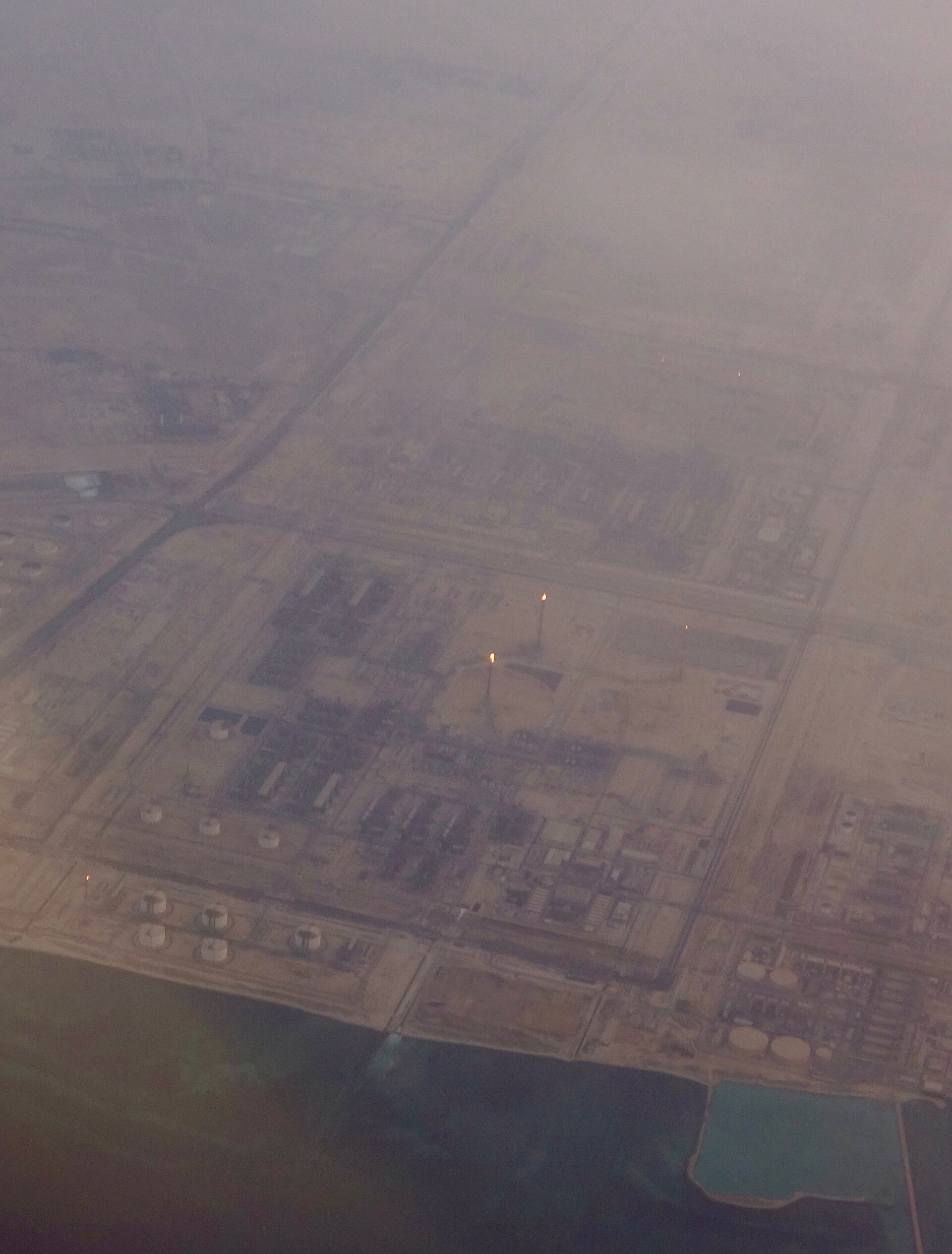
Ras Laffan is where the war's cost to Qatar stops being strategic language and becomes concrete. The complex on the north-east coast is the heart of an export machine that makes Qatar one of the largest suppliers of liquefied natural gas on earth — on the order of a fifth of the world's traded LNG in a normal year. According to the forum reporting, Iranian strikes on Ras Laffan in March damaged facilities there, and the repairs are expected to take several years. A plant that took a generation to build, and on which the state's finances rest, is now partly a reconstruction project — and a reconstruction project sitting in the same geography that exposed it. Every month of repair work is also a month in which the question Doha is now answering — how does Qatar protect this coastline itself, rather than rent protection for it? — has a visible, smouldering referent a short drive from the capital.
That context explains the order of Al Thani's priorities. Air defence and counter-drone systems are what stand between a missile or a one-way attack drone and a liquefaction train; cybersecurity is what protects the control systems of a plant that is as much software as steel. A production hub aimed at those three things is not a general rearmament programme. It is a programme shaped precisely by the damage Qatar has already taken and the damage it most fears next — the defence of fixed, flammable, irreplaceable energy infrastructure against exactly the weapons this war has used against it.
Al Udeid airbase defence partnership: the shield Qatar already relies on
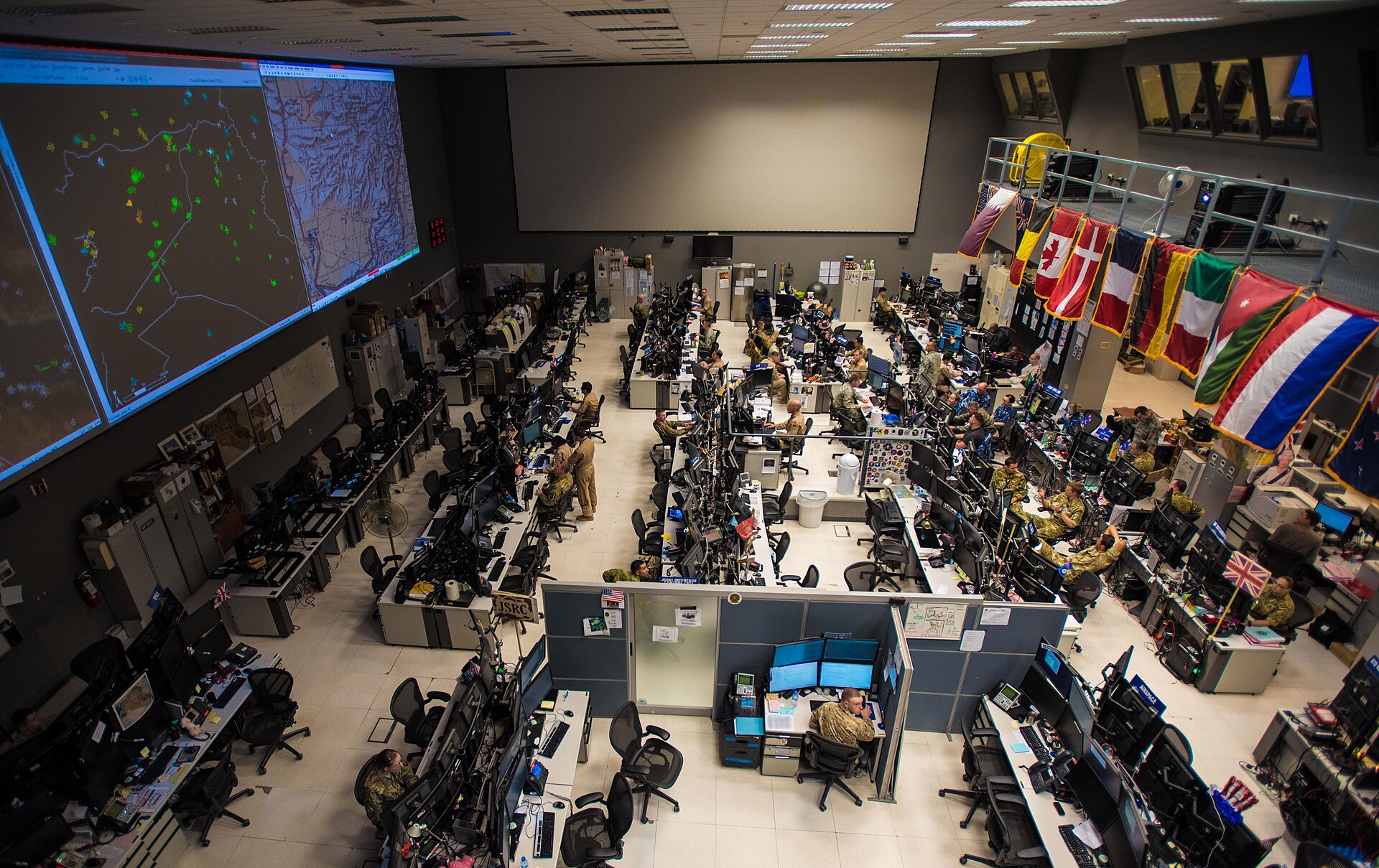
None of this starts from zero. Al Udeid Air Base, south-west of Doha, hosts the forward headquarters of US Central Command's air component and the Combined Air Operations Center from which coalition air operations across the Middle East are run; it is the largest American military installation in the region, and its development continues, Al Thani noted. Qatar's air defence in this war has been exercised through that partnership. Al Thani said more than 90 percent of attacks had been prevented through the US defence partnership — a figure he presented as the product of a relationship built over three to four decades. That number is his claim, offered by the minister responsible, and it should be read as one: Qatar has not published the underlying data, and no independent accounting of attempted versus successful attacks accompanies it. But even as a claim, it defines the starting point for the production hub: Doha is not describing a partnership that failed and must be replaced. It is describing one that, by its own account, worked — and that it now wants to supplement with industrial capacity of its own, so that the next war's interceptors, sensors and counter-drone systems are not all flown in from someone else's stockpile.
Why this matters
Gulf defence manufacturing: the local production turn
For half a century, the Gulf's defence model was a purchase order. Wealthy, small-population states bought the most advanced finished weapons the West would sell — fighters, frigates, missile batteries — and relied on the sellers' logistics, training and resupply to keep them working. The model delivered impressive inventories and a hidden dependency: in a long war, what matters is not the peacetime inventory but the rate at which interceptors can be replaced, drones countered and systems repaired, and all of that sat in factories on other continents, behind export approvals Qatar did not control. The Qatar regional defence partnership Al Thani described is the region's wealthiest states converging on the same correction: local production, co-development and equity stakes in manufacturers, so that at least part of the supply chain answers to the government that depends on it in wartime.
Local production changes three things at once. For deterrence, it raises the cost an attacker must expect to impose: a state that can manufacture and replenish its own air defences at home is harder to exhaust than one counting a fixed stock of imported interceptors, and adversaries plan against stockpiles they can see. For supply chains, it shortens the distance between factory and front for the items wars consume fastest — interceptors, counter-drone effectors, spare parts, secure networks — even if the most advanced components still come from abroad. And for the Western primes, it changes the business: access to Gulf budgets increasingly runs through joint ventures, local workshare and technology transfer, which is why the presence of the United States, the United Kingdom and France in Al Thani's sentence matters commercially as much as militarily. The firms that anchor the partnership will not merely sell to Qatar; they will build in Qatar, train Qataris, and bind their own regional strategies to the hub's success.
Qatar mediation, Iran war, defence readiness: the mediator rearms
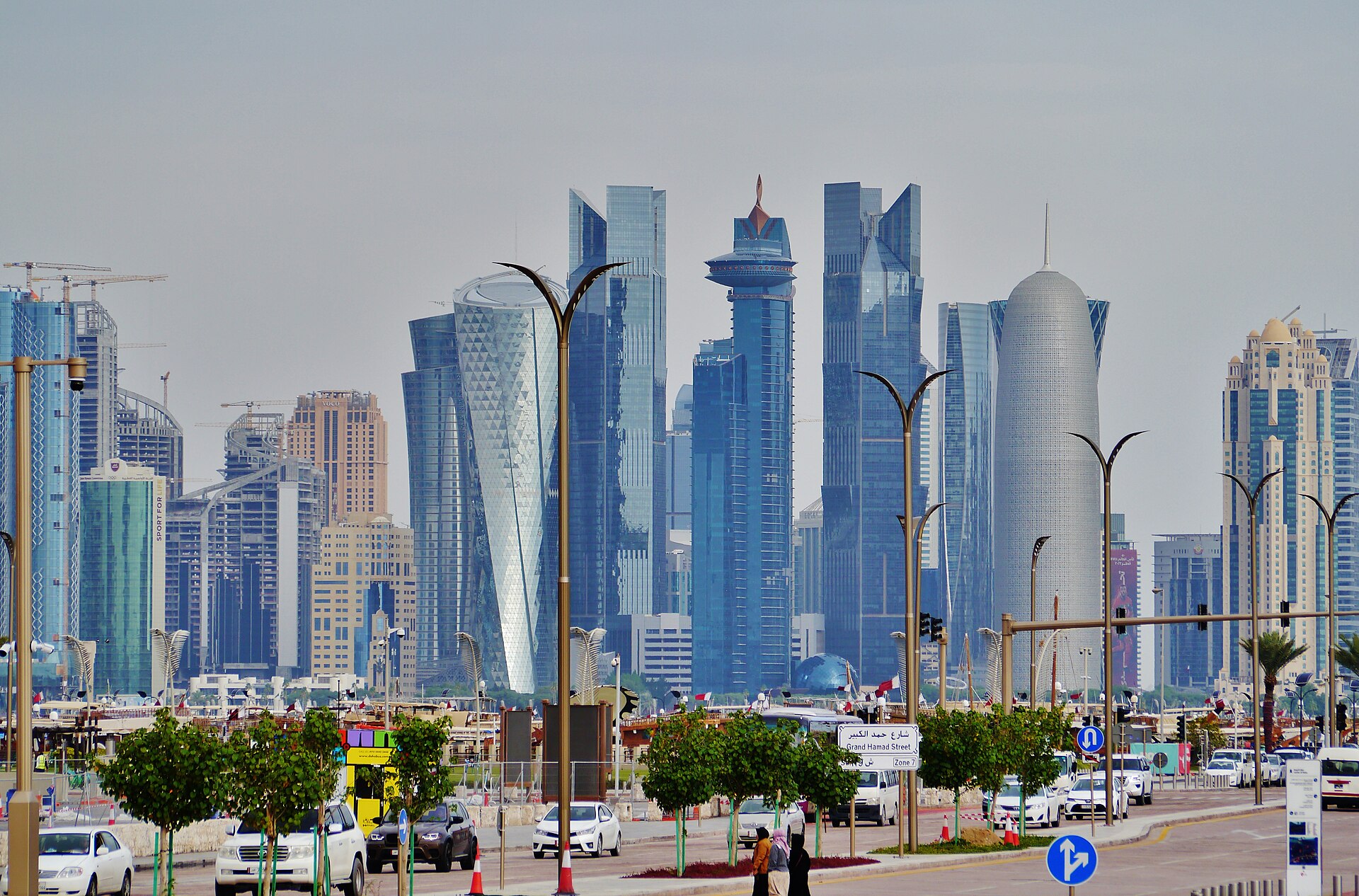
The apparent contradiction at the centre of Qatari policy — the region's mediator building a weapons industry — is one Al Thani addressed directly, and his answer is the clearest statement of the doctrine behind the hub. "Mediation doesn't mean that we should not be ready for any defensive action from our side," he said. Qatar, he stressed, never stopped communication with Tehran throughout the war, even as Iranian weapons were striking Qatari soil. "Iran is our neighbour. We need to find ways to live with them," he said. Read together, the two positions are not in tension in Doha's telling: mediation is Qatar's method for ending wars, and domestic defence production is its insurance for the ones mediation fails to end. The same government that hopes mediation involving Qatar, Pakistan and Oman produces an agreement involving the United States, Iran and Israel — and beyond that a broader dialogue including the Gulf states, Pakistan and Turkiye — is preparing, in parallel, to manufacture the means of its own protection if no agreement comes.
Whether Tehran reads it that way is another matter. From Iran's side of the Gulf, a Qatari production hub built with American, British and French partners can look less like insurance and more like integration — Qatar embedding itself more deeply in the Western defence architecture that Iran has been fighting, on the territory of a state that also hosts the base from which US air operations are coordinated. Iranian officials have their own stated logic for striking Gulf energy infrastructure: retaliation and leverage in a war they did not fight alone. Qatar's answer, on the record, is that its build-up is defensive in purpose and that the channel to Tehran stays open regardless. Both positions are now stated plainly; the space between them is where the risk sits, and it is tracked day by day on Signal Post News's Live Global Wars Tracker.
Who gains, who watches warily, who doubts
The beneficiaries are the easiest to identify. Western defence firms gain a funded Gulf production foothold at the moment every Gulf state is competing for the same industrial partnerships; the unnamed regional partner gains co-production status alongside the West's three principal arms exporters; and Qatar gains the beginnings of an industrial base in the three technologies its war has made priceless. The watchers are equally clear. Iran will study the forthcoming announcement for what it says about the durability of the US-Qatar defence relationship it has been trying to strain. Other Gulf capitals, several of which are further down the same local-production road, will measure their own programmes against Doha's terms — the Gulf's industrial race is competitive as well as collective.
The sceptics' case deserves equal weight, because it rests on the Gulf's own record. Defence-industrial announcements in the region have repeatedly outrun delivered capability: glossy partnership frameworks, followed by years of quiet renegotiation, small initial workshare and dependence on foreign engineers that fades slowly if at all. Building interceptors, counter-drone systems and military-grade cyber capability is among the hardest industrial work there is; it requires export licences for controlled technology that Washington, London and Paris grant cautiously, a technical workforce Qatar must train or import, and sustained budgets across political cycles. Nothing in Monday's remarks was false — but nothing in them yet distinguishes this hub from the long list of announced Gulf ventures that produced more ceremonies than systems. The honest verdict on October 19 is that Qatar has announced an intention with unusually strong reasons behind it, and that intention is all it has announced.
What would make it real: the test for the forthcoming announcement
Al Thani promised a partnership announcement "soon", and it will be judged against a short list of concrete tests. First, names: the regional partner identified, and the Western companies — not just countries — attached to the venture. Second, products: which systems, in the air defence, counter-drone and cyber fields, are actually slated for production or co-development in Qatar. Third, place and scale: a facility, a workforce plan and a budget figure that together indicate whether this is an assembly line or an industry. Fourth, time: a production start date and milestones against which Doha can be held. Fifth, terms: the export-control and technology-transfer arrangements that decide how much of the capability is genuinely Qatari and how much remains licensed, supervised and switchable-off from abroad. An announcement that answers those five questions converts Monday's statement into a programme. One that repeats the framework in grander language will tell the region — and Tehran — that the hub is still a negotiating position rather than a factory.
Either way, the strategic fact of Monday stands. The state that has made itself indispensable to every negotiation in this war has concluded that diplomacy is not a substitute for the means of defence, and that those means should increasingly be made at home. "We haven't reached the peak with respect to energy," Al Thani said of the war's shockwaves. His government's answer to that warning is now on the record: mediate with one hand, and build with the other.
Related on Signal Post News: US Patriot Batteries Rushed to Saudi Arabia and Qatar as Iran Strikes Loom · Tanker Attacked Near Qatar: Acers Strike Widens the Hormuz Shipping War
Sources
Reuters, October 19, 2026, "Qatar will soon announce local defence production hub, minister of state says" (reuters.com) — Al Thani's Global Security Forum remarks on the defence production hub, the regional partner and the United States, United Kingdom and France as partners; the forthcoming partnership on ballistic missile, drone and cyberattack capability; and the Ras Laffan shutdown and Hormuz shipping context. Al Jazeera reporting from the Global Security Forum, syndicated October 19, 2026 (ghanamma.com) — the energy-peak warning, opposition to Hormuz transit fees, the March strikes on Ras Laffan and the multi-year repair estimate, the claim that more than 90 percent of attacks were prevented through the US partnership, continued Al Udeid development, the air defence, counter-drone and cybersecurity priorities, and the mediation remarks concerning Tehran, Pakistan, Oman, the GCC and Turkiye. Background on Al Udeid Air Base and the Combined Air Operations Center reflects the installations' long-documented public roles as the forward headquarters of US air operations in the Middle East.