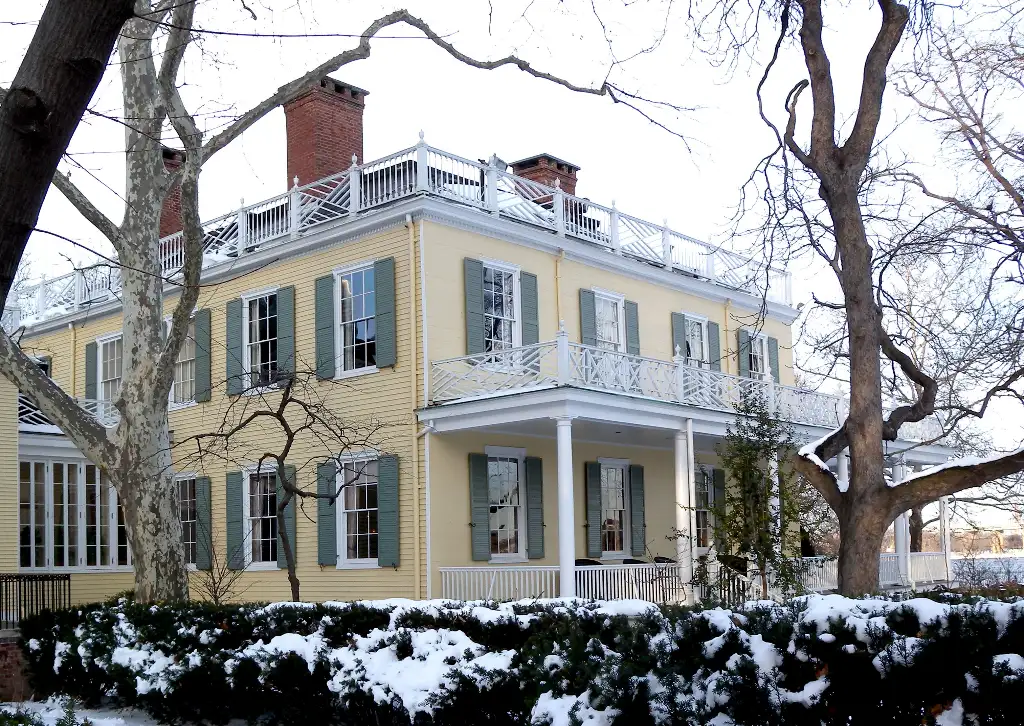
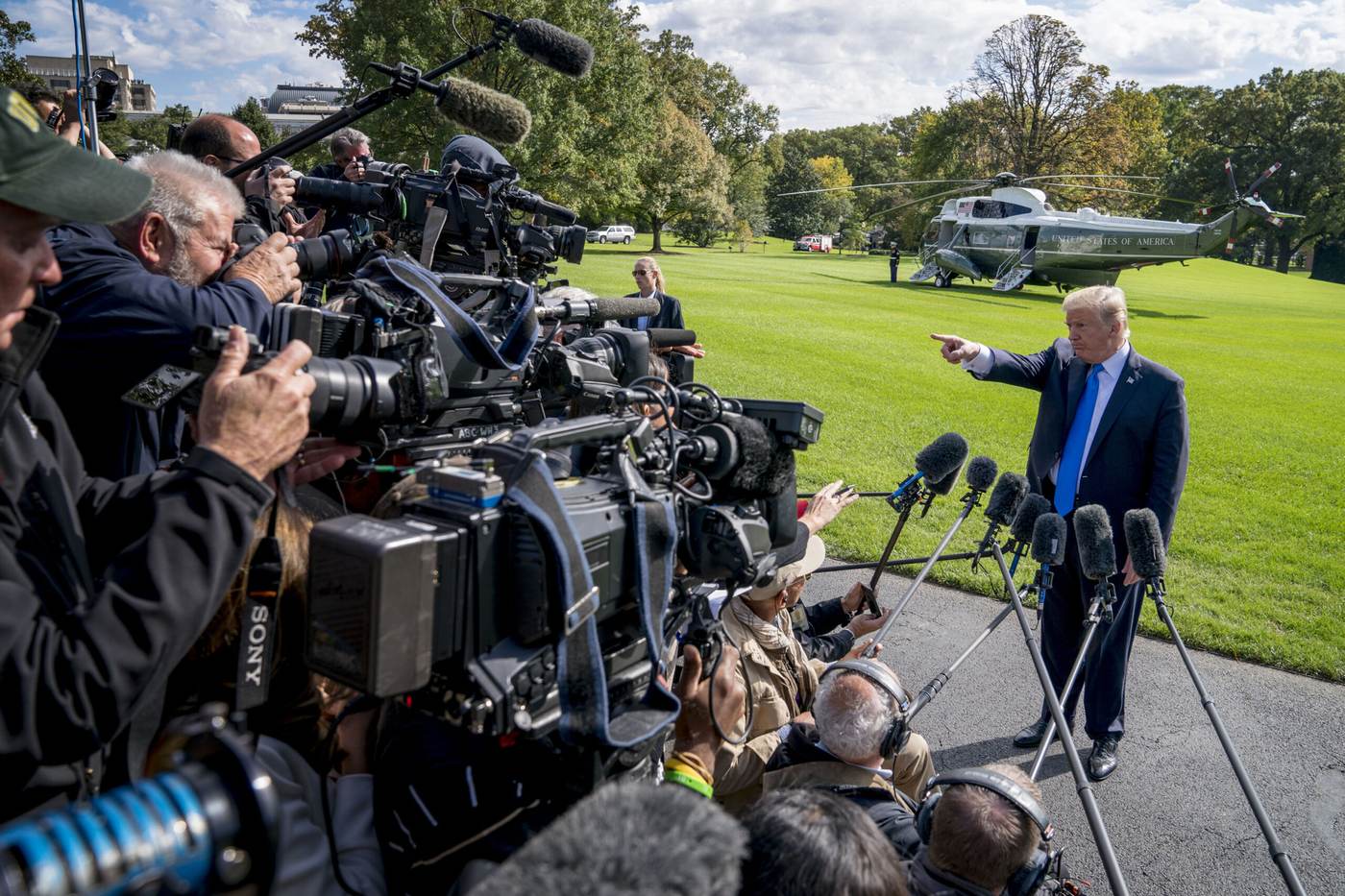
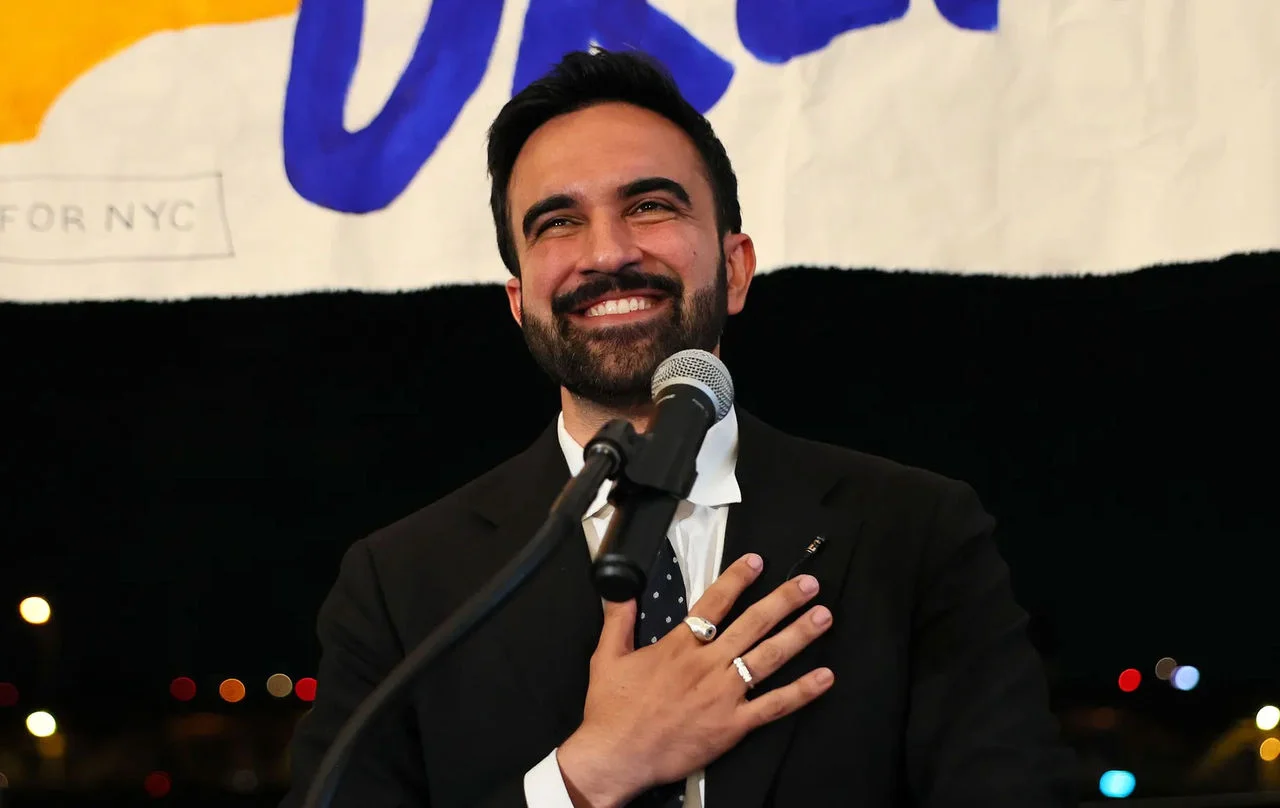
President Donald Trump made an unusual detour from the choreography of United Nations General Assembly week on Monday, September 21, visiting Gracie Mansion for a private conversation with New York City Mayor Zohran Mamdani. The two men then appeared together on the lawn, trading praise instead of the insults that once defined their relationship. Trump said the 34-year-old mayor had “great potential” and could become a “great” mayor. Mamdani said their exchanges keep returning to the cost of living and the practical power of government.
The meeting lasted about an hour in the Associated Press account and roughly 90 minutes in other reporting. White House chief of staff Susie Wiles and Mamdani chief of staff Elle Bisgaard-Church attended. The agenda reached from an enormous housing proposal over Sunnyside Yard in Queens to the future of Temporary Protected Status for Haitians. The conspicuous fact is not that the two agreed; it is that an 80-year-old Republican president and the democratic-socialist mayor of America’s largest city now consider direct cooperation politically useful.
That distinction matters. No federal funding was committed for Sunnyside Yard. Trump did not reverse the administration’s termination of Haitian TPS. The new White House–City Hall consultation channel described after the meeting is a way to keep talking, not a financing agreement or an immigration settlement. The cordial pictures are evidence of access. They are not proof of delivery.
A cordial tableau with hard limits
Associated Press reporting described Trump’s visit as a Gracie Mansion detour during his U.N. trip and said the men discussed housing and affordability before appearing on the lawn. The scene was deliberately neighborly: a president returning to his hometown, a new mayor hosting at the city’s official residence, and two political brands built in opposition to each other behaving like partners with a shared problem list.
Mamdani’s formulation was disciplined. “Each time the president and I speak, it is about the same topics: how to improve the lives of New Yorkers and how to use the power of government to take on the cost of living crisis, to grow our economy and to build a better, stronger New York,” he said, according to The City Reporter. He added that he would work with anyone regardless of party or disagreement elsewhere.
Trump’s praise was equally strategic. Calling Mamdani a potentially “great” mayor lets the president present cooperation as a personal dealmaking achievement rather than ideological accommodation. It also keeps the focus on New York, where Trump’s biography, business history and political identity remain unusually intertwined. But praise carries no appropriation, permit or policy change. The practical test begins after the motorcade leaves.
Why this odd-couple détente matters
The politics are almost designed for confrontation. Trump leads a national Republican movement that has made opposition to socialism and progressive immigration policy central to its message. Mamdani is a democratic socialist whose municipal agenda depends on ambitious public intervention in housing and affordability. Their cooperation therefore tests whether divided government can still produce city-level bargains when both sides benefit from visible results.
For Mamdani, the logic is straightforward. New York cannot build over an active rail yard, assemble more than $21 billion in financing and navigate federal approvals by treating Washington as a distant adversary. Access to the president can shorten bureaucratic distances even when ideology does not change. The mayor can tell supporters that he is using every available lever for housing while preserving disagreements on immigration and enforcement.
For Trump, the meeting reinforces the image he prefers: the executive who can negotiate with anyone and convert personal rapport into movement. It also reconnects him to the city that made him famous. A workable relationship with a hostile political symbol gives Trump a contrast with Washington paralysis. If Sunnyside Yard advances, he can claim participation in a marquee hometown project; if it stalls, the mayor bears much of the local political burden.
The détente is not reconciliation. It is transactional coexistence. That can still matter. In a polarized system, a reliable phone line may be modest, but it is more useful than dueling press conferences when federal approvals, housing grants, immigration enforcement and emergency coordination are at stake.
From “Communist lunatic” to a third meeting
The civility is striking because Trump previously called Mamdani a “100 per cent Communist lunatic.” Their first face-to-face meeting, in the Oval Office in November 2025, nevertheless became unexpectedly cordial. An official White House video page records that encounter with the then mayor-elect. A second, private meeting followed in February 2026. Monday’s session was their third in person and the first in New York since Mamdani took office in January.
According to Newsmax and the New York Post, the two have also remained in contact by phone and text. That continuity helps explain why the Gracie Mansion meeting looked less like a diplomatic breakthrough than the public surfacing of an already functioning relationship.
The sequence also reveals a familiar political pattern. Campaign language maximizes difference; governing rewards channels. Trump loses little by praising a mayor while retaining control over federal decisions. Mamdani loses little by hosting a president if he can argue that the contact serves renters, workers and immigrant communities. The risk for each begins when the relationship asks for a concession rather than a photograph.
The Sunnyside Yard test
The largest prospective bargain sits above 190 acres of active rail infrastructure in Queens. Mamdani’s proposal envisions as many as 12,000 affordable homes and 30,000 union jobs. An official City Hall release from February said the city sought more than $21 billion in federal grants, including support for 6,000 Mitchell-Lama-style homes aimed at middle-income households.
The numbers explain both the promise and the dependence. Building a platform over a working rail yard is not ordinary housing construction. It requires complex engineering, coordination with transportation agencies, environmental review, long-term financing and sustained political support. The federal government is not merely a potential donor; it is likely to be involved in approvals and infrastructure decisions even if Congress never supplies the full request.
Trump acknowledged that the project likely needs federal approvals and money, but he made no commitment. That is the central uncertainty. A consultation channel can help teams identify permits, funding streams and sequencing. It cannot substitute for a grant award, an authorization or an appropriation. Mamdani leaves with access and a more visible project. He does not leave with a federal cheque.
- 190 acres
- Approximate size of Sunnyside Yard in Queens
- Up to 12,000
- Affordable homes in the mayor’s proposal
- 30,000
- Union jobs projected by City Hall
- >$21B
- Federal grant support sought by the city
- ~350,000
- Haitians affected nationally by the end of TPS protections
- ~40,000
- Estimated Haitian TPS holders in New York state
Immigration is the fault line
Housing offers room for shared credit. Immigration tests the limits of the relationship. Mamdani pressed Trump on the administration’s decision to end Temporary Protected Status for Haitians, a change affecting roughly 350,000 people nationally. New York state is estimated to have about 40,000 Haitian TPS holders. For the city, the issue reaches families, workplaces, schools and neighborhoods; for the administration, it sits inside a broader effort to narrow temporary immigration protections.
No agreement was announced. Trump did not commit to reversing the termination, and Mamdani did not retreat from his opposition. The absence of a deal is not a footnote: it shows the difference between a relationship that can manage disagreement and one that can change policy. Future cooperation on public safety or federal enforcement could intensify the tension, especially if City Hall’s rhetoric of protecting immigrants collides with pressure from Washington.
Mamdani’s base may accept engagement as necessary governance, but it can object if access appears to soften resistance to Immigration and Customs Enforcement or the loss of TPS. Trump’s base faces the mirror-image risk: the president has spent years attacking socialism, and repeated praise for a democratic-socialist mayor can look like normalization. Each man therefore needs visible gains without appearing captured by the other.
Who gains—and who carries the political risk
Mamdani gains leverage, not victory. The mayor has placed Sunnyside Yard directly before the president and established a mechanism for continued White House–City Hall contact. That can improve the project’s odds and demonstrates executive pragmatism. But the scale of the request means that anything short of a concrete federal pathway will eventually expose the distance between access and construction.
Trump gains a dealmaker image and hometown stage. Visiting Gracie Mansion lets him look larger than partisan combat and attentive to New York’s affordability crisis. The political upside arrives immediately in photographs and praise; the fiscal responsibility remains optional until a specific commitment is made. His risk is ideological: allies who treat Mamdani as a symbol of the left may see warmth as surrender without a corresponding concession.
New Yorkers could gain if the channel becomes operational. Housing agencies, transportation authorities and federal departments often fail through sequencing as much as ideology. A direct consultation process can identify which approvals or grants are decisive. Yet residents also bear the cost of inflated expectations. A 12,000-home vision can dominate headlines long before engineering, finance and construction become credible.
Immigrant communities remain exposed. The meeting brought Haitian TPS into the room, but produced no policy change. For affected families, friendly language has little practical value unless it changes deadlines, work authorization or removal risk.
What the numbers do—and do not—prove
The 190-acre figure conveys physical scale, not developable land. Rail operations, decking, access, utilities and public space will determine how much housing can actually be built. The 12,000-home and 30,000-job figures describe an ambition; they are not completed units or guaranteed employment. The more than $21 billion request is similarly a financing goal, not money awarded.
The TPS figures describe exposure rather than a single immediate outcome. Roughly 350,000 Haitians nationally and an estimated 40,000 in New York state may face different timelines and legal circumstances. Court challenges, individual applications and later federal decisions can alter what happens to particular people. The political question is large and urgent, but the article should not collapse a population estimate into a claim that every case moves on the same day.
What happens next
The first test is administrative. City Hall and the White House need to name officials, define the promised consultation channel and identify a short list of Sunnyside Yard approvals or funding programs. A meeting calendar, technical working group or written project sequence would be more meaningful than another round of compliments.
The second test is money. Watch for a federal grant notice, budget request, agency commitment or congressional pathway tied to the project. Until one appears, Trump’s openness should be read as political interest rather than financial support. The same caution applies to TPS: only a formal policy action, court ruling or official extension would change the status of affected Haitians.
The immediate national spotlight shifts to Trump’s scheduled address to the U.N. General Assembly on Tuesday, September 22. The speech will show whether his New York visit was a narrow municipal interlude or part of a broader effort to present himself as a pragmatic negotiator during high-level week.
Finally, both men must manage their coalitions. Mamdani needs to show that engagement produced leverage without muting his positions on ICE and TPS. Trump needs to show that warmth toward a socialist mayor serves federal or New York interests without blurring his party’s message. Their relationship may be durable precisely because neither needs to agree on very much. But it will become politically expensive if the other side collects the credit while constituents see no result.
Conclusion: access is the opening, not the outcome
The Gracie Mansion meeting matters because it replaces caricature with a working channel between two powerful officials who have every incentive to remain ideological opponents. That is not trivial. The president controls federal levers New York needs; the mayor governs the country’s largest city and a hometown central to Trump’s identity.
Still, the honest measure is concrete. Sunnyside Yard has no federal financing commitment. Haitian TPS has no new agreement. The consultation channel has no public record of decisions. If permits move, grants materialize or immigration policy changes, Monday will look like the start of a consequential bargain. If not, it will remain a revealing photograph of political pragmatism—valuable, perhaps, but not yet a deal.
Sources and reporting notes
- Associated Press via Netscape: meeting length, lawn appearance and discussion topics
- The Times: participants’ ages, agenda and Trump’s “great potential” comment
- New York Post: attendees, meeting duration, prior contacts and Sunnyside Yard figures
- Newsmax: third in-person meeting and absence of a federal funding commitment
- The City Reporter: consultation channel, 190-acre site, TPS estimates and Mamdani remarks
- NYC Mayor’s Office: February Sunnyside Yard proposal and federal grant request
- White House: November 2025 meeting video page
Reporting cutoff: September 22, 2026. This is a fixed snapshot. Trump committed no specific Sunnyside Yard funding, and neither side announced an agreement on Haitian TPS. Estimates for affected populations and project scale are attributed to the reporting and official material listed above.