Grynkewich NATO warns Russia
NATO Commander Grynkewich Warns Russia: 'If Someone Is Foolish Enough to Attack Us, We Will Fight'
Track it live: Live Global Trackers — wars
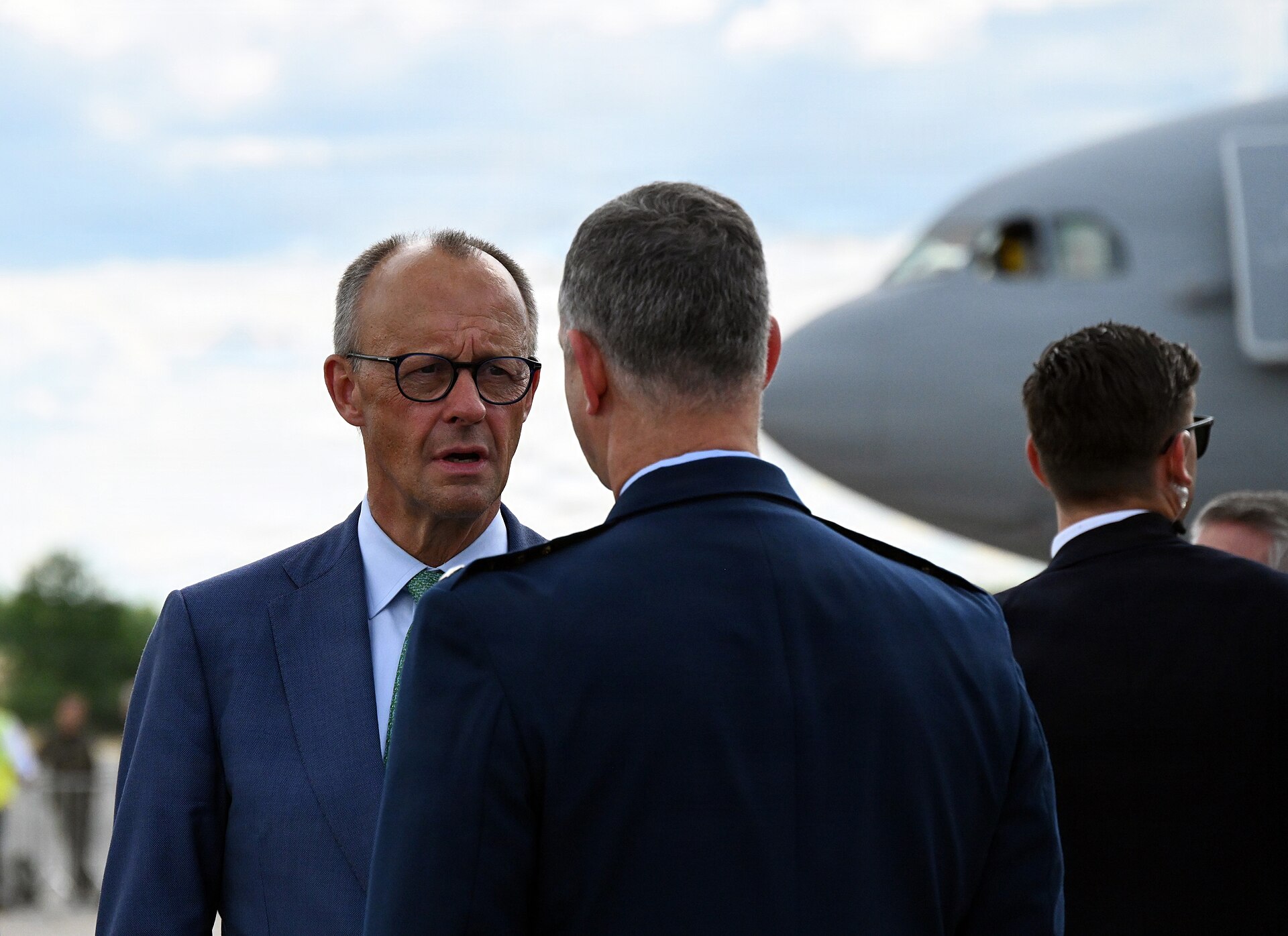
The most powerful soldier in the Atlantic alliance chose the capital of its front-line state to deliver the bluntest warning of his tenure. Speaking at the Warsaw Security Forum on Monday, U.S. Air Force Gen. Alexus Grynkewich — NATO's Supreme Allied Commander Europe and the head of U.S. forces in Europe — publicly unveiled what he called his "theory of victory" for a war the alliance insists it does not want, and addressed the adversary he never once named.
"If someone is foolish enough to attack us, we will fight," Grynkewich said. "We will stop the attack and deny them the ability to achieve their objectives, whatever those may be. We will, in short, ensure any attack, against any ally, proves utterly futile."
The general did not mention Russia by name. He did not need to. NATO's 2022 Strategic Concept formally designates Russia as the alliance's most significant security threat, and every element of the doctrine he described — the geography, the hybrid attacks it answers, the reserves it promises to break — points at Moscow.
A 'theory of victory' in three verbs
Grynkewich organized the alliance's war plan around three verbs: block, blunt and break. NATO forces would block an initial assault at the border, blunt its momentum, and then — the part of the speech written to be quoted in the Kremlin — break the entire machine behind it.
"Should the adversary choose to press the attack or commit his reserves, we will break the warfighting system engaged against us," he said. "This includes not just the attacking force itself, but anything and everything that supports, sustains, and controls that force." Reuters summarized the doctrine plainly: NATO would strike beyond the front lines, destroying anything and everything involved in sustaining an attack, rather than confining its response to the troops who crossed the line.
That is a deliberate escalation of rhetoric from the alliance's usual language of proportional response. Military deterrence works by removing doubt about consequences, and Grynkewich's formulation removes two specific doubts: that an attacker could limit the war by limiting his own first move, and that the infrastructure behind an attack — command nodes, logistics, the systems that "support, sustain and control" — would sit safely behind the front. Under the doctrine he described, it would not.
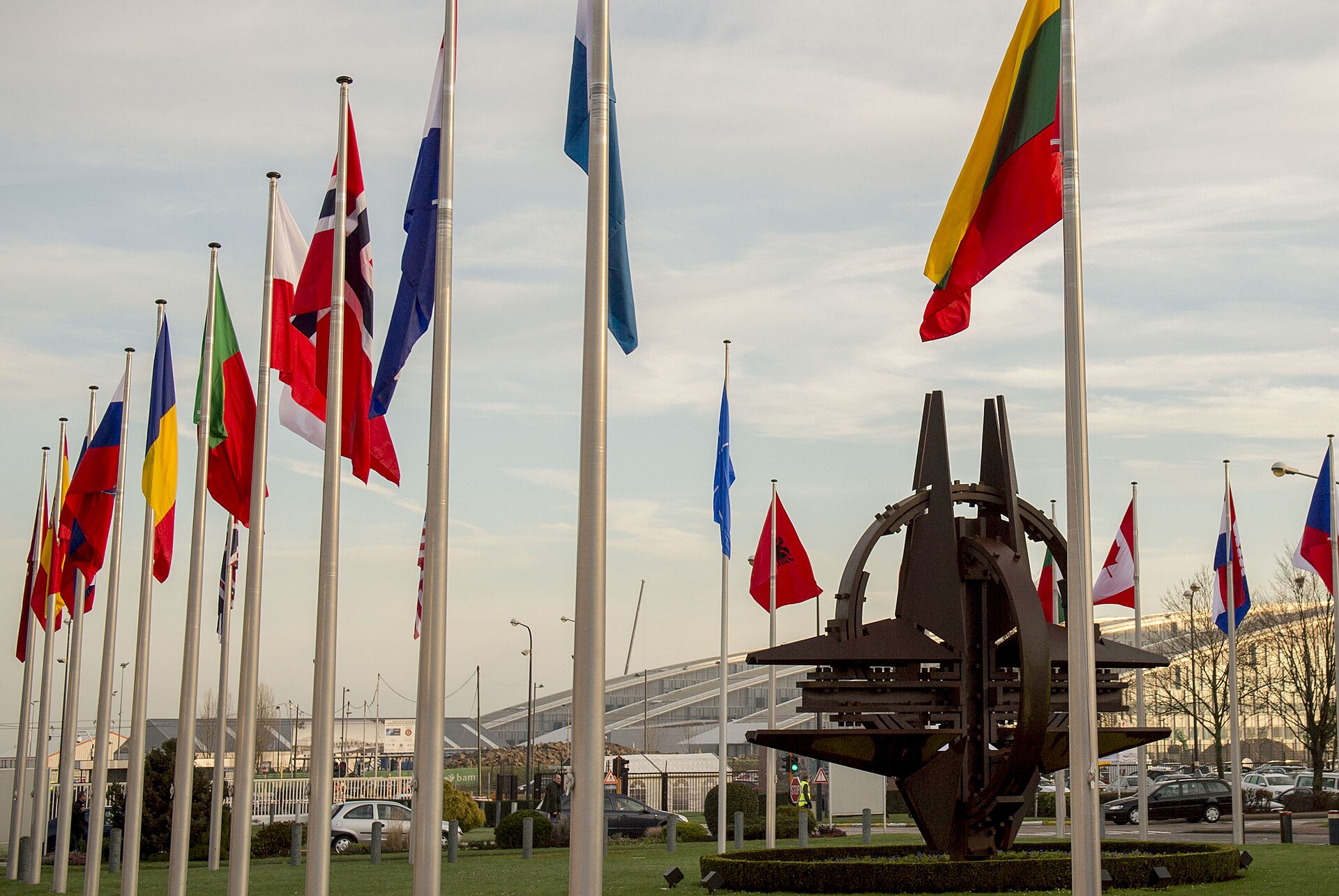
A message to allied publics, too
Half the speech was aimed over Moscow's head at the alliance's own citizens. "I think our populations around the alliance are a bit nervous," Grynkewich acknowledged. "What I want to do is assure the one billion citizens of our alliance that we've got this. We know what we need to do. We know how we would do it." And then the line aimed at anyone reading restraint as hesitation: no one, he said, should mistake the alliance's defensive nature for weakness or lack of resolve.
The nervousness he described has specific sources. European governments have spent two years accusing Moscow of a widening hybrid campaign — sabotage, drone incursions into allied airspace and cyberattacks — conducted below the threshold that would trigger NATO's Article 5 collective-defense clause. The open question hanging over the alliance is whether its political unity, and specifically Washington's commitment, would hold at the moment the threshold is crossed. Grynkewich, an American general speaking in Poland, was the alliance's answer to that question in uniform. He also praised Ukraine's fight — a notable choice of emphasis, given the week in Washington.
Why the warning landed when it did
The timing was impossible to separate from the politics. Days before the Warsaw speech, President Donald Trump struck a deal with Vladimir Putin under which Russia would supply diesel fuel to global markets — an agreement condemned by European leaders and by members of the president's own party, who argued Washington should not ease pressure on Moscow while it escalates against Ukraine and probes Europe. On Oct. 10, Trump lashed out at Ukrainian President Volodymyr Zelenskyy, calling for leadership change in Kyiv and blaming him for refusing a deal. On Monday, asked about Russian strikes that followed his own energy-ceasefire announcement, Trump declined to condemn Moscow and said Putin wants a deal more than Zelenskyy does — remarks we reported separately here.
The result, as USA Today put it, is that European allies have once again been left wondering whether they could count on Washington to come to their defense. Estonia's foreign minister, Margus Tsahkna, told the paper that giving "the aggressor" additional revenue would not bring a just and lasting peace any closer, and that only sustained support for Ukraine and increased pressure on Russia can. Grynkewich's speech — reassurance delivered by the American officer who would actually command the war — was the counterweight: whatever the diplomatic weather in Washington, the military guarantee was stated on the record, in Warsaw, in the strongest available terms.
Russia's stated position
Moscow's public position runs in the opposite direction. Russian officials have repeatedly insisted that Russia has no intention of attacking NATO, and they frame the alliance — its enlargement, its deployments on Russia's borders and its members' sharply higher military budgets — as the escalating party. From the Kremlin's stated view, Western warnings of a Russian attack are a pretext for militarization and record defense spending, and it is NATO's posture, not Russia's, that raises the risk of a wider war. Russian officials had not issued a specific response to Grynkewich's Warsaw remarks in the first reports of the speech.
One Russian statement from last month framed the backdrop to Monday's exchange: Moscow warned that it could use nuclear weapons if NATO attempted to cut off Kaliningrad, Russia's Baltic exclave wedged between alliance members Poland and Lithuania. Alliance officials treat such warnings as part of the same contest of signals Grynkewich was playing in Warsaw — each side pricing the other's red lines in public, in advance, precisely so that neither has to test them in fact.
Spending, readiness and what did not happen
The doctrine rests on material the alliance has been assembling since 2022. Allied governments have committed to far higher defense spending over the coming decade, eastern-flank states have been the fastest movers, and NATO's regional defense plans — the detailed, country-by-country schemes Grynkewich commands — are the framework into which that money is supposed to flow. The general's confidence in Warsaw was presented as a product of that buildup: an alliance that knows "what we need to do" and "how we would do it."
Just as notable was what the speech did not contain. Le Monde, covering the address, noted that some observers had expected announcements — revisions to NATO's defense plans, or new troop deployments on the eastern flank — and none came. The event was a doctrine speech, not a deployment order. Its purpose was communicative: to fix in the minds of three audiences — Moscow, allied publics and Washington — a single sentence each. To Moscow: an attack fails. To allied citizens: we've got this. To anyone doubting the guarantee: the commander has said, on the record, that he will fight.
What happens next
Deterrence speeches are judged by what follows them. The practical tests are readiness measures on the eastern flank, the pace of allied spending as budgets come due, and whether the hybrid campaign Grynkewich's doctrine implicitly answers — the sabotage, incursions and cyber operations that stay below Article 5 — continues, slows or changes shape. The diplomatic test runs in parallel: the same week produced a U.S.-brokered energy ceasefire whose violations Kyiv catalogued within hours (we covered the fallout here) and a public American refusal to condemn them. Grynkewich's Warsaw doctrine and Trump's ceasefire diplomacy are now the two halves of Western strategy toward Russia — one promising overwhelming force if the alliance is touched, the other testing whether a deal can be had first. Which half Moscow believes is the question both were written to answer.
Sources: USA Today (Oct. 12, 2026); Reuters (Oct. 12, 2026); Le Monde (Oct. 12–13, 2026). Photographs: U.S. military / Texas Air National Guard (public domain); © EU.