The Myanmar ASEAN ties review was announced to parliament in Naypyidaw on Wednesday: Min Aung Hlaing said his administration is reconsidering the country’s relationship with the Southeast Asian bloc, would keep talking to its members, and plans a peace conference in February aimed at ending the civil war.
Track it live: Live wars tracker
NAYPYIDAW, Myanmar, November 18, 2026 — Myanmar’s military-backed leader, Min Aung Hlaing, told parliament in Naypyidaw on Wednesday that his administration is reconsidering the country’s relationship with the Association of Southeast Asian Nations (ASEAN), but would continue discussions with its members, Reuters reported. The Myanmar ASEAN ties review lands three days after ASEAN leaders, meeting in Manila without Myanmar’s leaders, said they may consider gradually restoring Myanmar’s full political representation if the country makes progress on the bloc’s five-point consensus — and in the same speech, Min Aung Hlaing announced plans for a peace conference in February aimed at ending a civil war that has killed more than 100,000 people. Two announcements, one about Myanmar’s place in its region and one about ending its war, were delivered in a single rare public address. What each of them means depends on follow-through that has not yet been specified, and this article keeps what was said, what the wires reported, and what remains unknown in separate compartments.
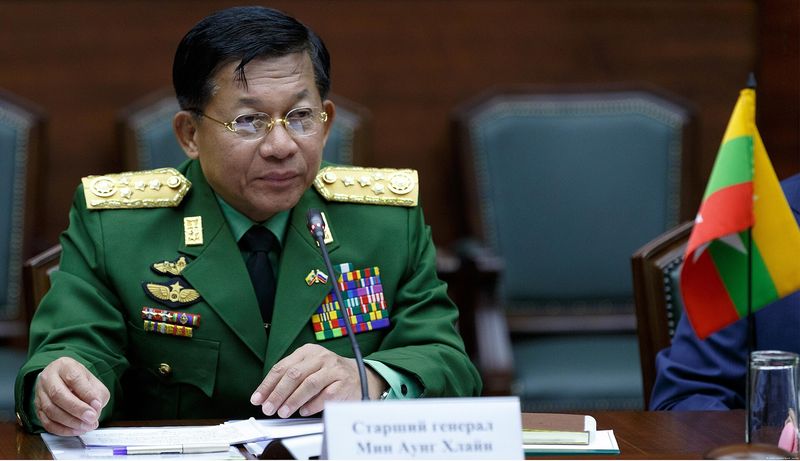
What happened
The core of Wednesday’s speech, as Reuters reported it, was a statement of reconsideration rather than rupture. Min Aung Hlaing told parliament that his administration is reconsidering Myanmar’s relationship with ASEAN, while adding that discussions with the bloc’s members would continue. His words, quoted by Reuters, were these: “For Myanmar and ASEAN to resume normal relations, we will take into consideration Myanmar’s stance and the intentions of ASEAN member countries. We will continue to discuss with ASEAN member countries.” A second wire account, Bloomberg’s reporting carried by BusinessMirror, rendered the same passage in stronger terms: “Moving forward, our government has decided to review and reconsider our relationship with Asean,” he said, in what Bloomberg described as a rare public speech at parliament in Naypyidaw. The two accounts agree on the substance — a review, announced publicly, with talks continuing — and differ mainly in emphasis, which is worth noting because the difference between “reconsidering” and “has decided to review and reconsider” is the difference between a signal and a decision. Both wires attribute the words to the same speech; neither reported any formal notice to ASEAN, any deadline for the review, or any stated consequence if it concludes against the current relationship.
The second announcement in the speech was the peace conference. Min Aung Hlaing said he plans to hold a peace conference in February, aiming to end the fighting within his five-year term, Reuters reported. Few details were provided: no venue beyond implication, no list of invited parties, no agenda and no statement of who would mediate or chair it were reported. Reuters noted that it would be the first such conference since he became president. The framing matters for what follows in this article: a February conference aimed at ending a nationwide civil war is a large promise attached to a small amount of published detail, and everything about its credibility — who is invited, on what terms, with what ceasefire arrangements in the meantime — sits in the unspecified space.
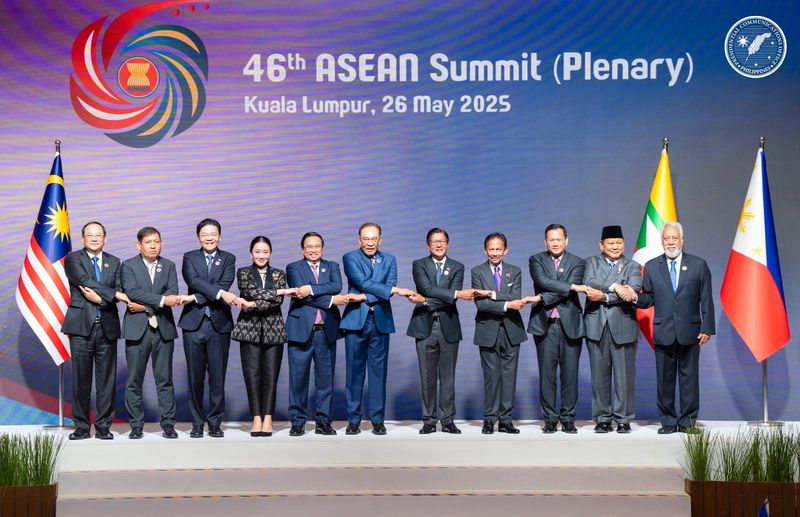
The timing of the speech is part of the record too. ASEAN’s leaders met this week in Manila without Myanmar’s leaders, who remain barred from the bloc’s political-level meetings. In a statement on Sunday, November 15, the leaders said they may consider gradually restoring Myanmar’s full political representation if Myanmar makes progress on the five-point consensus, Reuters reported. The leaders agreed to what they called “calibrated engagement” with Myanmar, through a “phased and progress-based” approach conditional on “sustained and concrete” progress. This newsroom’s coverage of that decision, ASEAN faces pressure to ease the Myanmar ban as leaders review the five-point consensus in Manila, set out the Manila statement in full. Three days later, Naypyidaw answered — not with a response addressed to the statement, but with a speech announcing that the relationship itself is under review. The Philippines’ foreign ministry, which currently chairs ASEAN, did not immediately respond to a Reuters request for comment on the speech.
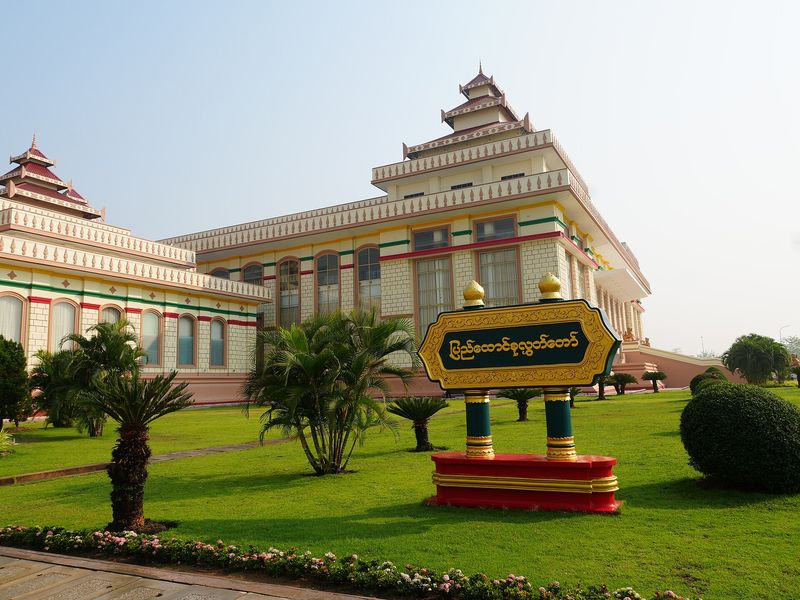
Why this matters
Analysis: the speech matters because it moves two files that have been stuck for years, and it moves them in opposite emotional directions at once. The ASEAN review is, on its face, a complaint — a public statement by Myanmar’s leader that the relationship as currently structured is being reconsidered by the party that has been partially excluded from it. The peace conference is, on its face, an offer — a named month, a stated aim of ending the war within a five-year term, and the first conference of its kind since he became president. Either announcement alone would be a significant diplomatic story. Together, they describe a government simultaneously pushing back against the regional framework that has judged it and proposing a domestic process that the same framework has demanded since 2021: the five-point consensus calls, among other things, for constructive dialogue among all parties in Myanmar. Whether the February conference is intended to answer that call, to run parallel to it, or to substitute a Naypyidaw-run process for an ASEAN-mediated one is precisely the question the speech leaves open — and it is the question on which the region’s response will turn.
A review announced from inside the room Myanmar is shut out of
There is an asymmetry at the centre of the story. ASEAN’s Manila statement offered a path back: gradual restoration of full political representation, in phases, in exchange for sustained and concrete progress on the consensus. Naypyidaw’s answer, three days later, reframed the negotiation: it is not only Myanmar’s conduct that is under examination, the speech said, but the relationship itself, and Myanmar’s stance will be weighed alongside the intentions of ASEAN’s members. Read neutrally, that is bargaining language — an insistence that restoration is a two-sided transaction rather than a one-sided test. Read against the bloc’s own wording, it is also a partial acceptance of the frame: the quote Reuters carried speaks of Myanmar and ASEAN resuming “normal relations,” which concedes that relations are not normal now, and promises continued discussion with member countries, which concedes that the channel matters. Nothing in the reported speech withdrew Myanmar from ASEAN, threatened withdrawal, or set a condition. The review is a lever, and levers are pulled to change the terms of a negotiation, not usually to end it.
The peace conference as the other half of the message
The February announcement gives the speech its second audience: Myanmar’s own combatants and the foreign capitals watching the war. A peace conference with a stated aim — ending the fighting within a five-year term — is a different kind of statement from the ceasefire appeals and unilateral truces that have punctuated the war. It implies a table, participants and an outcome. But the published record, as Reuters reported it, contains few details, and the history set out below is the reason analysts will wait for them: every previous framework for ending this war has foundered not on the announcement but on the guest list, the agenda and the guns that kept firing while talks were proposed. This article takes no position on whether February will be different. It notes only that the speech itself supplied the test by which it will be judged: invitations, terms, and whether the bombing campaign Reuters describes continues in the meantime.
Context and background
The war and the diplomatic freeze share a single origin. Min Aung Hlaing’s coup in 2021 triggered the nationwide civil war that Myanmar is still fighting, Reuters reported — a conflict that began with the military’s seizure of power and spread into armed resistance across much of the country. ASEAN responded within months. The five-point consensus, adopted soon after the 2021 coup, calls for an immediate end to violence, constructive dialogue among all parties, ASEAN mediation and humanitarian assistance. It has been the bloc’s stated framework ever since, and Myanmar’s progress against it — or, in the assessment of ASEAN’s statements over the years, the lack of it — is the formal reason Myanmar’s leaders have been excluded from the bloc’s political-level summits, including this week’s meeting in Manila. This newsroom’s earlier reporting on the war’s toll, Myanmar’s civil war death toll passing 100,000, documents the conflict whose end the February conference is now promised to pursue.
Two features of that background bear directly on Wednesday’s speech. The first is the consensus itself: because it demands dialogue among all parties and offers ASEAN mediation, any peace process Naypyidaw runs on its own sits in an ambiguous relationship to it — potentially a step toward the consensus’s second point, potentially a route around its third. The second is the aid grievance that Bloomberg’s account surfaced. Min Aung Hlaing criticised that Myanmar received only around $30 million in humanitarian aid from ASEAN’s AHA Centre during natural disasters, Bloomberg reported via BusinessMirror. Humanitarian assistance is the consensus’s fifth point; a public complaint that the bloc’s aid fell short is, in effect, Naypyidaw’s counter-entry in the ledger — an argument that if Myanmar is to be measured against the consensus, ASEAN’s own delivery under it should be measured too. That argument is reported here as his, attributed to Bloomberg’s account of the speech; ASEAN has not, in the reporting available, answered it.
The angles
Naypyidaw’s case, as the speech made it
The speech’s own logic, assembled from the two wire accounts, runs as follows. Myanmar’s leader says the relationship is being reviewed and reconsidered — a decision, in Bloomberg’s rendering, not a passing remark. He says normal relations require taking into account both Myanmar’s stance and the intentions of ASEAN’s member countries. He says discussions with those countries will continue. He points, through the visits he has made since taking office in April, to direct evidence about those intentions: the leaders of Laos, Cambodia, Thailand and Malaysia, whom he visited, told him they wish to see him attending ASEAN summits, Bloomberg reported. And he enters a grievance on the aid ledger: around $30 million from the AHA Centre during natural disasters. Taken together, the case is that Myanmar is not isolated within its own region in the way the summit seating plan suggests — that individual member states have told its leader they want him in the room — and that the relationship’s problems run in both directions. Each element of that case is attributed here to the reporting of the speech; the claims about what four leaders said in private are his account of those meetings, reported by Bloomberg, and have not been independently confirmed in the coverage available.
ASEAN’s position, as Manila stated it
The bloc’s position, as of Sunday, is a conditional offer with the conditions spelled out. ASEAN’s leaders said they may consider gradually restoring Myanmar’s full political representation if Myanmar makes progress on the five-point consensus. They agreed on “calibrated engagement” — a “phased and progress-based” approach — conditional on “sustained and concrete” progress. The language is deliberately graduated: nothing is restored at once, everything is earned in stages, and the measure is the consensus adopted after the coup. From Manila’s side of the table, then, Wednesday’s speech contains one element that fits the framework and one that challenges it. A February peace conference aimed at dialogue speaks, at least in outline, to the consensus’s demand for constructive dialogue among all parties. A unilateral review of the relationship, announced three days after the offer, speaks to a different proposition: that the terms themselves are negotiable. The Philippines, as current ASEAN chair, is the capital that would ordinarily answer first; its foreign ministry did not immediately respond to Reuters’ request for comment, and as of the reporting relied on here, the bloc has issued no reply.
The view from the battlefield
The third angle is the one neither capital’s statement addresses directly: the war itself, which continued on its own schedule while the statements were exchanged. Reuters reported that the military has stepped up a bombing campaign, including airstrikes killing large numbers of civilians. That sentence sits in the same Reuters account as the peace conference announcement, and the juxtaposition is the central credibility question for February. A conference to end the fighting, announced by the leader whose forces are reported to be intensifying an air campaign, will be assessed by every invited party — and by ASEAN, applying its “sustained and concrete” test — against what happens in the air between now and February. This article states that as an analytical observation about how the announcement will be received, not as a prediction: the facts available are the announcement, the reported bombing campaign, and the absence, so far, of any reported ceasefire accompanying the conference plan.
What the member-state visits suggest
A final angle concerns ASEAN’s internal geometry. The bloc decides by consensus among its members, and its Myanmar policy has always had to hold together governments with different instincts about engagement and isolation. Min Aung Hlaing’s claim — reported by Bloomberg — that the leaders of Laos, Cambodia, Thailand and Malaysia told him they wish to see him at summits is, if accurate, evidence that the calibrated-engagement formula adopted in Manila reflects real divisions of emphasis inside the bloc: a phased path back exists in the statement precisely because some members wanted a path. If the claim is not accurate, it is still doing work in the speech, signalling to the harder-line members that Naypyidaw believes it has friends in the room. Either way, the claim is his, attributed to Bloomberg’s reporting, and the four governments named have not confirmed it in the coverage available to this article.
The numbers
The figures in this story are few, and each carries its attribution. More than 100,000 people have died in the civil war and millions have been displaced, in Reuters’ wording — the scale against which both the peace conference promise and the five-point consensus’s demand for an immediate end to violence are measured. Around $30 million is the figure Min Aung Hlaing cited, per Bloomberg, for the humanitarian aid Myanmar received from ASEAN’s AHA Centre during natural disasters — his measure of the bloc’s delivery under the consensus’s assistance point. Four is the number of member-state leaders — of Laos, Cambodia, Thailand and Malaysia — whom he said, per Bloomberg, told him they want him attending ASEAN summits, from visits made since he took office in April. Five is the number of points in the consensus itself: an immediate end to violence, constructive dialogue among all parties, ASEAN mediation and humanitarian assistance among them, adopted soon after the 2021 coup. Five years is the term within which he aims to end the fighting, per Reuters. And three is the number of days between ASEAN’s Manila statement on Sunday, November 15, and the Naypyidaw speech that answered its logic on Wednesday, November 18 — a gap short enough that the two documents will be read, in every regional capital, as a single exchange.
What happens next
Analysis and open questions, not predictions. The first test is procedural: a review of ASEAN ties, to mean anything, must produce something — a statement of terms, a set of demands, a communicated position to the bloc or its chair. Watch for any formal communication from Naypyidaw to the Philippines as chair, and for the reply Manila has not yet given to the speech itself. The second test is the conference: February is close, and a real peace conference generates paper — invitations, a venue, an agenda, named participants, ceasefire arrangements. Each of those, as it appears or fails to appear, will tell combatants and capitals whether the announcement was the start of a process or a line in a speech. The third test is ASEAN’s own framework: the Manila formula restores representation in phases against sustained and concrete progress, so the bloc’s next statements will reveal whether it counts a Naypyidaw-run conference toward the consensus’s dialogue point, or insists on the mediation point as well. The fourth test is the war: Reuters’ reporting of a stepped-up bombing campaign means the interval between the speech and February will be measured, by everyone watching, in airstrikes as much as in diplomacy. For now, the established record is short enough to state in full. On Sunday, ASEAN offered Myanmar a phased path back, conditional on progress. On Wednesday, Myanmar’s leader told his parliament that the relationship is under review, that talks with member countries will continue, and that a peace conference will be held in February to end a war that has killed more than 100,000 people. Everything else — the review’s outcome, the conference’s guest list, the bloc’s reply — is still to come.
Related coverage: ASEAN Faces Pressure to Ease Myanmar Ban as Leaders Review Five-Point Consensus in Manila · Myanmar Civil War Death Toll Passes 100,000 as UN Says Military Deliberately Targets Civilians
Sources
Sources: Reuters, November 18, 2026 — report of Min Aung Hlaing’s address to parliament in Naypyidaw (wncy.com): that Myanmar’s military-backed leader told parliament on Wednesday, November 18 that his administration is reconsidering the country’s relationship with ASEAN but would continue discussions with its members; the direct quote, “For Myanmar and ASEAN to resume normal relations, we will take into consideration Myanmar’s stance and the intentions of ASEAN member countries. We will continue to discuss with ASEAN member countries”; the plan for a peace conference in February, aiming to end fighting within his five-year term, with few details provided and the conference the first since he became president; that his 2021 coup triggered the nationwide civil war; that ASEAN met this week in Manila without Myanmar’s leaders and that the leaders’ statement on Sunday, November 15 said they may consider gradually restoring Myanmar’s full political representation if Myanmar makes progress on the five-point consensus, agreeing “calibrated engagement” via a “phased and progress-based” approach conditional on “sustained and concrete” progress; the five-point consensus’s contents (immediate end to violence, constructive dialogue among all parties, ASEAN mediation and humanitarian assistance, adopted soon after the 2021 coup); that more than 100,000 people have died and millions have been displaced; that the military has stepped up a bombing campaign including airstrikes killing large numbers of civilians; and that the Philippines’ foreign ministry (current ASEAN chair) did not immediately respond to a request for comment. Bloomberg, November 18, 2026, via BusinessMirror — “Myanmar Pres. protests ASEAN treatment, says reviewing ties” (businessmirror.com.ph): the quote “Moving forward, our government has decided to review and reconsider our relationship with Asean”; that the speech was a rare public address at parliament in Naypyidaw; that the leaders of Laos, Cambodia, Thailand and Malaysia, whom he visited since taking office in April, told him they wish to see him attending ASEAN summits; and his criticism that Myanmar received only around $30 million in humanitarian aid from ASEAN’s AHA Centre during natural disasters. Photographs: file photographs by Vadim Savitsky / mil.ru (CC BY 4.0), the Presidential Communications Office of the Philippines (public domain) and Zawzawaungthwin (CC0), all via Wikimedia Commons and credited in the captions; none depicts Wednesday’s speech.