War · Myanmar · Karen State · Sagaing
On Tuesday, an explosive drone detonated over a Christian Bible school in Hpapun District, killing students in and around its dormitory. The next evening, a jet bombed a public hospital in Sagaing Region, killing at least eight people by local accounts — among them, the World Health Organization says, at least five health workers.
Track it live: Live war tracker — follow Myanmar and the world's active conflicts
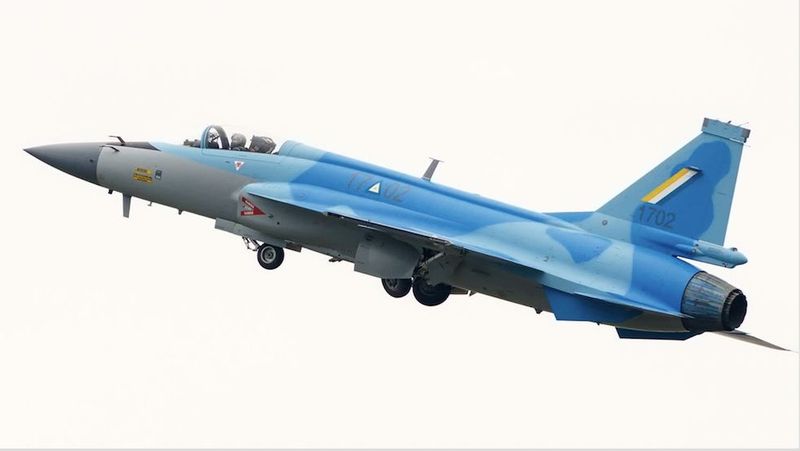
HPAPUN, Karen State — In roughly 28 hours this week, Myanmar’s air war found two of the places international law protects most absolutely: a school and a hospital. On Tuesday, November 3, military jets dropped more than ten bombs across Hpapun (Mutraw) District in Karen State, followed by an hour-long bombardment by armed drones, according to Christian Solidarity Worldwide (CSW, November 5). One explosive drone detonated directly over a Christian Bible school; by the time the wounded had been carried across the Salween River into Thailand the next day, three young women students were dead. On Wednesday evening, November 4, a jet struck a public hospital in Kawlin Township, Sagaing Region, killing at least eight people according to local sources — a toll the head of the World Health Organization said included at least five health workers. As our recent reporting on a civil war death toll that UN experts say has passed 100,000 showed, these strikes are that larger story told in two afternoons.
What happened in Hpapun: a Myanmar junta airstrike on Karen State
The CSW Bible school attack in Myanmar, as first reported
CSW’s statement describes an attack beginning at about 3 to 4 p.m. on Tuesday, when jets bombed villages across Hpapun District and armed drones then worked over the area for about an hour. In Day Bu Noh village, CSW said, an explosive drone detonated directly above a Christian Bible school: two female students were killed instantly and seven injured. The Karen National Liberation Army’s Central Military Headquarters described a wider matching operation: two jets made five bombing runs with 500-pound bombs between 3 and 5 p.m. on November 3 against villages in Lu Thaw Township, Mutraw District — Depuno, Phawsepu, Klaw Baw Hta and Lay Na Day — damaging schools and Bible schools.
The same attack, a second account: HURFOM and the Hpapun airstrike’s students killed
The Human Rights Foundation of Monland (HURFOM), also reporting November 5 and citing local sources, describes what appears to be the same strike with different details: the drone hit the girls’ dormitory of a Bible school in Ler Nar Der village, Bu Tho Township, in the Karen National Union (KNU) Brigade 5 area, at about 4 p.m., killing two at the scene and injuring nine. The two accounts differ — Day Bu Noh versus Ler Nar Der as the village name, seven versus nine injured — and Signal Post News cannot independently reconcile them from outside a closed conflict zone. Village names in this border district are rendered differently across Karen, Burmese and English sources, and early casualty counts routinely shift as the wounded are counted along an evacuation route. What does not differ is the core fact pattern: a drone strike on a Bible school dormitory area, two students dead at the scene, and no fighting under way nearby. Both CSW and HURFOM state that there was no active fighting in the area at the time of the attack.
Across the Salween: the evacuation into Thailand
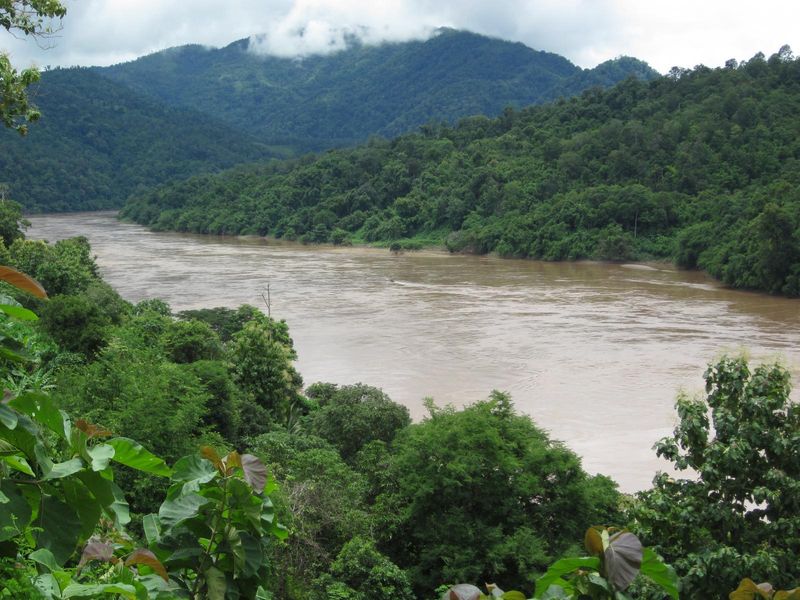
The border here is a river, and on November 4 it became the evacuation route. The two most critically injured students were carried by boat across the Salween River into Thailand’s Mae Hong Son Province, where, the Thai outlet Khaosod reported, health staff at Mae Sam Laep received them. One died while awaiting transfer onward to Sop Moei Hospital, bringing the toll to three students killed, with the surviving injured put at six by CSW and eight by HURFOM — the same reporting gap that separates the two accounts of the strike itself.
CSW’s chief executive, Scot Bower, condemned the strike: “CSW is outraged and appalled by the junta’s deliberate attack on a Christian Bible school in Hpapun District, which claimed the lives of three young women and injured six others.” That word — deliberate — is CSW’s characterisation, and should be read as such: no independent judicial investigation has established that the school was deliberately targeted, and Myanmar’s military had not commented on this specific attack in the reporting available. Its standing position, stated in response to earlier accusations, is that it strikes only legitimate military targets and that resistance groups it describes as terrorists operate among civilians.
The next evening: a Myanmar hospital airstrike in Kawlin
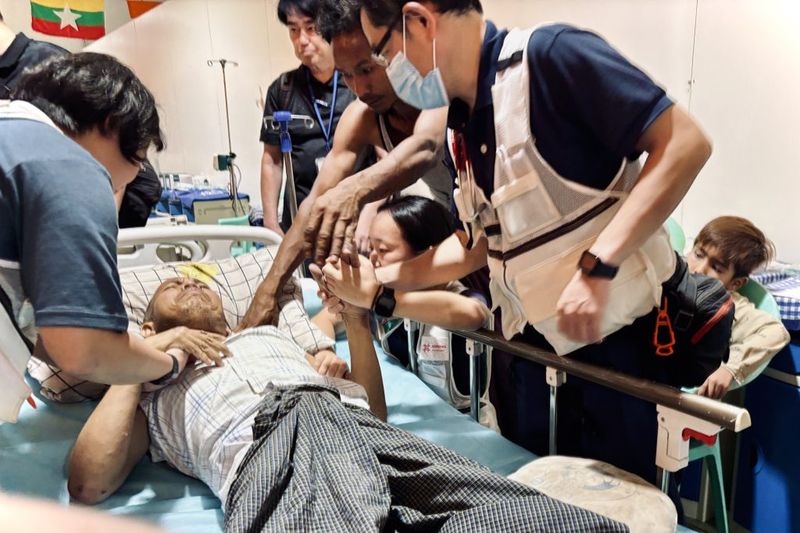
A day later, the second strike hit the other protected institution. At about 7 p.m. on Wednesday, November 4, a military jet bombed a public hospital between Pepinchaung and Hlawphyukone villages in eastern Kawlin Township, Sagaing Region, according to local sources reported on November 5 and 6, including in the m.CDM domestic news roundup, with Myanmar Now reporting referenced in analysis coverage. Local sources said at least eight people were killed, including a doctor participating in the Civil Disobedience Movement (CDM) — the strike movement of civil servants and professionals who refused to work under the junta after the 2021 coup — and that there was no ongoing fighting in the area at the time. Military supporters have accused the facility of operating under the National Unity Government (NUG), the parallel administration formed by ousted lawmakers and their allies — a claim Signal Post News attributes to those supporters and cannot independently verify; the military had not issued a statement on the Kawlin strike in the reporting available.
Myanmar attacks on health care in 2026: the WHO count reaches 65
WHO Director-General Tedros Adhanom Ghebreyesus posted on November 5 that the November 4 attack on health in Kawlin Township, Sagaing, reportedly killed at least five health workers, bringing attacks on health care in Myanmar in 2026 to 65, with 63 deaths. The two Kawlin figures — at least eight total dead locally, at least five of them health workers per the WHO chief — are compatible, not contradictory: one counts everyone killed, the other the medics among them. The cumulative numbers are the harder to read past: 65 attacks on health care in a single country in a single year, 63 dead, and the year not over.
Why this matters
When the Myanmar military bombs a school and a hospital, it is a pattern, not an exception
Analysis, clearly labelled: what makes this week significant is not that two protected sites were hit — it is how routine that has become. Myanmar Witness has documented more than 300 airstrikes on religious sites alone — churches, mosques and monasteries — between January 2024 and December 2025. UNICEF warned on November 3, the day of the Hpapun strike, that children are being killed in schools and clinics: an October 31 airstrike hit a school for displaced children in Loikaw Township, Karenni State, killing three children and injuring five, and weekend strikes in Rakhine hit a temporary clinic, killing a newborn and health workers. On October 25, a jet dropped four bombs on Mae Nu Hta village, also on the Salween, killing a child. Against that record, a Bible school on Tuesday and a hospital on Wednesday are not anomalies; they are the air campaign’s recurring subjects. Nor is the pattern Myanmar’s alone: in Ukraine, a strike on a humanitarian aid point in Komyshuvakha has produced a toll since risen to 53 — a reminder, across our War section, of how widely protection for civilian infrastructure is eroding.
A war waged from the air
The strategic logic is documented too. ACLED assessed on October 1 that the junta’s air campaign escalates when it suffers ground losses — and it has lost control of much of the country since the 2021 coup, in a war that has displaced some 3.7 million people, according to analysis reporting. An army that cannot hold territory can still fly over it. Aircraft and drones are the one capability the resistance cannot match, and they fall increasingly on the institutions that make resistance-held territory governable: its schools, clinics and places of worship. Whether any individual strike is deliberate in the legal sense is for investigators; that the campaign’s weight falls on civilian infrastructure is a question the numbers have answered.
Background: the war behind the strikes
Myanmar’s civil war began with the coup of February 1, 2021, when the military overturned an elected government and detained its leaders; the protests that followed were met with lethal force, and armed resistance spread nationwide alongside long-established ethnic armed organisations. Karen State’s place in the war is older than the coup: the KNU has fought for Karen self-determination for decades, and the Karen Christian communities of districts like Hpapun — where Bible schools are central institutions — have lived within reach of the military’s aircraft through successive campaigns. Meanwhile the CDM built a parallel civilian state: doctors, nurses and teachers who walked out of junta institutions in 2021 now staff clinics and schools under the NUG and allied administrations, from converted buildings to jungle hospitals. That is the infrastructure this war is now fought over — and monitors insist on the legal point that medical care does not lose its protection because of who administers it.
Who gains, who loses — and what each side says
The gains from such an air campaign are narrow and short-term: pressure on resistance administrations, deterrence of the communities that sustain them, and a demonstration of reach over territory the military cannot garrison. The losses compound. Each strike on a school or clinic deepens the grievance recruitment feeds on, pushes border communities toward Thailand, and adds documented incidents to the files of the UN’s Independent Investigative Mechanism for Myanmar (IIMM), which prepares cases for future prosecution. Critics and monitors — CSW, HURFOM, UNICEF and the WHO among them this week — describe a campaign against civilians and their institutions; the military’s stated position remains that its operations target armed resistance and legitimate military objectives, and it has previously accused resistance groups of operating from civilian areas. Between those accounts sit the verified counts — religious sites struck, attacks on health care, the displaced — and they have moved in one direction for two years.
What happens next
Three things bear watching. First, the calendar: the end of the monsoon traditionally opens the year’s heaviest campaigning, and an air force that escalates after ground losses, per ACLED, has both the motive and the dry-season weather to intensify strikes into the new year. Second, the border: every evacuation like the Salween crossing adds pressure on Thailand’s Mae Hong Son Province, whose hospitals absorb the overflow of a war Bangkok does not control. Third, accountability: the IIMM continues to collect exactly this category of evidence — strikes on protected sites, with named victims and dated, sourced accounts — and the Hpapun and Kawlin attacks will enter that record alongside the WHO’s running count, whether or not any court is yet positioned to use it. The immediate question is grimmer: whether this week’s counts — three students, at least eight hospital dead — are where the post-monsoon campaign begins, or merely its latest chapter.
Sources
- Christian Solidarity Worldwide (CSW), statement of November 5, 2026, via The Christian Post, “3 students killed in Myanmar airstrike on Christian Bible school.”
- Human Rights Foundation of Monland (HURFOM), “Three female students killed in junta airstrike on Christian Bible school in Karen State” (November 5, 2026).
- m.CDM domestic news roundup, “November 6, 2026 — m.CDM domestic news” (Moemaka, November 6, 2026).
- World Health Organization Director-General Tedros Adhanom Ghebreyesus, post on the November 4 attack on health in Kawlin Township, Sagaing (November 5, 2026).
- UNICEF statement coverage on children killed in schools and clinics in Myanmar (November 3, 2026); Myanmar Witness documentation of airstrikes on religious sites, January 2024–December 2025; ACLED analysis of Myanmar’s air campaign (October 1, 2026).