War · Myanmar · Elections
The Myanmar by-elections April 2027 are now on the calendar. The military-appointed Union Election Commission says voters in 55 constituencies will go to the polls on April 4, 2027 — including in Sagaing, Chin and Shan townships where the civil war is still being fought — in the first vote since a general election the United Nations and many Western governments dismissed as a sham.
Track it live: Live Global Trackers — Wars
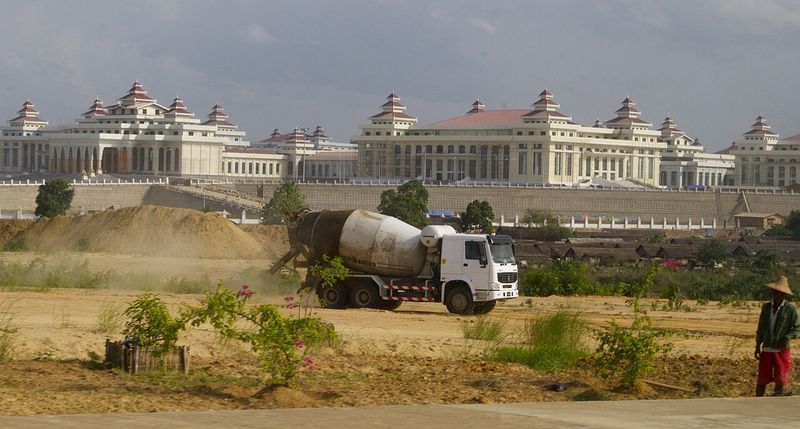
NAYPYIDAW, November 6, 2026 — Myanmar’s military-appointed Union Election Commission has scheduled by-elections for April 4, 2027, to fill vacant parliamentary seats in 55 constituencies, including in areas affected by the country’s civil war, according to state media reports carried on Friday by Reuters, the Associated Press, The Irrawaddy and Bernama-Anadolu. The announcement — UEC Announcement No. 68/2026, dated November 5 and signed by commission chairman U Than Soe, and published in the state-run Myanma Alinn newspaper — sets the first electoral test since the December–January general election returned a parliament dominated by the military-backed Union Solidarity and Development Party (USDP) and made junta chief Min Aung Hlaing president.
The vote will be small in arithmetic and large in symbolism. Fifty-five seats cannot change who governs Myanmar: the USDP already controls 84 percent of the bicameral parliament, and a quarter of all seats in both chambers are reserved for military appointees in any case. What the by-elections will test is something else — whether a ballot can physically be held at all in townships where resistance forces are strong, where the military has only recently recaptured ground, and where, in the judgement of the United Nations experts whose reporting Signal Post News covered in a civil war death toll that has passed 100,000, the armed forces are deliberately attacking civilians.
What was announced: 34 plus 5 plus 16
The 55 constituencies divide into three groups, according to the commission’s announcement as reported by Bernama-Anadolu: 34 seats in the Pyithu Hluttaw, the 440-seat lower house; five seats in the Amyotha Hluttaw, the 224-seat upper house; and 16 seats in region and state legislatures. Voting will be by first-past-the-post, the system used across Myanmar’s elections.
The seats are vacant for two different reasons, the Associated Press reported. Some were left empty when elected representatives gave up their seats to take ministerial or other government posts after the general election, as Myanmar’s rules require. Others are in areas that could not vote at all in December and January because of the fighting. The by-election is therefore two exercises folded into one: a routine filling of ministerial vacancies, of the kind every parliamentary system runs, and an attempt to extend the ballot into territory the state could not reach ten months earlier.
What has not been published is almost as notable as what has. No full campaign calendar accompanied the announcement — no candidate-nomination dates, no campaigning period, no timetable for voter-list publication or advance voting — beyond the polling date itself and the constituency counts. Those details, when they come, will determine how much of a campaign, in any recognisable sense, the April vote will have.
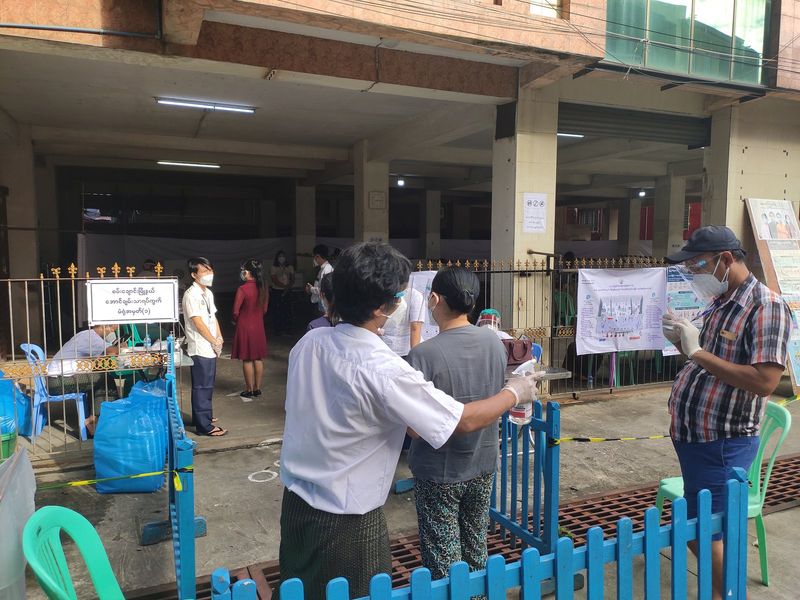
Where the vote will be held — and where it will not
The geography is the story. Several of the by-election seats encompass townships in Sagaing Region and in Chin and Shan states, Reuters reported, where anti-military resistance forces have a strong presence; Mandalay, in central Myanmar, also appears in the reported list. At least seven of the 55 constituencies are in towns the military recently recaptured from armed groups fighting against it, according to the Associated Press — places where control on the ground is new, contested, or both.
Sagaing is the war’s northwestern heartland: a region of local defence forces, repeated airstrikes and burned villages, whose public hospital in Kawlin Township was bombed this week in an attack that killed medics, as Signal Post News reported in Myanmar jets bomb a Bible school and a hospital in two days. Chin State, on the Indian border, is largely contested by Chin resistance forces; Shan State, in the northeast, is a patchwork of ethnic armed organisations, ceasefires and active fronts. Holding a credible ballot across such terrain is a logistical question before it is a political one: voter lists, polling staff, ballots and ballot boxes all have to move through areas where the state’s writ runs unevenly, and where armed opponents of the vote have both the motive and, in places, the means to disrupt it. Whether voting can be held safely in these contested townships is, on the evidence available today, genuinely uncertain — the commission has set a date, not yet demonstrated the conditions.
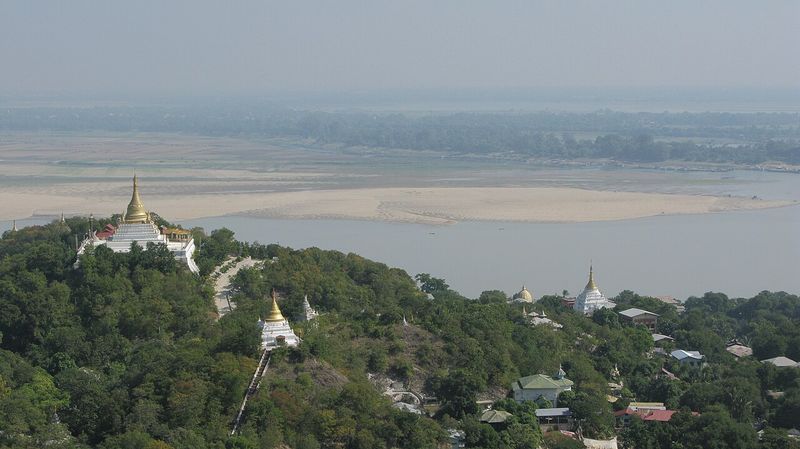
And then there is the map’s blank space. Rakhine State, bordering Bangladesh, is not included in the by-election list at all, Reuters reported, because the military there is locked in fierce fighting with the Arakan Army, the ethnic armed organisation that has seized much of the state. Rakhine’s exclusion is the announcement’s most honest line: where the war is hottest, there will be no vote, and no pretence of one. It is also a measure of the distance between the parliament this process is building and the country it claims to represent — a legislature seated in Naypyidaw while one entire state’s seats stay empty because the state cannot enter much of it.
Why this matters
Analysis, clearly labelled. A by-election round that cannot change the balance of power can still change three other things. First, the map of claimed control: every township that votes in April is a township the government can point to as administered, and every constituency quietly dropped, postponed or held under armed guard is evidence of the opposite. The general election’s own arithmetic conceded the point — voting happened in 692 constituencies while 121 were excluded as outside military control. The April list, reaching into Sagaing, Chin and Shan, is an attempt to shrink that excluded number and to convert recent battlefield recaptures into electoral facts.
Second, the legitimacy argument. The authorities present each completed vote as another step from military rule toward constitutional normalcy: a seated parliament, a civilian-titled president, vacancies filled by due process. Critics — including the UN and the Western governments that called the December–January election a sham — answer that a vote without viable opposition, held under a commission the military appointed, in a country where the elected government of 2020 remains detained or exiled, ratifies power rather than distributing it. The April by-elections will not settle that argument; they will restage it, constituency by constituency, in the places where it is hardest to hold a vote at all.
Third, the security precedent. If polling day in recaptured or contested towns passes quietly, expect the model to be extended — more excluded constituencies folded into future rounds. If it is marred by attacks, boycotts or visibly empty polling stations, the excluded map will harden into a public measure of the state’s limits. Either outcome tells the region something real about where Myanmar’s war is going, which is more than can be said for the parliamentary arithmetic.
Background: from the 2021 coup to an 84-percent parliament
Myanmar has been in turmoil since February 1, 2021, when the military seized power from the elected government and detained its leaders, triggering a civil war that has killed an estimated 100,000 people and displaced more than 3.5 million, according to Reuters’ summary of the conflict’s toll. Resistance that began with protests and a civil disobedience movement hardened into a nationwide armed conflict: local People’s Defence Forces allied, loosely, with ethnic armed organisations that in several border states have fought the military for decades and, since 2023, have taken and held significant territory.
The general election held in phases across December 2025 and January 2026 was the military’s chosen exit from direct junta rule, and it was conducted on the military’s terms. Voting took place in 692 constituencies; 121 were excluded as outside the military’s control. In the absence of any viable opposition — the most popular parties of the pre-coup era dissolved, banned or boycotting — the USDP won overwhelmingly, and it now controls 84 percent of the bicameral parliament, where military appointees separately hold a reserved quarter of seats in each chamber. The United Nations and many Western countries criticised the election as a sham. Junta chief Min Aung Hlaing then became president, converting the commander who ordered the 2021 takeover into the head of state of the order that followed it.
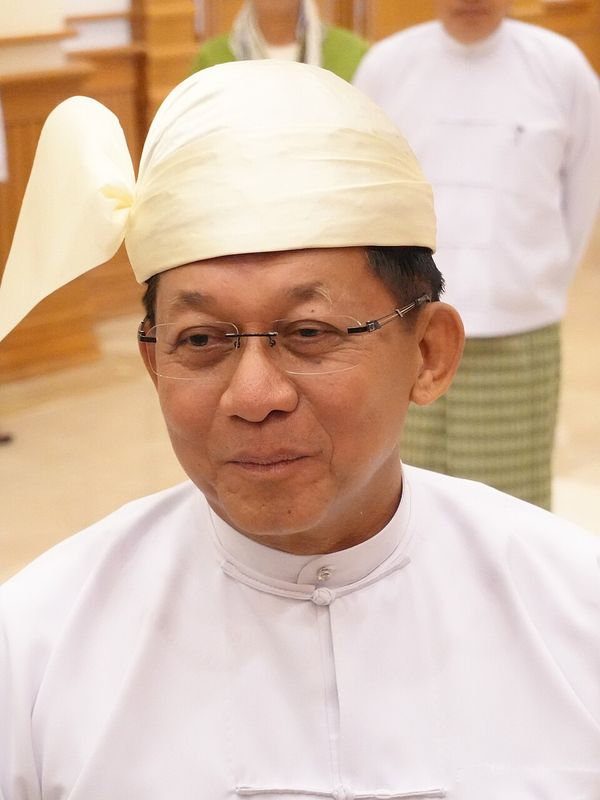
The war, meanwhile, did not pause for the ballots. Airstrikes on civilian infrastructure have continued through the autumn — on schools, hospitals and displacement camps, documented in our reporting on the UN experts’ findings and on this week’s attacks in Karen State and Sagaing. It is into that war — not into a peace — that the April by-elections are being scheduled.
Who benefits, who loses — and how each side frames it
The clearest beneficiaries are the incumbents of the new order. For the USDP and the government of President Min Aung Hlaing, a completed by-election round fills the legislature, rewards local allies in recaptured towns with winnable seats, and produces fresh imagery of ballots being cast under the government’s auspices. The commission’s own framing, as carried in state media, is procedural and constitutional: vacancies exist, the law provides for by-elections, and constituencies that missed the general election are being given their vote. On that reading, April 4 is simply the electoral machinery completing its work.
The critics’ framing is the mirror image. Opposition movements and exiled pro-democracy figures, along with the governments that rejected the general election, argue that extending a discredited process into war zones does not broaden representation but launders control: parties that might win in Sagaing or Chin are banned, detained, exiled or fighting, and a ballot offered on those terms asks voters to legitimate the power that displaced them. Resistance organisations, for their part, have treated the military’s elections as an extension of the war by other means and have disrupted earlier rounds where they could; whether they call a boycott, attempt disruption, or ignore the April vote will vary township by township, and none of those positions had been formally declared in the reporting available on Friday.
Between the two framings sit the voters of the 55 constituencies themselves, for whom the calculation is practical as much as political: registration lists compiled by a contested administration, polling stations that may or may not be safe to approach, and candidates among whom, in many places, no figure from the movements they supported in 2020 will appear. Turnout — where it can be measured credibly at all — will be read by both sides as a verdict, which is precisely why it will be disputed.
The numbers, in context
The figures repay a slow read. Fifty-five constituencies is a small fraction of the 813 national and regional seats contested in a full general election cycle — but it is nearly half the size of the bloc the general election could not reach: 121 constituencies were excluded in December and January as outside military control, and the April round is explicitly aimed at part of that remainder, alongside the ministerial vacancies. Thirty-nine of the 55 seats are in the two national chambers (34 lower house, five upper house); 16 are in region and state legislatures, the bodies closest to the contested ground itself. At least seven constituencies sit in towns recaptured only recently — the single most sensitive number in the announcement, because it ties the electoral calendar directly to the front line’s movement. And behind all of it stands the parliament’s existing shape: 84 percent controlled by the USDP, 25 percent of each chamber reserved to the military by constitution, and one whole state, Rakhine, absent from the April list because the Arakan Army, not Naypyidaw, decides what happens in most of it.
What happens next
Four things to watch between now and April 4, 2027. First, the campaign calendar: the commission has published a date, not a process, and the nomination and campaigning rules it issues next will show whether any organised opposition activity is contemplated in the contested seats. Second, the constituency-level detail: which specific townships in Sagaing, Chin, Shan and Mandalay are on the final list, and whether any are quietly withdrawn as the security picture changes — withdrawals would be the clearest early signal of the military’s real reach. Third, the reaction of ASEAN and Myanmar’s neighbours, whose engagement with Naypyidaw has generally run ahead of Western recognition and who will be pressed by both sides to bless or to shun the vote; international reaction to a by-election is usually muted, but this one arrives attached to a general election the UN has already condemned. Fourth, and most consequentially, polling day itself in the recaptured towns: whether ballots are cast freely, cast under guard, cast hardly at all, or not cast because the fighting resumes first. The commission has set the date with confidence. The war will have its own say in whether the date is kept.
Sources
- Reuters, “Myanmar plans April by-election, including in conflict areas” (November 6, 2026), reporting the April 4, 2027 date, the Sagaing, Chin and Shan constituencies, Rakhine’s exclusion, the USDP’s 84 percent of parliament and the 692–121 general-election split.
- Associated Press, “Myanmar to hold by-elections in April, including in areas where fighting persists” (November 6, 2026), on the ministerial vacancies, the constituencies previously unable to vote and the at least seven constituencies in recently recaptured towns.
- The Irrawaddy, “Myanmar Regime Plans April Vote in 55 Constituencies Despite Continued Clashes” (November 6, 2026).
- Bernama-Anadolu reporting of UEC Announcement No. 68/2026 (dated November 5, 2026; chairman U Than Soe), via The Star and Life News Agency’s summary, on the 34–5–16 seat breakdown and the first-past-the-post system.