The richest political spender of the midterm cycle has graded his own investment, and the grade is not kind. Joining the New York Times DealBook Summit by video from China, Elon Musk told Andrew Ross Sorkin that he feels “pretty foolish” about the money — at least $445 million of it, by OpenSecrets’ count — after Democrats seized both chambers of Congress, took the Texas governor’s mansion, and left his stated goal of a durable Republican firewall in ruins. What he said next was just as striking: “I’m not MAGA.”
The Elon Musk pretty foolish midterm spending story begins with a confession delivered from the other side of the world. On Wednesday, November 18, 2026, Elon Musk was interviewed by Andrew Ross Sorkin at the New York Times DealBook Summit, joining virtually from China, where he is travelling with the Trump administration for APEC, according to TechCrunch and Adweek. Asked about the midterm elections that had just swept Democrats into control of both chambers of Congress, Musk did not reach for spin. “I feel pretty foolish about having spent so much money and not seeing much for it,” he said, in remarks reported by Reuters and The Wall Street Journal. The Journal carried the fuller, more ambivalent version of the thought: the money bought little that he could see — “or maybe it would have been much worse without that” money. Even his regret came with a hedge.
The hedge matters, because it captures the two arguments now running through American politics about what just happened. In one, the 2026 midterms are the most expensive demonstration yet that money has a ceiling: a single donor can flood a cycle, dominate the airwaves in the races that matter most to him, and still watch the tide take both chambers and his own home state’s governorship. In the other, the counterfactual is unknowable — no one can rerun the election without the $445 million to see whether the wave would have been higher. Musk, characteristically, asserted both in the same breath. What is not in dispute is the scoreboard, the size of the cheque, or the fact that the man who wrote it has now publicly called the purchase foolish. That combination — scale, failure and candour — is why a conference interview from China became the defining post-election story of the cycle’s biggest spender.
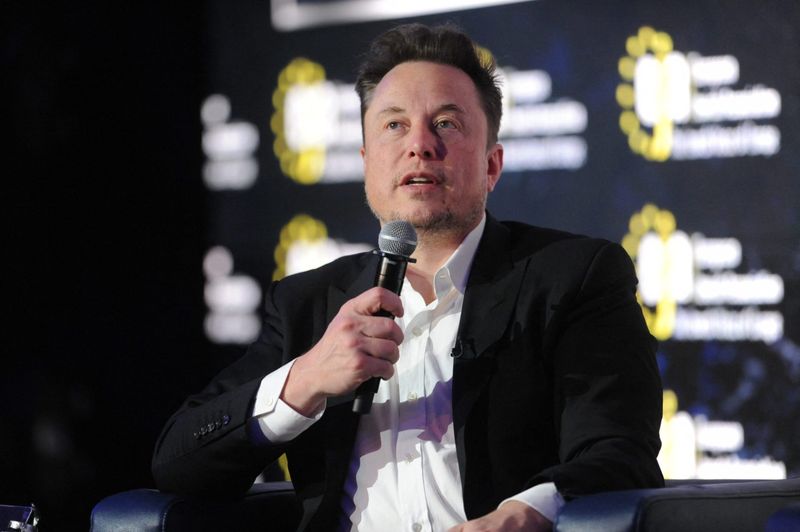
What Musk said at DealBook
The setting was incongruous, and worth dwelling on. DealBook is the New York Times’ flagship business summit, a room built for chief executives and dealmakers, and Musk was not in it. He appeared by video link from China, where he is travelling with the Trump administration for the APEC meetings — a reminder that, even in political defeat, his proximity to power remains intact and largely unbothered by party outcomes. Sorkin’s questions, though, were about the election, and Musk’s answers, as reported by Reuters, were unusually plain for a man whose public statements usually arrive wrapped in provocation. “Probably, if I could rewind the clock, I would have spent less money,” he said. Reuters also reported his broader conclusion: that cash alone could not determine an election.
That last point is the one political scientists have made for decades and donors rarely concede on the record. Money in American campaigns buys reach — advertising, field operations, data, lawyers — and reach moves margins, particularly in low-information down-ballot races. What it has never reliably bought is a national mood. Midterms are referendums on the party holding the presidency, fought across hundreds of districts at once, and the structural forces that drive them — presidential approval, economic sentiment, turnout asymmetries — do not respond to any one donor’s chequebook, however large. Musk’s DealBook remarks amount to the world’s richest man arriving, at a cost of nearly half a billion dollars, at the textbook conclusion. Whether he believes it as a general law or only as a description of this cycle is a question his future behaviour will answer; the remark itself, reported by Reuters, was unqualified.
The Wall Street Journal’s account added a second, quieter admission that may matter more for understanding how the spending happened. The sum Musk spent, the Journal reported, far exceeded the attention he actually paid to the election — he was focused on SpaceX. Read that again: the largest individual political outlay of the cycle was, by its author’s own account, something of a side project, authorised at a scale that dwarfed the scrutiny it received from the only person who could have stopped it. That is not how the money was described while it was being spent, when each new eight-figure transfer was read as evidence of a master political strategy. It is how it looks in retrospect, from China, after the results came in.
The $445 million, in context
Precision about the number matters, because several different numbers are now circulating and they do not measure the same thing. The figure attached to the DealBook story is at least $445 million spent backing Republican candidates and conservative PACs, per OpenSecrets, as reported by TheWrap and Adweek. Reuters described the same effort in rounded terms as nearly half a billion dollars spent to back Republicans and keep Texas red. Two cautions belong with the $445 million wherever it appears. First, it is an OpenSecrets “at least” figure — a floor assembled from disclosed spending, attributed to OpenSecrets via TheWrap and Adweek — and not a final Federal Election Commission total; late filings and undisclosed channels mean the complete accounting of the cycle is still being compiled. Second, it is not the same number as the running tally this site tracked during the autumn: Signal Post News reported in October on Musk’s $366 million in midterm spending for Republicans, a mid-cycle figure compiled at that point in the race. The $366 million and the $445 million are snapshots of the same escalating effort taken at different moments, not rival estimates to be averaged or merged — the later, larger OpenSecrets figure reflects spending that continued through the final weeks of the campaign.
Set against his own history, the scale is still startling. Musk entered big-money politics in earnest in 2024, and the two most-cited accounts of that cycle differ in ways that should be kept separate rather than blended. TheWrap put his 2024 spending at more than $290 million. TechCrunch put the figure at $277 million spent to help re-elect Donald Trump. Those are different tallies from different counters, and this article attributes each to its source rather than fusing them into a single invented number. What can be said without merging them is the direction of travel: by either outlet’s accounting of 2024, the 2026 midterm figure — at least $445 million, in a midterm, a cycle type that historically draws far less money than a presidential year — represents a dramatic escalation. Midterms are supposed to be the quiet cycles. Musk spent on this one like it was a presidential race, for a party that did not hold a presidential race’s turnout machinery, and lost both chambers anyway.
What the money was meant to buy
The strategy behind the spending, as reported by TheWrap and Adweek, was defensive in design even where it was aggressive in scale. The aim was to keep at least one of the House, the Senate or the presidency in Republican hands in 2029, and to prevent a Democratic supermajority from forming. TheWrap described a specific version of the goal: preserving a 51-seat Republican Senate majority into 2029. In other words, the spending was not primarily a bet on Republican gains; it was insurance — an attempt to guarantee that, whatever the voters did in November 2026, some veto point in Washington would remain in Republican hands through the end of the decade, and that no configuration of results could produce the kind of unified Democratic power that rewrites rules rather than merely passing laws.
Measured against its own stated purpose, the investment failed completely. Democrats seized both chambers of Congress, Reuters reported — the outcome TechCrunch labelled a “blue wave.” The House firewall fell. The Senate firewall fell. The 51-seat majority that TheWrap described as the object of the exercise did not survive. And because the presidency was not on the ballot, the one element of the 2029 equation Musk’s money could not influence was the only one that remained Republican. Insurance is judged by whether it pays out when the house burns down. The house burned; the policy, by its purchaser’s own DealBook assessment, did not pay. That is the factual core beneath the word “foolish”: not that the money was spent on a lost cause in the ordinary way of campaign donations, but that it was spent on a specific, limited, explicitly defensive objective — hold one chamber, any chamber — and the objective was not achieved.
There is a counter-argument, and Musk himself supplied it in the fuller Journal version of his quote: perhaps it would have been much worse without the money. Perhaps some of the races his PACs contested were closer than they would otherwise have been; perhaps a seat or two that stayed competitive into the final week would have flipped early without his spending. All of that may be true, and none of it is testable. Elections do not come with control groups. But notice what the counter-argument concedes: the best available defence of at least $445 million is that an unmeasurable quantity of additional damage might hypothetically have occurred in its absence. For a man who runs engineering organisations on measurable outcomes, that is a remarkable place to land — and his own first instinct, the unhedged sentence, was the blunter one: he spent a great deal of money and did not see much for it.
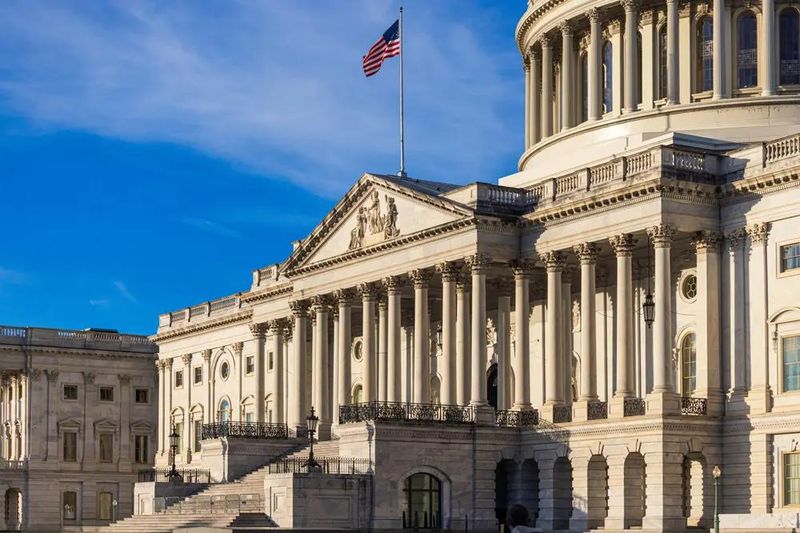
Texas: the race at the centre of the money
If the national result was a wave, the Texas result was the one that landed closest to home — literally. Reuters reported that Musk spent nearly half a billion dollars to back Republicans and keep Texas red, and Texas did not stay red at the top of the ticket: Gina Hinojosa defeated Greg Abbott for governor, as Signal Post News reported in its account of how Hinojosa beat Abbott in the Texas governor’s race. For most donors, a lost governor’s race in a state where they happen to live is an abstraction. For Musk, Texas is the physical centre of his empire: the state is home to Tesla, to SpaceX and to a planned joint chip venture, Reuters noted. His factories, his launch sites and a significant share of his regulatory future sit inside the borders of the state that just elected the candidate his money was spent to defeat.
His public reaction, however, was not defiance. It was something closer to a shrug of acceptance that may prove to be the most consequential sentence of the interview for his businesses. “Everything I’ve heard about her, I think things will be fine in Texas with Gina,” Musk said, according to The Wall Street Journal. Consider what that sentence does. It declines, in advance, the posture of war between the state’s most prominent industrialist and its incoming governor. It signals to Austin, to his own companies’ government-affairs teams and to investors that the relationship will be transactional and calm rather than ideological and scorched. And it quietly retires the premise of the spending itself: if things will be fine under the Democrat, the case that nearly half a billion dollars had to be spent to prevent her election becomes difficult to state with a straight face. Musk, to his credit or his embarrassment, did not try to state it.
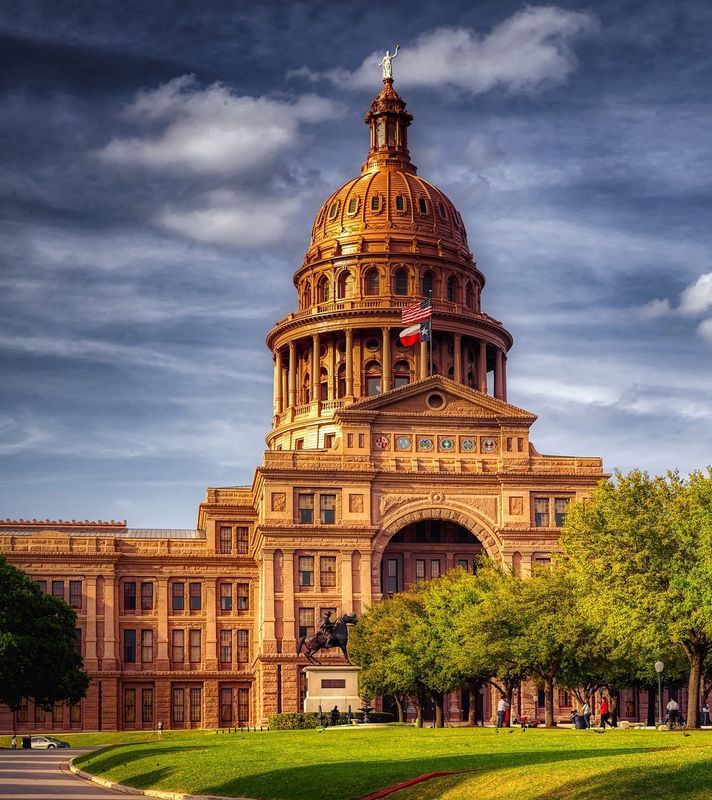
The background between Musk and the incoming governor is not blank, and Reuters documented its edges before election day. In reporting on November 4, Reuters noted that Hinojosa had sued for Musk–Abbott emails and had pushed a data-centre moratorium — a record that puts her, on paper, among the more Musk-sceptical figures to win a governorship this cycle, with live disputes touching both transparency and the physical build-out of the AI economy in Texas. That is precisely why his DealBook conciliation is news rather than politeness. A data-centre moratorium is not a symbolic issue for a man whose companies are racing to build compute capacity; litigation over his correspondence with the outgoing governor is not a symbolic issue either. The incoming administration in Austin holds real levers over real Musk interests. His response, at the first public opportunity, was to say things will be fine. Whether that reflects confidence, resignation or the opening move of a negotiation, it is the opposite of the posture his spending implied — and Hinojosa’s team, reading it in Austin, will have noticed.
“I’m not MAGA”
The interview’s second headline was an act of political self-definition — or self-distancing — that neither of America’s parties will quite know what to do with. “I’m not MAGA,” Musk said, in remarks reported by The Wall Street Journal and TechCrunch. He elaborated: “I’m not sure what MAGA means, but if that means sort of blind adherence to a set of policies by the Republican Party, then I certainly don’t have that.” The sentence is constructed with care. It does not renounce the Republican Party, the president he travelled to China alongside, or the candidates he funded. It renounces a manner of belonging — blind adherence — and reserves the right of independent judgment that his political operation never actually seemed in danger of losing. No one who watched Musk spend the cycle as a free agent, answerable to no party committee, could have mistaken him for a loyalist in the ordinary sense. What is new is that he now says so, on the record, in the same interview in which he called his own spending foolish.
The Journal also reported that Musk suggested divided government might be in the best interest of the United States. Place that beside the wreckage of his stated strategy and an interesting picture forms. The strategy was to guarantee a Republican veto point; the result is a Democratic Congress facing a Republican presidency — divided government of exactly the kind he now floats as possibly optimal. It is impossible to know whether this is philosophy or rationalisation, conviction arrived at before the election or comfort constructed after it. Politicians who lose elections discover the virtues of the outcome they got with suspicious regularity, and billionaires are not immune to the habit. But the combination of statements — the spending was foolish, the result may be for the best, and he was never a movement loyalist anyway — amounts to a systematic unwinding of the political identity he spent two years and, by the various counts, well over $700 million across two cycles constructing. Each sentence walks back a different part of it: the money, the mission and the membership.
Why this matters
The obvious lesson — money has limits — is true but incomplete, and the less obvious ones are more durable. The first is about the structure of modern campaign finance. A system in which one individual can spend at least $445 million in a single midterm, more than many entire cycles’ worth of party spending in earlier eras, has been tested at its logical extreme and produced a clear result: the extreme purchase did not include the outcome. That does not make money irrelevant; every close race in the country was shaped at the margins by spending, his included. It does establish, with unusual clarity and at unusual scale, where the ceiling sits. Money can saturate a media market. It cannot repeal a national mood, and 2026 was a mood election. Future donors contemplating nine-figure cycles now have a data point with a name and a confession attached: the man who spent the most called it foolish himself.
The promise he had already made — and broken
The second lesson is about Musk specifically, and it is written in his own earlier words. In May 2025, after the 2024 cycle — the cycle TheWrap tallied at more than $290 million and TechCrunch at $277 million spent to help re-elect Trump — Musk said he would spend “a lot less” on politics and that he had “done enough.” The 2026 cycle is what happened next: not less, but considerably more, in a midterm. The DealBook regret is therefore the second verse of a song he has sung before. He has now twice cycled through the same sequence — escalation, immersion, disillusion, announced withdrawal — and the withdrawal announcements have a perfect record of not surviving contact with the next election. Analysts pricing his political future should weight the pattern over the pronouncement. The pronouncement says he would spend less if he could rewind the clock. The pattern says the clock always runs forward into another cycle, and he has yet to sit one out.
Attention, not money, was the scarce resource
The third lesson is the strangest, and it comes from the Journal’s reporting that the sum far exceeded the attention Musk paid the election because he was focused on SpaceX. Campaign professionals will read that sentence with a kind of horror. The entire craft of political spending is allocation under scrutiny: which races, which weeks, which messages, adjusted as polling moves. A $445 million operation whose principal’s attention was elsewhere is not a strategy executed badly; it is closer to a strategy that was never really the point. The point, perhaps, was presence — being the indispensable man of the governing coalition, the donor whose calls get returned — and presence, unlike Senate seats, is not measured on election night. By that colder accounting, the spending may have bought exactly what it was for: he gave the DealBook interview from China, travelling with the administration, at a summit of the global elite, his access undamaged by the defeat of every objective his money publicly pursued. The foolishness he confessed to was electoral. The access was never foolish at all. Both things can be true, and the tension between them is the most honest summary of what mega-donor politics has become.
The Anthropic aside
Buried in the same interview was a remark that the technology industry will parse as closely as the political world parses the rest. Musk said the highest-probability outcome was Anthropic seeking an additional 10 gigawatts of compute from SpaceX, according to Reuters. Precision matters here as much as it does with the spending figures: this was a remark — a prediction offered in an interview about what he expects Anthropic to do — and not an announced deal, agreement or contract, and it should not be reported as one. No terms were described, no commitment was stated by either company, and Anthropic has announced nothing of the kind. What the remark does establish is the direction of Musk’s actual attention, the SpaceX-centred focus the Journal described: while his political operation was spending toward a blue wave, his mind was on the compute economy — on gigawatts, capacity and which AI laboratory will need whose infrastructure. Readers following the AI build-out can place the comment alongside this site’s coverage of Anthropic’s IPO pricing and Nasdaq debut, which tracks the valuation and capital demands driving every major laboratory’s hunger for compute. A 10-gigawatt appetite, if it ever becomes a negotiation, would be among the largest infrastructure arrangements in the industry’s history. For now it is a sentence in an interview — attributed, unverified as a transaction, and noted here at exactly that weight.
What happens next
The forward questions arrange themselves in three arenas. In Washington, the divided government Musk described as possibly optimal now has to function: a Democratic House and Senate, a Republican presidency, and a legislative calendar in which nothing moves without negotiation. The donors who financed the losing firewall, Musk first among them, will be courted all over again — by the party they funded, which needs them for 2028, and quietly by the party that won, which governs now and knows that industrial policy, space policy and AI regulation will be written in rooms where his companies are the subject. His “I’m not MAGA” line, read in that light, is not an exit from politics; it is a renegotiation of his position within it, from movement financier to unaffiliated power — a status that historically extracts more deference from both parties than loyalty ever does.
In Texas, the test is concrete and near-term. An incoming governor who sued for his emails and campaigned on a data-centre moratorium will now make decisions affecting Tesla’s factories, SpaceX’s operations and the planned chip venture, while Musk has publicly pre-committed to calm: things will be fine with Gina. The first friction — over the moratorium, over disclosure, over the ordinary thousand permits of industrial Texas — will reveal whether the DealBook conciliation was a strategy or a mood. In the third arena, his own companies, the question is whether the political retrenchment he has now announced twice becomes real in the only form that counts: the 2028 cycle’s filings. The OpenSecrets counters will be watching the same disclosure reports that produced the $445 million figure, and the first quarter in which Musk’s political spending genuinely falls to the “a lot less” he promised in May 2025 will be the first evidence that this time the lesson was learned rather than merely recited.
There is a final, quieter possibility worth holding open, because Musk himself left it open in the fuller version of his quote. Maybe it would have been much worse without the money. Maybe somewhere in the wave there are two or three races that his spending kept close enough to matter in a recount, a court fight or a negotiation over a majority’s working margin. If so, the epitaph for the $445 million is not that it bought nothing, but that it bought things too small to see from China — which, for the largest political spender in American history, may be the most damning assessment of all. He set out to guarantee the shape of the federal government through 2029. What he got was a video link, a confession, and a sentence that will follow every dollar he spends from now on: pretty foolish, by his own account, and said where everyone could hear it.
Sources
Sources: Reuters, November 18, 2026 — Musk’s DealBook remarks (“Probably, if I could rewind the clock, I would have spent less money”; cash alone could not determine an election), the description of nearly half a billion dollars spent to back Republicans and keep Texas red, Democrats seizing both chambers of Congress, Gina Hinojosa’s defeat of Greg Abbott, Texas as home to Tesla, SpaceX and a planned joint chip venture, and the Anthropic 10-gigawatt compute remark — reuters.com. The Wall Street Journal, November 18, 2026 — “I feel pretty foolish about having spent so much money and not seeing much for it” including the fuller “or maybe it would have been much worse without that” form, “everything I’ve heard about her, I think things will be fine in Texas with Gina,” the “I’m not MAGA” remarks, the suggestion that divided government might be in the best interest of the U.S., and the reporting that the sum far exceeded the attention Musk paid the election as he focused on SpaceX — wsj.com. TheWrap, November 2026 — the OpenSecrets figure of at least $445 million backing Republican candidates and conservative PACs, the aim of preserving a 51-seat Republican Senate majority into 2029, and Musk’s 2024 spending of more than $290 million — thewrap.com. Adweek, November 2026 — the OpenSecrets $445 million figure, the DealBook appearance from China during the APEC trip, and the aim of keeping at least one of the House, Senate or presidency Republican in 2029 while avoiding a Democratic supermajority — adweek.com. TechCrunch, November 18, 2026 — the virtual DealBook appearance from China while travelling with the Trump administration for APEC, the “blue wave” characterisation, the “I’m not MAGA” remarks, and $277 million spent in 2024 to help re-elect Trump — techcrunch.com. OpenSecrets figures as reported via TheWrap and Adweek. Background: Reuters, November 4, 2026 — Hinojosa’s lawsuit for Musk–Abbott emails and her proposed data-centre moratorium. Related Signal Post News coverage: Hinojosa beats Abbott in Texas, Musk’s $366 million October running figure, and Anthropic’s IPO pricing and Nasdaq debut.