Track it live: Ukraine war map — live tracker
CHISINAU, November 17, 2026 — Russian drone over Chisinau: that was the report Moldova’s president herself put to the country on Tuesday evening, as a large-scale Russian attack wave on neighbouring Ukraine spilled across the border of a state that is not a party to the war. “This evening several Russian drones violated our airspace, one of them over Chisinau, alarming residents,” President Maia Sandu wrote on X. “Russia’s war threatens all of Europe. Moldova stands for peace. We’ll keep pushing for sanctions on Moscow, standing with Ukraine and building our defence with partners.” Moldova closed its national airspace.
The Defence Ministry, as reported by Reuters, recorded two violations of Moldovan airspace on Tuesday by drones it identified as Russian. The first drone flew over eastern regions of the country; the second entered the southern part of Moldova and flew towards Chisinau. Photographs said to show a drone over the capital circulated on unofficial social-media sites; Reuters did not verify those photographs, and Signal Post News does not present them as verified evidence. What is established by the ministry’s account, via Reuters, is the fact of two recorded violations and a nationwide airspace closure — a response Moldova has not previously had to take for an overflight of its capital.
Reuters’ reporting subsequently put the day’s totals higher. The agency reported that seven Russian drones violated Moldovan airspace on Tuesday in all, and that five of them crashed in Moldova. That tally — seven in, five down — is Reuters’ reporting, and it is kept here alongside, not merged into, the Defence Ministry’s earlier record of two violations: the ministry’s figure counts the violations it formally recorded, and the two accounts are presented as their sources gave them rather than reconciled into a single track. No casualties from the crashes have been reported.
Sandu added a candid admission that sits underneath the whole incident: Moldova, she said, does not have the defence capabilities to protect itself from drones, and it will invest in national defence together with friendly countries. She also restated the strategic destination that frames Chisinau’s response to every such violation — she wants Moldova to join the European Union by 2030. The Independent’s live Ukraine-war blog independently carried the same sanctions pledge and airspace closure on Tuesday, corroborating the core of the account.
The track Moldovan reporting describes
A more detailed track comes from Moldovan reporting, and it is attributed separately here because it goes beyond what Reuters confirmed. MoldovaLive and Realitatea, citing the National Army’s Air Operations Centre and the Defence Ministry, reported that a Geran-2 — the Russian version of the Iranian-designed Shahed — entered Moldovan airspace twice on Tuesday afternoon. On that account, the first entry came at 15:49 local time, from the Grebeniki area of Ukraine’s Odesa region towards Tiraspol, before the drone left towards Slavianoserbka, in Ukraine. The second entry came at 16:02, from Velikoploske in the Odesa region towards Malaesti, in Moldova’s Criuleni district.
The Geran-2 identification, the entry times and the routes are Moldovan official sourcing as carried by local media; they are not stated here as Reuters-confirmed facts, and readers should hold the two layers apart. The same local reporting said three flights — from Yerevan, Istanbul and Sharm El-Sheikh — were unable to land in Chisinau because of the alert. Footage also circulated appearing to show a drone over Gura Bicului, in Anenii Noi district, at around 16:05, heading towards Chisinau; the ministry had not clarified whether that footage shows the same drone, and that attribution gap is part of the record.
Later development: the Botanica closure
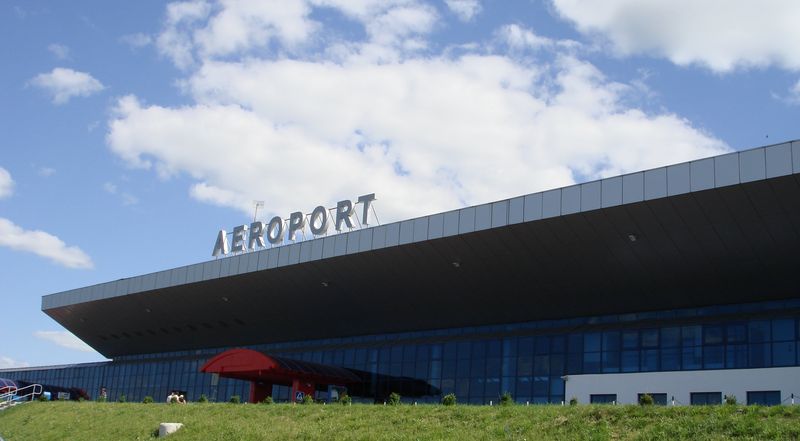
The incident did not end with the afternoon entries. In a later phase reported by the Defence Ministry via Mediafax and Moldova 1, Moldova restricted its entire airspace again at 16:27 local time, after a Shahed-type drone was detected heading towards Chisinau’s Botanica sector. The central sector was reopened to civil aircraft at 17:03; as of 18:10, no full reopening had been reported. Police were checking a report of a drone that had come down near Pohorniceni, in Orhei district — a specific, unconfirmed report under examination on Tuesday evening, reported separately from the wider crash tally in Reuters’ reporting.
Moldova 1, citing Flightradar24 data, also reported that two further flights bound for Chisinau changed course towards Iasi, in Romania. Those two diversions belong to the later Botanica phase and are separate from the three flights — Yerevan, Istanbul and Sharm El-Sheikh — reported unable to land in the earlier phase; the two sets are presented here attributed, and are not merged into a single tally. Taken together, the day’s air picture is of a small country’s entire civil aviation system switching off and on around drone tracks it cannot intercept: closure, partial reopening, renewed restriction, and aircraft feeling their way towards a neighbouring country’s runway.
Moscow’s answer: denial and “no proof”
Russia rejects the accusation. Moscow’s position, as reported by Reuters, is that Moldova has provided no proof that the drones are Russian, and that Chisinau is whipping up anti-Russian sentiment. That denial is a standing feature of these incidents, and it matters analytically: the dispute is not only about airframes crossing a border, but about what counts as evidence. Moldova’s case rests on its military’s radar record and, in the local reporting, on the Air Operations Centre’s tracked entries and exits. Russia’s counter is to demand proof in a form it can then contest, while treating the accusation itself as the offence.
The diplomatic temperature around the denial is already high. Sandu has refused to let Russia’s ambassador, Oleg Ozerov, present his credentials since he arrived in October 2024 — an extraordinary, years-long snub that means the two governments are conducting this argument without the normal channel through which such protests are formally delivered and answered. Political analyst Vitalie Andrievschi, cited by Reuters, assessed that Moldova was unlikely to go beyond another formal denunciation. That is the sceptical reading: Chisinau can document, protest and align — but its coercive options against Moscow are close to nil, which is precisely why Sandu’s response is aimed at Brussels and at sanctions rather than at any bilateral lever.
Why this matters
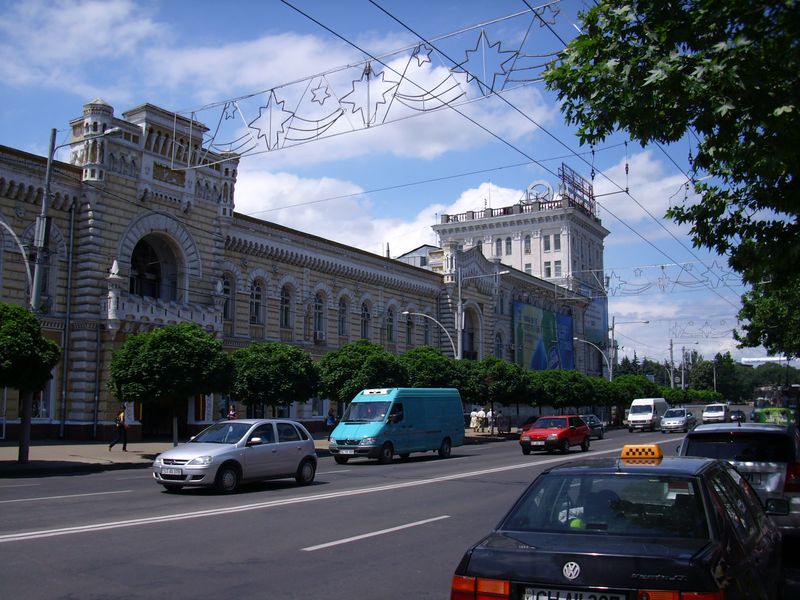
Geography is the first reason. Moldova has absorbed spillover from Russia’s war on Ukraine for years — debris, crashes and airspace violations along its borders, including the September and October incidents Signal Post News covered in our report on October’s airspace violations by Russian drones and missiles. A drone over a border village is a violation; a drone over the capital, alarming residents, during a nationwide airspace closure, is a demonstration that no part of the country is outside the war’s shadow. For an EU-candidate state whose government has staked its legitimacy on a European path, the overflight of Chisinau converts an abstract alignment question into something every resident of the capital could hear above their own street.
The second reason is Sandu’s own admission. A head of state stating publicly that her country cannot defend itself against drones is doing several things at once: telling her own public the truth, telling partners exactly what she needs, and telling Moscow that the gap is known. Moldova’s armed forces are small, its air defence is thin, and the drones in question are cheap mass-produced weapons that strain even well-equipped states. The pledge to “build our defence with partners” is therefore the operational sentence in her statement — the sanctions pledge is the political one. Tuesday’s events happened during a large-scale Russian attack wave on Ukraine, on the same day Kyiv confirmed the second strike on the Crimean Bridge — the operation detailed in our report on Zelenskyy’s confirmation of the seven-stage Crimean Bridge operation. Spillover on this scale is a function of those waves: the larger the salvo aimed at Ukraine, the more tracks stray, malfunction or route through the airspace of the small state on Ukraine’s southwestern flank.
A pattern, not an episode
The context is repetition. Through September and October, Moldova recorded a series of drone and missile airspace violations as Russian strike packages crossed or clipped its territory en route to Ukrainian targets; drones came down on Moldovan soil in earlier incidents, and Chisinau condemned each one. The routes in Tuesday’s local reporting brush against the war’s most sensitive Moldovan geography: Tiraspol is the capital of Transnistria, the Russian-backed separatist strip along the Ukrainian border where Russian troops have been stationed for three decades. A track that enters from the Odesa region towards Tiraspol crosses, in minutes, the exact seam where Moldova’s unresolved conflict meets Ukraine’s war — which is why Moldovan officers track these entries so closely and publish them so quickly.
Layered over the military pattern is the political one. Sandu’s government has tied Moldova’s future to EU accession by 2030, and every violation strengthens her argument in Brussels that Moldova’s security is a European question, not a bilateral quarrel with Moscow. It also strengthens, in Moscow’s telling, the opposite argument — that Chisinau manufactures incidents to justify its Western course, which is the substance of the “anti-Russian sentiment” charge. Both governments are therefore speaking past the radar track to their real audiences: Sandu to the EU capitals that will decide sanctions packages and accession pace; Moscow to anyone inclined to doubt that the drones were Russian at all.
The numbers, in context
The arithmetic of Tuesday comes in attributed layers, and they are worth keeping apart. Two violations were recorded by the Defence Ministry, per Reuters. Reuters subsequently reported seven drones in total, five of them crashed in Moldova. Moldovan local reporting describes one Geran-2 entering twice, at 15:49 and 16:02. Three inbound flights were reported unable to land in the first phase; two more changed course towards Iasi in the later phase. The entire airspace was restricted at 16:27 in the Botanica phase, the central sector reopened at 17:03, and no full reopening had been reported by 18:10. No casualties in Moldova have been reported. Those are the figures the Defence Ministry, Reuters and the Moldovan outlets cited here support; anything beyond them is not carried in this article.
What those numbers describe is a particular kind of vulnerability. Moldova was not attacked, on any account; it was overflown, repeatedly, by weapons in transit to a war next door, and its only available responses were to close its sky, divert its aircraft, document the tracks and protest. The cost falls on civil aviation, on public calm, and on a government that must explain to its citizens why drones cross the capital unopposed. That is the strategic effect of spillover even when the drones are in transit to someone else’s war rather than aimed at Moldova itself: it taxes a neutral, unaligned-in-arms state for a war it did not choose, in front of its own people — and, on Reuters’ tally, it now leaves wreckage on Moldovan ground as well.
What happens next
Three tracks will decide whether Tuesday becomes a turning point or another entry in the log. The first is sanctions: Sandu has pledged to keep pushing, and the test is whether a capital overflight moves any EU capital that has treated Moldovan incidents as regrettable background noise. The second is air defence: her statement commits Moldova to building capability “with partners,” and the concrete question is whether radars, interceptors or a partner-operated shield arrive before the next large Russian wave — because on the pattern of this autumn, there will be one. The third is the diplomatic standoff: Andrievschi’s assessment, via Reuters, is that Chisinau will stop at denunciation, and the Ozerov credentials freeze, now in its third year, suggests a relationship with no near-term repair in either direction.
The Pohorniceni report also remains open as a specific local report: police were checking it on Tuesday evening, and until Moldovan authorities confirm or dismiss it, it stays where this article has kept it — an unconfirmed report under examination, distinct from Reuters’ wider tally of five crashed drones. The day closes as it stands: two violations formally recorded by the Defence Ministry, seven drones and five crashes in Reuters’ reporting, a capital overflown, an airspace closed and reopened in phases, five flights diverted across two phases, a sanctions pledge, a denial — and a small country stating, in its president’s words, that Russia’s war threatens all of Europe.
Reporting based on Reuters (Nov. 17, 2026), President Maia Sandu’s statement on X, MoldovaLive/Realitatea reporting citing the National Army’s Air Operations Centre, Defence Ministry statements carried by Mediafax and Moldova 1, and The Independent’s live blog. The Geran-2 track and the Botanica-phase details are attributed to their Moldovan sources in the text; Russia’s denial is included in full.
Sources
Sources: Reuters, “Moldovan president says Russian drone flew over capital” (Nov. 17, 2026); President Maia Sandu via X (Nov. 17, 2026); MoldovaLive / Realitatea (Nov. 17, 2026); Moldova Defence Ministry via Mediafax and Moldova 1 (Nov. 17, 2026); The Independent, Ukraine–Russia war live blog (Nov. 17, 2026).