Moldova airspace violation Russian missiles

Five weapons, four districts, 15 minutes
Between 7:45 and 8:00 a.m. local time Saturday, five aerial weapons crossed Moldova's airspace and exploded near communities in Căușeni, Ștefan Vodă, Anenii Noi and Hîncești districts, according to President Maia Sandu and Moldovan defense authorities. Defense Minister Anatolie Nosatîi later clarified the initial account of five unmanned aircraft: officials now identify three missiles and two drones. Radar subsequently recorded a sixth unauthorized flight.
The burst of incursions coincided with a Russian attack on Ukraine's neighboring Odesa region. Ukraine's air force said Moscow launched Banderol cruise missiles there overnight. The Associated Press described the Banderol as a relatively low-cost, jet-powered loitering munition. In the Moldovan account, Sandu said five “Russian air attack weapons, including Banderol missiles and drones, violated our airspace and exploded on our soil.”
“I condemn Russia's attack on Ukraine this morning. Its war is dangerously reaching Moldova,” Sandu said. “Moscow is putting lives at risk across Europe and must be stopped.” In a separate warning, she said: “Russia's war against Ukraine directly endangers the lives of our citizens.” She urged residents not to approach wreckage and to call the emergency number 112.
No injuries were reported. One drone came down in a vineyard near Crocmaz, igniting vegetation and blowing out windows in a nearby house. Fragments were also reported near Dubovca, outside Căușeni, and between Delacau and Puhaceni. Authorities said the explosions occurred outside built-up areas—an important qualification, and also a matter of luck.

A protest note, and Moscow's denial
Moldova's Foreign Ministry summoned Russian Ambassador Oleg Ozerov on Saturday and handed him a formal note of protest. It was the second such summons in days. On Thursday, after three drones violated Moldovan airspace in a single day and two crashed or exploded, the ministry called him in as officials counted eight incursions over seven days. “Russia's war against Ukraine continues to pose concrete threats to our country and to the security of the entire region,” the ministry said.
Ozerov disputed the attribution after Thursday's visit. “We have received no evidence that the drone is of Russian origin,” he told Tass, and accused Chișinău of ignoring Moscow's proposals for a joint investigation. Russia did not immediately comment on Saturday's claims. That position deserves to be stated plainly: Moldova says the recovered evidence identifies Russian weapons; Moscow says the proof has not been shown to it and proposes joint examination.
Nosatîi answered that skepticism with the wreckage itself. He said evidence found at the scenes refuted Russian diplomatic statements and that “the drones launched by the Russian Federation are causing fear and posing a danger to our citizens... the evidence is right there.” His policy conclusion was equally direct: Moldova must invest urgently in defense.
Why this matters
The significance is not merely that debris crossed a border. Moldova says five armed objects crossed in one 15-minute interval, spread across four districts, after a week that had already produced eight violations. That changes the argument from whether a single vehicle strayed to whether Moldova is becoming a recurring extension of the Odesa battlespace.
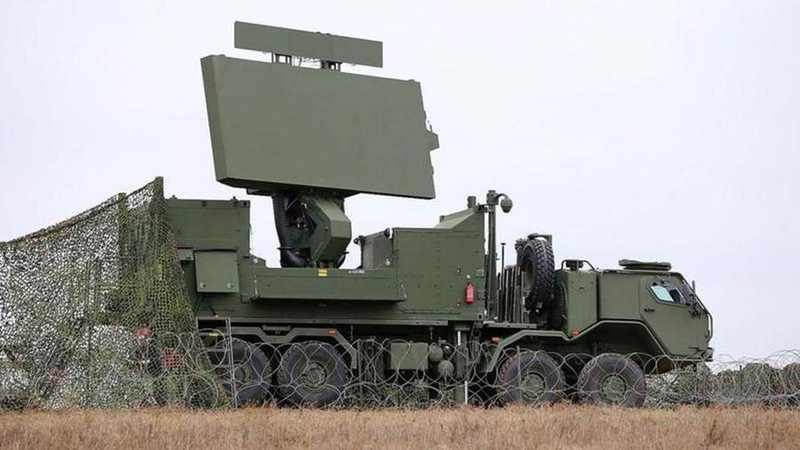
Banderol economics sharpen the problem. Low-cost jet-powered weapons allow Russia to build larger, faster salvos without spending a premium cruise missile on every target. Ukraine must still track and intercept each object; neighboring Moldova must detect the ones that cross its border but lacks Ukraine's layered defenses. Cheap attack systems therefore impose expensive defensive choices on states that were not the intended target.
For Sandu's government, the incursions validate years of warnings that the military campaign is paired with pressure below the threshold of open attack: energy leverage, illicit political financing, alleged voter-bribery attempts, cyberattacks, false bomb threats and disinformation. Chișinău says there have been dozens of airspace intrusions this year. Sandu has stressed that Moldova no longer depends on Russian gas, but strategic independence in energy does not create control of the sky.
Neutrality is not insulation
Moldova is constitutionally neutral, an EU candidate and not a NATO member. Those three facts define its predicament. Neutrality limits the political appetite for alliance-style military commitments, EU candidacy pulls the country toward Western institutions, and geography places Odesa immediately to the east and NATO-member Romania to the west.
Russia's war has already tested that arrangement repeatedly. The earlier Hîrbovăț drone explosion showed how quickly a Ukrainian strike wave can become a Moldovan emergency. The latest incident comes as Russia has also hit Kyiv's Northern Bridge and struck a Liberian-flagged ship at Odesa. These are distinct events, but together they show pressure on civilian mobility, maritime trade and the airspace around Ukraine's neighbors.
Who benefits, who loses, what critics say
Russia gains operational leverage from attacking Odesa at scale: every additional weapon complicates Ukrainian air defense, while any spillover forces Moldova and Romania to spend money and political attention. That does not prove every border crossing is deliberate. Technical failure, route planning and electronic warfare can all displace a weapon. Critics of Chișinău's framing argue that attribution and intent should follow a transparent forensic process rather than political statements.
Moldova loses in every scenario. If the crossings are accidental, citizens still face explosive wreckage and fires. If they are reckless, Moscow is accepting that risk. If any are intentional probes, they test Moldova's radar coverage and Western response. Farmers, homeowners and aviation bear the immediate costs; Sandu's opponents can then exploit fear, while her government must defend a European course without overstating what partners can guarantee.
Ukraine gains no benefit from Russian weapons entering Moldova. Each incident can distract from the attack's original target and creates space for competing claims about debris and responsibility. Romania, meanwhile, becomes the hinge: it is both Moldova's closest linguistic and political partner and the nearest NATO air-defense umbrella, yet any move to intercept over Moldova would require careful legal authority and an invitation from Chișinău.
The numbers tell a strategic story
Five objects in 15 minutes is a saturation problem, not an isolated navigation error. Four districts show a broad footprint. Eight violations in seven days, even before the later sixth Saturday track, establish frequency. Dozens this year, as Moldovan officials count them, establish persistence. And zero injuries should be read as good fortune, not proof that the threat is manageable.
The choice facing Chișinău is therefore not between perfect protection and doing nothing. It is about raising the probability of detection, shortening public warnings, improving debris response and—eventually—creating an interception capacity proportionate to small drones and low-cost missiles. A country should not have to fire a multimillion-euro interceptor at every cheap loitering weapon; the defense must be economically sustainable as well as technically credible.
What happens next
The most likely scenario is managed spillover: Moldova documents each breach, summons diplomats, expands radar coverage and asks the EU for additional equipment while avoiding a direct military role in Ukraine's war. Brussels can fund sensors, communications, counter-drone systems, civil-defense training and forensic teams without turning Moldova into a NATO outpost.
A second scenario gives Romania a larger role. Bucharest could share radar tracks faster, conduct more exercises and support Moldovan crews, while NATO keeps its aircraft on the Romanian side of the border. That would improve warning and attribution but stop short of cross-border interception. It is the politically realistic middle ground.
The escalation scenario begins with casualties. A missile striking a house, school or passenger aircraft would create pressure for active defense over Moldova and a much harder EU response. Yet even then, alliance guarantees would not automatically extend to a non-member. The danger is the gap between public expectation and treaty reality.
Sandu's sharp language is therefore both warning and strategy. Moldova cannot deter Russia alone, but it can make each incident visible, preserve evidence and force European capitals to treat its airspace as part of the continent's security perimeter. The question is whether that political perimeter acquires practical defenses before luck runs out.
Sources
- Associated Press wire report via The Daily Reflector
- Informat.ro — Sandu statement and incident locations
- Cotidianul — five weapons in 15 minutes
- Sweden Herald — Sandu statement and Banderol context
- Logos Press — Foreign Ministry protest note
- Logos Press — presidential, foreign ministry and defense ministry reactions