The bridge remained standing, but the pressure point moved north: road traffic from Kyiv's left bank to its right bank was blocked as emergency crews assessed a morning blast on one of the city's most important crossings.
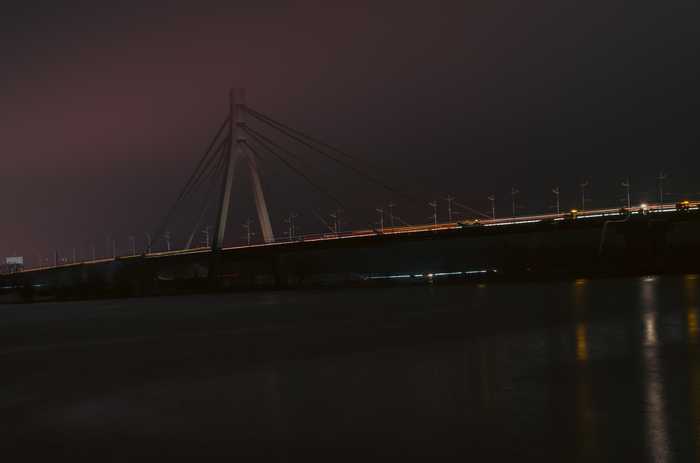
Kyiv Northern Bridge strike: Russian forces hit the Pivnichnyi, or Northern, Bridge across the Dnipro on Saturday morning, October 3, in the third straight day of attacks on Kyiv's bridges. Explosions were reported just after 6:30 a.m. local time, and videos circulating from the scene showed a large blast on the crossing while vehicles were moving. Kyiv Mayor Vitali Klitschko and the Kyiv City State Administration confirmed damage to the road surface and the trolleybus contact network.
City officials said traffic from the left bank toward the right bank was blocked and emergency services were working at the scene. Their statements confirm the impact and disruption; they do not yet establish the weapon type, the bridge's full engineering condition or the intended target. Early reporting compiled by EA WorldView said Saturday's wider attacks in Kyiv killed one man and injured two people. Those casualty reports were preliminary and had not been independently verified at publication time.
Why this matters
Bridges are chokepoints even when they are not destroyed. Around 500,000 people commute each day from Kyiv's left bank to its right bank, according to reporting cited by the AAP News wire. Closing one direction on a major span pushes vehicles toward a small number of alternatives, lengthens emergency routes and turns an inspection measured in hours into a citywide delay.
The pressure is also psychological. A bridge blast visible to motorists tells residents that ordinary movement can become part of the battlespace without warning. Civilian morale may therefore be affected even when structural damage is repairable. That does not prove morale was the intended target; it describes a predictable consequence of repeatedly striking transport infrastructure used by commuters.
Russia bridge attacks Kyiv at a strategically sensitive moment. Winter converts mobility, electricity, heating and water into one connected system: repair crews need roads, substations need parts, and households need both power and access. A strike on a crossing can amplify damage elsewhere by slowing the people and equipment required to restore services.
Background: three days with Dnipro bridges closed or under attack
The sequence began on October 1, when two Russian drones hit near the Southern, or Pivdennyi, Bridge's support structures while vehicles and a metro train were present. The initial disruption was temporary, and city officials said inspectors found no critical damage. The significance lay in the expansion of the target set to a major urban crossing.
On October 2, Russian drones struck the Southern Bridge again — the fourth drone attack on that bridge in two days. Authorities blocked all Dnipro bridges at points, producing long traffic jams across the capital. On October 3, the focus shifted to the Northern Bridge. The pattern now consists of repeated attacks and closures across two separate crossings, not one isolated hit.
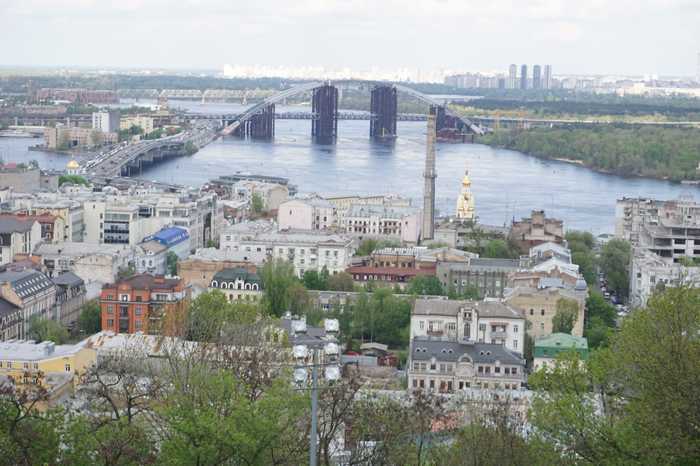
The Klitschko Northern Bridge confirmation
Klitschko's statement and the city administration's account establish the core local facts: a hit on the bridge, damage to the pavement and trolleybus contact system, a directional traffic block and an emergency response. They do not yet answer whether the span's load-bearing components were affected. That distinction matters because visible road damage can be repaired quickly, while hidden structural damage requires longer inspection and potentially heavier restrictions.
The “Putin no rules war” account and winter infrastructure warnings
President Volodymyr Zelenskyy wrote on X on October 2 that Ukrainian intelligence indicated Vladimir Putin told commanders at the beginning of September, “No rules now,” meaning they should abandon any rules of war. This is Zelenskyy's account of Ukrainian intelligence, not an independently released Russian order. Its relevance is that Kyiv sees the bridge sequence as part of a broader loosening of target constraints.
The New York Times separately published an assessment that Russia was planning a three-stage campaign against substations serving Ukrainian nuclear power plants, hydroelectric facilities and water infrastructure ahead of winter. AAP reported that officials and analysts in Ukraine view the current attacks as the first salvo of an expected cold-weather bombing campaign. Those assessments are forecasts, not proof that every bridge strike belongs to a single centrally ordered plan.
Multiple angles: who benefits, who pays
Russia can multiply defensive demands. Repeated attacks force Kyiv to protect bridges alongside power plants, substations, water systems, military sites and residential districts. Even unsuccessful strikes can trigger closures and inspections. That dispersal strains Ukraine's air defences and tests whether Western partners will keep high-end interceptor supplies moving through the winter.
Ukraine can impose costs in return. Ukraine's military said its drones targeted the Lukoil refinery in Volgograd and an oil facility in Russia's Samara region. Those strikes aim at fuel production and the revenue base supporting Moscow's war economy. As with Russia's target claims, the military significance and full damage require independent verification; the strategic logic is to make the attacker absorb repair and protection costs at home.
Civilians absorb the immediate friction. The daily commuter does not need a bridge to collapse for an attack to matter. A one-way block shifts traffic, delays work, complicates school travel and makes ambulance routes less predictable. Critics of Moscow's campaign argue that this accumulated disruption is part of the point. Russia says the targets serve military purposes and denies deliberately targeting civilians.
Skeptics should separate reach from effect. A blast on a bridge demonstrates access to the target; it does not automatically demonstrate strategic success. If repairs are fast, alternate routes stay open and the structure remains sound, the material payoff may be limited. Conversely, repeated low-damage strikes can still consume interceptors, crews and public attention at a cost disproportionate to the visible crater.
Data: commuters, interception math and three days of pressure
The 500,000 daily left-bank-to-right-bank commuters put the disruption in scale. If only a fraction must reroute, congestion grows quickly because bridge capacity is not infinitely interchangeable. The effect is nonlinear: removing one direction on one major crossing can slow approaches to other crossings and spread delay well beyond the damaged site.
The three-day timeline also matters. One strike can be tactical; attacks on October 1, 2 and 3 begin to look like an operational pattern. Still, three days are not enough to prove a permanent bridge campaign. The best evidence will be what follows: repeat attacks, changes in weapon mix, sustained closures and signs that transport targets are synchronized with power or water strikes.
Ukraine says it needs a minimum of 300 Patriot interceptors to sustain air defence through winter. That number is a floor stated by Ukraine, not an independently audited inventory requirement. It nonetheless conveys the scale of the problem: Patriot missiles must be reserved for the hardest ballistic threats, while cheaper systems are needed against drones. Faster jet drones Kyiv has reported seeing can compress decision time and make that sorting problem harder.
The early casualty report — one killed and two injured in Saturday's wider Kyiv attacks — remains unverified. It should neither be ignored nor treated as final. In a developing strike cycle, casualty numbers, damage assessments and closure durations often change as emergency services reach sites and officials reconcile reports.
What happens next: Russia's winter campaign and Ukraine air defense
Scenario one: grid substations become the central target. If the reported three-stage plan is accurate, attacks could focus on substations linked to nuclear generation, seeking to disconnect supply without striking reactor buildings. Bridge pressure would then work as a supporting tactic by slowing repair movements and widening the area air defences must cover.
Scenario two: hydroelectric and water systems follow. Damage to hydroelectric facilities can remove generation and grid-balancing capacity, while attacks on water infrastructure create a separate humanitarian burden. Repeated transport closures would make spare parts, fuel and technical crews harder to move just as demand peaks.
Scenario three: ammunition strain becomes decisive. The 300-interceptor floor Ukraine describes shows how quickly a long winter campaign could consume expensive missiles. If Western deliveries lag, Kyiv may have to accept more risk at some infrastructure sites. If supplies hold and lower-cost drone interceptors improve, Russia may find repeated bridge attempts yield disruption but little durable damage.
The Russia winter energy campaign Ukraine expects will be measured less by any single explosion than by system resilience: how quickly roads reopen, whether the grid can reroute power, whether water pressure holds and whether air-defence magazines stay deep enough for the next wave. Watch for engineering findings on the Northern Bridge, changes to trolleybus service, the duration of the traffic block, additional attacks on other Dnipro crossings and new interceptor commitments from Ukraine's partners.
The narrow conclusion is firm. Kyiv's Northern Bridge was struck on October 3 after two days of attacks on the Southern Bridge. The broader conclusion remains conditional: Russia appears to be testing how transport disruption can reinforce winter pressure, but the campaign's military effect will depend on repeat accuracy, structural damage, repair speed and Ukraine's ability to defend several kinds of infrastructure at once.
Sources
- OSNT daily brief — October 3, 2026 brief with Klitschko and Kyiv city statements
- EA WorldView — Ukraine War, Day 1,682: Russia targets a Kyiv bridge for a third straight day
- AAP News — Russian airstrikes choke key bridges in Kyiv