World · Mexico · Sinaloa · Cartels
For nine hours, Guasave fought back. By dawn, one of the FBI’s Ten Most Wanted men — a $5 million target who outlasted the cartel that made him — was on a military plane to Mexico City.
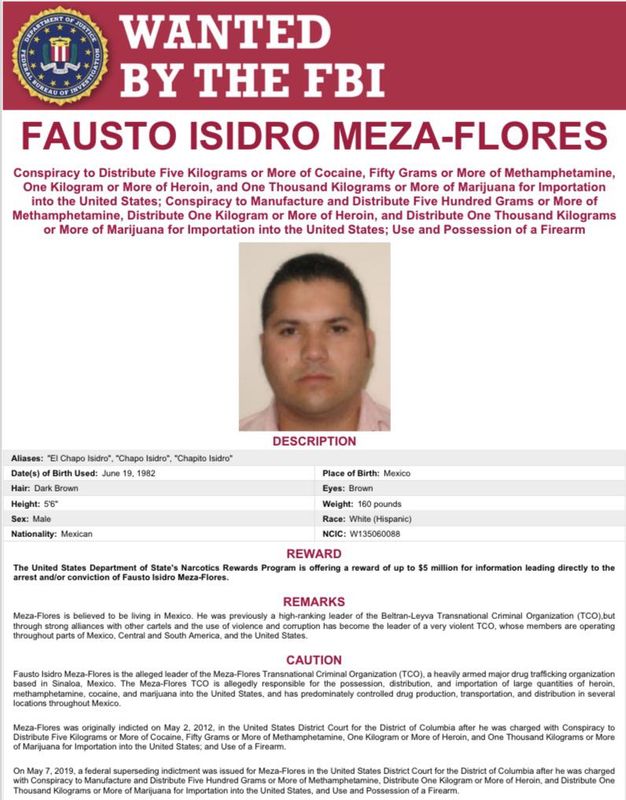
GUASAVE, Mexico, November 22, 2026 — Mexican special forces captured Fausto Isidro Meza Flores, the cartel boss known as “El Chapo Isidro”, in a night raid on this agricultural city in northern Sinaloa on Friday, November 20, in an operation that Mexican officials said left 11 people dead — four soldiers and seven alleged cartel gunmen — and set off a wave of retaliatory roadblocks across the region. Meza Flores, 44, was one of the FBI’s Ten Most Wanted Fugitives, with a $5 million United States reward on his head. He was arrested alongside seven others, including his alleged second-in-command, Germán, alias “Serafín”, and an alleged financial operator identified as José, according to Mexico’s Defense Ministry and Security Secretary Omar García Harfuch. US and Mexican officials said the operation by elite Mexican Army, National Guard and Air Force forces was aided by US intelligence.
The night Guasave went to war
The battle began at about 7 p.m. on Friday, according to residents and Mexican officials. Federal forces had located their target and moved on a house in Guasave, a farming city of roughly 290,000 people in the heart of Sinaloa’s coastal plain. The Defense Ministry said the arresting force came under attack with firearms and explosives, and that troops entered the house and detained Meza Flores and the men with him. Helicopters and drones circled overhead as gunfire spread across the city — a fight residents described as happening, in effect, everywhere at once.
The violence did not stay in Guasave. As word of the capture spread, gunmen set up at least 10 roadblocks and set vehicles ablaze on roads around the region, including near Los Mochis, the larger city to the north — the standard cartel show of force that follows the fall of a major leader, designed to slow the security forces, free the boss if it is not too late, and remind everyone watching who still holds the streets. In Guasave itself, gunfire forced the evacuation of Kuroda Park in the middle of a baseball game, sending spectators scrambling from the stands. It was the second time in this conflict that Sinaloa’s violence has emptied a stadium, and it will not be remembered as the least frightening.
Because of the roadblocks and the fighting, the army and National Guard could not get their prisoner out of the city for hours. Meza Flores was not extracted until about 4 a.m. on Saturday, a federal official said — nine hours after the shooting started — and was then flown to Mexico City aboard a Mexican Air Force aircraft and handed to the Specialized Prosecutor’s Office for Organized Crime, known by its Spanish initials as SEIDO/FEMDO. Video released by the Defense Ministry showed the detainees being marched by heavily armed soldiers onto the aircraft. Eight people were arrested in total, Mexican authorities said.
Why this matters
Start with what this arrest is not. It is not the fall of a street gang or a mid-level trafficker: Meza Flores was, by the US government’s own accounting, one of the ten most wanted fugitives on earth, the head of an organisation Washington says moved drugs by the multiton, and a survivor — perhaps the last major survivor — of the Beltrán Leyva cartel, once one of the most violent organisations in Mexico. Removing him closes a chapter of cartel history that opened in 2008 and has been written in blood ever since.
It matters for three more reasons. First, it is a test of the US–Mexico security relationship at its most sensitive point: both governments say American intelligence helped locate the target while Mexican forces made the arrest — the model Washington has long demanded and Mexico City has long insisted must keep Mexican boots in front. Second, it lands in the middle of Sinaloa’s internal cartel war, where every arrest rearranges the balance between the factions fighting for the state; Meza Flores was not a bystander in that war but a participant, aligned with one side against the other. Third, it poses the oldest question in Mexico’s drug war in its sharpest form: whether taking the kingpin weakens the machine, or merely breaks it into smaller, more violent pieces. Sinaloa has answered that question both ways before. The next weeks will answer it again.
Who is El Chapo Isidro?
Fausto Isidro Meza Flores was born on June 19, 1982, in Navojoa, Sonora, according to his FBI wanted poster, and built his career in neighbouring Sinaloa. The nickname invites confusion: he is not related to Joaquín “El Chapo” Guzmán, the Sinaloa Cartel co-founder now serving a life sentence in the United States — “Chapo” is simply slang for a short man, and both men acquired it independently. Where Guzmán’s organisation was the establishment, Meza Flores made his name in the rebellion against it.
From Beltrán Leyva lieutenant to a cartel of his own
For years, the Beltrán Leyva brothers were the Sinaloa Cartel’s enforcers and partners — until January 2008, when Alfredo Beltrán Leyva was arrested in Culiacán. The brothers blamed Guzmán’s faction for betraying him, and the federation shattered into one of the bloodiest feuds in Mexican criminal history. When cartel leader Arturo Beltrán Leyva was killed by Mexican marines in Cuernavaca in December 2009, the organisation fragmented further, and its surviving commanders carved out territories of their own. Meza Flores emerged from that wreckage in northern Sinaloa: US authorities describe him as a former high-ranking Beltrán Leyva leader who went on to head his own organisation, the Meza-Flores Transnational Criminal Organization, and its armed wing, known as Los Mazatlecos, based around Guasave and Los Mochis.
The United States has been building its case against him for most of that time. He was first indicted in Washington, D.C., in 2012, with a superseding indictment and federal arrest warrant following in 2019. The US charges accuse him of conspiracy to manufacture and distribute methamphetamine, cocaine, heroin and marijuana for importation into the United States, together with firearms offences. The State Department says the Meza-Flores organisation smuggled multiton quantities of those drugs north, and US authorities have also linked the organisation to fentanyl trafficking — the allegation that, more than any other, raised his priority in Washington. On February 4, 2025, the FBI added him to its Ten Most Wanted Fugitives list as the 533rd fugitive named to it, and the State Department’s Narcotics Rewards Program offered up to $5 million for information leading directly to his arrest or conviction.
Sinaloa’s war within a war
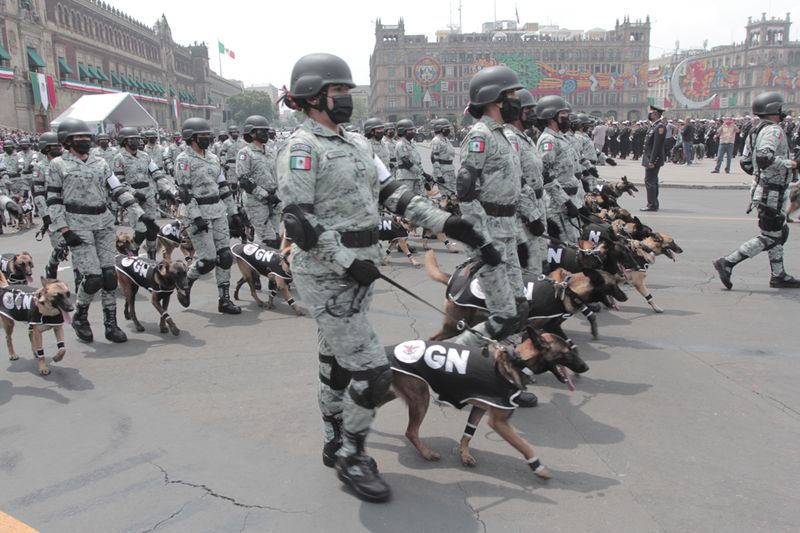
To understand the stakes of this arrest, it helps to see Guasave on the map of a state already at war with itself. Since the capture of Sinaloa Cartel co-founder Ismael “El Mayo” Zambada in 2024 and his delivery into US custody, the cartel’s two great factions — Los Chapitos, led by Guzmán’s sons, and Los Mayos, loyal to Zambada’s camp — have fought an internal war that has killed thousands and emptied whole districts of Culiacán. Meza Flores, whose organisation had its own long history of fighting the Guzmán faction since the Beltrán Leyva split, aligned with Los Mayos in that war, US and Mexican reporting has indicated — an alliance of old enemies against a common one. His capture therefore does not simply remove a trafficker from northern Sinaloa; it removes a combatant, a financier and a flag around which one side’s local forces were organised. Who holds Guasave and Los Mochis now — his successors, his allies, or his enemies — is a question that will be contested, and contested questions in Sinaloa are usually settled violently before they are settled any other way.
The American hand — and the extradition question
Both governments moved quickly to present the capture as a shared success. Mexico’s government said intelligence provided by the United States helped authorities locate and detain Meza Flores, while the forces that fought the battle in Guasave were Mexican — Army special forces, National Guard and Air Force, in an operation the Defense Ministry described as executed in phases, with stealth and surprise. That division of labour is the politically essential point for Mexico City, which has resisted any suggestion of US forces operating on Mexican soil, and for Washington, which gets the result it has sought since 2012 without crossing that line.
What neither government has confirmed is the endgame. Meza Flores is now in the custody of Mexico’s organised-crime prosecutors in Mexico City, and he faces process in Mexico as well as the long-standing US indictment in Washington. Whether he will be extradited to the United States — as Guzmán and Zambada were before him — has not been announced, and it should not be reported as decided: extradition is a legal and political process, not a formality, and its timing, if it comes, will be its own story. What is certain is that Washington wants him: a Ten Most Wanted listing, a $5 million reward and a fourteen-year-old indictment are not the paperwork of a government content to leave its man in a Mexican cell.
The retaliation, and what it was for
The overnight violence followed a script Sinaloa knows by heart. At least 10 roadblocks of burning vehicles were reported on the roads around Guasave and Los Mochis; a baseball crowd was evacuated under gunfire; helicopters worked over the city until the prisoner was gone. Roadblocks of this kind — the narcobloqueos — serve three purposes at once: they physically obstruct the forces trying to extract a prisoner, they demonstrate that the organisation can still shut down a region on command, and they write the first draft of the story for a frightened public, in which the state may have won the arrest but does not control the night. The nine hours it took to fly one handcuffed man out of Guasave is the measure of how well the script still works. It is also, read the other way, the measure of the state’s determination this time: the extraction was delayed, contested and costly — four soldiers dead, by the official count — but it was completed.
Who gains, who loses
The clearest winners are the two governments. Mexico’s security establishment, under García Harfuch, can point to a high-value capture executed by Mexican forces on Mexican terms — the kind of result that answers critics at home and in Washington simultaneously. The United States closes one of its oldest cartel files and validates the intelligence-sharing model it has pressed on Mexico for years. Los Chapitos gain, too, in the cold arithmetic of the faction war: their Mayos-aligned enemy in the north has lost its head, its number two and its money man in a single night, according to the official account.
The losers are equally clear. The Meza-Flores organisation loses the leader who held its alliances, its plazas and its discipline together — and it loses them simultaneously, which is how organisations shatter rather than bend. Los Mayos lose an ally and a northern buffer. And the people of Guasave and Los Mochis lose, as they reliably do, whichever flag wins: eleven dead by the official count, a night of terror, roads burned, a ballgame abandoned — and the near-certainty that the contest for the vacant territory will be fought in their streets.
The kingpin question
Every capture like this revives the argument that has run through two decades of Mexico’s drug war. The kingpin strategy — decapitating organisations by removing their leaders — has a genuine record: it ended the careers of Guzmán, of Arturo Beltrán Leyva, of Zambada, and now of Meza Flores, and each removal yielded intelligence, arrests and moments of state advantage. Its critics answer with the map: Mexico has more armed groups today than when the strategy began, because organisations that lose a unifying leader tend to fragment into factions that fight each other for the remains, and smaller groups finance themselves with extortion, kidnapping and predation on civilians in ways the big cartels often avoided. Security analysts warned within hours of this capture — as they warned after Zambada’s — that removing a capo in the middle of a faction war can set off another wave of violence rather than end one.
Both readings can be true of the same arrest, and in Sinaloa they usually are. The honest assessment of the Guasave operation is that it is a real victory with a price already partly paid — four soldiers and seven alleged gunmen dead, by the official account — and a bill still to come. Whether the state can convert a spectacular arrest into durable control of northern Sinaloa is a question of garrisons, prosecutors, courts and years. The arrest took nine hours of fighting. The conversion, if it happens at all, will take far longer, and it will not be televised.
What the numbers say
Five numbers frame the story. $5 million: the State Department reward — the market price Washington put on information about one man. 533: his number on the FBI’s Ten Most Wanted list, which he joined on February 4, 2025, after evading a US indictment that dates to 2012. 44: his age — a reminder that the generation of capos formed in the 2008 Beltrán Leyva split is now the old guard of a war that has outlived most of its founders. 11: the dead, on the official Mexican count — four soldiers and seven alleged cartel gunmen — a toll that makes this one of the costliest cartel arrests in recent years. And 8: the number arrested alongside the headlines, including, officials said, the organisation’s number two and its financial operator — the detail that may matter most, because organisations survive losing a chief far more easily than losing the chief, the deputy and the money in one night.
What happens next
Three scenarios now compete. The first is consolidation: the state holds northern Sinaloa with a heavy federal presence, the Meza-Flores organisation’s remnants accept a successor or absorption by their Mayos allies, and the violence of Friday night proves to be the spasm, not the sequel. The second is succession war: lieutenants contest the plazas of Guasave and Los Mochis, Los Chapitos move north into the vacuum, and the region gets a new front in a war that already has too many. The third is fragmentation — the critics’ scenario — in which the organisation breaks into local cells that answer to no one, and the violence becomes smaller in scale, closer to civilians and harder to end.
Running alongside all three is the legal track. Watch, first, for the formal charges Meza Flores faces in Mexico and the court that takes them; second, for any extradition request from the United States and Mexico’s answer to it — a decision that has not been announced and should not be assumed; and third, for the streets: whether the roadblocks return, whether a successor’s name begins to circulate, and whether Guasave’s next baseball crowd gets to watch a whole game. The capture of El Chapo Isidro is the end of a fourteen-year manhunt. What it is the beginning of, Sinaloa will learn the hard way — it always does.
Related coverage: Honduras Yorito Massacre: 12 Killed in Yoro Attacks · Three Guilty in Mexico Murders of Australian Surfers and U.S. Friend · Operation TorNado: 354 Arrested in Global Dark Web Drug Crackdown
Sources
Sources: Associated Press, November 21, 2026 — “Cartel leader captured in northern Mexico in a bloody firefight that left 11 dead” — northcountrypublicradio.org. CNN, November 21, 2026 — “Cartel kingpin on FBI’s most wanted list captured in dramatic Mexican military operation” — cnn.com. Reuters, November 21, 2026 — reporting on the Guasave operation, the roadblocks near Los Mochis and the Kuroda Park evacuation. US Department of Justice, November 2026 — statement on the arrest of Fausto Isidro Meza Flores — justice.gov. US Department of State — Narcotics Rewards Program listing for Fausto Isidro Meza Flores — state.gov; FBI Ten Most Wanted Fugitives listing and wanted poster (Federal Bureau of Investigation). The death toll and operational details are as stated by Mexico’s Defense Ministry and Security Secretary Omar García Harfuch and are attributed as such; extradition to the United States has not been confirmed. Analysis in this article — on motives, gains and scenarios — is Signal Post News’s own and is distinguished from the reported facts above.