World · Honduras · Latin America
At least 12 people were killed in four separate attacks across the rural municipality of Yorito in Yoro department, northern Honduras, in the early hours of Wednesday, November 18 — a night of killing police attribute, as a working hypothesis, to organised crime, and that has drawn an emergency intervention from President Nasry Asfura and a deployment of up to 500 police and soldiers.
At least 12 people were killed in the early hours of Wednesday, November 18, in four separate attacks across the rural municipality of Yorito in Yoro department, northern Honduras — a coordinated night of killing that police attribute, as a working hypothesis, to organised crime, and that has drawn an emergency response from President Nasry Asfura, a deployment of up to 500 police and soldiers, and a manhunt across one of the most violent departments in the country. The Honduras Yorito massacre — 12 killed in two small villages in a single night — is the deadliest single episode in Yoro this year and an early, brutal test of the Asfura government's offensive against armed groups.
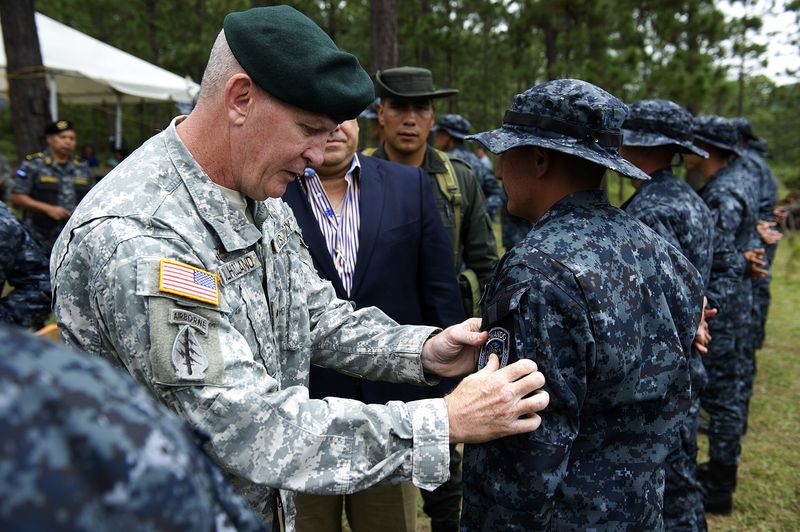
Four attacks in two villages
Police spokesman Edgardo Barahona told Reuters that three of the attacks took place in the village of Vallecillos — one at a soccer field and two at homes — and that three people were killed in each, nine in total. A fourth attack, in the village of Pacayales (also reported as El Pacayal), killed three more. Police Commissioner Lenin Pineda told AFP: “Twelve people lost their lives in the early hours of this morning in four separate incidents in Yoro.” One of the victims was reportedly a local government official. No arrests in connection with the killings had been announced by Wednesday evening, and investigators were still working to formally identify all of the dead.
The victims — and what is not yet confirmed
Honduran television network Televicentro preliminarily identified the three Pacayales victims as a Yorito municipal councilwoman, her husband and her son, who was a minor. That identification is preliminary and has not been confirmed by Reuters; Signal Post News is reporting it as local reporting, not as an established fact. Secondary local summaries of the overall toll describe five women, four men and three children among the dead; those breakdowns likewise come from local reporting and remain subject to official identification. What is confirmed by police, via both Reuters and AFP, is the total: at least 12 people killed in four attacks.
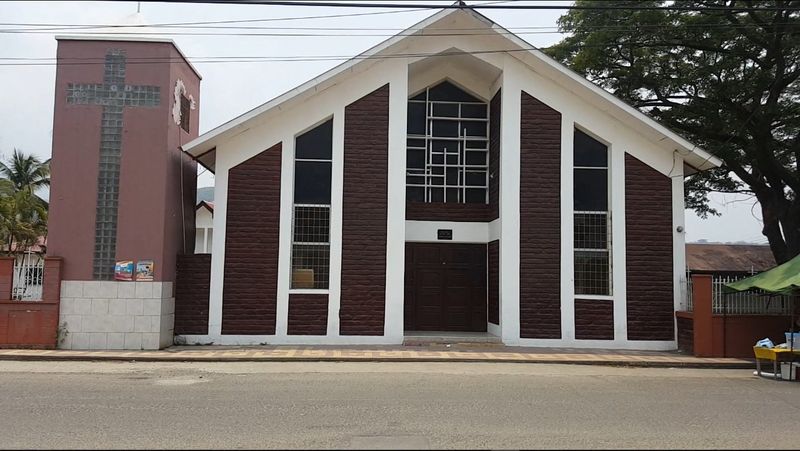
The ‘Devil’s Cartel’ and the Sunday arrests
The killings happened in an area where security forces are conducting operations against a group that calls itself the Devil’s Cartel (Cartel del Diablo), which Honduran authorities recently designated a terrorist organisation. Barahona told Reuters that police have “always assumed it was the work of organized crime groups” — a working hypothesis, not a confirmed attribution. Police have NOT officially confirmed that the Devil’s Cartel carried out the Yorito attacks, and they have NOT confirmed that the massacre was a reprisal for what happened on Sunday. On Sunday, November 15, police arrested the 60-year-old mother and the 18-year-old sister of Esteban Gumercindo Ferrera Rodas, known as “El Diablo,” whom authorities describe as the group’s alleged leader, in the community of Chilindrones, Sulaco. On Monday a judge ordered both women held on terrorist-association charges, with an initial hearing set for Friday, November 20. Both deny wrongdoing; the mother told reporters she had not seen her son in three years. Ferrera Rodas himself remains at large. With those arrests, the number of alleged members of the group detained reached 22, according to AFP and local reporting. All of those detained are alleged members facing charges — none has been convicted.
A threat audio — authenticity unconfirmed
On Monday, November 16, an audio recording attributed to the Cartel del Diablo circulated on social media threatening anyone who sells food, water or soft drinks to police in Sulaco, Victoria and Yorito in Yoro, and in Marale in Francisco Morazán. La Prensa reported that authorities had NOT confirmed the authenticity of the recording. It is evidence of the climate of intimidation around the police operation — not, on its own, evidence of who carried out Wednesday’s killings.
The state responds: 400–500 personnel and an emergency council
Police deployed investigative teams to Yorito and announced the transfer of between 400 and 500 police and military personnel to reinforce Yoro. President Nasry Asfura held an emergency meeting at the Presidential Palace, announced an emergency intervention in Yoro, and convened an extraordinary meeting of the National Defence and Security Council. The scale of the response — a department-level intervention ordered from the palace within hours — signals how seriously the government reads the challenge: an armed group able to threaten shopkeepers for selling water to police, and a massacre in four places at once, is a direct contest over who governs rural Yoro.
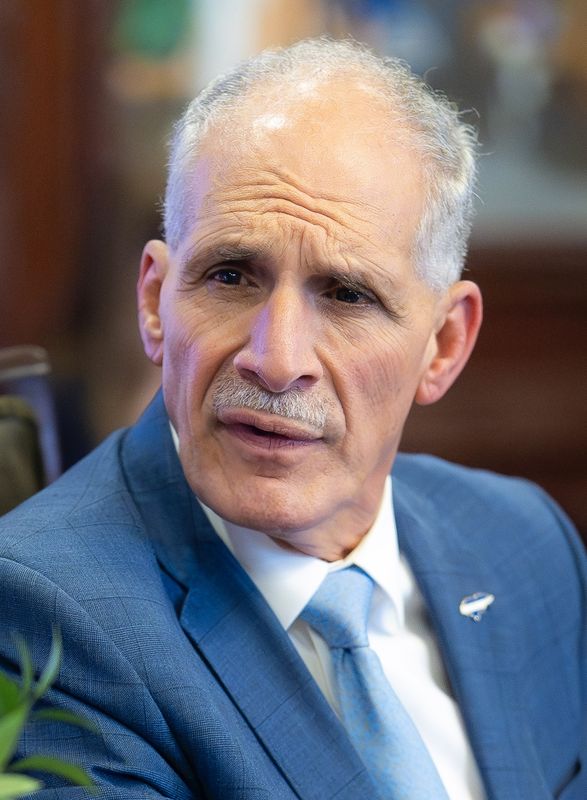
Why this matters
Three things make Yorito more than one terrible night. First, the pattern: four simultaneous attacks in two villages is not a robbery or a feud — it is a demonstration of coordination and territorial reach, the kind of operation armed groups use to announce that the state’s writ does not run somewhere. Second, the sequence: the killings came three days after the arrests of the alleged leader’s mother and sister and two days after a threat audio named Yorito itself. Police are right to treat the reprisal theory as a hypothesis rather than a fact — but if investigators do establish that link, it would mean the group answered a family arrest with mass murder, an escalation doctrine Honduran authorities have not previously had to plan around. Third, the politics: Asfura took office in January 2026 promising a hard offensive against armed groups, and his administration has authorised searches without a court warrant and allows tattoos to be used as evidence to charge suspects — powers supporters call necessary and critics call an invitation to abuse. Yorito is where that argument stops being abstract. A government that cannot protect a soccer field in Vallecillos will struggle to justify sweeping powers; a government that answers massacre with mass arrests will be judged on whether it catches the actual gunmen.
Context: Yoro’s long count of mass killings
According to figures from Honduras’s National Human Rights Commission (CONADEH) summarised in local reporting, Yoro recorded 24 incidents of multiple deaths between December 2022 and August 2026, with 84 victims — not counting Yorito. With this massacre, Honduras has recorded 33 mass killings so far in 2026, according to the same source chain. Those numbers describe a department where multi-victim killings are recurrent, not exceptional — and where each new operation against an armed group has historically been followed by the group reasserting itself. The regional picture is similar: across Latin America, governments are expanding military-style responses to organised crime while armed groups splinter and retaliate, a dynamic visible from Colombia’s rural battlegrounds to Ecuador’s cartel wars.
Who benefits, who loses
Nobody in Yorito benefits. The residents of Vallecillos and Pacayales lose neighbours, security, and the ordinary freedom to sell a soft drink to a police officer without fearing a threat recording. The Asfura government loses either way it moves slowly — every day without an arrest reads as impunity — yet also risks losing legitimacy if the emergency intervention sweeps up the innocent alongside the guilty, as critics of warrantless searches and tattoo evidence warn it could. The armed groups of Yoro, whoever fired the shots, gain the one currency they trade in: proof that they can act in four places at once and vanish. The clearest losers, if the reprisal hypothesis proves true, are the families of detained suspects everywhere in Honduras, who would learn that an arrest can make them targets — and the two women in custody in this case, whose Friday hearing will now take place in the shadow of a massacre they are not charged with committing.
What happens next
Four dates and decisions will shape the story. Friday’s initial hearing for Ferrera Rodas’s mother and sister will test what evidence the state actually holds on terrorist association. The manhunt for Ferrera Rodas himself — the alleged leader, still at large — is now the operation’s centre of gravity. The formal identification of all 12 victims, and the forensic work in Vallecillos and Pacayales, will either support or undermine the organised-crime hypothesis police are working from. And the emergency intervention in Yoro — 400 to 500 additional personnel — will be measured by a simple standard: whether the next threat audio, if one comes, is answered by arrests of the people who made it. Signal Post News will update this story as identifications and arrests are confirmed.
Related coverage
From ‘Most Aggressive Threat’ to ‘Compliant Security Partner’: Hegseth Signs a Military Deal in Caracas — Hegseth’s Latin America security tour, which included Honduras as an expected stop.
Drone Attack on Colombian Army Base in Santa Rosa del Sur Kills Three Soldiers, Seriously Wounds 16 — armed-group violence against security forces in Colombia.
Wife and Daughter of Ecuador Drug Kingpin ‘Fito’ Arrested in Colombia — the arrest of a cartel leader’s family members in the region.
More world coverage: Signal Post News — World
Sources
Sources: Reuters, November 18, 2026 — police spokesman Edgardo Barahona on the four attacks in Vallecillos and Pacayales and the organised-crime working hypothesis. AFP, November 18, 2026 — Police Commissioner Lenin Pineda (“Twelve people lost their lives in the early hours of this morning in four separate incidents in Yoro”); the Devil’s Cartel designation and the Asfura security offensive, as carried by international outlets. La Prensa and El Heraldo — the Sunday arrests in Chilindrones, Sulaco, and the unconfirmed threat audio. Televicentro — preliminary identification of the Pacayales victims. National Human Rights Commission (CONADEH) figures via local reporting — Yoro multiple-death incidents, 2022–2026. Photographs: Honduran TIGRES special police graduation, Tegucigalpa, 2014, U.S. Army photo by Spc. Steven Young via DVIDS (public domain); the church of Santa Rita, Yoro, by Obeduran (CC BY-SA 4.0); President Nasry Asfura, DHS photo by Tia Dufour (public domain) — all via Wikimedia Commons and credited in the captions.