Dominican Republic bans Haiti stadiums
Dominican Republic bans Haiti stadiumsHaiti national team stadium banHaiti DR Nations League clashHaiti 4-1 Dominican RepublicWilson Isidor Hispaniola remarkFelix Sanchez stadium crowd troubleHaiti Costa Rica Nations LeagueDominican federation FIFA complaintHispaniola Haiti Dominican Republic tensionsKelvin Cruz stadium ban
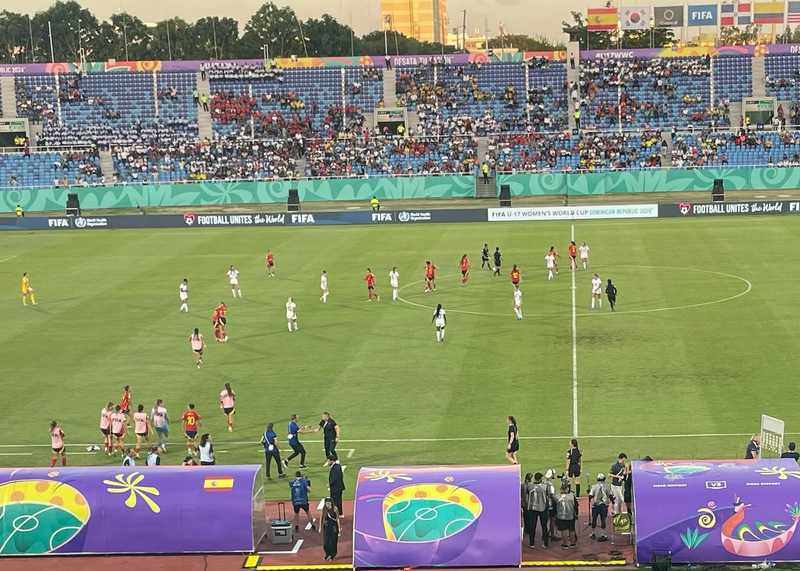
SANTO DOMINGO — The Dominican Republic banned Haiti's national soccer team from playing at its sports venues on Friday, one day after crowd trouble marred a Concacaf Nations League match between the two island neighbors at the Estadio Olímpico Félix Sánchez in Santo Domingo. Announced by Sports Minister Kelvin Cruz and immediately endorsed by President Luis Abinader, the decision converts a 4-1 Haitian victory into the most symbolic escalation yet in the fraught relationship between the two countries that share the island of Hispaniola.
"What we saw yesterday with a gate at the Felix Sanchez, a sports facility that has cost millions and millions of pesos to make it shine, is unacceptable," Cruz said on Friday, declaring a zero-tolerance policy on indiscipline at the country's venues. Abinader backed him within hours: "The position of the Sports Minister is the position of the Government."
Video circulating on social media on Thursday night showed groups of fans forcing entrances at the stadium, with one gate visibly damaged, according to Reuters, which first reported the ban on Friday. The Haitian Football Federation did not immediately respond to Reuters' request for comment — but on its official X account it struck a markedly different tone, calling Thursday "a beautiful night for Haiti, beautiful night for the island we share," and adding: "On the field, competition; off the field, respect for the neighbor."
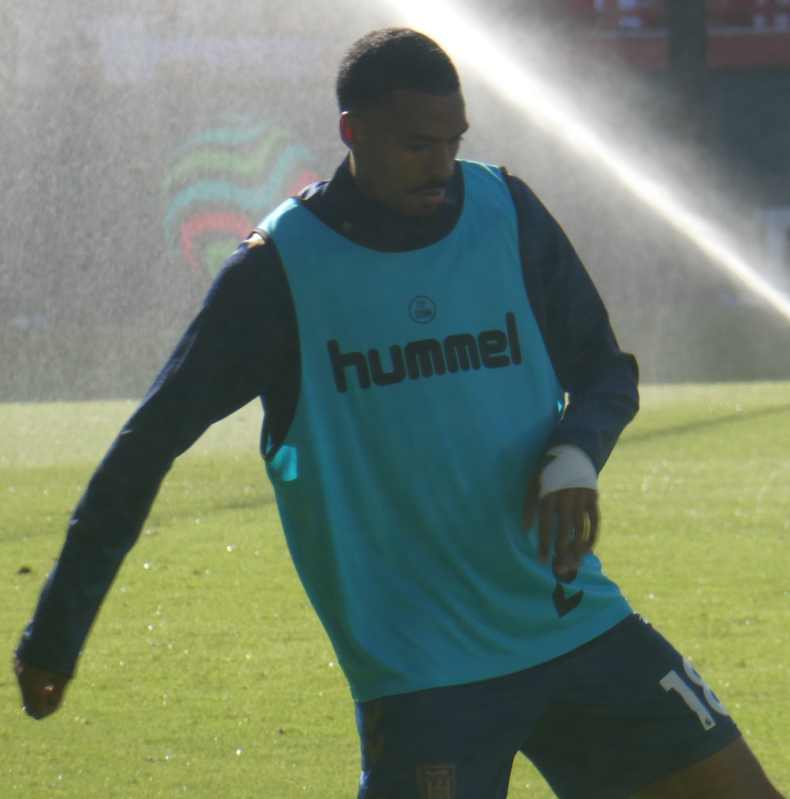
On the field, there was little to dispute. Haiti won 4-1, with Sunderland striker Wilson Isidor scoring twice, and the result left Haiti on nine points in Nations League Group A against the Dominican Republic's six.
The three words that lit the fuse
The crowd trouble alone might have produced a fine and a warning. What turned it into a diplomatic incident was a camera and a striker's mouth. Isidor was filmed after the match saying "Hispaniola is Haiti" — three words that landed in Santo Domingo like a provocation. Dominican federation president Jose Deschamps called the remark "a lack of respect for national sovereignty" and said the federation would file a formal complaint with FIFA and Concacaf. Neither body had responded at the time of publication.
The remark matters because of what it implies, not what it says on its face. Hispaniola is the name of the island both countries share; asserting it "is Haiti" reads, to Dominican ears, as a claim over the whole of it. Whether Isidor meant it as bravado, history, or something in between is impossible to know — he has not publicly clarified the comment — and that ambiguity is itself part of the story: in a bilateral relationship this strained, every utterance gets read at its most hostile.
Why this matters
Start with how rare this is. Governments close stadiums after disasters; federations ban clubs after riots; FIFA suspends national teams after wars. But a state barring a neighboring country's national team from all of its sports venues over one night of crowd trouble — announced by a sports minister and countersigned by a president within 24 hours — sits in a category of its own. It is collective punishment wearing the clothes of crowd control, and everyone involved knows it.
It matters, second, because of what Haitian football has become. This is a national team that has not played a senior home international on home soil since 2021, whose national stadium was overrun by gangs in March 2024, and which staged its "home" games in Curaçao and Jamaica. In June, it completed a 52-year journey back to the World Cup. For millions of Haitians living through state collapse, the team is one of the last functioning symbols of the nation — and now, the country next door has closed its gates to them too.
And it matters because the ban is almost certainly not really about a gate. A damaged entrance does not require a nationwide venue ban on a foreign national team; a fine, a closed-doors order, or a security review would do. The scale of the response reveals the scale of the politics: this is the Abinader government's posture toward Haiti, expressed through football.
How we got here: one island, two countries, a deepening rift
The Dominican Republic and Haiti share the island of Hispaniola and little else at the moment. The current downward spiral began in September 2023, when Abinader suspended visa issuance to Haitians and threatened to close the border entirely over a canal dispute — then did close it. By March 2024, Dominican authorities were effectively refusing entry to travelers holding Haitian passports, a move confirmed when airlines said they would not board Haitian-passport holders bound for Santo Domingo.
Then came the deportations. On October 2, 2024 — two years to the day before the stadium ban — Abinader announced a plan to deport up to 10,000 Haitians per week, citing an "excess" of migrants. By early April 2025, Amnesty International reported that more than 180,000 people had been deported under the plan. The arithmetic is worth pausing on: 10,000 a week is a pace of more than half a million people a year, a figure that would represent one of the largest forced-removal campaigns in the hemisphere's recent history.
Across the border, Haiti has been coming apart. Armed gangs that already controlled much of Port-au-Prince overran the country's national stadium, the Stade Sylvio Cator, in March 2024. The Kenya-led multinational security mission was transformed into a UN-backed Gang Suppression Force in September 2025; the Security Council renewed its mandate on September 29, 2026, through March 31, 2027 — but only about 1,500 of the 5,550 authorized personnel have actually deployed, and the renewal is explicitly aimed at securing Haiti's first election in a decade, planned for December.
Football kept going anyway. Barred from home soil, Haiti played its World Cup qualifying "home" games primarily at the Ergilio Hato Stadium in Willemstad, Curaçao, and its current Nations League home fixtures at Sabina Park in Kingston, Jamaica. In 2023, Haiti's own sports ministry ordered the federation to stop staging home matches in the Dominican Republic after Abinader's border closure — a detail that makes Friday's ban, in one sense, symbolic: Haiti had already walked away from Dominican venues. What the DR has now done is make the rupture official, and permanent-sounding.
And then there is what the team achieved against this backdrop. On November 18, 2025, Haiti beat Nicaragua 2-0 in Curaçao to win its qualifying group and reach the World Cup for the first time since 1974 — a 52-year wait ended in exile, hundreds of miles from home. Duckens Nazon's six goals led all Concacaf scorers in qualifying. In June 2026, Haiti played the tournament itself and went out in the group stage — 0-1 to Scotland, 0-3 to Brazil, 2-4 to Morocco — but not before Isidor scored Haiti's first World Cup goal in 52 years. That is the team the Dominican Republic has now banned from its stadiums.
Who wins, who loses — and what the critics say
The winners: Abinader's government
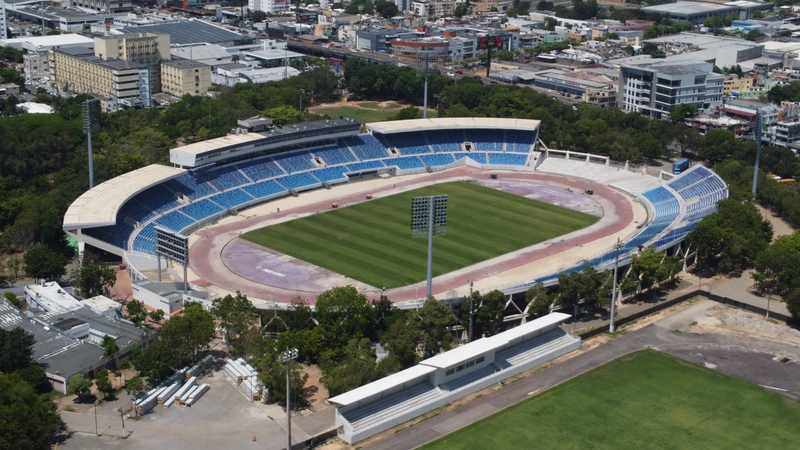
Domestically, this is cost-free toughness. The deportation pledge was popular; the border closure was popular; a sports minister defending a gleaming renovated stadium from "indiscipline" will be popular. Cruz's line about the "millions and millions of pesos" spent making the Félix Sánchez shine is doing deliberate work: it frames the ban as stewardship of public money, not as politics against Haitians. The stadium, renovated in 2024–2026 to host the 2024 FIFA U-17 Women's World Cup final and the 2026 Central American and Caribbean Games, is a genuine point of national pride — and genuine pride is the best cover a political gesture can have.
The losers: Haiti's players, Haiti's fans, and the Caribbean game
The players did not break the gate. That sentence, obvious as it sounds, is the core of the case against the ban: it punishes a squad — many of them diaspora players who chose Haiti, like the France-born Isidor — for the behavior of fans. Haitian supporters, including the large Haitian community living in the Dominican Republic itself, lose the chance to watch their team play a neighbor a short flight away. And Concacaf loses: the 2026/27 Nations League doubles as qualifying for the 2027 Gold Cup, and a venue ban between two member associations is the confederation's problem now, whether it wants it or not.
What the critics will say — and the honest reply
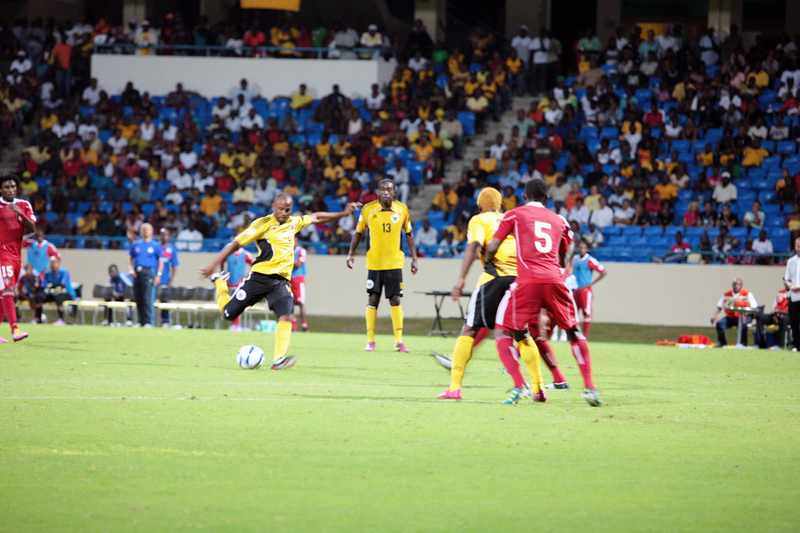
Critics will call this collective punishment, and they will have a point: no individual player committed an act of indiscipline on Thursday night. They will call it politicized sport, and they will have a point: the 24-hour minister-to-president pipeline is not how crowd-control decisions are normally made. They will call it disproportionate, and the comparison set backs them — a single damaged gate has produced a wider sanction than many actual stadium disasters have.
The honest reply, and it deserves to be stated plainly, is that the Dominican government is not wrong that crowd violence is a real problem, or that a state may protect its public venues. Forcing entrances and damaging a gate at a 24,863-capacity stadium is genuinely dangerous; people get crushed that way. A government that had imposed a fine, ordered a security review, or played the next fixture behind closed doors would be on unassailable ground. The ban goes past that ground — and the distance past it is the measure of the politics.
The numbers behind the story
Put the figures in context and the story sharpens. The deportation pledge — 10,000 people a week — annualizes to more than 520,000 removals a year; the 180,000 deportations Amnesty documented by April 2025 work out to roughly 7,000 a week, meaning the government ran at about two-thirds of its announced pace. That is still an extraordinary tempo: it implies removing, every single week, a population larger than most Dominican towns.
The stadium arithmetic matters too. The Félix Sánchez holds 24,863 for football — and it has seen crowds of 35,000, well beyond its sporting capacity. Thursday's trouble, whatever its scale, happened in a venue that routinely operates at its limits when full.
The football math is simpler: after Thursday, Group A reads Curaçao 9 points, Haiti 9, Dominican Republic 6, Costa Rica 3, Trinidad and Tobago 0, Nicaragua 0. Haiti's win was not just symbolic; it kept Les Grenadiers level with Curaçao at the top of the group.
And the precedent math is the most telling. Iraq was banned from hosting internationals for 28 years (1990–2018). Russia's teams were suspended indefinitely in 2022. English clubs served five years after Heysel in 1985. Every one of those sanctions followed war, invasion, or mass death. The Dominican Republic has now imposed a venue ban on a neighboring national team over a damaged gate — a sanction without a modern precedent at anything like this scale, for anything like this cause.
What happens next
Scenario 1 — The FIFA complaint goes nowhere
This is the base case. FIFA almost never punishes players for post-match remarks, and "Hispaniola is Haiti" — however provocative in Santo Domingo — is closer to trash talk than to the discriminatory conduct FIFA's disciplinary code actually targets. A host nation's decision about who may use its stadiums is, moreover, a sovereign matter, not obviously a FIFA one. Expect strongly worded letters and no action.
Scenario 2 — Concacaf steps in
Concacaf has more skin in this game than FIFA does. The Nations League is its flagship competition and a Gold Cup qualifying pathway; a venue ban between two of its members, announced mid-tournament, is a confederation problem. The plausible middle outcome is quiet mediation: future DR–Haiti fixtures, if any are scheduled, played at neutral venues, with the ban left formally in place but practically bypassed. Nobody involved has an interest in a public climbdown.
Scenario 3 — The ban hardens into policy
The risk is that Friday's announcement becomes the new normal — the template for how the Abinader government handles the next incident, on a pitch or off it. Remember the irony: Haiti's own sports ministry barred the federation from Dominican venues back in 2023. The two countries' football relationship was already broken; Friday's ban just made it official, with a presidential signature. The practical bite falls on future tournaments the DR might host and any qualifier that would otherwise be staged on Dominican soil.
Before any of that, there is Sunday. Haiti plays Costa Rica at the Estadio Ricardo Saprissa Aymá in San José on October 4 — a match the Grenadiers must win to keep pace with Curaçao at the top of Group A. Whatever happens in the federation offices, eleven Haitian players will walk onto a pitch in Costa Rica this weekend carrying a week that began with a famous win and ended with a ban. That, as much as the politics, is the story.
Sources
- Reuters, October 2, 2026: "Dominican Republic bans Haiti from its stadiums after Nations League clash"
- Concacaf: official Concacaf Nations League page
- Haitian Football Federation (@fhfhaiti) on X
- Reuters, September 29, 2026: "UN renews Haiti force mandate for six months after fresh gang killings"
- Reuters, June 1, 2026: "Haiti end 52-year World Cup wait, aim to lift nation from turmoil"
- Amnesty International, October 2024: Dominican Republic — deportation plan (AMR 27/8597/2024)
Reporting cutoff: October 2, 2026 at 9:30 p.m. PDT. The ban and the quoted statements rest on Reuters' October 2 reporting; crowd-trouble details come from video described in that report. FIFA and Concacaf had not responded to the Dominican federation's planned complaint at publication. The FHF's X posts are as quoted in Reuters' report.