The Matan Kahana Knesset speaker vote was the first real test of power in Israel’s new parliament — and Benjamin Netanyahu lost it. By 66 votes to 52, lawmakers on Tuesday handed the gavel to a former F-16 squadron commander from Gadi Eisenkot’s Yashar party, which means the bloc trying to end Netanyahu’s long hold on power now controls what the Knesset debates, what it votes on and whom it summons — even though Netanyahu still sits in the prime minister’s office.
JERUSALEM, November 18, 2026 — Israel’s Knesset elected Matan Kahana of Gadi Eisenkot’s centre-right Yashar party as its 26th speaker on Tuesday, November 17, in the first institutional transfer of power since last month’s deadlocked election stripped Prime Minister Benjamin Netanyahu of his majority. Kahana won 66 votes in the 120-seat parliament, according to the Knesset spokesperson, while Ofir Katz — the Likud coalition whip put forward by Netanyahu’s camp — received 52. The two men were not voted on head-to-head: lawmakers voted on each candidacy separately, and Kahana’s 66 cleared the 61-vote majority threshold with five votes to spare. He replaces Amir Ohana of Netanyahu’s Likud, who held the chair through the outgoing coalition.
Taking the podium, Kahana struck a deliberately unifying note. “The Knesset of Israel is the home of all citizens of the State of Israel, and I intend to be the Speaker for everyone,” he said in his inaugural address, as reported by Reuters. Eisenkot, the former military chief of staff who has been tasked with forming the next government, framed the result as the election verdict finally taking institutional form: Kahana’s appointment, he said, was a “proper democratic move which reflects the absolute majority who voted for change,” according to CNN.
Why this matters
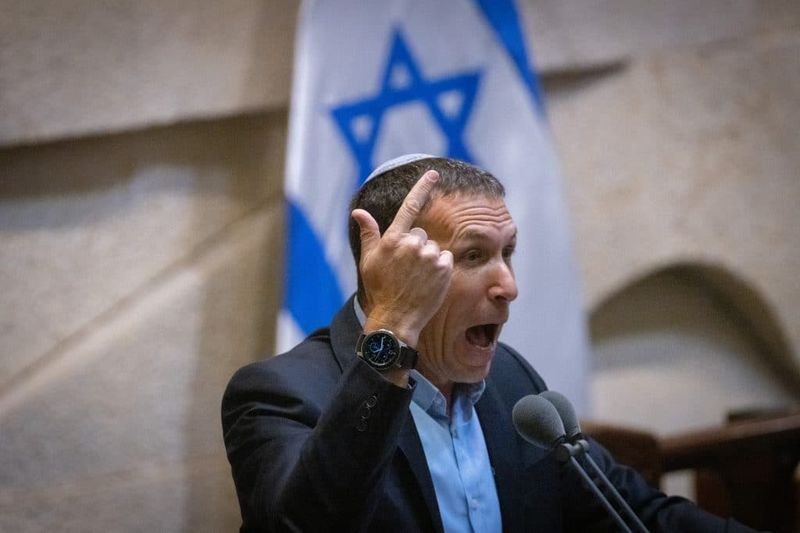
Analysis, clearly labelled as such: a speakership vote is normally procedural housekeeping, the kind of ballot that passes unnoticed a week after an election. This one was the opposite — the first moment since October 27 when the new parliament’s arithmetic stopped being a projection and became a fact of institutional life. Netanyahu loses Knesset speaker control not as a symbolic embarrassment but as a working loss of power. In Israel’s unicameral Knesset, the speaker wields considerable influence over what legislation is brought to a vote and over the legislative agenda as a whole: which bills reach the floor, in what order, and how much time the government of the day must spend fighting measures it cannot stop.
A speaker vote as the first transfer of power
The practical consequences begin immediately. The Eisenkot bloc Knesset speaker vote installs an opposition chairman over the chamber while Netanyahu remains caretaker prime minister — a split-screen government in which the executive is still his and the legislature no longer is. The bloc has also taken interim chairs of key Knesset committees, including finance and foreign affairs and defense. Avigdor Liberman of Yisrael Beytenu, chairing the Foreign Affairs and Defense Committee, has said he will summon all of Israel’s security chiefs for briefings — oversight Netanyahu’s outgoing coalition had little appetite for. A speaker and committee chairs aligned against a caretaker government can set the agenda, summon officials, advance repeal bills and force votes the prime minister would rather never face. None of that requires a new government to exist. That is precisely why Likud fought the vote so bitterly, and why Eisenkot’s camp treated a procedural ballot as a founding moment.
How Israel got here: deadlock, a mandate and a sworn-in parliament
The road to Tuesday’s vote ran through three dates. On October 27, Israel voted, and the result — tracked from the election-night exit polls onward — left no bloc with a majority: Netanyahu’s right-wing and ultra-Orthodox bloc holds 53 of 120 seats, while the opposition holds 67 in total, split between 48 seats across four Jewish parties and a record 19 for two Arab parties, the Joint List and Ra’am. On November 8, President Isaac Herzog tasked Eisenkot with forming a government after party recommendations ran 67 for Eisenkot against 46 for Netanyahu — the decision this site reported when Herzog tapped Eisenkot, not Netanyahu, to form Israel’s next government. And on November 10, the new parliament was sworn in with no new government in place, leaving Netanyahu as caretaker prime minister and every institutional question — starting with the speaker’s chair — open.
There is a historical pattern here that Israeli politicians know well: in a parliamentary system without a settled majority, the speakership fight is the first test of whether a claimed majority is real. Recommendations to a president are private letters; a speaker vote is a public roll call. Parties that will not yet commit to a coalition can still be counted, named and bound by a vote on the record. Eisenkot’s camp understood that, which is why it forced the question early, while its 67 recommendations were still warm. The 66 votes Kahana received — one short of the 67 who recommended Eisenkot to Herzog — told both camps almost exactly where the parliament stands, and how Netanyahu’s position weakened as the ultra-Orthodox parties withheld their support during the consultation round has now been confirmed on the Knesset floor rather than merely reported.
The numbers: what 66, 52 and 61 actually prove
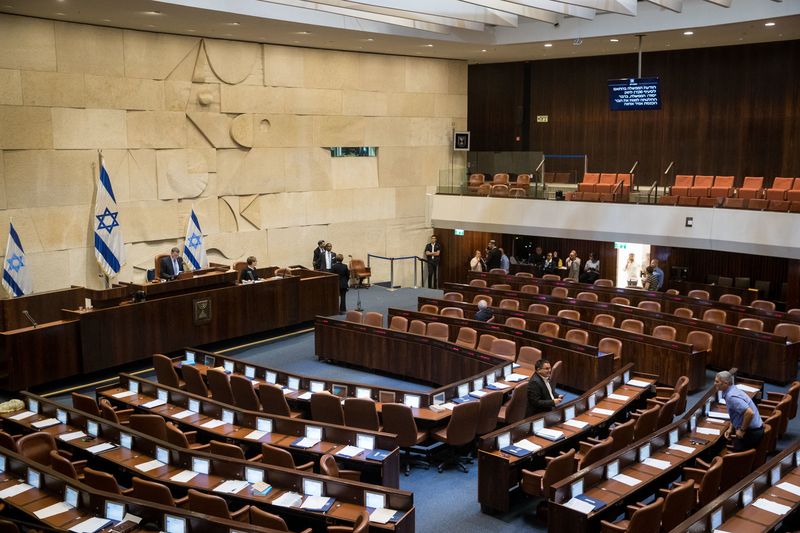
Three numbers organise everything about the Knesset speaker vote 66 52 result. The first is 61, the majority threshold in a 120-seat parliament: Kahana’s 66 cleared it, which means the anti-Netanyahu majority is not a polling construct — it can be assembled, on the record, for a vote that matters. The second is 52, the support for Katz: Netanyahu’s bloc holds 53 seats, so his candidate ran at roughly bloc strength and no better, evidence that the caretaker prime minister picked up no meaningful support beyond his own camp. The third is the gap between the two totals — 118 votes cast across the two separate ballots — which underlines that these were sequential votes on each candidate, not a single head-to-head contest.
What the arithmetic proves is narrower than what either camp claims, and it is worth being precise. The opposition’s 67 seats divide into 48 held by four Jewish parties and 19 held by the Joint List and Ra’am. Kahana’s 66 shows those two components can vote together for an institutional office. It does not show they can vote together for a government: Arab parties supporting a speaker from outside a coalition is a far smaller step than Arab parties sustaining a government’s budget, security policy and confidence votes. Equally, Netanyahu’s 53 is a blocking minority, not a governing one — large enough to deny Eisenkot an easy path, too small to restore Likud’s control of the chamber, as Amir Ohana replaced as speaker now demonstrates. The vote, in short, proves the old majority is gone. It does not yet prove a new one exists.
What the Eisenkot bloc wants to do with the gavel
The bloc’s stated legislative priorities explain why it wanted the chair before it has a government. First is a state, independent commission of inquiry into the failures leading to the October 7, 2023 Hamas attack — a demand Netanyahu has opposed and refused throughout his tenure, and the single most politically charged item on the list. Second are prime-ministerial term limits, aimed squarely at the man who has dominated Israeli politics for a generation. Third is repealing the judicial-overhaul laws passed by Netanyahu’s outgoing coalition — the changes to how judges are selected and the limits weakening the attorney general that sparked the unprecedented nationwide protests of 2023. Fourth is undoing the media-regulation overhaul that expanded government control over communications and news.
Amir Ohana replaced as speaker — and what changes on day one
Each of those items can now begin moving through a Knesset whose agenda the bloc controls, even while the ministries remain in caretaker hands. That sequencing is deliberate. A commission of inquiry bill, a term-limits bill and repeal bills debated under Speaker Kahana would dominate the political agenda through the coalition talks themselves, raising the cost to any party of drifting back toward Netanyahu. The speakership, in other words, is not a consolation prize for a bloc that cannot yet form a government; it is leverage inside the negotiation over whether it can.
Who is Matan Kahana?
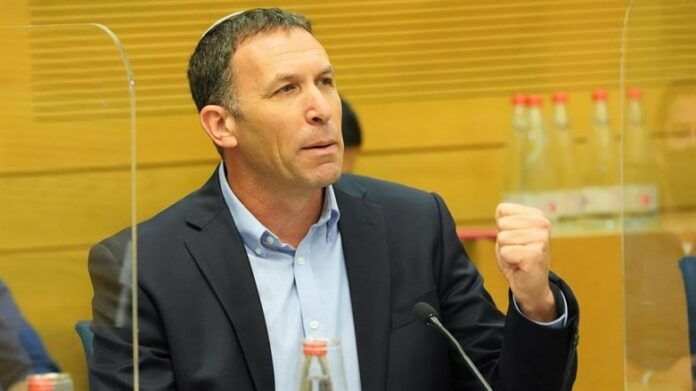
For readers asking who is Matan Kahana, the biography explains why Eisenkot — himself a former chief of staff — chose him as the bloc’s face in the chamber. Kahana is 54, born in Haifa on July 29, 1972. He served three and a half years as a combat soldier in Sayeret Matkal, the IDF’s most elite reconnaissance unit, where he served alongside Naftali Bennett. He then became an Israeli Air Force F-16 fighter pilot and squadron commander, flying in the 2006 Lebanon war and in Gaza operations in 2008, 2012 and 2014, and retired from the IDF in 2018 as a colonel. He holds law degrees from Bar-Ilan University.
Yashar party Matan Kahana: the road into politics
Kahana entered politics in 2019 with the New Right and then Yamina, and served as Minister of Religious Services from June 2021 to May 2022 in the Bennett-Lapid government — the last coalition to govern Israel without Netanyahu. In September 2025 he was a founding member of Yashar, the party Eisenkot built for this election, and he was elected on its list on October 27. The Yashar party Matan Kahana profile — religious Zionist, decorated combat officer, former minister in a cross-bloc government — is calibrated for exactly the role he now holds: a speaker whose own biography makes it harder for Likud to paint the new majority as illegitimate, and whose promise to be “the Speaker for everyone” will be tested by how he handles the chamber’s angriest debates.
“A low point”: the furious reaction from Likud
Likud condemned the vote in the harshest terms available to it, calling it “a low point in the history of the Knesset” and saying Kahana was elected with the votes of “terror supporters” — Likud’s characterisation of the Arab lawmakers whose support was decisive. During the vote, members of Netanyahu’s bloc shouted “shame” at Arab lawmakers voting for Kahana, CNN reported. The reaction reflects a strategic choice as much as anger: unable to win the vote, Likud set out to delegitimise it, framing the new majority as dependent on parties it casts as beyond the pale — the same argument it will deploy against any government Eisenkot tries to build with outside Arab support.
Two related claims require careful attribution. Netanyahu has alleged fraud in Arab voting; that allegation is baseless — election officials say they have seen no evidence of fraud that could have influenced the outcome. Separately, Channel 12 reported that law enforcement is investigating whether Netanyahu’s office planted information that prompted a vote-buying inquiry in Arab communities; Netanyahu’s office dismissed that report as “false.” Signal Post News reports both strictly as what they are — an allegation without supporting evidence, and a reported investigation whose central claim is denied — and neither changes the certified arithmetic of October 27 or of Tuesday’s vote.
Controlling the Knesset is not forming a government
The hard part starts now. Israel government formation 2026 remains stuck on the same arithmetic that produced the deadlock: Eisenkot’s proposed “national emergency government” would be a 48-seat minority built from the four Jewish opposition parties, kept alive by the Arab parties staying outside the coalition while not voting to bring it down. That construction has a powerful internal opponent. Liberman has vetoed reliance on Arab parties and is instead pushing talks with the ultra-Orthodox parties, Shas and United Torah Judaism (UTJ) — an alternative that Tuesday’s vote showed to be distant: UTJ declined to recommend Netanyahu to Herzog, yet still voted for Katz rather than Kahana, and Shas remains loyal to Netanyahu.
Israel coalition talks: Eisenkot’s three doors, all of them narrow
The Israel coalition talks Eisenkot is running therefore face three doors, none of them wide. The first is the minority government with outside Arab support, blocked by Liberman’s veto. The second is peeling the ultra-Orthodox parties away from Netanyahu, contradicted so far by their behaviour — UTJ’s speaker vote being the latest data point. The third is a unity arrangement: Naftali Bennett reportedly favours unity talks with Likud, but Netanyahu conditions any talks on remaining prime minister himself, which Eisenkot has rejected outright. A bloc that can win 66 votes for a speaker can still fail to assemble 61 for a government, because a speakership asks parties only to agree on who chairs the chamber, while a coalition asks them to agree on budgets, conscription, religion and state, and war.
Four scenarios for the rest of the mandate
Eisenkot’s clock is the frame for everything that follows. He holds a 28-day mandate from November 8, with a possible 14-day extension from the president; about four and a half weeks of that window remain, putting the deadline in early December, extendable by roughly two weeks. Four scenarios cover the plausible outcomes. In the first, Eisenkot forms his minority “national emergency government” of the four Jewish opposition parties, sustained from outside by the Arab parties — possible only if Liberman’s veto softens or is overridden by his partners. In the second, a unity deal emerges, most plausibly if Likud’s price — Netanyahu remaining prime minister — collapses under the pressure of a Knesset the bloc now controls. In the third, Eisenkot fails and the mandate passes to Netanyahu, whose 53 seats would then face the same 61-seat wall from the other side. In the fourth, no one forms a government and Israel heads to another election next year, with Tuesday’s speaker vote as the campaign’s opening argument.
What to watch in the remaining window is concrete: whether the bloc uses its new agenda control to force early votes on the commission of inquiry and term limits, converting institutional power into negotiating pressure; whether UTJ’s behaviour shifts from voting with Netanyahu to abstaining, the classic first sign of a party pricing its options; whether Liberman’s summons of the security chiefs produces the kind of public reckoning that moves coalition math; and whether Kahana’s speakership itself holds the 66 together when the votes stop being procedural. Netanyahu remains caretaker prime minister until a government is formed, and caretaker governments in Israel have survived long stretches before. But a caretaker who has lost the Knesset is governing on borrowed institutional time — and on Tuesday, for the first time since the election, the clock visibly started.
Sources
- Reuters — Eisenkot-led bloc replaces Netanyahu ally as Knesset speaker: the November 17, 2026 vote electing Matan Kahana as the Knesset’s 26th speaker with 66 votes to 52 for Ofir Katz, per the Knesset spokesperson, and Kahana’s inaugural pledge to be “the Speaker for everyone.”
- CNN — Israel Knesset speaker vote and Netanyahu: Eisenkot’s description of the appointment as a “proper democratic move,” the “shame” shouts directed at Arab lawmakers during the vote, and the separate-ballot procedure for the two candidacies.
- Knesset spokesperson, via Reuters and CNN: the official vote figures — 66 votes for Matan Kahana (Yashar) and 52 votes for Ofir Katz (Likud) in the 120-seat Knesset, with lawmakers voting on each candidate separately.