Politics · Israel · Middle East
The Netanyahu Eisenkot form government contest tilted on Thursday when United Torah Judaism — the ultra-Orthodox party that backed Benjamin Netanyahu after five straight elections — told President Isaac Herzog it would recommend no one at all. With an Arab-led party endorsing Gadi Eisenkot instead, the former military chief now leads the recommendation count, and Netanyahu’s path to staying prime minister runs through parties that are openly pricing their support.
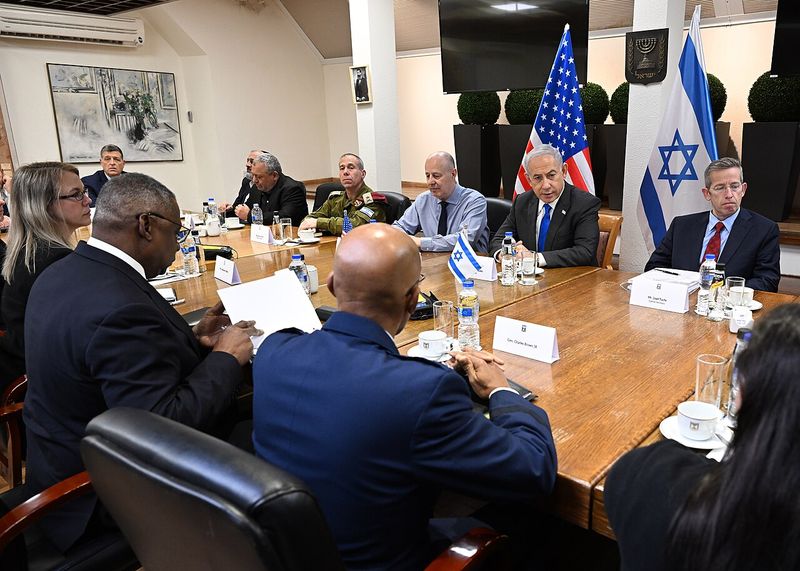
Jerusalem’s government-formation ritual is usually theatre with a known ending: the parties file past the president, say the name everyone expects, and the leader of the largest bloc collects the mandate. On Thursday, the theatre broke. United Torah Judaism, one of the two big parties of Israel’s ultra-Orthodox voters and a pillar of Benjamin Netanyahu’s coalitions for years, walked into President Isaac Herzog’s residence and declined to recommend any member of the Knesset to form a government — not Netanyahu, not his rival Gadi Eisenkot, no one. Hours of consultations later, the arithmetic of Israel’s deadlocked October 27 election had a new shape: Eisenkot, the former chief of staff leading the Yashar party, stood ahead in the count of recommendations, helped by an endorsement from the Arab-led Ra’am party, while the prime minister’s own religious allies made clear that their support is no longer his by default.
Track it live: Live Israel war map and tracker
Herzog now holds the decision. He was due to meet Netanyahu and Eisenkot separately at his Jerusalem residence on Thursday night, closing two days of party consultations that began on Wednesday after the Central Elections Committee delivered the certified results. He has until November 11 to hand one of them the mandate to form a government. Whoever receives it gets 28 days, with a possible 14-day extension, to assemble a coalition of 61 in the 120-seat Knesset — a number neither man’s bloc is anywhere near reaching on its own, as the election-night count already showed. Until a new government is sworn in, Netanyahu remains prime minister of a caretaker government, running a country still at war on several fronts with a parliament that has not agreed on who should lead it.
What happened on Thursday: an ally of five elections sits on its hands
United Torah Judaism (UTJ) holds seven seats, split between two factions: Degel HaTorah, representing Lithuanian ultra-Orthodox Jews with four seats, and Agudat Yisrael, representing Hasidic communities with three. According to Times of Israel reporting carried across Thursday’s coverage, the spiritual leaders of both factions instructed their lawmakers not to recommend a candidate. The party then informed Herzog, in the president’s office’s own summary, “that it has decided not to recommend any member of Knesset to form a government.” Agudat Yisrael chairman Yitzhak Goldknopf put the message in blunter political language: “We are not committed to any political bloc.”
The break is a genuine rupture, not a negotiating formality. AFP noted that UTJ backed Netanyahu after each of the previous five elections; Reuters described it as a longstanding coalition ally and called Thursday’s move a setback for the prime minister. Israeli media reported that Netanyahu personally telephoned UTJ lawmakers in the days before the consultations to lock in their support and reaffirmed his commitment to their central demand — a law settling the status of ultra-Orthodox seminary students. The party’s answer, in effect, was that promises have stopped being currency. “In whatever government is next formed, our immediate item is sorting out the status of Torah students,” UTJ lawmaker Isaac Pindrus said — a sentence that reads as a condition addressed to both candidates at once.
The second blow came from the opposite end of the political map. Ra’am, the Arab-led party of Mansour Abbas, which won eight seats, told Herzog it recommends Eisenkot. That endorsement matters beyond its size: both Eisenkot and Netanyahu have ruled out building a government with the Arab-led parties, yet it is an Arab-led party’s recommendation that now puts Eisenkot in front. The second Arab-led list, the Joint List, with 11 seats, had not declared its position in the reports published on Thursday; Reuters said it was expected to endorse Eisenkot later in the day, which would widen his lead further.
The numbers: 53, 48, 19 — and a recommendation count that flipped
Start with the certified result of the October 27 election, delivered to Herzog on Wednesday. Netanyahu’s Likud is the largest single party with 27 seats, and his wider religious-nationalist bloc holds 53. Eisenkot’s Yashar won 21, and his four-party opposition bloc — Yashar, Naftali Bennett and Yair Lapid’s B’Yachad with 12, the Democrats with 8 and Avigdor Liberman’s Yisrael Beytenu with 7 — holds 48. The two Arab-led parties won an unprecedented 19 seats between them, Ra’am’s 8 and the Joint List’s 11, on high turnout including among Arab voters. A government needs 61. Netanyahu is eight short; Eisenkot is thirteen short; and the 19 Arab-led seats, which neither leading man will govern with, sit across every path either of them can draw.
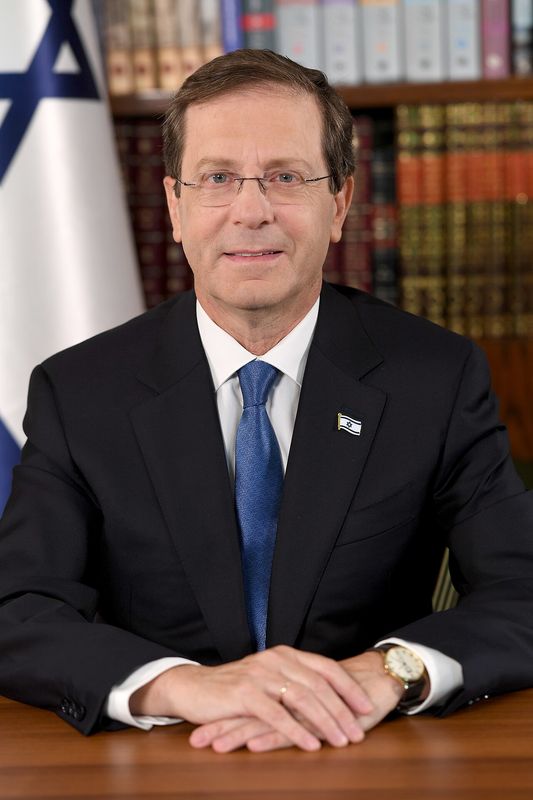
Recommendations are not seats, but they are the scoreboard Herzog traditionally follows — the mandate normally goes to the candidate more parties recommend. By the counts reported by Ynet and the Times of Israel and carried in Thursday’s international coverage, Netanyahu’s recommenders — Likud, Shas, Religious Zionism and Otzma Yehudit — total 46 lawmakers. Eisenkot’s — Yashar, B’Yachad, the Democrats and Yisrael Beytenu — totalled 48 before Ra’am’s eight were added, taking him to 56. UTJ’s seven abstentions are the swing: had they followed five elections of habit, Netanyahu would lead 53 to 56’s mirror image and the week would read as continuity. Instead the prime minister trails the recommendation count while leading the seat count — the precise inversion that makes Herzog’s choice a real decision rather than a formality. If the Joint List follows Ra’am, Eisenkot’s recommendation total reaches 67, a majority of the Knesset recommending a man whose own bloc holds 48 seats.
Hold those two facts together, because the gap between them is the whole story. A recommendation is a statement about who should try first; it is not a promise to join, or even to sustain, the government that follows. Eisenkot can be recommended by 67 lawmakers and still be unable to pass a budget if the parties behind those recommendations refuse to sit together — and several of them do refuse, starting with his own ally Liberman, who opposes any government resting on Arab-party support. Netanyahu, conversely, can trail in recommendations and still be the only man who can actually assemble 61, if UTJ’s abstention is what many observers took it to be: a price negotiation, conducted in public, by a party that would still serve under him once its price is met.
The draft law underneath everything
UTJ’s price has a name, and it predates this election by decades: the exemption from military service for ultra-Orthodox men who study in seminaries full-time. Netanyahu preserved the exemption in practice but, facing fury from a public whose reservists have served repeated tours through the wars in Gaza, Lebanon and Iran, never enshrined it in law. When no law passed, UTJ and Shas — the other ultra-Orthodox party, representing Sephardic communities — quit his coalition in July 2025. Their demand now is a statute, with the status of Torah students settled before, not after, the next government forms. Ultra-Orthodox Jews are roughly 14 percent of Israel’s population, with far higher birthrates than secular Israelis, which is why a question about a few thousand seminary students is also a question about the country’s demographic future: every year the exempt cohort grows, and every year the burden on everyone else grows with it.
That is what makes UTJ’s neutrality so much more than pique. Eisenkot has been adamant about closing the exemptions; a government he leads on the votes of secular parties cannot easily hand UTJ the law it wants. Netanyahu can hand it over — he has protected the arrangement for years — but at the price of enraging the broader public that just voted, in large numbers, for parties promising change, and of confirming the opposition’s central charge that his survival is bought with other people’s service. Note, too, the split inside the ultra-Orthodox camp on Thursday: Shas, which shares the draft demand, nevertheless recommended Netanyahu, putting its seats inside his 46. UTJ chose the demonstration. Two parties with the same policy goal ran two different tactics — loyalty with a claim on credit, versus neutrality with a claim on both sides — and which tactic history rewards will be decided by which man forms the government and what he signs in its coalition agreements.
The other fight: Netanyahu disputes the result itself
Running underneath the consultations is a second contest, over whether the election that produced them was legitimate. Netanyahu has seized on an investigation by election officials into possible vote tampering to cast doubt on the outcome, accusing Arab-led parties of stealing the vote and, in a video filmed in the prime minister’s office on Wednesday, alleging “serious suspicions” that foreign powers put money into the election and questioning the loyalty of Arab citizens. His far-right allies, including National Security Minister Itamar Ben-Gvir, have called for the immediate arrest and interrogation of Arab party leaders. Critics accuse Netanyahu and his partners of trying to undermine a result they dislike — an accusation he denies.
The referee has already spoken. The Central Elections Committee said on Wednesday that the election’s integrity had not been compromised, and its head, Supreme Court Justice Noam Sohlberg, used the ceremony at Herzog’s residence to warn officials directly: “This is a real danger. One of the foundations of democracy is the peaceful transfer of power.” High turnout, including among the Arab minority, was a blessing, he said. Herzog’s own framing, as he opened the consultations, pointed the parties inward as much as outward: “Any reasonable person need only look at the security and diplomatic challenges before us, at the changing region around us, and remember the issues tearing us apart from within, to understand that an immense responsibility rests upon us.” A president choosing between two candidates is routine in Israel; a president choosing while the sitting prime minister disputes the count is not, and it raises the cost of every day the process takes.

Why this matters
Strip the personalities away and Thursday marks a structural change in Israeli politics: the ultra-Orthodox parties have stopped behaving as the automatic furniture of a Netanyahu government and started behaving as free agents in a hung parliament. For three years of war, the assumption underneath every Israeli political calculation was that Netanyahu’s bloc, whatever its unpopularity, cohered — that the religious parties’ interests were safest with him and would stay bought. An election that cost the bloc its majority has repriced every one of those relationships. UTJ’s abstention tells Netanyahu that even his oldest allies now invoice him in public, and it tells Eisenkot that the road to 61 might run, improbably, through a minority government tolerated from outside by parties that refuse to join it — UTJ on one flank, the Arab-led lists on the other, each extracting a different price and each able to bring the arrangement down.
The stakes travel well beyond coalition mathematics, because of what a caretaker government can and cannot easily do. Israel’s wars and ceasefires — Gaza, Lebanon, the confrontation with Iran and the diplomacy around all three — are being managed by a prime minister whose parliament has just declined to renew his majority, and whoever forms the next government inherits those files mid-crisis, as the October 7 reckoning election made the central question of the campaign. A long formation fight, a fragile minority government, or a second election early next year each carry a different risk: drift, collapse, or a country asked to vote again while its strategic position is unsettled. Netanyahu, notably, has form here — Israel held repeated elections between 2019 and 2022 precisely because blocs could not convert seats into governments — and his opponents’ fear, voiced throughout the campaign, is that deadlock itself suits an incumbent who remains in office while it lasts.
There is also a quieter significance in who made Eisenkot’s lead possible. Arab citizens of Israel, voting at rates that helped their parties to a record 19 seats, have become the hinge of a Jewish-majority state’s government formation — recommended by no one into a coalition, courted by everyone for arithmetic. Ra’am’s Mansour Abbas has argued for years that Arab parties should trade recommendations for influence over budgets and policy rather than sit in permanent opposition; Thursday was that doctrine’s biggest test, and it worked on its own narrow terms: his eight seats decided who leads. Whether influence without membership survives contact with an actual coalition negotiation — and whether Eisenkot, who has promised a government resting on a “Zionist majority,” can accept the arrangement that made him the front-runner — is the contradiction at the centre of the next month.
What happens next
The immediate sequence is fixed. Herzog meets Eisenkot and Netanyahu on Thursday night, in ascending order of party size, ending the consultations. The new Knesset is sworn in on Tuesday, November 10. By Wednesday, November 11, Herzog must assign the mandate. His tradition-bound choice is Eisenkot, the recommendations leader; his discretion is real, and he could judge that Netanyahu — with the larger bloc and UTJ’s conditional availability — has the better practical chance of reaching 61. Either man then has 28 days, extendable by 14, to file a government. If the first fails, the mandate passes to the other; if both fail, the Knesset can rally behind any member with 61 signatures, and failing that, Israel votes again.
Watch four signals in the coming days. First, UTJ’s language: any softening from “no recommendation” toward a named price in writing means the negotiation phase has begun in earnest. Second, the Joint List’s delayed position, which decides whether Eisenkot’s recommendation lead is 10 seats or 21. Third, Liberman: if Eisenkot’s own ally hardens his refusal of Arab-supported arrangements, the recommendations lead becomes a paper asset, and Herzog may price it accordingly. Fourth, Netanyahu’s fraud campaign: a prime minister who might yet be asked to form a government is simultaneously arguing the election was compromised, and how far he pushes that claim — against his own election committee’s explicit finding — will shape both Herzog’s room to choose him and the country’s willingness to accept the choice. The deadlock Israel voted for on October 27 was supposed to be resolved by arithmetic. Nine days on, it is being resolved, slowly, by leverage — and on Thursday the leverage changed hands.
Reporting based on Reuters and AFP dispatches published on November 5, 2026; the Israeli president’s office statement on United Torah Judaism’s position; Central Elections Committee certified results and Justice Noam Sohlberg’s remarks as reported by Reuters; and Times of Israel and Ynet reporting on the recommendation counts and UTJ’s factional deliberations, as carried in syndicated coverage. Recommendation tallies are those reported by Israeli media; the Joint List had not announced its position in the reports available at publication.