Mamata Banerjee detained Delhi protest
The detention of Banerjee, TMC lawmakers and other opposition figures turned a youth-led challenge to India's election administration into a wider test of political legitimacy and protest policing.

NEW DELHI — Delhi Police detained former West Bengal chief minister Mamata Banerjee while she sat on a dharna near the South Avenue bus stand on October 10, as the Cockroach Janta Party protest demanded the removal of Chief Election Commissioner Gyanesh Kumar. TMC MPs were detained with her, while police took scores of demonstrators and multiple opposition leaders into custody across the capital.
Why this matters: a dispute over the referee, not just the result
Election disputes normally focus on candidates, parties and outcomes. This confrontation is more fundamental: the protesters are challenging the neutrality of the institution that administers the contest. Critics of the Special Intensive Revision, or SIR, say the voter-list process could remove legitimate voters and advantage the Bharatiya Janata Party. The Election Commission and the BJP deny that the revision is designed to favour the governing party.
That disagreement turns administrative procedure into a question of democratic trust. A voter roll must be accurate enough to exclude duplicate or ineligible entries without making lawful voters prove their identity through burdensome or uneven procedures. If either side convinces the public that the process is politically manipulated—or that criticism of it is knowingly exaggerated—the dispute will shape confidence before the next ballot is cast.
The detention of a nationally prominent opposition leader raises the stakes. Police can argue that restrictions and preventive detentions were necessary to keep a large, unauthorized gathering from overwhelming central Delhi. Opponents can answer that mass detention, suspended links and a heavy security presence make lawful dissent harder and amplify the concerns about institutional fairness that brought people into the streets.
What happened across Delhi
CJP protest October 10 2026: from Jantar Mantar plan to scattered marches
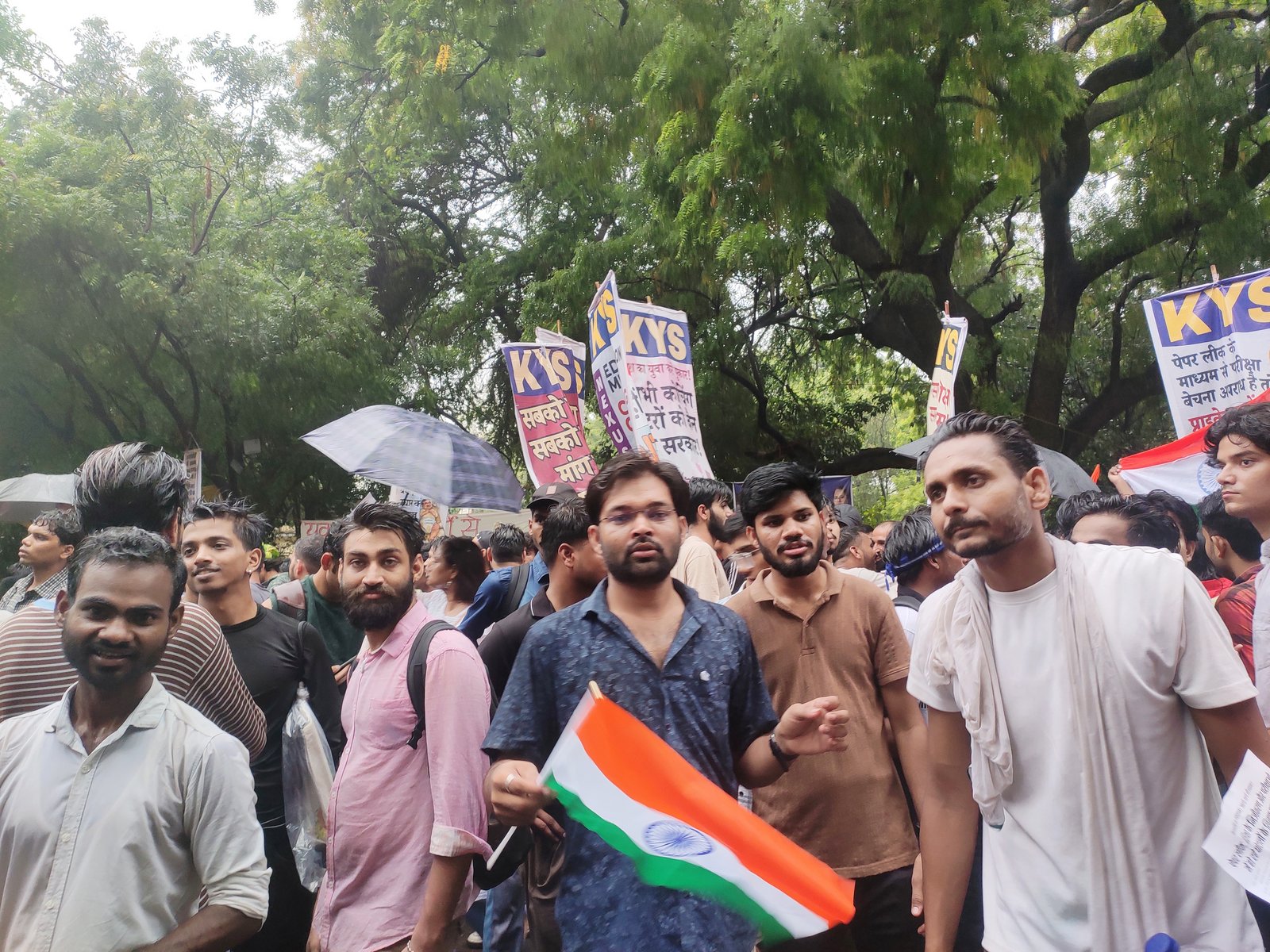
The CJP had called supporters toward Jantar Mantar to press for Gyanesh Kumar's removal. Delhi entered the day under an extensive security operation. Thousands of personnel were deployed, while travel and telecommunications links were suspended in parts of the capital. The restrictions dispersed the protest rather than ending it: groups appeared at multiple points, including near INA and Imtiaz Khan Marg.
A Reuters witness, in an account carried by TBS, described young protesters chanting as officers moved scores of people into buses. At Imtiaz Khan Marg, SFI workers toppled barricades. Those two scenes capture the day's competing narratives. Protesters presented a movement determined to reach a political landmark; police confronted crowds willing to test physical boundaries despite restrictions.
Abhijeet Dipke detained airport: the leadership was intercepted early
CJP founder Abhijeet Dipke and senior leaders Saurav Das and Ashutosh Ranka were detained when the aircraft carrying them from Mumbai arrived in Delhi, according to a CJP statement reported by TBS. Removing senior organizers before they reached the protest site reduced the chance of a single, coordinated march. It also gave the movement a new grievance: the organizers could argue that the state was preventing assembly before any central gathering occurred.
The episode matters strategically. Decentralized movements can survive the detention of leaders because supporters can organize through local networks. But without recognized organizers on the ground, protest discipline becomes harder to maintain, messages become less consistent and isolated confrontations can define public perception.
Delhi Police detains opposition leaders as the protest broadens
Banerjee's dharna near South Avenue shifted the event from a youth-led mobilization to a national opposition confrontation. ANI, as carried in The Daily Jagran's live blog, reported that Banerjee and other TMC MPs were detained. The same live coverage later reported the detention of AAP figures Arvind Kejriwal, Saurabh Bhardwaj and Sanjay Singh. Samajwadi Party chief Akhilesh Yadav backed the call for Kumar's resignation.
That breadth does not automatically amount to a durable alliance. The parties involved compete with one another in several states and approach national strategy from different positions. Yet detention can temporarily align rivals by giving them a shared institutional grievance and a common visual story: opposition leaders being removed by police while challenging the conduct of an election authority.
Background: the SIR row and three days of opposition protests
SIR voter list controversy: accuracy versus exclusion risk
The Special Intensive Revision sits at the center of the dispute. Supporters of a more intensive review argue that voter lists require periodic correction to remove duplicates, records of deceased people and other invalid entries. Critics say the documentation process can fall most heavily on poor, migrant or otherwise vulnerable voters, creating a risk that eligible citizens are excluded.
Opposition parties have framed that risk through accusations of “vote chori,” or vote theft. That phrase is a political allegation, not an established finding. The Election Commission and the BJP reject claims that the revision is biased. The factual question will turn on implementation: which records are flagged, what notice voters receive, how easily they can correct errors and whether exclusion patterns are geographically or socially uneven.
CEC Gyanesh Kumar resignation demand follows three days of pressure
The October 10 demonstration followed three days of INDIA-bloc protests over the voter-list dispute. Opposition leaders, including Rahul Gandhi and Priyanka Gandhi, had been detained during earlier demonstrations, and police filed a case connected with protesters entering Akashvani Bhawan. By Friday, the CJP's mobilization had become the latest and most youth-centered phase of the pressure campaign.
Signal Post News's pre-protest briefing on the Delhi lockdown and metro disruption documented how authorities prepared to contain the march. The result was not a conventional rally at one site but a contest over access, mobility and visibility across the capital.

Who benefits, who loses—and what each side's critics say
The government and police: control gained, legitimacy tested
The immediate operational advantage belongs to the authorities. Early detention of organizers, transport restrictions and a large security deployment prevented demonstrators from consolidating at one symbolic location. That reduces the risk of a dense crowd, prolonged occupation or a confrontation at Jantar Mantar.
The cost is political. Images of senior politicians and young demonstrators being detained can broaden attention beyond the original SIR policy dispute. Critics of the police will say the response was disproportionate and designed to suppress criticism. Critics of the opposition will say leaders deliberately escalated an unauthorized gathering to create arrest imagery and convert an administrative dispute into a street spectacle.
The opposition and CJP: attention gained, unity still unproven
The CJP benefits from national visibility. Detaining Dipke before he reached the protest site makes the group central to the story even without a single mass rally. TMC, AAP and Samajwadi Party leaders also gain a shared platform for attacking the Election Commission's conduct.
But attention is not the same as organization. A movement loses practical capacity when its leaders and supporters are dispersed, transport is disrupted and communications are constrained. Opposition parties must still agree on evidence, legal strategy and a sustained political message. Their critics will argue that the alliance is tactical and that accusations against the SIR substitute slogans for proof. The opposition's answer will depend on whether it can document specific errors or exclusions in the rolls.
Banerjee's national profile also gives the TMC a larger role in an argument that extends beyond West Bengal. Broader India coverage, including the site's report on Prime Minister Narendra Modi's negotiations with Washington, shows how national politics increasingly turns on whether regional parties can shape debates usually dominated by the central government.
What the numbers imply: scores detained, thousands deployed
Reports describe scores of people being placed into buses, with hundreds reported detained across the capital. Those terms should not be treated as a precise final count. They establish scale: this was not one isolated arrest, and police prepared for a citywide operation rather than a small demonstration at a single gate.
The asymmetry is equally important. Thousands of security personnel confronting crowds measured in the hundreds indicates that authorities prioritized prevention and containment. A large deployment can deter violence and keep routes open; it can also make the response look disproportionate if the protest remains largely nonviolent. The meaning of the number therefore depends on outcomes as well as intent—whether serious disorder was prevented, whether force was proportionate and how quickly normal movement and communications resumed.
The airport detentions show a different kind of scale: a small number of targeted interventions can have an effect larger than mass arrests if those interventions remove organizers. Conversely, every high-profile detention creates another political messenger after release. The state can reduce a crowd's immediate coordination while increasing the opposition's media reach.
What happens next
Legal challenges to the SIR could become the decisive arena
The most consequential next step may occur in court or through the Election Commission's review process rather than on the street. Challenges could focus on notice requirements, documentation burdens, deadlines, appeal rights and evidence of unequal exclusion. A legal ruling that orders clearer safeguards could lower tensions without accepting the opposition's broader allegation of partisan intent. A ruling that upholds the process could strengthen the Commission, though political disagreement would likely continue.
Opposition unity depends on evidence after the arrests
Detentions can produce a day of unity, but a durable coalition requires agreement about remedies. Parties may converge on demands for transparent roll data, independent auditing and accessible appeals even if they cannot agree on a single leadership structure. If they present documented cases, the dispute could stay alive through legislative and legal channels. If the campaign remains centered on accusation alone, the government will argue that the protest was more about mobilization than voter protection.
The protest movement's next moves
The CJP can try to replace a blocked central march with smaller demonstrations, state-level events, legal petitions and systematic collection of voter-roll complaints. Authorities, in turn, can release detainees, restore disrupted links and defend restrictions as temporary public-order measures—or continue preventive action if organizers announce new gatherings.
The immediate question is whether October 10 becomes a peak or a bridge. If the opposition converts the detentions into a common reform agenda and verifiable voter-list cases, the movement may widen. If parties retreat to separate state interests and the CJP cannot reorganize after its leaders' detention, the day may remain a dramatic but contained confrontation.