Macklemore Free Palestine tour
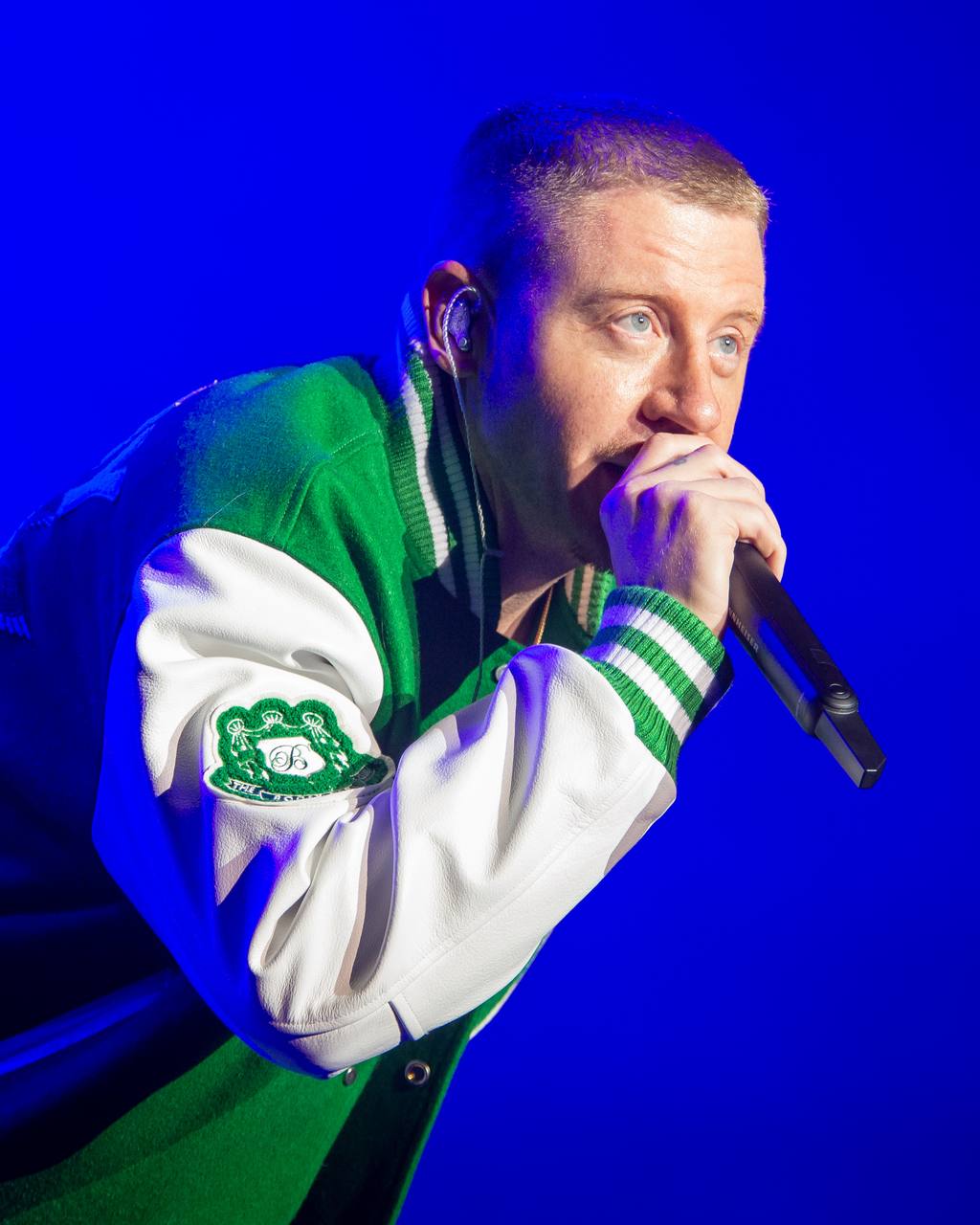
Macklemore announced a "Free Palestine Tour" this week, days after being dropped as the opening act on Ed Sheeran's stadium tour over his onstage pro-Palestine remarks — turning a career setback into one of the most confrontational artistic statements of the Gaza war's cultural fallout. The Grammy-winning Seattle rapper revealed the tour Thursday on Instagram: it kicks off October 26 in Dublin, Paris and London, with US dates and additional performers to be announced, and every dollar of proceeds will go to organizations supporting the Palestinian people. The Macklemore Free Palestine tour is a direct answer to the industry that cast him out — and a test of whether mainstream music still has room for protest.
What he announced
According to the tour flyer Macklemore posted to Instagram on September 25, the first three cities are Dublin, Paris and London, with the run beginning October 26. US dates and guest performers are promised later. "All proceeds from the tour will be sent to organizations supporting Palestine and the Palestine movement," the announcement states.
Macklemore framed the tour as a recruiting drive, not just a concert run. "This is a moment of momentum, and there is work to be done. So we're going on tour," he wrote. "So, as you all know, my schedule freed up a bit. I've spent the last week reaching out to artists who have shown up and used their stages to stand in solidarity with the Palestinian people, regardless of the consequences. Artists who understand that our platforms mean very little if we're only willing to use them when it's safe."
The message was pointed: this is a tour for the artists who spoke up anyway. "Being apolitical during a genocide doesn't work anymore," he said in the announcement. "People are asking artists to show up, educate themselves and be in community. To use the stage for more than entertainment. To push back when the call for a Free Palestine is met with attempts to silence it." (Israeli officials have strongly denied their actions in Gaza amount to genocide, describing them as self-defense.)
The night at MetLife: how we got here
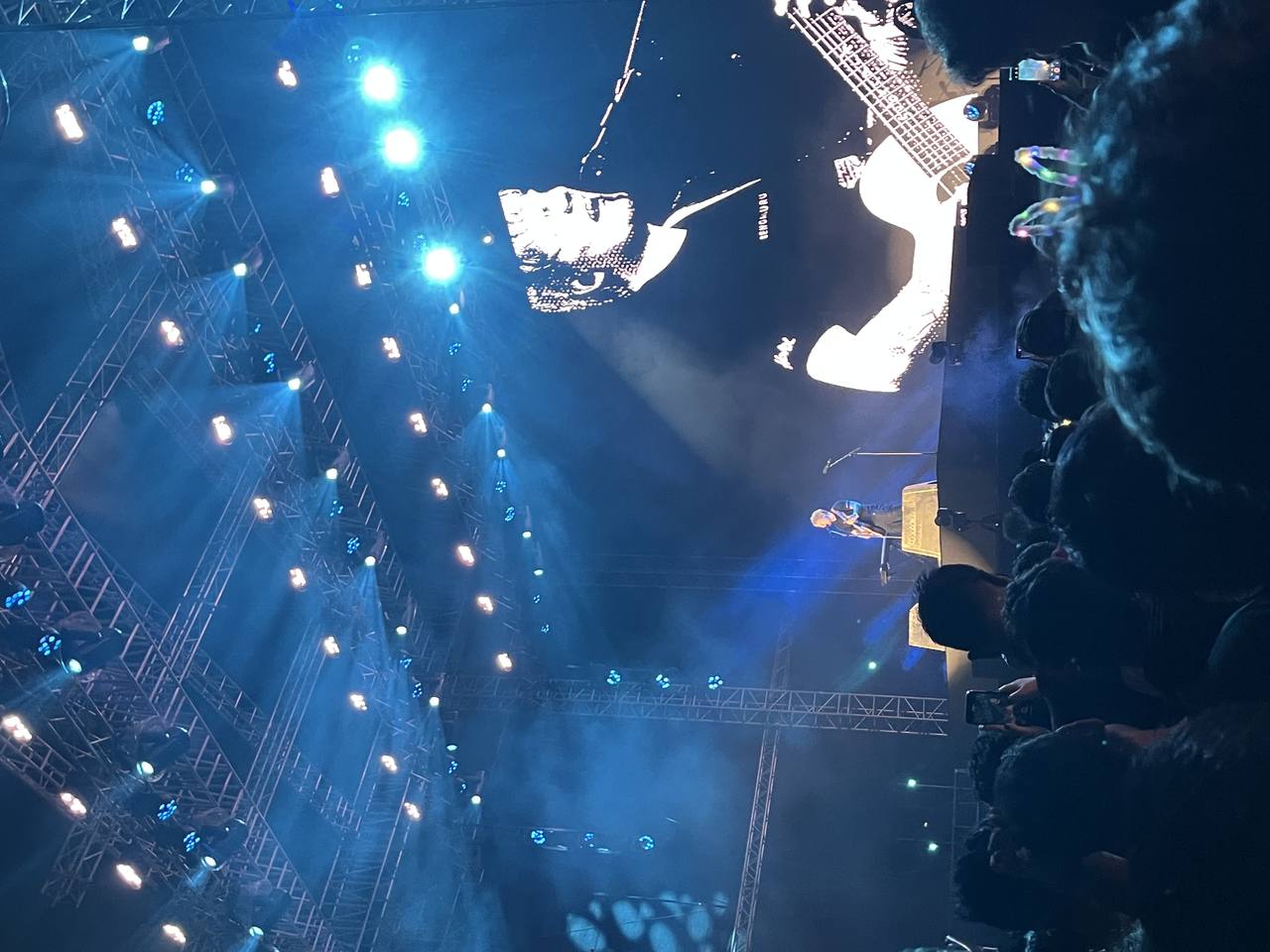
The chain of events runs back to a stadium stage in New Jersey. On September 14, Macklemore announced he had been dropped from the remaining dates of Sheeran's Loop Tour — he had been due to perform at eight additional shows — after remarks made during his set at MetLife Stadium. Video from the night captures him mid-set: "One of the reasons why I wanted to come on this tour, was because I wanted to stand up here on stages and stadiums across America, and say two words that are very near and dear to my heart. Free Palestine."
Stadium owners where Sheeran was set to play objected to those remarks, Macklemore said. What happened next, according to Macklemore's own account, was a pressure campaign at the ownership level: he alleged in a separate post that Sheeran personally told him that Robert Kraft — the owner of Gillette Stadium and the New England Patriots — had mobilized other NFL stadium owners and delivered an ultimatum: remove Macklemore from the remaining shows or be blocked from performing at their stadiums. That claim comes solely from Macklemore's telling; neither Kraft nor the stadium owners have publicly confirmed it, and it should be read as his allegation, not an established fact.
Sheeran, one of the world's best-selling recording artists, has said the decision to remove Macklemore came from tour organizers rather than from him, and that he tried to find a resolution. At a performance in Philadelphia he apologized for his handling of the situation — and then did something unusual for a headliner in the middle of an American tour: he publicly decried Israel's treatment of residents in Gaza as "unjustifiable." The two musicians, in other words, now broadly agree on the underlying politics. What they did not agree on was whether an opening act gets to say so on the headliner's stage.
Why this matters
The music industry's standard move when an artist says something radioactive is to wait out the news cycle — a quiet dropped act, a management statement, the hope that the internet moves on. Macklemore did the opposite: he weaponized the firing into a product launch. That matters for two reasons.
First, it converts a personnel dispute into an institution. A "Free Palestine Tour" with proceeds flowing to Palestinian organizations is no longer one rapper's grievance; it is infrastructure — venues, dates, tickets, money. Once it exists, other artists have somewhere to show up to, which is exactly what Macklemore says he wants: a roster of performers who have "shown up and used their stages to stand in solidarity with the Palestinian people, regardless of the consequences."
Second, the dispute pulled the curtain back on how dissent actually gets policed in live music. If Macklemore's account of the Kraft-led ultimatum is accurate, the censorship came not from a record label or a government but from the people who own the buildings — the venue class, whose leverage is quiet, contractual and almost never visible. That is a bigger story than one rapper: it is about who really controls the stage in American stadium culture.
Who benefits, who loses — and what the skeptics say
Start with who benefits. Palestinian charities get a headline tour's proceeds, which — if the Dublin, Paris and London dates sell through and US dates materialize — could be substantial. Macklemore benefits in the most concrete way available to a musician: the firing became the marketing. And the broader pro-Palestinian movement in culture gets a flagship event, joining a run of 2026 flashpoints from sports boycotts to parliamentary pressure.
Who loses? Sheeran's tour operation loses its opening act and, more damagingly, the moral high ground — the headliner who agrees with the politics but let the system remove the speaker. The venue owners lose nothing financially in the short term but gain a spotlight they never wanted. And there is a real loser nobody talks about: the fan who bought a ticket for both acts and now has to choose.
The skeptics' case deserves its airing. One: the Kraft ultimatum story rests on Macklemore's word alone, and until anyone else confirms it, it is possible the truth is more mundane — a risk-averse promoter, a contractual morality clause, bad optics math. Two: the genocide framing is contested — Israeli officials strongly deny it — and much of the audience being asked to buy tickets will have never engaged with the evidence either way. Three: benefit tours are not new, and critics will ask whether the money moved justifies the moral branding. Fair questions all. What the skeptics cannot dismiss is the underlying fact pattern: a musician said two words on a stage in New Jersey, and within days he was off the biggest tour of his life. Everything else is argument; that part happened.
The numbers behind the controversy
A few figures put the story in scale. Eight: the number of remaining Sheeran shows Macklemore was scheduled to play before his removal — the size of the career setback he is now trying to replace with his own tour. Three: the cities announced so far — Dublin, Paris, London — all European, all cities with large, vocal pro-Palestinian movements, which is not a coincidence. October 26: the kickoff date, barely a month after the announcement — a fast build that suggests the tour has been in motion since before the firing was public. And one: the number of Grammy-winning stadium-level artists currently headlining an explicitly pro-Palestinian tour. That number was zero last week.
What happens next: three scenarios
First, the breakout. The Dublin, Paris and London dates sell out, big-name guests sign on, the US leg follows with real momentum, and the tour becomes the cultural story of the autumn — a proof of concept that audiences will pay for protest music at scale. In that scenario, the industry's punishment model (say the thing, lose the slot) visibly fails, and other acts take note.
Second, the freeze-out. US venues — many of them NFL-owned or NFL-adjacent — quietly decline to book the tour, insurance and promoter costs balloon, and the run stays a European story that fades by Christmas. The firing holds: dissent becomes expensive in exactly the way the industry's quiet machinery prefers, with no single villain to blame.
Third, and most likely in the near term, the messy middle. The tour happens, the charities get paid, the discourse moves on to the next controversy — and the lasting effect is structural rather than symbolic: a generation of artists now understands, with unusual clarity, where the real red lines are drawn in American live music. Watch for whether any NFL stadium owner responds on the record to the Kraft allegation in the coming days: silence would be its own answer.
Related coverage
Gaza death toll coverage · Ireland–Israel football boycott vote · eight-nation Gaza comprehensive plan
Sources
- Pollstar — "Macklemore Announces 'Free Palestine Tour' After Ed Sheeran Controversy" (September 25, 2026)
- Reuters via WNCY (Lisa Richwine, LOS ANGELES, September 24, 2026) — "Macklemore sets 'Free Palestine' tour after being dumped from Ed Sheeran shows"
- Reuters via The Business Standard/TBS News (September 25, 2026)
- Macklemore's Instagram announcement (September 25, 2026) — tour flyer: Dublin, Paris, London; US dates and performers TBA; proceeds to organizations supporting Palestine and the Palestine movement.
Reporting basis: Fixed September 27, 2026 snapshot. Statements and chronology are attributed to the linked reports and Macklemore's announcement; analysis is Signal Post News's.