London October 7 protests arrests
Student demonstrators marched from King's College to UCL despite appeals to protest on another day; five were arrested for inciting racial hatred outside the Board of Deputies as clashes with counter-protesters brought a heavy police presence to central London.
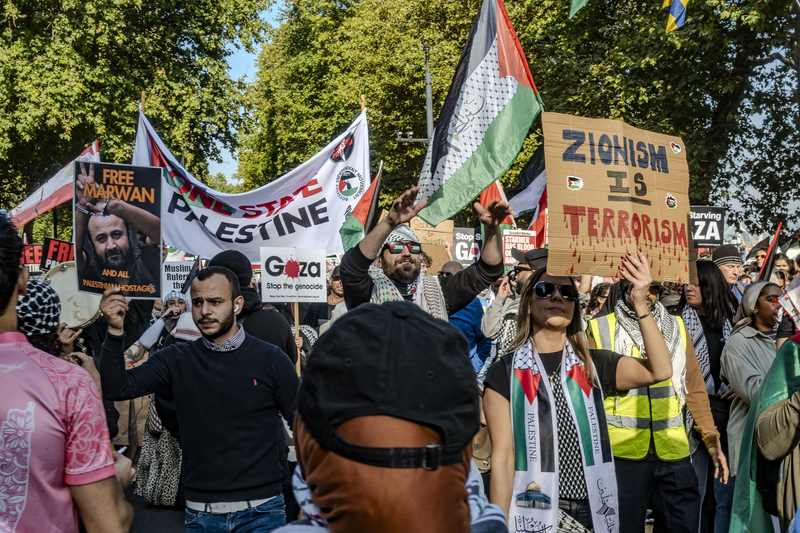
Eleven people were arrested in London on Wednesday as pro-Palestine protests went ahead on the third anniversary of the October 7, 2023 Hamas attacks, despite public pleas from the Metropolitan Police and senior government figures to demonstrate on another day. Five people were arrested for inciting racial hatred after allegedly chanting slogans calling for intifada at what police called a “spontaneous protest” outside the Board of Deputies of British Jews in Camden; others were arrested at student marches and a counter-protest for breaching Public Order Act conditions, with one arrested for common assault.
What happened on Wednesday
The marches unfolded on the third anniversary of the Hamas-led attacks in Israel, when about 1,200 people were killed, most of them civilians, and more than 250 were taken hostage. The date made every decision about timing, route and language unusually charged.
The first major intervention came in Camden on Wednesday morning. Five people were arrested on suspicion of inciting racial hatred after alleged “intifada” chants outside the Board of Deputies of British Jews. Police described the gathering as spontaneous; the arrests are allegations, not convictions.
Later, the Metropolitan Police placed strict conditions on the central pro-Palestine march in London on October 7, including a ban on face coverings. Officers said they could restrict the route and conduct but could not ban the event outright. Police and PA reporting put the total at 11: alleged breaches included failing to remove a face covering, while one person was arrested on suspicion of common assault.
The University of London Coalition march brought together students from King's College London, UCL, LSE and SOAS. About 60 walked from King's on the Strand to UCL in Bloomsbury, chanting “free, free Palestine” and “free the people, free the land.” Banners read “3 years since Oct 7, 78 years since 1948” and “keep boycotting.” Officers asked students to remove masks or scarves; most complied.
Near Russell Square, counter-protesters carrying Israeli flags called for terrorist supporters to leave the streets. Insults were exchanged, and police repeatedly separated the groups. After officers blocked them from following the march, some counter-demonstrators moved through Russell Square gardens. Another group of around 100 marched under a banner identifying them as descendants of Holocaust survivors opposed to what they called genocide in Gaza.
Separate rallies were reported at Queen Mary University in east London, at universities in Edinburgh and Glasgow, and in Manchester, where hundreds left Albert Square behind a banner framing the Gaza war as three years of genocide and calling for resistance and return.
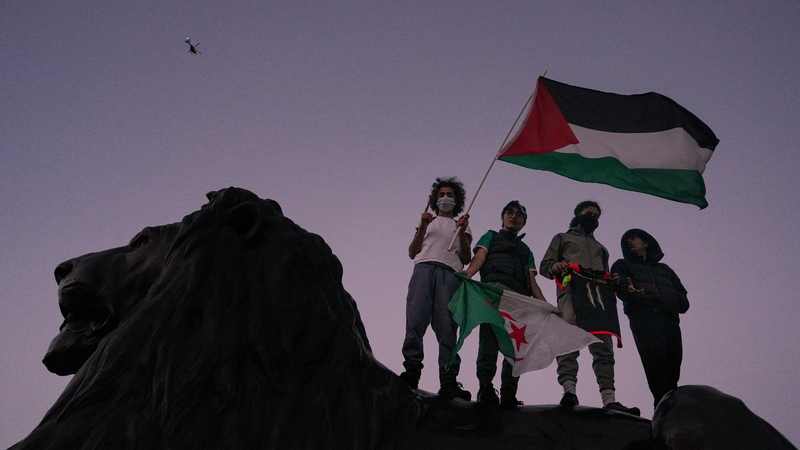
Why this matters
October 7 is becoming an annual civic stress test: a day of mourning for one community and protest for another, with each saying the date carries the meaning of its cause. The arrests show how difficult it is for Britain to police grief, speech and assembly simultaneously.
Three years on, the Gaza war still organizes British street politics. The Palestinian Ministry of Health says more than 74,000 Palestinians have been killed. Protesters cite that toll as the reason delay feels impossible; Jewish organizations and ministers say choosing the anniversary imposes another burden on people commemorating murdered relatives and hostages.
The Board of Deputies intifada chants arrests put a contested boundary at the center of the story. Police treated the alleged language as potential incitement to racial hatred. Others argue the slogan can carry different historical meanings. If charges follow, a court will have to decide from evidence and context.
Context: three years on
The Hamas attacks of October 7, 2023 and Israel's retaliatory offensive created a cycle of trauma that remains unresolved. A U.S.-brokered ceasefire has stalled, while hostages and detainees remain central to negotiations. Signal Post News has separate coverage of the day's October 7 anniversary commemorations.
Before Wednesday's events, Metropolitan Police Deputy Assistant Commissioner James Harman asked organizers to “reflect on the impact and distress” and choose another date. The force said it cannot normally prohibit demonstrations outright but can impose conditions when legal thresholds are met. Harman also said antisemitic incidents had risen since October 2023.
The student movement has evolved from encampments and divestment campaigns into a durable network. The University of London Coalition said it sought “the complete end of complicity in genocide.” That is the coalition's characterization; it also explains why participants rejected the idea that commemoration should suspend protest.
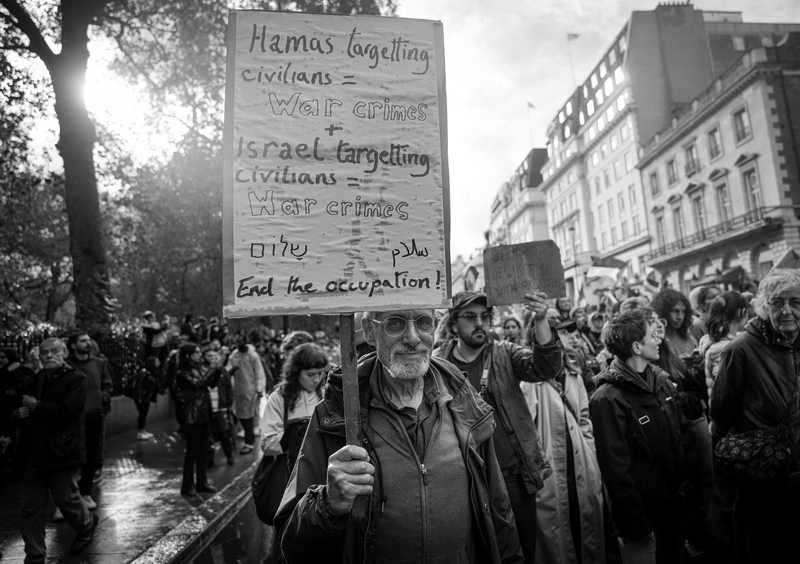
Three sides of one day
What the protesters say
Protesters argue that the scale of Palestinian death and destruction makes silence on any date indefensible. They describe Israel's campaign as genocide, cite the Gaza death toll and decades of displacement, and treat the right to march on October 7 as a test of whether protest rights survive public offence. Their banners connected the 2023 attacks to 1948 and to an economic boycott, placing the day's events inside a much longer Palestinian history.
The date is the sharpest point of disagreement. Critics answered that “there are 365 days of the year” and said organizers could have made the same case without selecting the anniversary of the Hamas attacks. Protesters' reply, in effect, is that power does not get to choose a convenient calendar for dissent. That argument explains the march; it does not erase the distress its timing caused.
What Jewish students and the government say
Union of Jewish Students president Raphie Leon called the October 7 protests “outrageous,” saying their timing was provocative and deliberate. Defence Secretary Wes Streeting described the marches as “shameful” and said Jewish students must not stand alone. Education Secretary Lucy Powell had urged demonstrators to show compassion and protest on another day. Jewish leaders said they would not be threatened or intimidated.
Those warnings were not abstract. In Leeds, university staff removed chalked “Zionism = Racism” markings from an area where Jewish students were gathering for a vigil. For students marking the murders and hostage-taking, campus protest on the anniversary can feel less like a policy argument than a confrontation staged at the place and hour of mourning.
What the police say
The police position was narrower than either political case. The Met said it could not ban the march merely because many people found the date offensive. It could set conditions under the Public Order Act, including limits on routes, conduct and face coverings, and arrest people suspected of breaching those conditions or committing separate offences.
That distinction is the legal reality behind the Metropolitan Police arrests at the London protests. The state does not need to endorse a demonstration to protect it, and protecting it does not immunize participants from the law. The legitimacy of Wednesday's policing will therefore turn on evidence: what was said, which conditions were communicated, whether orders were proportionate and whether each arrest survives scrutiny.
The numbers
Eleven arrests; roughly 60 people in the central student march; around 100 in another London group; hundreds in Manchester; about 1,200 people killed and more than 250 taken hostage on October 7, 2023; more than 74,000 Palestinians reported killed by Gaza's health ministry over the war; three years since the attack. Put together, the figures reveal a striking imbalance between the small size of the London marches and their vast symbolic weight.
This confrontation was about the calendar more than the crowd. Sixty students would rarely command a major police operation or national ministerial statements. On October 7, the same gathering became a contest over memory, language and belonging. That is why a numerical reading matters: the public-order challenge came from the meaning attached to the day, not mass attendance.
What happens next
The immediate path runs through police files and possible prosecutions. The Crown Prosecution Service will have to assess evidence in the incitement, Public Order Act and assault cases. Arrest does not establish guilt, and the “intifada” cases may become an important test of how courts read politically contested speech in its specific setting.
The diplomatic backdrop is also worsening. Israel is set to close the British consulate in Jerusalem on Thursday in response to the UK's settlement trade ban, with Foreign Minister Gideon Saar saying Israel would hold firm and Britain threatening reciprocal expulsions. That move extends the wider Israel-Europe diplomatic rift and puts UK-Israel relations near a new low.
Campus administrators and Parliament will revisit where commemoration ends and protest begins. Organizers must decide whether October 7 becomes a permanent fixture of Britain's protest calendar; Jewish student groups will press universities and police for stronger safeguards; ministers will face demands to explain how restrictions can protect public safety without becoming a de facto veto over unpopular speech.
President Donald Trump marked the anniversary by calling it one of Israel's darkest days and writing, “We will NEVER forget October 7th.” His intervention links remembrance to Washington's still-unfinished diplomacy. Signal Post News's retrospective on the stalled Trump Gaza plan explains why even a declared diplomatic framework has not dissolved the conflict that returned to London's streets.
The larger question will remain after the court dates and political statements pass: whether Britain can protect remembrance, vigorous protest and vulnerable communities at the same time. Wednesday showed that the law can separate crowds and record alleged offences. It cannot settle who owns a date.