Letitia James whistleblower Trump probe
Politics / New York / LegalThe Letitia James whistleblower Trump probe dispute moved into national politics on Saturday after President Donald Trump shared a New York Post exclusive about Daniel Wiesenfeld, a fired prosecutor who alleges James kept an inquiry alive even after investigators found no crime. The account is contested. Wiesenfeld is a former employee making allegations after his dismissal; James' office says he was fired for cause after violating law, professional-conduct rules or agency policy. Neither side's characterization, by itself, proves why the investigation continued or why his employment ended.
What Wiesenfeld alleges — and what James' office denies

Wiesenfeld, who worked in the attorney general's Investor Protection Bureau, told the Post that an inquiry into Trump and people around him continued for roughly a year after the bureau received a tip alleging possible wrongdoing by Donald Trump Jr. Wiesenfeld alleges the work produced no evidence of a crime but that senior leadership wanted it to remain open. His summary of the office culture was blunt: “Tish was the boss and what Tish wanted, Tish got.”
According to the Post's October 8 report, Wiesenfeld says the matter was one example of political pressure inside the office. He also alleges that staff were expected to identify targets who fit James' political priorities rather than begin with conduct and follow the evidence. Those are Wiesenfeld's claims; Signal Post News has not independently reviewed the investigative file, internal directives or personnel record that would prove or disprove them.
James' office rejects that version. It says Wiesenfeld was dismissed for cause after violating law, rules of professional conduct or agency policy. That response challenges both his credibility and the implication that his firing was retaliation. It does not publicly resolve the disputed sequence inside the bureau, which is why documents, contemporaneous messages and sworn testimony would matter more than dueling public statements.
Why this matters
A state attorney general has broad discretion to investigate fraud and protect investors. That authority requires time: a matter that initially appears unproductive can change when new witnesses or records surface. But the same discretion creates a vulnerability. If an investigation stays open after agents and lawyers conclude there is no predicate for further work, critics can portray ordinary prosecutorial judgment as political targeting.
The stakes extend beyond James and Trump. Career attorneys must be able to raise legal and ethical concerns without retaliation, while elected officials must be able to discipline lawyers who break rules or misuse confidential information. The question is not simply whether Wiesenfeld calls himself a whistleblower or whether the office calls the termination “for cause.” It is whether his August 28 disclosures were protected, whether the office had documented nonretaliatory grounds before or apart from them, and whether any investigation was supported by a legitimate, recorded basis.
The dispute also arrives in an election year. Trump's October 10 Truth Social share carried the Post story to an audience of 13 million followers and folded it into his long-running argument that law enforcement has been weaponized against him. James' allies can answer that a political figure's amplification does not authenticate a fired employee's allegations. Both propositions can be true: Trump's post magnifies the political value of the accusation, but it does not settle its factual merits.
From an August email to a September firing
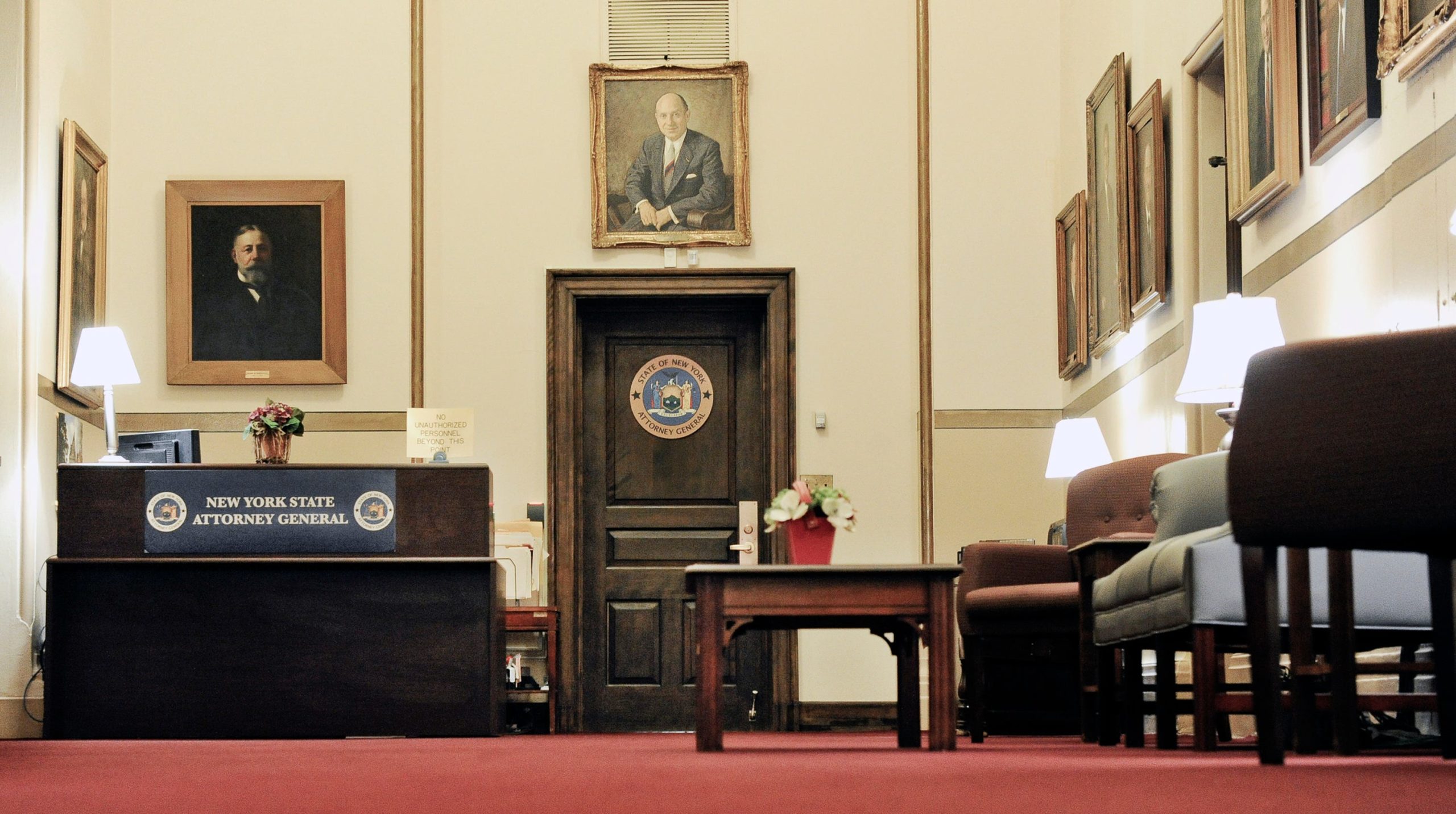
On August 28, Wiesenfeld sent an email to more than 2,000 colleagues in the attorney general's office. The Albany Times-Union obtained and reported on the message that month, as later described by the Post. In it, Wiesenfeld accused the office of targeting Trump's political enemies and argued that the institution's judgment had been distorted by partisan goals. The office placed him on administrative leave and fired him on September 5.
That chronology will be central to any retaliation claim. Wiesenfeld could argue that the protected disclosure preceded and precipitated the adverse action. The office could argue that investigators had already documented misconduct, confidentiality breaches or professional-rule violations sufficient for dismissal. Timing can support an inference of retaliation, but timing alone rarely answers whether an employer had an independent lawful reason.
The Daniel Wiesenfeld fired prosecutor story therefore turns on evidence unavailable in public accounts: the leave letter, termination notice, any prior discipline, instructions he received, the text and distribution of his email, and the policies the office says he violated. A court or legislative inquiry would also ask whether similarly situated employees were treated the same way.
The James–Trump history behind the allegation
James and Trump were already adversaries before this dispute. James campaigned with a promise to hold Trump accountable and pursued the civil-fraud case that resulted in a $454 million judgment in 2024. In August 2025, an appellate court threw out that monetary judgment. The broader fight made each side's motive an immediate part of the public debate: Trump says James' history shows persecution; James has maintained that her office follows the facts and applies the law regardless of status.
That history explains why the phrase Letitia James Trump investigation no crime is politically potent. It does not, without the case file, establish that no lawful investigative reason ever existed. Prosecutors regularly test allegations that do not become charges. At the same time, an office should be able to explain internally why resources remain committed when lawyers report that a theory has gone cold.
Wiesenfeld's allegation involving a tip about Donald Trump Jr. adds another layer. A tip can justify preliminary review but is not evidence of guilt. The crucial questions are what the source alleged, whether investigators corroborated any part of it, what legal theory applied and when supervisors decided the inquiry should continue or close.
Political-prosecution disputes and the mechanics of firing for cause
New York attorneys general from both parties have faced accusations that enforcement choices served political ambitions. The durable lesson from those disputes is that slogans rarely prove selective prosecution. A credible claim generally requires evidence that similarly situated subjects were treated differently and that the difference arose from an improper motive. The office's defense, in turn, is strongest when intake standards, investigative milestones and closure decisions are documented consistently across matters.
A firing-for-cause case uses a parallel framework. The employer identifies a rule, shows notice and evidence of a violation, and explains why termination was proportionate. A whistleblower-retaliation claim asks whether the employee reported conduct he reasonably believed unlawful, whether decision-makers knew of that report, whether an adverse action followed and whether the stated reason was a pretext.
Professional obligations complicate the balance. Government lawyers handle confidential investigative material, and disclosing it broadly can itself be sanctionable. Yet internal reporting channels exist precisely so lawyers can object to what they believe is unlawful or unethical conduct. The difference between protected reporting and an improper disclosure will depend on the content of Wiesenfeld's message, the audience he chose and the applicable state-law protections.
Who benefits, who loses
Trump benefits politically because the accusation reinforces a message his supporters already accept: that investigations of him and his family were driven by opponents rather than law. The timing lets him connect a state-office personnel dispute to November's midterm contest, where distrust of prosecutors can motivate his base.
James bears institutional risk because even an unproven allegation can damage confidence if her office does not produce a clear, document-based explanation. But critics of Trump note that he has an incentive to amplify claims that weaken a prominent adversary, especially when the accuser's account has not been tested under oath.
Wiesenfeld gains a national platform and potential leverage in litigation or oversight. He also faces scrutiny over motive, confidentiality and the office's allegation that he violated rules. Critics of James may treat his dismissal as proof of retaliation; critics of Wiesenfeld may treat the dismissal as proof he is unreliable. Neither shortcut substitutes for evidence.
Career prosecutors lose room for quiet judgment when internal disagreements become partisan weapons. If staff fear retaliation, legitimate objections may go unreported. If any employee can publicize confidential disputes without consequence by adopting the whistleblower label, enforcement work can become impossible. A fair process has to protect both interests.
What happens next
House committees could seek Wiesenfeld's testimony, the August 28 email, administrative-leave records and documents showing why the Trump-related inquiry remained open. Congressional oversight cannot decide a state employment claim, but it can create a public record and pressure the office to explain its practices. Subpoena fights over privileges and investigative secrecy would be likely.
Wiesenfeld could sue under applicable whistleblower or employment law, forcing the parties into discovery. That route would test whether he engaged in protected activity, whether the office's stated cause was documented, and whether decision-makers treated other employees consistently. James' office could respond that any disclosure breached duties that applied regardless of politics.
Any live James investigations will now be assessed through this controversy. Subjects can cite the allegation to attack credibility; courts will still require case-specific proof. Politically, the story will likely become a midterm argument about “weaponization” on one side and accountability for powerful figures on the other.
The most revealing next development will not be another social-media post. It will be evidence: the exact August email, the personnel record, the investigative chronology and testimony under oath. Until then, the responsible conclusion is limited. Wiesenfeld has made serious allegations, James' office has issued a serious denial, and neither public statement alone resolves the dispute.
Sources
- New York Post, October 8 — Wiesenfeld's allegations, the Investor Protection Bureau inquiry and James' office response
- New York Post, October 10 — Trump's Truth Social share and its political reach
- Newsmax, October 9 — Wiesenfeld's account and the office's denial
Reporting note: The Albany Times-Union's August 2026 account of Wiesenfeld's email is cited as reported by the New York Post because no verified Times-Union URL was available. All disputed allegations are attributed.