Letitia James Cornell rape case
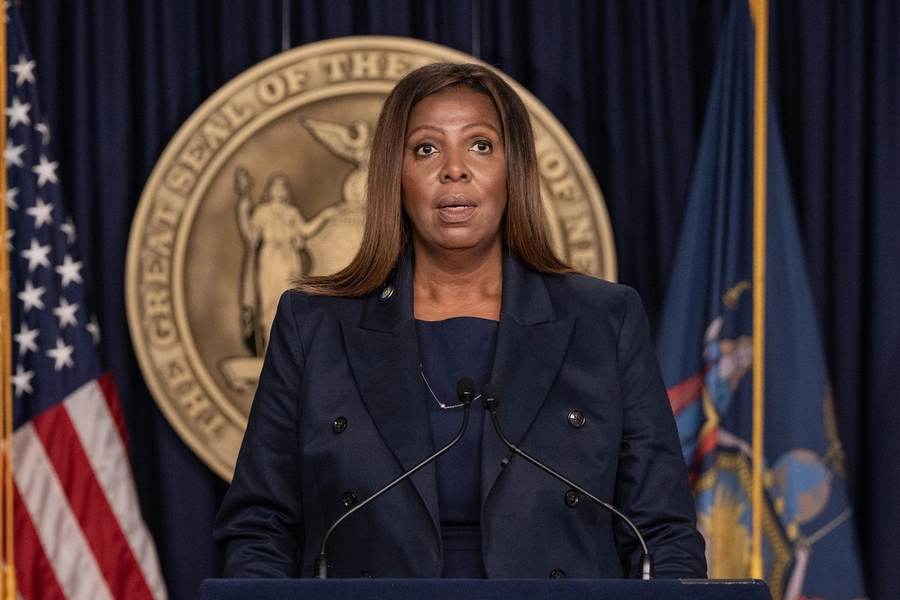
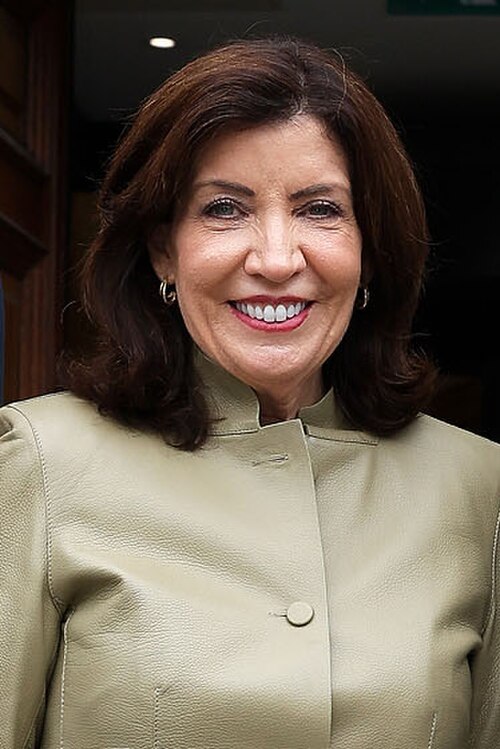
Hochul signed an executive order Thursday night appointing James as special prosecutor in the criminal investigation of an alleged October 19, 2024 gang rape at Cornell University's Xi Chapter of Chi Phi fraternity in Ithaca. A woman identified in court papers as Jane Doe alleges that seven fraternity members assaulted her when she was 20. No criminal charges have been filed, and the allegations have not been proven in court.
At a Friday press conference with James, Hochul said she was “deeply disturbed” by the case's original handling. “Newly released information continues to raise serious questions about the investigation conducted by the Cornell Police Department and the decision by the Tompkins County District Attorney not to prosecute,” the governor said. She said those questions “undercut my faith, and the public's faith, in the District Attorney's ability to effectively investigate and prosecute the case at this time.”
The transfer does not decide whether a crime occurred. It changes who evaluates the evidence. James's office will conduct the investigation and, if it concludes the evidence warrants criminal charges, present the matter to a grand jury.
Why this matters: institutional failure and the intoxication-consent gap
Analysis: Hochul's intervention is significant for three reasons. First, it treats the quality of the original institutional process as a central issue, not a side dispute. The governor did not merely ask for another review; she removed the local district attorney from control of the case after saying confidence in that office's ability to handle it had been undercut.
Second, the case exposes a difficult gap in campus sexual assault prosecution. New York law can make a sexual-assault charge harder to prove when a complainant became intoxicated voluntarily. That framework places enormous weight on evidence about capacity, conduct and communication. It can also create a gulf between how an alleged survivor describes an encounter and how prosecutors assess whether the facts fit a criminal statute.
Third, a Hochul executive order special prosecutor appointment sends a political signal. Hochul, James and Tompkins County District Attorney Matthew Van Houten are all Democrats. The change therefore cannot be reduced to a partisan transfer from one party to another. It is a public judgment by the governor that state-level independence and resources are needed to restore trust.
Background timeline: from the October 2024 allegation to James's appointment
October and November 2024: the allegation and report
The alleged incident occurred October 19, 2024 at Cornell's Chi Phi fraternity. Jane Doe reported it on November 14 to Cornell campus police and the university's Title IX office. No criminal charges followed the initial investigation.
The original charging decision later became the focus of the dispute. Van Houten has said the woman's sworn statement described drug use and sexual conduct as “voluntary, conscious, and consensual” and did not rise to a crime under state law. That is his stated explanation for the 2024 non-prosecution; it is not a judicial finding about what occurred.
September 2026: the Jane Doe Cornell lawsuit and reopened inquiry
Jane Doe filed a civil lawsuit in New York County Supreme Court in September 2026 against Cornell and the seven men. The filing put the allegations and the university's response back into public view. On Monday, September 29, Van Houten reopened the criminal investigation while continuing to defend his office's earlier assessment.
That reopening followed a separate civil track. Civil litigation and a criminal investigation ask different legal questions and apply different burdens of proof. The existence of the lawsuit does not establish criminal guilt, but material disclosed through the case can give investigators records or testimony to reassess.
October 1–2: a missing statement changes the center of the case
The New York Times reported that the Cornell police report omitted the rape claim when it was sent to prosecutors. Hochul said Friday that the woman “could not have been clearer that she was 100% confident that she had been raped; yet, shockingly those words never made it into the account that Cornell police sent to prosecutors.” The DA, she said, “then declined to pursue charges after reviewing that incomplete account.”
Hochul also questioned why the district attorney did not interview the woman directly or review the complete interview transcript. She signed the executive order Thursday night, and on Friday appeared with James to explain the transfer. After the press conference, Van Houten said he supported James's appointment and would cooperate.
Multiple angles: what Hochul, the DA, Cornell and Chi Phi now face
Hochul's signal is about process as much as outcome
Analysis: Hochul is signaling that a charging decision cannot command trust if the underlying record may have been incomplete. Her position does not instruct James to indict anyone. It says the state must rebuild the evidentiary record before deciding whether prosecution is justified.
That distinction matters. Supporters of the transfer can argue that independent review is the least the state owes a complainant whose clearest statement allegedly did not reach prosecutors. Critics can fairly warn that intense political attention must not become pressure for a predetermined result. James's office will be judged on whether it can satisfy both demands: a full investigation and a charging decision grounded in law rather than public outrage.
Tompkins County DA Matthew Van Houten's defense
Van Houten's defense rests on what his office received and how New York law applied to that material. He says the sworn account before prosecutors described the relevant conduct as voluntary and consensual. The governor's criticism is that the record itself was incomplete and that the office did not close the gap by interviewing the woman or reviewing the full transcript.
Analysis: Those positions are not identical claims. Van Houten is defending a legal assessment based on a given file; Hochul is challenging whether that file was adequate for the assessment. James must now test both: what the evidence shows and why key information did or did not move through the system.
Exposure for Cornell and the Chi Phi fraternity members
The Chi Phi fraternity members named in the lawsuit face civil claims, while Cornell faces questions about its institutional handling. The seven men retain the presumption of innocence in the criminal process. James's appointment does not convert the civil allegations into proof and does not mean a grand jury will return indictments.
Analysis: Cornell's exposure is broader than the final criminal decision. The state review may examine how campus police summarized the interview, what was shared with the district attorney and whether institutional procedures preserved the complainant's account accurately. For the men sometimes described online as the Cornell 7, the renewed state investigation increases legal scrutiny but does not erase due-process rights.

Data-driven reasoning: what the missing statement changes
The Cornell police report omitted rape claim
A criminal case is built from a chain: an interview produces a record; the record informs investigators; investigators send material to prosecutors; prosecutors compare that evidence with statutory elements. If an unequivocal assertion was present in the interview but absent from the summary delivered to the DA, the loss occurred at a critical transfer point.
Analysis: The omission does not by itself prove the underlying allegation. It changes the reliability question. A prosecutor can reasonably make a decision on the file presented, but confidence in that decision falls if the file did not faithfully capture the source interview. Hochul's full-transcript question is therefore measurable rather than rhetorical: Did prosecutors receive the complete record, and if not, why did they not seek it before closing the case?
The same logic applies to the decision not to interview Jane Doe directly. A direct interview can clarify chronology, capacity, words used and inconsistencies. It can also produce information unfavorable to prosecution. Either way, the absence of that step limits what can confidently be said about the completeness of the first review.
How the New York voluntary intoxication law works in practice
Experts and advocates say New York's legal framework makes campus sexual assault prosecution more difficult when the complainant became intoxicated voluntarily. The practical issue is not whether alcohol or drugs were present in the abstract. Prosecutors must connect the evidence to statutory definitions and prove each required element beyond a reasonable doubt.
Analysis: That creates two filters. The first is factual: what did the complainant perceive, communicate and retain, and what do witnesses or digital records show? The second is legal: do those facts meet the available criminal statutes? A missing statement can distort the first filter, while the New York voluntary intoxication law can narrow the second. James's office has to reconstruct both rather than assume that correcting one automatically resolves the other.
What happens next: grand jury scenarios and Albany's legal debate
The grand jury Cornell case has more than one possible outcome
James said, “Every New Yorker deserves to know that when they report a crime, it will be investigated fully and fairly. The Governor has entrusted my office with this investigation, and we do not take that responsibility lightly.” Her office can re-interview witnesses, examine the complete records and decide whether the evidence warrants presentation to a grand jury.
A grand jury Cornell case could produce indictments, a decision not to indict, or a request for more investigation before any presentation. A grand jury decides whether there is enough evidence for charges to proceed; it does not decide guilt. If James concludes the evidence remains legally insufficient, the credibility of that decision will depend on demonstrating that the omitted statement and full transcript were finally evaluated.
Legislative reform and political stakes
Hochul also addressed reforming New York's voluntary-intoxication law. Any legislative change would create a policy debate about how the state defines incapacity and consent, the proof prosecutors must offer, and the due-process protections owed to accused people. This case gives that debate an immediate example, but lawmakers will have to write rules that operate across cases rather than around one set of allegations.
Analysis: Time pressure will build on James's office from both directions. Moving too slowly risks deepening the sense that institutions do not respond to sexual-assault reports. Moving too quickly risks appearing to substitute political urgency for careful evidence testing. Hochul has attached her judgment to the intervention, James has attached her office to the investigation, and Van Houten has agreed to cooperate after defending his original decision. Because all three are Democrats, the political test is internal accountability: whether state and local officials can scrutinize one another without turning the investigation into a party loyalty contest.
The most defensible benchmark is process, not prediction. The full interview record should be reconciled with the police report, the complainant should be heard directly, available corroborating evidence should be tested, and the final legal reasoning should not imply that an investigation itself proves guilt. That is the standard the special-prosecutor appointment now promises.
Sources
- Reuters: New York governor attacks handling of Cornell rape investigation
- Associated Press via WVLT: New York AG will oversee Cornell investigation
- New York Post: Hochul appoints James as special prosecutor
- Rochester Democrat and Chronicle: Hochul addresses prosecutor order and voluntary-intoxication law
- Rochester Democrat and Chronicle: Special prosecutor appointed in Cornell case