Leipzig airport fence breach: German police are investigating after a vehicle appeared to have rammed through the perimeter fence at Leipzig/Halle Airport in eastern Germany on Saturday night, close to where three Russian Antonov An-124 cargo planes have sat grounded since 2022, according to Reuters and the German news agency dpa. No unauthorised person or suspicious object was found in an overnight search, but the airport's north runway remains closed and officers were returning with reinforcements on Sunday to search the grounds again.
Leipzig/Halle / A hole in the fence, three stranded Russian giants and a closed runway — the airport Europe cannot stop worrying about
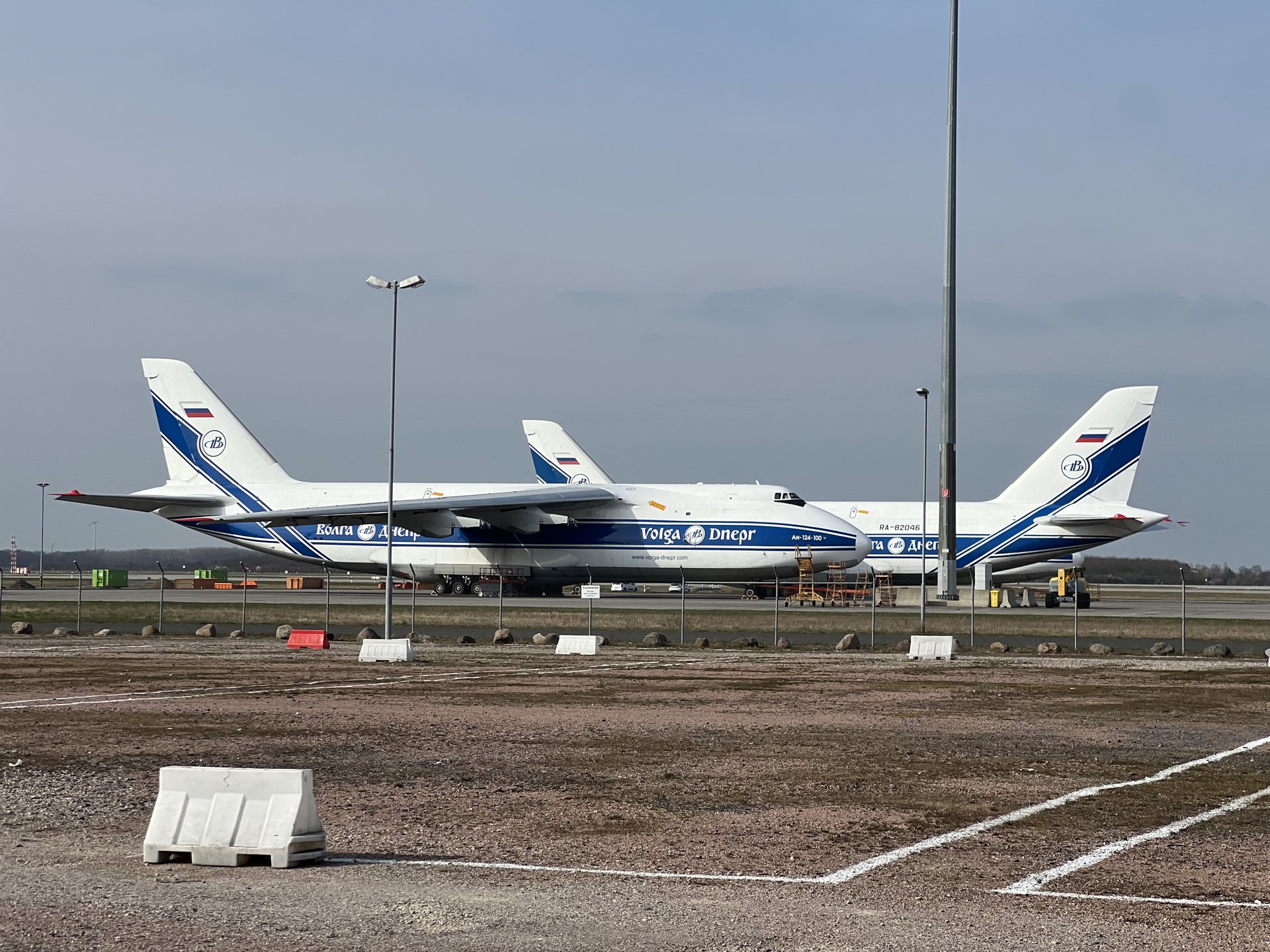
LEIPZIG — The damage was found on Saturday evening, shortly before 11 p.m. local time, when officers discovered a section of the perimeter fence at Leipzig/Halle Airport in Schkeuditz, eastern Germany, had been torn open, according to reporting by The Sun citing the Leipzig Police Department and a police spokeswoman. "Investigations so far have shown that it is highly likely a vehicle must have crashed through the fence," the Leipzig police said. The damaged section sits near parked Russian Antonov cargo aircraft, a police spokesman told the German news agency dpa — three Russian Antonov An-124 heavy freighters that have been unable to leave since the European Union closed its airspace to Russian aircraft on February 28, 2022, days after Russia's full-scale invasion of Ukraine.
The discovery triggered an immediate multi-agency operation. Federal and state police searched the airport grounds overnight alongside firefighters and forensic teams, Reuters and dpa reported. By Sunday morning, police confirmed that no unauthorised person and no vehicle had been found on the grounds, and no suspicious objects had been located. But the search was not called off: additional crews were brought in on Sunday to sweep the airfield again and look for any sign of suspicious activity, and investigators said the inquiry was proceeding "in all directions." Airport spokeswoman Therese Leverenz told the German outlet BILD: "Following the security-related incident, flight operations on the north side of the airport were suspended." The north runway remains closed to traffic, Reuters reported, with cargo traffic using the south runway in the meantime.
Track it live: follow the wider conflict picture on the live wars tracker.
What we know — and what nobody is claiming yet
The established facts are narrow, and it matters to keep them narrow. A fence was breached, very likely by a vehicle, late on Saturday. The breach was near the Russian Antonov aircraft. A large search found nobody and nothing. The north side of the airport is shut while the search and the forensic work continue. Beyond that, everything is open: police have not said whether they believe the breach was deliberate, who might have done it, or whether anything was taken, planted or photographed inside the perimeter. No arrests have been reported, and no government — German or otherwise — has attributed the incident to any state or group.
That restraint is worth noting because of what happened at this airport in August. On August 4–5, an explosive-laden drone was discovered near a runway at Leipzig/Halle, close to a Ukrainian-operated Antonov An-124, and a DHL cargo aircraft struck an unknown object as it climbed away, diverting to Hanover. German officials later said Russia was responsible for the August incident; Russia denied the allegation. This site covered that episode and the diplomatic row that followed, and the pattern it set — incident, investigation, attribution, denial — is the template hanging over this weekend's far less dramatic event. A hole in a fence is not a drone bomb. But investigators will inevitably work through the same checklist: was this a probe of the airport's defences, an attempt to reach the parked aircraft, a theft or smuggling run gone wrong, or simply a driver who crashed and fled?

Why this matters
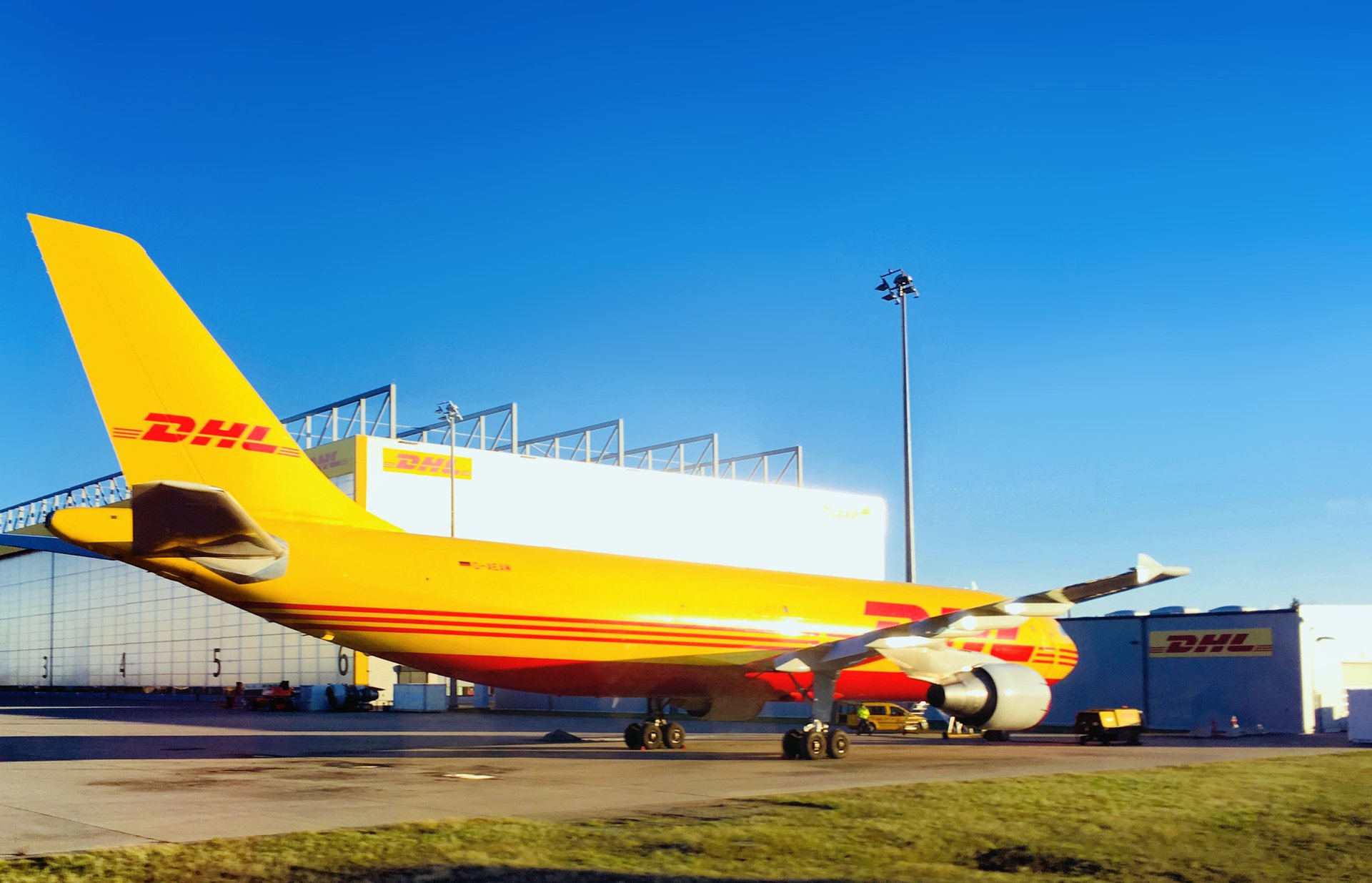
Leipzig/Halle is not an ordinary regional airport, and its fence is not an ordinary fence. It is one of Europe's largest air-cargo hubs — home to DHL's global hub operation, with freighters arriving through the night from across Europe, Asia and North America — and, since Ukraine's Antonov Airlines moved its heavy-lift base there after its home field at Hostomel was wrecked in 2022, it is also a working military-logistics asset for the Western alliance, flying oversized cargo including for NATO's strategic airlift arrangements. An airport that is simultaneously a parcel hub for half a continent and a base for Ukrainian strategic freighters sits, whether it likes it or not, on the front line of the hybrid confrontation between Russia and Europe — the campaign of sabotage, arson, drone incursions and reconnaissance that Chancellor Friedrich Merz and NATO Secretary General Mark Rutte have publicly warned is intensifying, as this site reported in its coverage of the Merz–Rutte hybrid attacks warning.
The soft underbelly problem
Airports are hardened against the threats aviation security was designed for — hijackers, bombs in luggage, attackers at terminals. Their perimeters are a different story: kilometres of fence line, much of it beside public roads, watched by cameras and patrols rather than walls. The same vulnerability has surfaced repeatedly this year, from the drone alert that scrambled NATO jets at Vilnius airport to the August drone at Leipzig itself. A vehicle through a fence is the lowest-technology version of the problem — no drone, no explosives, just momentum — which is precisely why security planners dread it: if a fence can be opened with a car, every parked aircraft, fuel farm and cargo warehouse behind it is reachable in the minutes before a response arrives. The overnight search finding nobody cuts both ways: reassuring if the intruder simply fled, unsettling if whoever came in also got out unseen.
Three Russian giants in the middle of it
The detail that will focus investigators is geography. The breach was not at a random stretch of fence; police themselves volunteered that it was near the parked Russian Antonov aircraft. Those three An-124s — among the largest cargo planes in the world — have been marooned at Leipzig since February 2022, accumulating parking fees and legal disputes, visible symbols of the sanctions regime. They are also, from a security standpoint, a peculiar asset to guard: Russian state-linked property sitting inside a NATO country's busiest cargo airport, a few hundred metres from Ukrainian aircraft flying missions against Russia's war effort. Any approach to those planes — whether to inspect, sabotage, photograph or steal from them — carries intelligence implications out of all proportion to the property damage a fence can record. Equally, the location may prove to be coincidence: the Antonovs are parked where they are parked, and a driver leaving the road at the wrong corner could end up beside them without ever intending to. The forensic work — tyre tracks, paint transfer, camera footage — is what will separate those stories, not speculation.
Who gains, who loses — and the attribution trap
If this was a hostile probe, the gain is information: response times, patrol patterns, how long a breach goes unnoticed, what a full search looks like. That kind of reconnaissance has preceded worse incidents across Europe, and it is cheap and deniable. If it was criminal — an attempt to reach high-value cargo, a known problem at freight hubs — the loss falls on the airport and its insurers, and the lesson is about ordinary security rather than geopolitics. If it was an accident, the only loser is the driver, once found, facing a very large bill and a police file. Germany's government, meanwhile, faces the attribution trap that has followed every hybrid incident this year, a dilemma this site examined in its reporting on Denmark's warning of a possible limited Russian attack on NATO: blame Moscow too fast, on thin evidence, and Berlin hands the Kremlin a propaganda victory when the facts soften; move too slowly, and a real probe goes unanswered and invites the next one. The federal police's formulation on Sunday — investigating "in all directions," attributing nothing — is the sound of officials who have learned that lesson the hard way.
What happens next
Three things will decide what this story becomes. First, the forensics: a vehicle that tears through an airport fence leaves paint, glass, plates or camera images behind, and German police are methodical about assembling them; an identification would collapse most of the speculation within days. Second, the runway: the north side cannot stay closed indefinitely at a hub whose economics run on night freight, so the pressure to certify the airfield clean and reopen will build quickly — watch for the airport to announce a full resumption as a signal that the search found nothing more. Third, the politics: if any evidence links the breach to the parked Russian aircraft — or to the August drone network — expect Berlin's response to follow the August script of summonses and statements, and expect Moscow to deny it in the same terms. If, instead, the trail ends with a local driver and a bent fence post, Leipzig will quietly spend money on barriers and bollards — and the episode will stand as a reminder that in 2026 the most sensitive perimeter in German aviation could be opened by the oldest tool of all: a car, at night, in the wrong place.
Sources
- Reuters, Oct. 18, 2026: "German police investigate fence breach at Leipzig airport" — vehicle apparently through the fence; August drone context; north runway closed.
- dpa, Oct. 18, 2026: "Car may have breached fence at Leipzig airport in Germany" — damaged section near parked Russian Antonov cargo aircraft; investigation "in all directions."
- The Sun, Oct. 18, 2026 — damage found shortly before 11 p.m. Saturday; spokeswoman Therese Leverenz to BILD on the north-side suspension; three Russian Antonov aircraft grounded under EU sanctions.
- dpa via Baltic News — three Russian Antonov An-124 cargo planes at Leipzig/Halle grounded since February 28, 2022 under the EU flight ban.