World · Latvia · NATO Eastern Flank
For about half an hour on Sunday, phones in Krāslava and Ludza lit up with an orange alert telling people to stay inside — the latest sign that the drone war over Ukraine keeps reaching the edge of NATO's map.
Track it live: Ukraine war map — follow the front line and the strikes that keep spilling toward NATO airspace
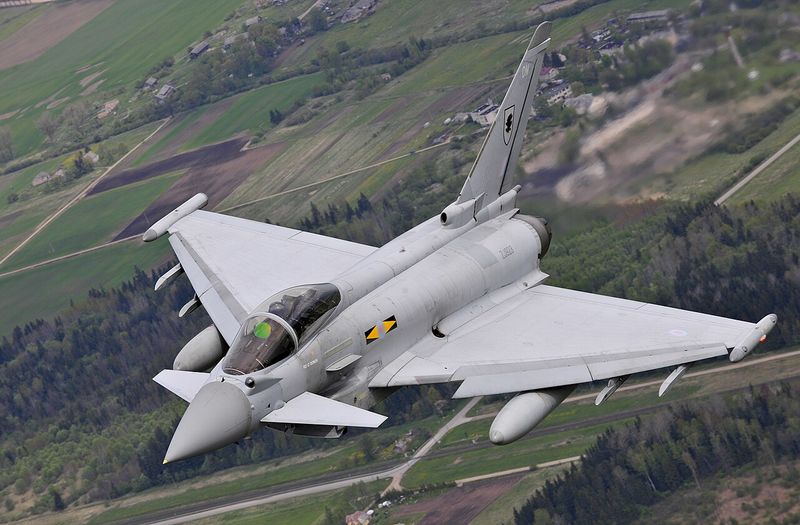
RIGA, Latvia — An unidentified object briefly entered Latvia's airspace near the country's borders with Belarus and Russia on Sunday, November 1, prompting the Latvian National Armed Forces (NBS) to warn residents in the eastern border region to stay indoors — and then, roughly 30 minutes later, to announce that the object had left and the threat had ended, Reuters reported from Riga. The armed forces did not identify the object, say where it came from, or report any damage, and no casualties were reported.
"We inform you that there is a threat in the airspace… If you notice a low-flying or suspicious object, do not approach," the military said in a post on X, according to Reuters. Some 30 minutes later, the NBS said the unidentified object had left Latvian airspace and that the threat had ended.
Latvia's public broadcaster LSM reported that an airspace threat was declared in the Krāslava and Ludza municipalities, in the Latgale region of eastern Latvia — Krāslava toward the Belarusian border, Ludza toward the Russian border — and that residents there received an orange cell-broadcast alert on their phones. The NBS told LSM it monitors Latvia's airspace continuously together with NATO allies, and that the armed forces have strengthened air defence along the eastern border by sending additional units.
What an orange alert actually asks people to do
Latvia's cell-broadcast system has two levels, LSM explains. A yellow warning flags a possible threat to Latvian airspace and asks for awareness, not action. An orange warning — the level used on Sunday — reports a detected threat and requires residents to act immediately on the instructions given.
Those instructions, as LSM relayed them, are specific: people indoors should shelter where at least two walls separate them from the outside of the building. Drivers should judge the situation, continue to a safe place or leave the vehicle, move away from the road and find the nearest shelter. Anyone who hears an explosion should stay indoors, away from windows and doors, and go back outside only when the authorities say so or at least 10 minutes after the last explosion. Residents are also asked not to post photos or videos on social media, to avoid spreading disinformation or revealing defence positions, and to head for a basement or designated shelter only if the early-warning system instructs them to.
That choreography matters for understanding Sunday's incident. An orange alert is not a siren test and not a precaution against a rumour: it is the state telling two municipalities, in real time, that something is in its sky that should not be there.

Why this matters
A 30-minute intrusion with no explosion, no wreckage and no injuries can sound like a non-event. On NATO's eastern flank, it is anything but. Latvia is a NATO and EU member whose airspace is policed by allied fighter jets under the Baltic Air Policing mission, because the Baltic states operate no fighters of their own. Every unidentified object that crosses that airspace forces the same unanswered question in a new form: at what point does the Ukraine war's debris field — drones knocked off course, drones jammed, drones that simply miss — become an incident the alliance has to answer as an alliance?
Sunday's timing sharpened that question. The intrusion came on the same day as one of the largest drone exchanges of the war: Ukraine's air force said Russia launched 433 long-range drones from Saturday evening and that 371 were shot down, while Russia's Defence Ministry said its forces downed 235 Ukrainian drones over Russian regions overnight — figures each side reported about its own defences, covered in full in our report on the 433-drone barrage that cut power across Ukraine. Reuters notes that as Ukraine has attacked Russian Baltic Sea oil shipping ports, some of its drones have missed their targets and led to security warnings in neighbouring countries. When hundreds of drones are in the air on a single night, the statistical chance that one ends up somewhere it was never aimed rises with them.
A pattern, not a one-off
Latvians in the eastern border region have heard this alert before. The NBS has previously warned that, while Russia's aggression in Ukraine continues, foreign drones may again enter or approach Latvian airspace, LSM reports. Ukrainian military drones have strayed into the airspace of Finland, Estonia, Latvia and Lithuania, Reuters reports, feeding concern that the war is spilling over into NATO countries bordering Russia and its ally Belarus.
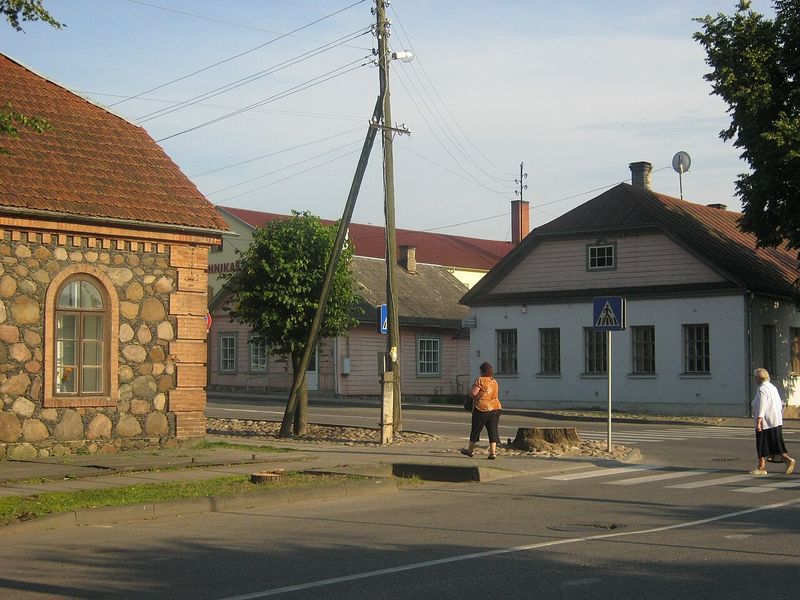
In Latvia, the politics of these incidents have already proved combustible. Reuters reports that an earlier intrusion this year led to a government collapse in the country. In our coverage of Latvia's 2026 election, the incoming prime minister treated the drone failures as part of a Russian pressure campaign, blaming Moscow for diverting Ukrainian drones toward Latvia after incidents in Krāslava in March and Rēzekne in May, followed by NATO interceptions in June and August. That is a political position, not a technical finding — and it is a measure of how little slack Riga's politics now allows for "unidentified."
Three explanations, none of them proven for this object
What was Sunday's object? On the public record, nobody has said — and the honest answer is that the competing explanations on offer are general claims about the pattern, not findings about this flight.
Moscow has accused Kyiv of using NATO airspace as cover for its attacks, Reuters reports. Kyiv says some of its drones have been steered off course by Russian signal jamming. NATO governments, for their part, generally blame Russia for the incidents on the grounds that it started the war by invading Ukraine nearly five years ago. Each account assigns the fault differently; none of them, as of Sunday evening, came with published evidence tying a specific drone, launch or jamming event to the object that crossed into Latvia.
That evidentiary gap is itself part of the story. A stray long-range drone, a jammed drone and a deliberately routed drone can look identical on a radar track for 30 minutes. The country underneath the track still has to decide — in minutes, on a Sunday — whether to alert two municipalities, and the alliance behind it still has to decide what, if anything, the crossing obliges it to do.
What happens next
Watch three things in the coming days. First, identification: if the NBS or NATO publishes a track, a wreckage find or a type for Sunday's object, the incident moves from the "spillover" file to a named claim — and each capital's reaction will follow the name. Second, repetition: the Baltic pattern this year has been clusters, not singletons, and Latvia's own military has told its public to expect foreign drones to approach or enter again while the war continues. Third, the politics in Riga: after a year in which drone incidents helped bring down a government, every orange alert now lands on a desk that knows exactly what the last ones cost.
For the people in Krāslava and Ludza, though, Sunday was simpler than the strategy papers. A phone buzzed, a message said stay inside and do not approach anything low and strange, and about half an hour later another message said it was over. The war stayed on the other side of the border this time — by a margin of one unidentified object, heading the other way.
Sources
Reuters, "Latvia reports brief airspace intrusion near Russia, Belarus borders," November 1, 2026 (reporting by Janis Laizans, writing by Terje Solsvik) — the NBS statements on X, the approximately 30-minute duration, the stray-drone pattern across Finland, Estonia, Latvia and Lithuania, the Baltic oil-port strikes context, the government-collapse reference, and the Moscow, Kyiv and NATO-government positions. LSM (Latvian public broadcaster), via Daily Baltic / LSM English, "Airspace threat declared in Krāslava and Ludza municipalities," November 1, 2026 — the orange cell-broadcast alert in Krāslava and Ludza, the two alert levels, the shelter instructions, and the NBS's reinforced eastern-border air defence. Related Signal Post News coverage: the November 1 Russia–Ukraine drone exchange and the Latvia 2026 election report, linked in the text above.