World / The race to succeed António Guterres had stalled: after six straw polls, every single candidate had been rejected by at least two of the five veto powers. On Wednesday, October 21, the United Arab Emirates' Lana Nusseibeh — its ambassador to the UN for more than a decade — stepped into that deadlock, promising to make the world body a problem-solver again rather than a spectator. If she wins, she would be the first woman ever to lead the United Nations.
The contest to choose the next UN secretary general changed shape on Wednesday, October 21, when senior UAE diplomat Lana Nusseibeh, 48, entered the race to succeed António Guterres, whose second term ends on December 31, 2026. Nusseibeh, the UAE's minister of state for foreign affairs and its permanent representative to the United Nations from September 2013 to April 2024, told Reuters she would seek to restore the UN's role as a diplomatic problem-solver. Her late entry follows a sixth Security Council straw poll in which the frontrunner, Costa Rica's Rebeca Grynspan, and every other candidate drew two or more opposing votes from the Council's five permanent members — Britain, China, France, Russia and the United States — leaving the race without a consensus choice barely ten weeks before the handover.
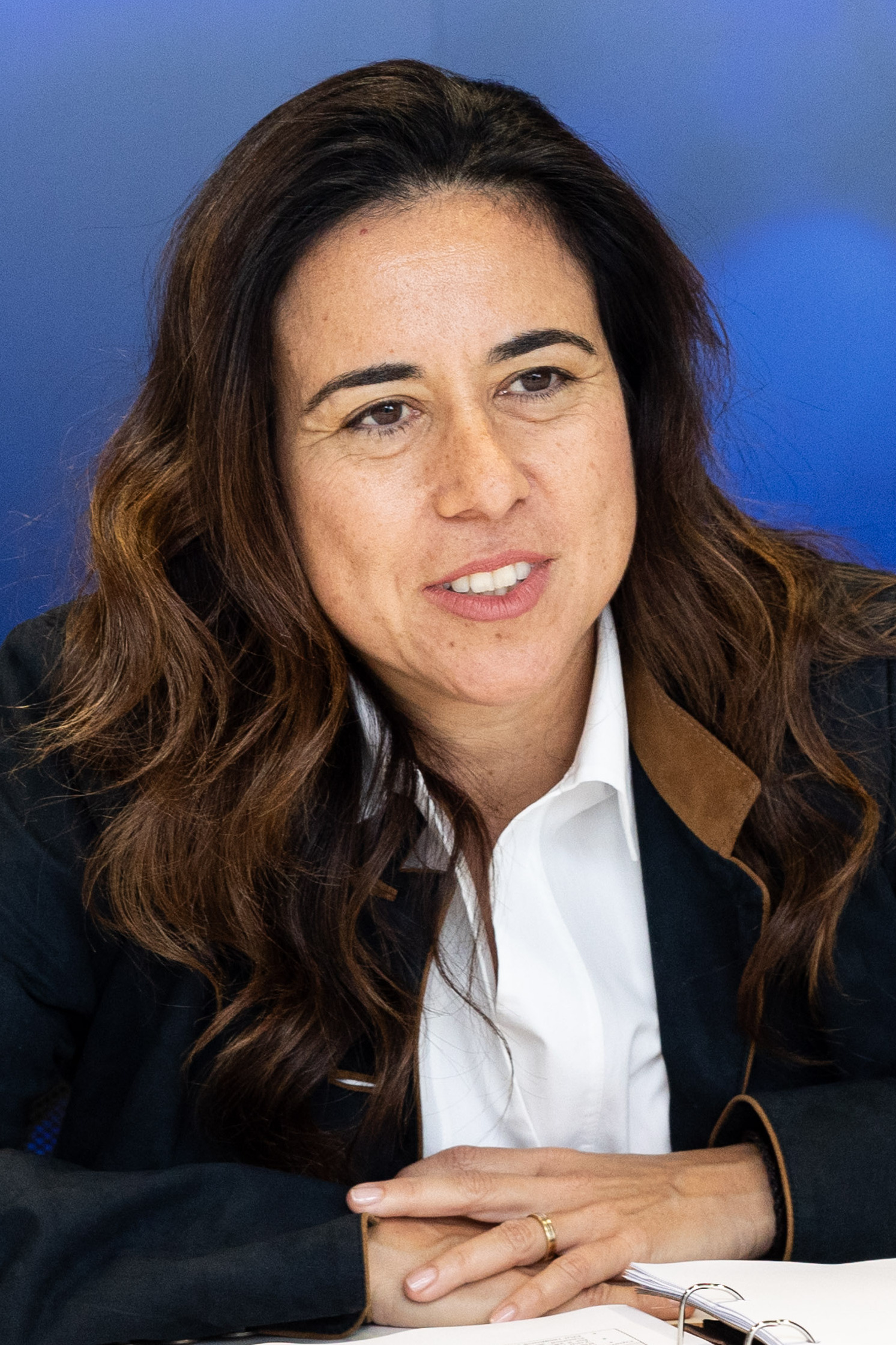
What she said as she entered the race
Nusseibeh framed her candidacy as a rescue mission for multilateralism itself. "It's clear that today we need a secretary-general that can recommit to the future of multilateralism and the future of the United Nations as a problem-solver rather than as a spectator to the world's crises," she told Reuters shortly before going public. "It's recognized today that we need someone who offers generational change for the organization," she added.
She said she had been approached by multiple countries during the last UN General Assembly in September to put herself forward — a detail that matters in a selection where, as The Guardian reported in September, some permanent members were openly holding out for new candidates to enter, and where POLITICO reported the Trump administration opposed all the existing options and wanted a wider field. Nusseibeh has taken leave from her UAE post to campaign.
On the historic dimension, she was careful: a victory would make her the first woman to lead the UN in its 81-year history, and only the second secretary-general from the Middle East, after Egypt's Boutros Boutros-Ghali (1992–1996). "I think it would be great if the next secretary-general was a woman but I'm not running because I'm a woman; I'm running because I am stubbornly optimistic about the future of the United Nations and I believe we need someone who is relentless in the pursuit of diplomacy to open doors," she said. "I come from a country that is younger than the United Nations but our region is one that has been facing severe challenges."
The deadlock she is walking into — in numbers
To understand why a late entrant can matter, look at the arithmetic of the straw polls. A secretary-general is appointed by the 193-member General Assembly on the recommendation of the 15-member Security Council. A candidate needs at least nine of the Council's 15 votes — and, crucially, no "discourage" vote from any of the five permanent members, each of which effectively holds a veto.
Six straw polls since July 30 have failed to produce that candidate. Former Costa Rican Vice President Rebeca Grynspan, 70, now secretary-general of the UN trade body UNCTAD, has led most rounds — she topped the first poll on July 30 with 10 "encourage" votes and led the sixth, colour-coded poll on October 16 with 9 encourage, 5 discourage and 1 no opinion. But two of those five discourage votes came from permanent members, according to people close to the process cited by Reuters — which, in a formal vote, would be enough to block her. Guyana's Carolyn Rodrigues-Birkett (8 encourage, 6 discourage on October 16, including two P5 negatives) and Argentina's Rafael Grossi, the head of the nuclear watchdog IAEA (8 encourage, 6 discourage, two P5 negatives), face the same wall. Every candidate on the October 16 ballot received at least two red P5 "no" votes — something diplomats say has never happened before in a selection. Senegal's Macky Sall withdrew on October 17, and Chile's Michelle Bachelet had already withdrawn in September after a weak third poll (1 encourage, 11 discourage).
Council members are now negotiating whether to hold another poll this Friday, October 23, or later — the first ballot on which Nusseibeh's name could appear. Guterres's term ends December 31 and his successor is due to take office January 1, 2027, which leaves roughly ten weeks to find a name all five veto powers can live with.
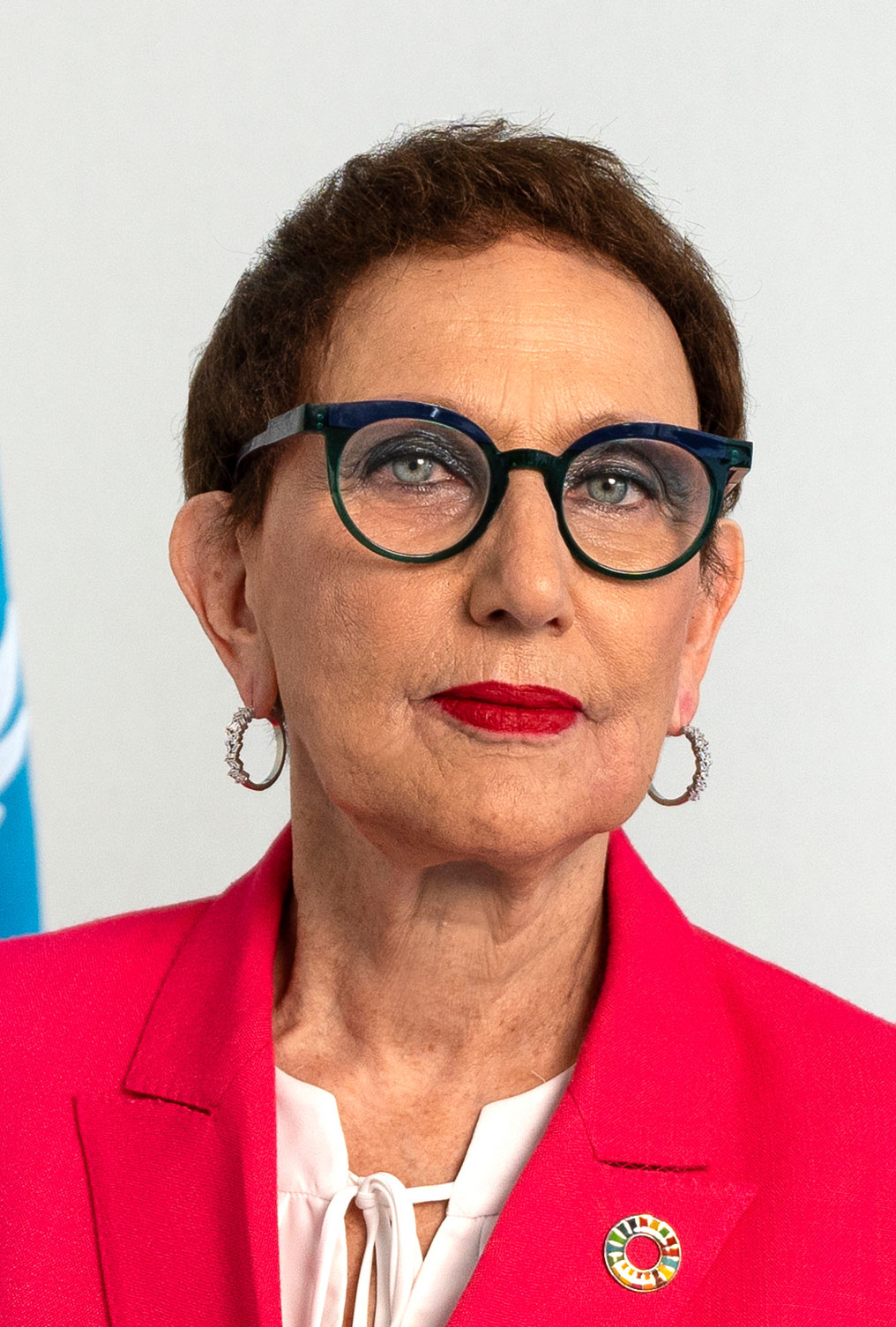
Her record: a decade running the UAE's UN mission
Nusseibeh is not an outsider parachuting in. She ran the UAE's mission to the UN for more than a decade, from September 2013 to April 2024, and led Abu Dhabi's successful campaign for election to the Security Council, where the UAE sat in 2022–2023. Diplomats in New York describe her as a respected, competent manager — the kind of reputation that counts in a process decided in private by 15 ambassadors.
Her signature achievement came during the Gaza war. In December 2023 she secured adoption of Security Council Resolution 2720, which paved the way for a UN mechanism to scale up humanitarian aid deliveries into Gaza. She told Reuters she won support for it by arranging a visit by Council members to the Rafah border crossing so they could see the situation on the ground themselves — an example, she said, of the "creative entrepreneurial diplomacy" that defines her approach. The UAE also co-penned Resolution 2686, the first Council text acknowledging that hate speech, racism, gender discrimination and disinformation can drive conflict, and Resolution 2681 condemning the Taliban's ban on Afghan women working for the UN.
Her background is part of the pitch: educated at Wycombe Abbey, Cambridge and SOAS in London, she is the daughter of Zaki Nusseibeh, a presidential adviser of Palestinian descent, and granddaughter of Anwar Nusseibeh — a family history that lets Abu Dhabi present her as both an insider of the Arab world and a bridge to the West.
Why this matters
The secretary-general is often called the world's top diplomat, and the job's power is mostly informal: convening enemies, shaming governments, setting the agenda on crises from Ukraine to Sudan, and running a sprawling system of peacekeeping, aid and refugee agencies. Who holds it for the five years from January 2027 will shape how — or whether — the UN responds to the wars and funding crises now squeezing it, including deep cuts in American contributions and Washington's withdrawal from dozens of UN bodies.
Nusseibeh's entry matters for three reasons. First, it tests whether the deadlock is really about the candidates or about the veto powers' rivalries: if the P5 were genuinely waiting for a fresh name, hers is the strongest fresh name available — a decade-long UN ambassador with a Gaza aid resolution to her name. If she too collects red votes on Friday, the problem is structural, not personal, and the Council may drift toward a compromise insider nobody campaigned for. Second, it breaks the race's geography. Under an unwritten rotation custom, 2026 is widely treated as Latin America and the Caribbean's turn — five of the seven remaining candidates, including Grynspan, Grossi and Rodrigues-Birkett, are from that group. A Middle Eastern winner would override that custom, which is precisely why her candidacy needs P5 enthusiasm, not just tolerance. Third, after 81 years and nine male secretaries-general, the UN has never been led by a woman; five of the eight candidates in this race have been women, and Nusseibeh's entry keeps that historic possibility alive even as the Latin American frontrunners stall.
The headwinds: Sudan, rotation and the veto powers
The candidacy carries real liabilities, and Nusseibeh was pressed on the largest of them on day one. UN sanctions monitors have described allegations that the UAE provided military support to Sudan's paramilitary Rapid Support Forces as credible; the UAE denies the allegations. Asked how that might affect her bid, Nusseibeh said she had taken leave from her UAE post and would focus on Sudan's humanitarian crisis. Critics amplified by commentators such as Nicholas Kristof argue an Emirati secretary-general would face a credibility problem on the very conflict where the UN most needs moral authority. Her supporters counter that she championed humanitarian access in both Gaza and Sudan from the ambassador's chair, and that no candidate from a major power's orbit arrives without baggage — Grynspan, for instance, has faced scrutiny over her record, and Rodrigues-Birkett's closeness to China has been cited by former American diplomats as a likely trigger for a US veto.
The rotation custom cuts the other way too: Latin American and Caribbean governments have waited decades for "their" turn and backed Grynspan heavily; an Arab-state winner would need to peel off P5 votes without uniting the regional bloc against her. And the field's history warns against reading momentum into a launch: Bachelet, a former president backed by three countries, collapsed within three polls; Sall, a former head of state, quit after the first colour-coded ballot exposed his P5 opposition.
What happens next
Three scenarios now dominate corridor talk. In the first, the October 23 poll (or the next ballot after it) shows Nusseibeh with nine-plus encourage votes and no more than one P5 discourage — instantly making her the consensus candidate and pressuring Grynspan's camp to stand aside, much as late compromise candidates have emerged in past deadlocked selections. In the second, she polls respectably but still draws two P5 negatives, proving no available candidate can clear the bar; the Council then either re-polls until someone blinks, or turns to a figure not yet nominated — names speculated about for months include the Netherlands' Sigrid Kaag and Kazakhstan's Kassym-Jomart Tokayev. In the third, the deadlock drags past November, raising the once-unthinkable possibility that the Council cannot recommend anyone before Guterres's term expires on December 31, forcing improvisation around an acting arrangement.
What is certain is the clock. The next straw poll is days away, the term ends in ten weeks, and for the first time in this race a candidate has entered because the existing field failed — not despite it. Whether Lana Nusseibeh is the answer the veto powers were waiting for will be known the first time her name is on a red-marked ballot.
Related coverage: Netanyahu's UNGA speech and the walkout · Lavrov's UNGA address
Sources
Reuters (October 21, 2026, Maha El Dahan, with Antoni Slodkowski at the UN): Nusseibeh interview and candidacy announcement, straw-poll state of play, Resolution 2720 background and Sudan exchange — northlandnewsradio.com (Reuters syndication). Reuters (October 16, 2026): Grynspan holds lead as race enters decisive stage, sixth-poll P5 detail — reuters.com. Financial Times reporting on her imminent entry and Times of Israel agency reporting on the October 16 poll, via Emirates Wire (October 22, 2026). Associated Press (October 16, 2026, Edith Lederer): no candidate has the required support of all five key powers. United Nations, "Selection and Appointment of the Next Secretary-General" (official process and nomination letters A/80 series), and the compiled straw-poll record (polls of July 30, August 21, September 18 and 29, October 7 and 16) via the 2026 selection record.