Published October 1, 2026 at 8:30 a.m. PDT
Bashir Khartoum hospital transfer
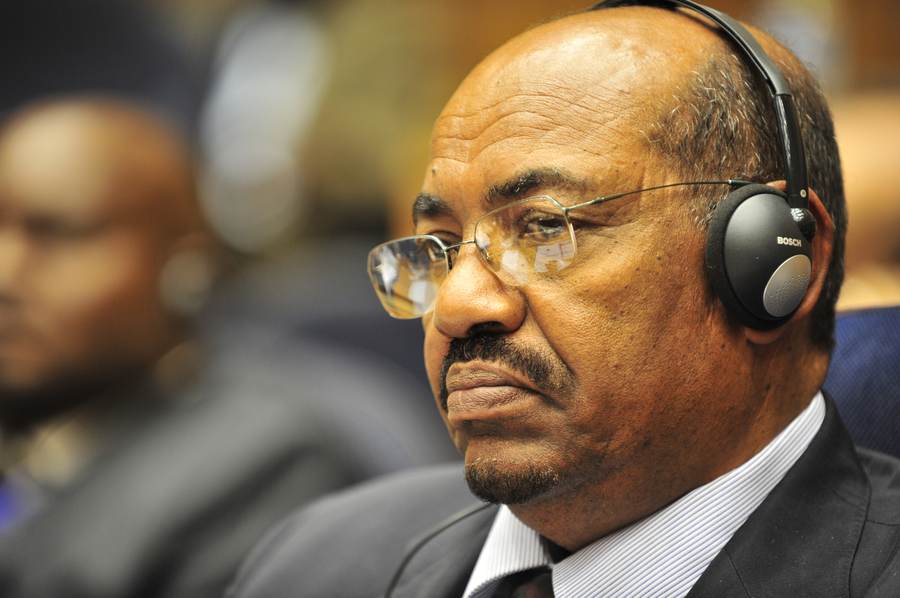
KHARTOUM — The Bashir Khartoum hospital transfer was confirmed on Thursday when Omar al-Bashir's lawyer, Mohamed Alhassan Alameen, told Reuters that the 82-year-old former president had been moved from the northern city of Merowe to a military-run hospital in the capital for medical tests and treatment. The move ends years of uncertainty about where Sudan's ousted ruler is being held — and it reopens a question the country's military rulers have dodged for more than a decade: what is to become of a man the International Criminal Court wants on charges of genocide, war crimes and crimes against humanity?
His family said on Wednesday that his need for treatment outside Sudan "has become critical and urgent, and cannot be delayed any longer," but that they had not received official permission to send him abroad, according to Asharq Al-Awsat reporting carried by Arab News. His precise medical condition is unclear. A separate report on Thursday claimed preliminary approval had been granted for Bashir to leave Sudan for treatment, with final military sign-off still pending — a single reporter's claim that could not be independently verified and should be treated with caution.
Alameen's account is the lawyer's and family's version of events; the military authorities have not publicly detailed Bashir's condition or the terms of his detention. That information gap is itself part of the story: in a war where both sides tightly control what the public sees, the health of the country's most famous detainee has become a matter of competing claims.
Why this matters
This is not really a story about one man's medical file. Omar al-Bashir is the International Criminal Court's defining fugitive — the first sitting head of state it ever indicted, and the case by which the court's credibility has been measured for seventeen years. His failing health forces a choice Sudan's army has deferred since the day it toppled him in 2019: surrender him, let him travel, or keep him in medical detention indefinitely. Each option carries a price, and the bill is coming due at the worst possible moment.
The timing compounds everything. Three and a half years into a civil war that has shattered the country, Washington is pressing a 90-day ceasefire plan that Burhan's own adviser warns could freeze Sudan into a Libya-style partition. Khartoum is back under army control; the RSF is entrenching a parallel administration in Nyala. In that landscape, where Bashir sleeps at night is a proxy for a larger question: who gets to decide Sudan's future — and whether accountability for its past is part of the settlement or collateral damage in the war.
There is also the symbolism the army cannot escape. Bashir is being guarded and treated by the same military establishment that removed him, now the faction that refuses to surrender him to The Hague. A hospital transfer keeps him alive and keeps him close — and keeps the decision about him exactly where it has been for a decade: in the hands of generals, not judges.
Background: thirty years, two ousters, one war
Bashir ruled Sudan for three decades after seizing power in a 1989 coup, presiding over the Darfur war that drew the ICC's first warrant in 2009 — for war crimes and crimes against humanity — followed by a genocide warrant in 2010. He was finally toppled in April 2019, when the army and the paramilitary Rapid Support Forces, acting together, removed him after months of popular protest. He was moved from prison to a hospital even before the current war, then shifted to Merowe under military guard after the army and the RSF turned on each other in April 2023 and plunged Sudan into civil war.
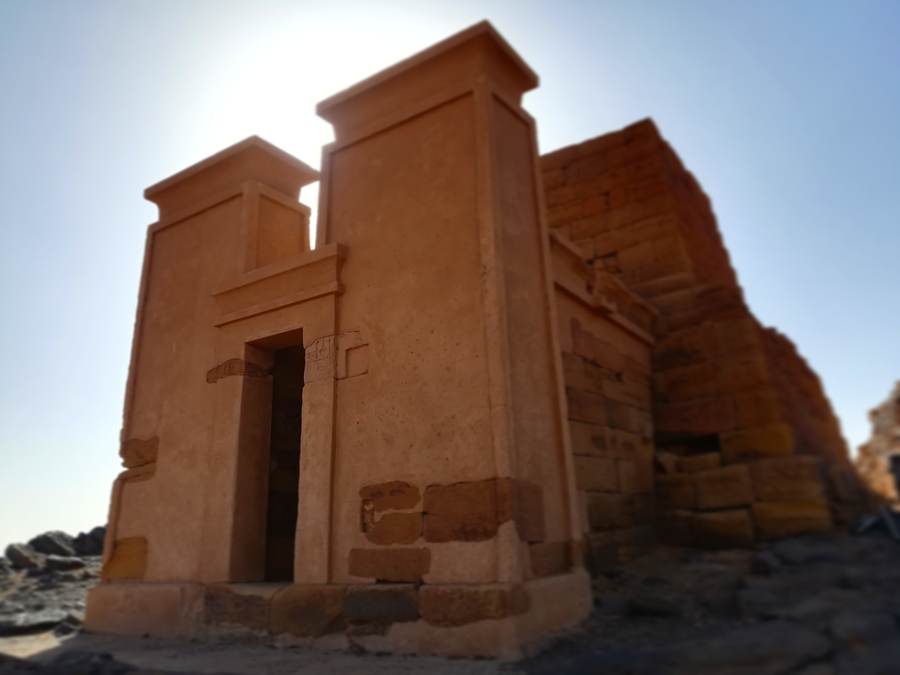
Merowe sits in Sudan's Northern State, upriver from Khartoum in the Nile valley country of the ancient Kushite kingdom — the region of the Nubian pyramids at Meroe. For more than three years it has been Bashir's gilded cage: detained, guarded, largely invisible. His transfer to the capital brings him back to the center of Sudanese politics at a moment when the war has made the capital, briefly, an army town again.
The 2015 parallel: the escape that still haunts the ICC
Any discussion of a Bashir medical evacuation runs into the same ghost: Johannesburg, June 2015. Bashir flew in for an African Union summit while an ICC warrant was active; a South African High Court ordered the government to prevent him from leaving; the government let his plane take off anyway. It remains the court's most humiliating episode — proof that warrants, even against a sitting president, are only as strong as the political will to enforce them.
That history is why the family's plea for treatment abroad lands the way it does. To his supporters it is a humanitarian request for an ailing 82-year-old. To Darfur victims' groups and ICC backers, "medical evacuation" reads as a potential escape hatch with a 2015 precedent. Both readings can be sincerely held; neither can be dismissed. The flight-risk question is not an accusation — it is the structural fact that any authority contemplating his travel must answer, on the record, before he boards a plane.
Who benefits, who loses, what the critics say
The army's angle: cohesion over accountability. For Burhan's camp, keeping Bashir inside Sudan — alive, guarded, and out of The Hague — avoids a rupture with the Islamist constituencies that powered his thirty-year rule and whose networks the army still relies on in its war against the RSF. Surrendering him would be read by those allies as betrayal. The cost is legitimacy: every month the army shelters an ICC indictee, its claim to be Sudan's responsible sovereign authority weakens with Western mediators and civilian groups whose support a postwar settlement would need.
The family's angle: a medical case with political uses. The "critical and urgent" framing puts the army in a bind — deny travel and own any deterioration in his health; grant it and own the flight risk. Critics note the timing serves Bashir's interests either way: a hospital in Khartoum is more comfortable than detention in Merowe, and a trip abroad is a trip abroad.
The RSF's angle: a propaganda gift. Hemedti's force has every incentive to amplify the episode. An army that guards the man accused of the Darfur genocide while accusing the RSF of atrocities in the current war hands its enemy a ready-made narrative — one the RSF's own extensive record of abuses does not erase, but which muddies the moral framing both sides compete over.
The mediators' angle: distraction or lever. Washington's envoy Massad Boulos is trying to sell a 90-day ceasefire to two armed camps that distrust the sequencing. A fresh Bashir crisis is either a sideshow that consumes diplomatic bandwidth or a lever — the army's handling of him is one of the few issues where international pressure, ICC obligations and domestic politics visibly intersect.
The victims' angle: the one most often missing. For Darfuris who survived the campaign Bashir is charged with orchestrating, the debate over his hospital bed can feel obscene. Their position is simple and consistent: a transfer for treatment is fine; a transfer that becomes impunity is not. Whether anyone in power is listening is a separate question.
The numbers behind the dilemma
Put the figures in context. Bashir is 82; he ruled for 30 years; the first ICC warrant is 17 years old — older than Sudan's civil war, which has run for three and a half years since April 2023. The war's human scale dwarfs the legal drama around one man: the International Rescue Committee counts 33.7 million people in need of aid, with roughly 9 million displaced, a catastrophe tracked in UN displacement reporting. ACLED has recorded at least 12,314 fatalities in Kordofan alone since April 2023 — one region, and a floor rather than a ceiling, since the true national toll is widely believed to be far higher but remains unverified.
The comparison cuts both ways. Against 33.7 million people in need, the fate of one 82-year-old is a rounding error — until you remember that the question of impunity versus accountability is one of the things the war is being fought over, and that how Sudan treats its most famous indictee signals how it will treat every lesser one.
What happens next: three scenarios
Scenario one: evacuation granted abroad — and the ICC trap springs. If the army signs travel papers, the destination decides everything. An ICC member state would be legally obliged to arrest him on arrival; a non-member becomes a diplomatic crisis and a test of how much impunity the region will still underwrite. The 2015 South Africa precedent suggests even binding warrants do not guarantee detention — but the political cost would fall on whoever signed the papers, and on Khartoum if the trip looks like state-facilitated flight.
Scenario two: permission denied — and the Islamist backlash builds. Bashir is not without a constituency; the Islamist movement that powered his rule retains networks, money and grievances. If his health visibly deteriorates in army custody after a denied evacuation plea, the army faces accusations of slow cruelty from the very allies it needs against the RSF. Denial is the legally safe option and the politically combustible one.
Scenario three: indefinite Khartoum-hospital limbo. The non-decision. A military hospital becomes a gilded cell; the warrants stay outstanding; the question returns larger with every health scare. This is the path of least resistance — and the one that slowly normalizes the idea that some indictees are simply too entangled with power to ever face a court. The war, meanwhile, does not wait for the dilemma to resolve itself.
The through-line is uncomfortable: Sudan's generals toppled Bashir, inherited his wars, started a new one, and now hold his life in their hands alongside the country's. What they do with an ailing 82-year-old in a Khartoum hospital will say more about the Sudan they are building than any ceasefire communiqué.
Sources: Reporting and official data reviewed from Reuters, Asharq Al-Awsat via Arab News, and UN/IRC/ACLED figures as cited. Claims by Bashir's lawyer and family are attributed and are not presented as independently established facts; the single report of preliminary travel approval is unverified. The 2015 South Africa episode is established historical record.