Kimberly Guilfoyle Resigns as Greece Ambassador
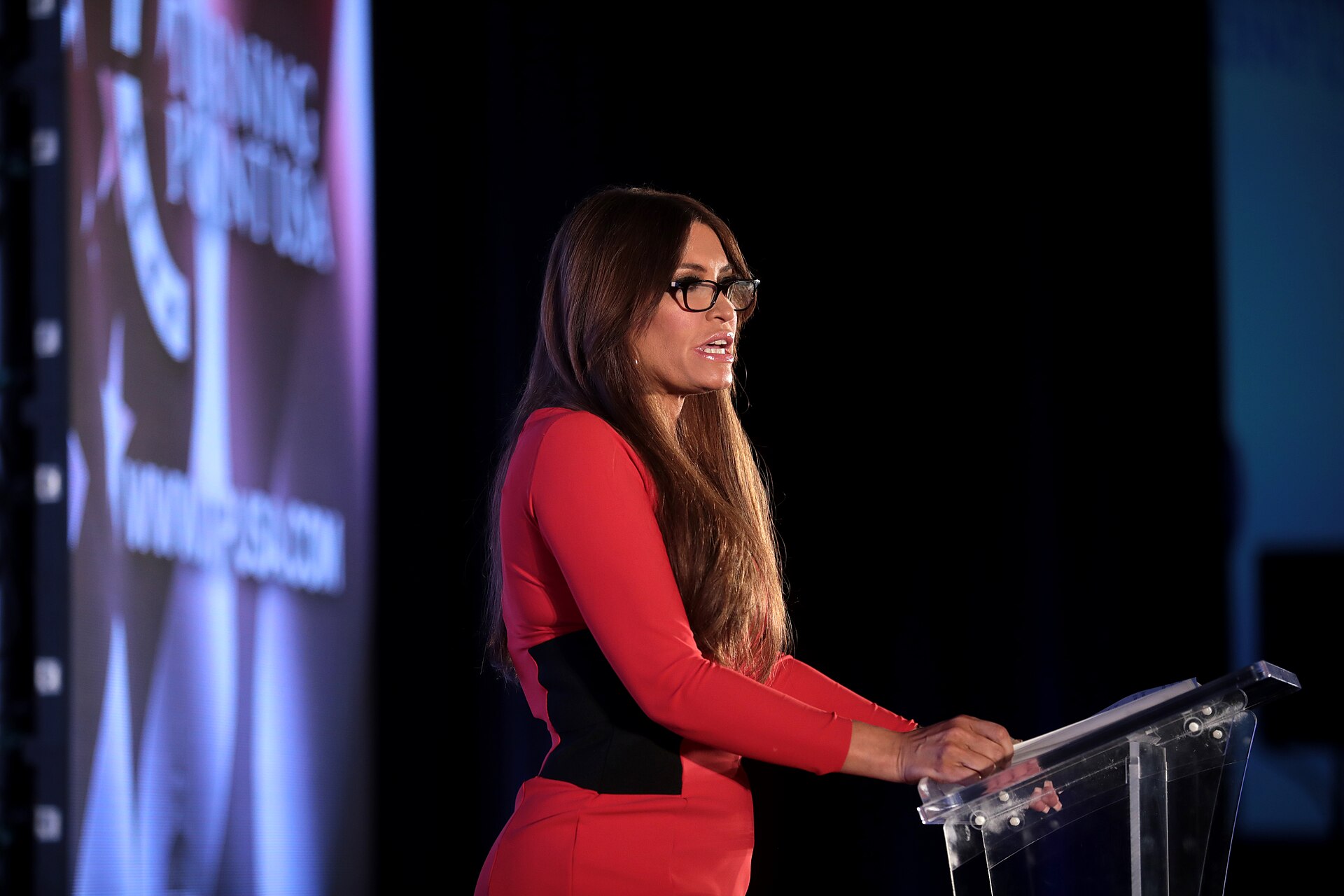
Kimberly Guilfoyle resigns as Greece ambassador — that is the headline the White House effectively wrote on Tuesday morning, and Guilfoyle herself confirmed it minutes later. At her first briefing as press secretary, Katie Zacharia told reporters, "We have asked Ambassador Guilfoyle to resign," adding, "She has been a wonderful asset to the team, and we wish her luck." Shortly afterward, Guilfoyle posted a long farewell statement on her X account: "Serving as the United States Ambassador to Greece has been the honor of a lifetime. I will forever be grateful to President Donald J. Trump and Secretary of State Marco Rubio for entrusting me with the extraordinary privilege of representing the greatest country in the history of the world."
The resignation ends, abruptly, one of the most closely watched ambassadorial tenures of Trump's second term — a posting that began with a swearing-in on September 29, 2025, and unraveled in about a week of reporting about money, donors and access. No successor has been named, and neither the White House nor Guilfoyle has said when her departure formally takes effect.
How Tuesday unfolded: from "not happy" to resigned in under a day
The sequence matters, because each step narrowed Guilfoyle's room to survive. The Wall Street Journal reported last week — on October 8 — that in the days before her Senate confirmation hearing last year, Guilfoyle had pressed a Trump donor, Eric Deters, for a $100,000 payment toward her American Express bill, in messages the Journal reviewed. The Associated Press reported that the State Department's inspector general was looking into the allegations. Over the weekend, Secretary of State Marco Rubio was in Athens, where he appeared alongside Guilfoyle, called her a "strong ambassador here," and refused to comment on the reports — a defense that held for roughly 48 hours.
On Monday, the president himself moved the story. Asked whether he was considering dismissing Guilfoyle, Trump told reporters as he departed the White House: "We're looking at it — yeah. We're not happy." We covered that moment as it happened: Trump said he was considering firing Guilfoyle as Greece ambassador. By Tuesday morning the consideration was over. Zacharia's announcement came near the end of her first briefing, and Guilfoyle's statement followed shortly after — a resignation in form, following a request in fact. The Wall Street Journal, CNN, the Associated Press and the New York Post all reported the same sequence: asked to resign, then resigned.
What her statement says — and what it does not say
Guilfoyle's farewell post is built in three parts: gratitude, record, and rebuttal. The gratitude is unambiguous — thanks to Trump and Rubio, and a closing pledge: "While my time as Ambassador may be coming to an end, my commitment to President Trump, the America First movement, and the country I love will never end." The record she claims is specific, and it is the record she wants attached to her tenure: "we have helped secure historic agreements to expand American liquefied natural gas exports to Europe, advanced the Vertical Corridor to reduce Europe's dependence on Russian energy, strengthened our defense and security partnership with a critical NATO ally, and expanded opportunities for American businesses and investment throughout the region." She also credited the embassy's role "in strengthening American energy dominance" and keeping the United States "the indispensable leader in Southeast Europe."
The rebuttal is short and total. "I also want to address the recent allegations against me. These allegations are false, and I intend to vigorously defend my name, my reputation, and my integrity," she wrote. "I will not allow false accusations to define my decades of public service." What the statement does not contain is equally notable: no mention that she was asked to resign, no criticism of the president or the secretary of state — her "gratitude and respect for President Trump and Secretary Rubio remain unwavering" — no effective date, no description of what she will do next, and no engagement with the specific reporting, beyond the blanket denial. It reads, deliberately, as a voluntary farewell. The White House's own framing — asked, then wished well — tells the other half of the story, and both halves are now on the record.
The allegations, and her defense
The core allegation comes from the Journal's reporting on messages it reviewed. According to the Journal, Guilfoyle sought a $100,000 payment to her American Express account from Deters, a Trump donor and former congressional candidate, days before her confirmation hearing, while touting her connections to the administration and offering to press the Internal Revenue Service and the Justice Department on his behalf. Deters told CNN's Jake Tapper last week, "No question it was a quid pro quo," and said Guilfoyle told him she would be his "ride or die" in the administration. He did not send the money — he told the Journal it would cost him his marriage, and told CNN he did not have the liquid assets at the time.
CNN reported that the ouster followed a string of reports: the alleged pre-confirmation solicitation, reports that she accepted lavish gifts as ambassador, and that she brought a lobbyist for a Greek construction company into official meetings. The Journal had also reported on her alleged promotion of a Greek energy firm in regional energy deals. Guilfoyle's lawyers have denied the money allegations, disputed the authenticity of the messages without providing specifics, and argued a different characterization of the Deters relationship: that he owed her money for speeches and consulting work done before she entered public service. "Asking a client to pay for work already done is not corruption. It is the opposite of corruption," her lawyers wrote. Deters says he owed her no balance. Her legal team has also said reports about her travel were misleading and that she complied with federal gift and reporting requirements. None of the allegations has been adjudicated; what exists as of Tuesday is reporting, denials, and now a resignation.
Reaction in Washington — and silence, so far, from Athens
The official Washington reaction split along predictable lines. The White House kept its public line courteous to the end: asked to resign, "a wonderful asset," wished well. Democrats on Capitol Hill did not accept the resignation as the end of the matter. Before Tuesday, Rep. Gregory Meeks, the top Democrat on the House Foreign Affairs Committee, had called for Guilfoyle to testify and for investigators to determine "whether Ambassador Guilfoyle solicited funds from any other source." After the announcement, the committee's Democrats wrote that "resigning does not shield her from accountability," and called for congressional oversight.
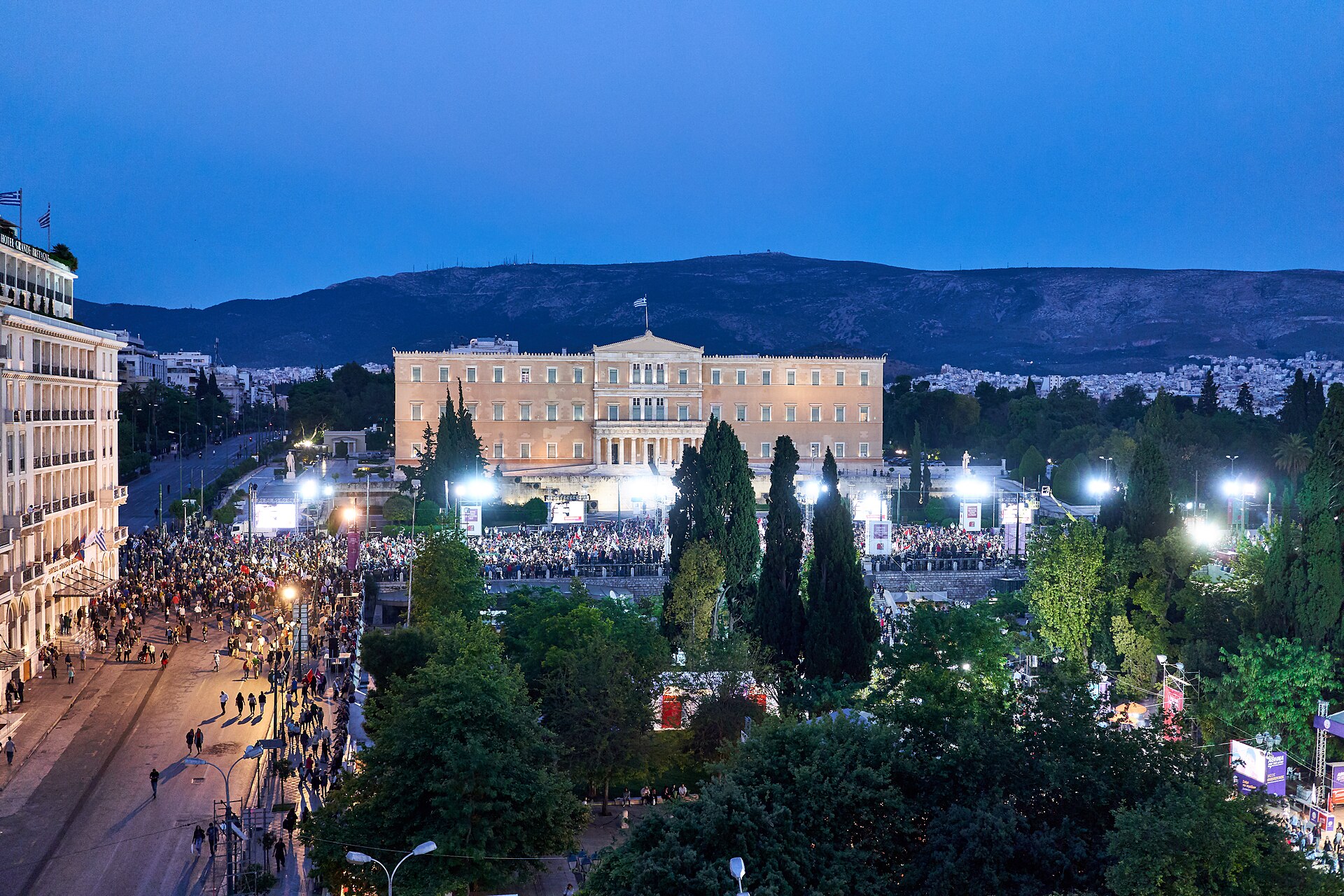
Hovering over the politics is the State Department's inspector general. CNN reported the OIG is investigating Guilfoyle amid the misconduct allegations, citing a source familiar with the effort; an OIG spokesperson said the office does not confirm or deny investigative matters. What happens to that inquiry now is genuinely unclear: CNN noted it may depend in part on whether the Justice Department opens its own investigation, and that inspector-general findings can take a year or more. From Athens, there was no immediate public reaction from the Greek government in the first hours after the announcement — notable in itself, given that Rubio had been in the Greek capital days earlier publicly backing her. Guilfoyle's own relationship to Greece predates the job; she has long spoken of her affection for the country, and Greek-American community politics were part of the case for her appointment.
A tenure of roughly a year
Guilfoyle arrived at the post with an unusual profile: a former San Francisco prosecutor, a former Fox News host, and for four years the fiancée of Donald Trump Jr. — a relationship that had ended by the time Trump nominated her in December 2024. She was sworn in on September 29, 2025, and took up the posting in Athens that fall. Her first hundred days were built around energy: she has pointed to the Partnership for Transatlantic Energy Cooperation ministerial in Athens last November — the largest official U.S. delegation to Greece ever, including two cabinet secretaries — as evidence of the posting's center of gravity. Supporters in the administration described a working ambassador on a strategically important file; critics, including Democratic lawmakers, questioned from the start whether the appointment rewarded proximity to the president's family over diplomatic experience. Both readings survived her tenure; the scandal, not the policy debate, is what ended it.
Why this matters
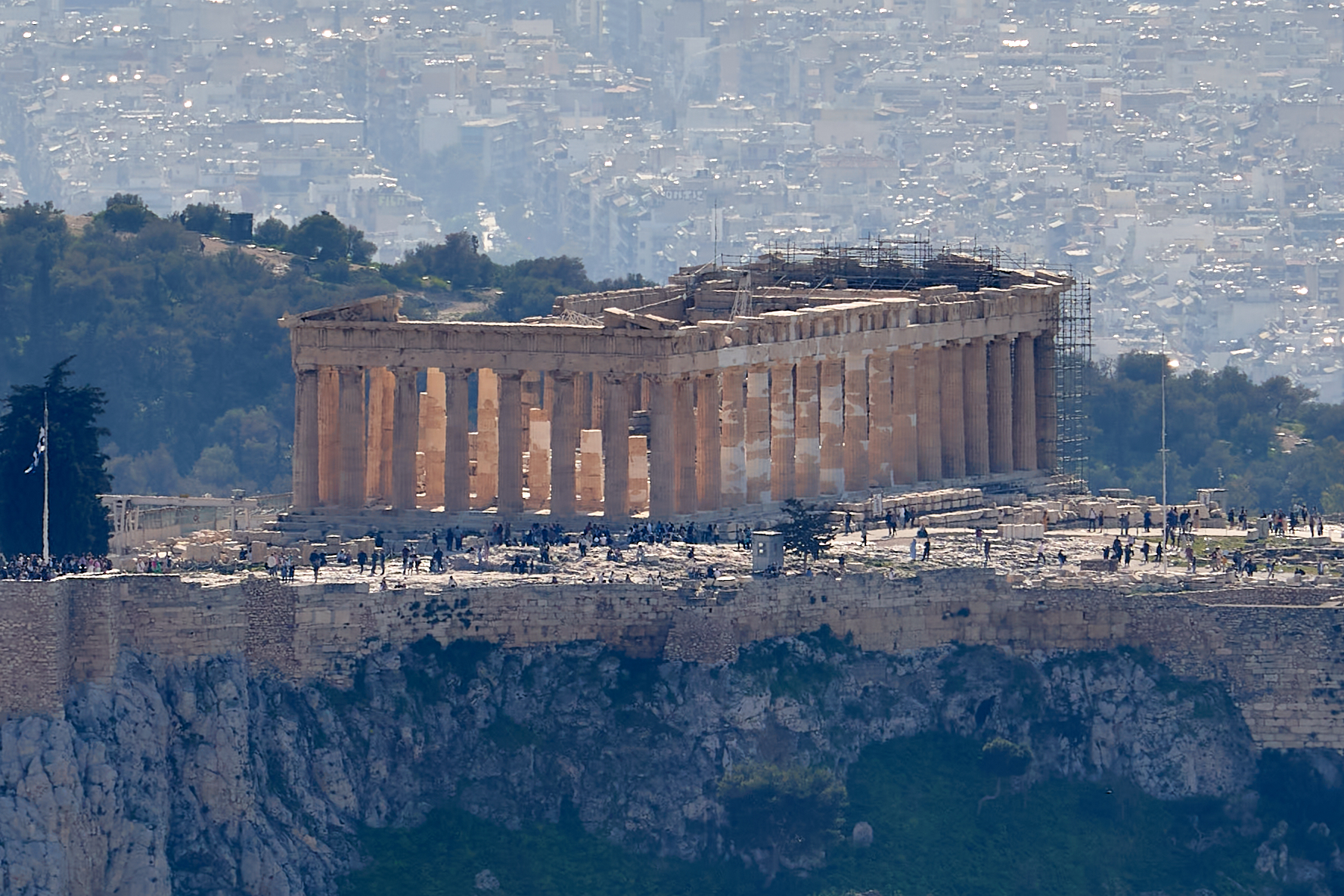
Strip away the celebrity and the scandal, and the Athens embassy is a serious piece of American statecraft. Greece sits at the hinge of several files Washington cares about at once: liquefied natural gas terminals that give southeastern Europe an alternative to Russian pipeline gas; the Vertical Corridor route meant to carry that gas north through Bulgaria and Romania toward Ukraine and Moldova; the deep-water port at Alexandroupoli, which has become a logistics artery for NATO's eastern flank; and the U.S. naval presence at Souda Bay in Crete. The ambassador in Athens is, on paper, the person who keeps Greek politics, American energy firms and NATO planners in the same conversation. A vacancy — and ambassadorships can stay vacant for months between nomination and Senate confirmation — does not stop that machinery, but it removes the politically connected voice at the top of it, at a moment when the energy deals Guilfoyle touted are still being built rather than banked.
The second reason this matters is institutional. The allegations, if any part of them is substantiated by the inspector general, describe exactly the conduct ethics rules for ambassadors exist to prevent: a nominee soliciting money from a donor while offering access, and an ambassador blurring official business with private interests. If they are not substantiated, then a diplomat has been removed on the strength of contested reporting — which is why the OIG's work, slow as it is, matters more than Tuesday's statements. The administration's defenders note that Trump asked for the resignation of his own appointee, quickly, once the reporting hardened — evidence, they would say, of accountability working. His critics answer that the appointment itself, and the refusal to comment during Rubio's Athens trip, show accountability arriving late and only under pressure. Readers can weigh both; the facts of the sequence are not in dispute.
What happens next
Three open questions will drive the story from here. First, the succession: no replacement has been named, and until one is nominated and confirmed, the embassy in Athens will be run day-to-day by its senior career staff under a chargé d'affaires, by standard diplomatic practice. Given the energy file's prominence, watch whether the White House reaches for another political loyalist or a career foreign-service officer — the choice will say something about what it thinks went wrong. Second, the investigation: whether the State Department inspector general continues, what it examines, and whether the Justice Department takes any interest will determine whether Tuesday was the end of this story or its midpoint. Guilfoyle has promised to "vigorously defend" her name; her lawyers' receivables argument previews the defense. Third, the deals: the LNG and Vertical Corridor projects she championed are multi-year infrastructure with their own momentum, but ambassadors matter in the capitals where projects get permitted, financed and defended. Athens will be watching who lands next as closely as Washington will.
For now, the formal record is two short documents: a press secretary's two sentences and a farewell post that never uses the word "asked." Between them sits a one-year ambassadorship that ended the way it was always going to be judged — on whether the energy strategy outlasts the scandal. That verdict is still out.
Sources
Guilfoyle's farewell statement, posted on her X account (@kimguilfoyle) on Tuesday, October 13, 2026 — full text as reproduced by Helleniscope and quoted by the Wall Street Journal, CNN and the New York Post. Wall Street Journal (Oct 13, 2026), Kimberly Guilfoyle Resigns as U.S. Ambassador to Greece — the resignation, the Deters messages reporting and the lawyer's response. CNN (Oct 13, 2026), White House has asked Kimberly Guilfoyle to resign as US ambassador to Greece — Zacharia's briefing remarks, the gifts and lobbyist reporting, Rubio's Athens defense, Meeks and the House Foreign Affairs Democrats, and the inspector-general investigation. New York Post (Oct 13, 2026) — the farewell statement's closing lines and the briefing sequence. Associated Press reporting (Oct 12–13, 2026) — Trump's "We're not happy" remarks and the inspector-general review. Scripps News/TMJ4 (Oct 13, 2026) — the September 29, 2025 swearing-in and statement quotations.