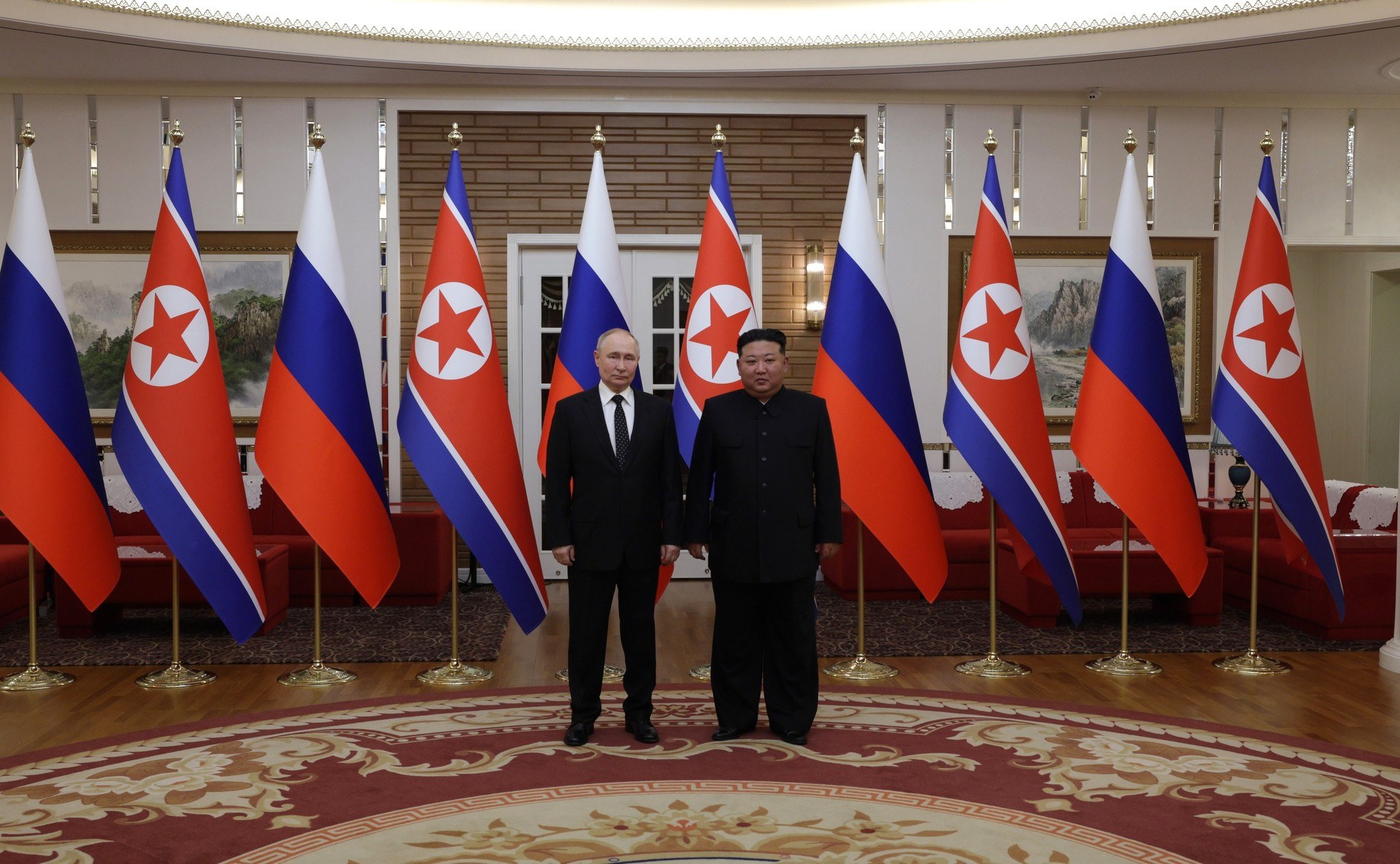
Kim Jong Un death rumors swept social media over the weekend of October 17–18, 2026, with posts claiming North Korea's leader had suffered a brain haemorrhage, fallen into a coma or died. There is no credible evidence for any of it: no news organisation has reported a death or a medical emergency, neither Pyongyang nor Seoul has announced any health event, and Kim was last seen in public on October 11, opening a defence museum in Pyongyang.
The rumor, in full — and the verdict
PYONGYANG, by way of everywhere else — Because the claims travelled as fragments, it is worth assembling them in one place, because assembled is exactly how they persuaded people. Over the weekend, posts on X, Facebook and other platforms claimed that Kim Jong Un had suffered a cerebral haemorrhage — a bleed on the brain. Some versions said he had been rushed to Beijing for treatment, with some posts naming Peking Union Medical College, one of China's most prestigious hospitals. Others went further: the North Korean leader was in a coma, or had already died. A fabricated memorial graphic, giving his lifespan as "1984–2026," was shared as though it were an official announcement. A Facebook page titled "R.I.P. Kim Jong-un" drew large engagement. And some posts lent the story a borrowed authority by attributing it to Ji Seong-ho, the North Korean defector who became a South Korean lawmaker and has commented on Kim's health before.
Now the checks. The Daily Star, examining the Ji attribution, found no trace of any such interview: Ji has not spoken to media for several years and stopped posting to his YouTube channel two years ago. No mainstream news organisation — not Reuters, not the Associated Press, not the BBC, not South Korea's Yonhap — has reported a death, a coma or a medical emergency of any kind. Neither Pyongyang nor Seoul has issued any statement confirming a health event. Fact-check write-ups of the weekend's claims rated the death claim false. There is, in short, no evidence that anything has happened to Kim Jong Un — only evidence that a claim about him was shared very widely.
That distinction matters, and it is the whole article. North Korea is a country of roughly 26 million people with one of the world's largest standing armies and a growing nuclear arsenal, ruled by a man whose health is a state secret and whose sudden death — whenever it eventually comes — would be a genuine geopolitical earthquake. A rumor of that earthquake is therefore not trivia. But it is a rumor, and it deserves to be reported as one: precisely, with its mechanics exposed, and with what is actually known set out alongside what is not.
How an evidence-free claim became "breaking news"
The weekend's rumor followed a template that is now well worn. It began with unattributed posts — no named source, no document, no photograph that could be checked. It acquired a visual: the fabricated memorial graphic, which did the persuasive work that text alone cannot, because a picture with dates on it looks like a conclusion rather than a claim. It acquired social proof through the memorial page's engagement numbers, which later posts then cited as though an audience were a source. And it acquired borrowed credibility from the Ji Seong-ho attribution — a real person, with a real record of commenting on Kim's health, whose name could be attached to the claim precisely because he has been publicly silent for years and was in no position to be quickly asked.
Each layer solved a problem for the layer beneath it. The graphic made the posts look official. The engagement made them look confirmed. The defector's name made them look sourced. None of the layers contained a fact. By Monday morning, aggregator accounts were presenting the claims in the visual language of breaking news — the format readers are trained to trust — and the rumor had completed the journey from invention to apparent event without passing through a single newsroom's verification desk. That is not a failure of any one platform. It is the predictable output of a system that rewards speed and emotional charge, applied to the one major world leader about whom almost nothing can be independently checked in real time.
What we know and what we don't
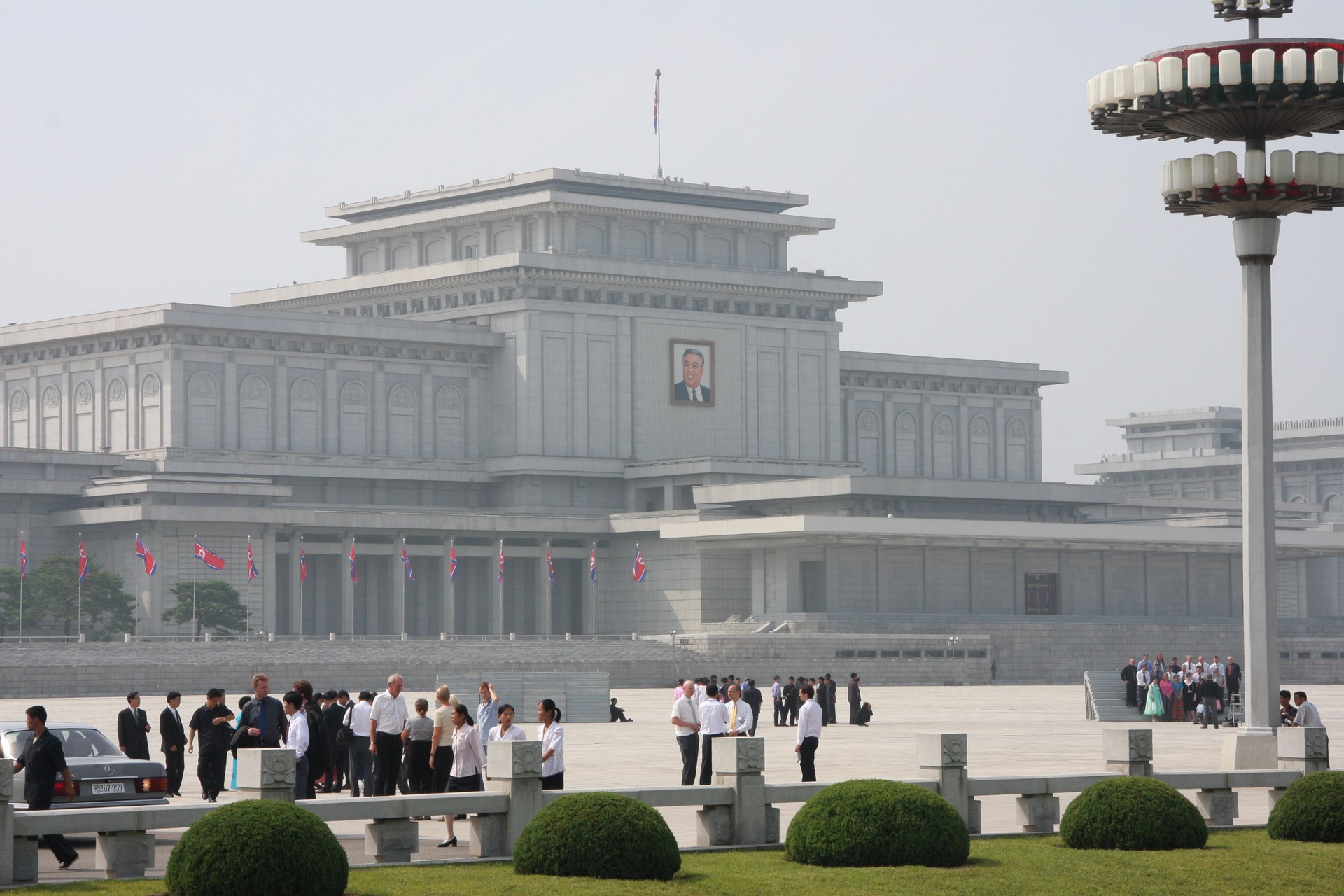
What we know. Kim Jong Un's last confirmed public appearance was on Sunday, October 11, when he opened the Defence Revolution Museum in Pyongyang, accompanied by his wife, Ri Sol-ju, and his daughter, Kim Ju-ae. State media coverage, reported by the Korean Central News Agency (KCNA) and covered by Reuters on October 13, showed him viewing displays that included the Hwasong-20 intercontinental ballistic missile. The day before, on October 10, he had attended the performance marking the 81st founding anniversary of the ruling Workers' Party, again with Ri and Ju-ae. KCNA also announced an upgraded tactical ballistic missile test around October 12–13 under his defence programme. Since then, eight days have passed without a new dated appearance — a gap that is, by the standards of Kim's schedule, entirely unremarkable. He routinely disappears from state media for one to three weeks at a time.
What we don't know. Almost everything else. Kim's actual health is among the most closely held secrets in the world. South Korean intelligence has assessed in the past that his weight puts him at elevated risk of a heart attack — an assessment about risk, repeated by analysts for years, not a report of any event. The origin of the weekend's posts is unknown. And the Chinese-hospital detail — the claim that he was treated at Peking Union Medical College — has been neither confirmed nor addressed by any Chinese institution or by Beijing; as of publication, no Chinese foreign-ministry comment on it appeared in the reporting available. An honest account of this story is mostly a list of absences: no announcement, no confirmation, no evidence — and, notably, none of the signals that have accompanied real North Korean leadership deaths in the past.
Why this matters
Start with the analyst's test for what a real North Korean succession crisis looks like. Benedict Rogers, a human-rights analyst quoted by The Sun, noted that when North Korea's past leaders died, the state produced an orchestrated public outpouring of grief — mass mourning, choreographed and unmistakable. None of that has been seen. Rogers added the corollary: if the rumors persist, expect the regime to answer them the way it has before, by releasing proof-of-life material — new dated footage of Kim performing some routine act of rule — because Pyongyang understands exactly what a leader-shaped silence does to outside speculation.
Then consider the timing, because the timing is why this rumor, and not some quieter week's, caught fire. On October 13, Reuters reported that President Trump had said he might meet Kim during a planned trip to Asia, with Trump expected at the APEC summit in China in mid-November. A possible Trump–Kim meeting is one of the few live diplomatic stories involving North Korea; it puts Kim's name in front of a global audience primed to care about his status, and it raises the market and diplomatic stakes of any news about him. A death rumor dropped into that news environment does not stay a curiosity. It moves chatter in Seoul, Tokyo and Washington, and it forces real officials to spend real time establishing that nothing has happened — which is, on the evidence available, the correct conclusion.
Finally, there is the structural problem, which no single fact-check fixes. North Korea's information blackout is not a bug that rumor fills by accident; it is the regime's design. A state that publishes nothing checkable about its leader's health guarantees that every gap in his schedule becomes a market for speculation, and that the first draft of any genuine future crisis will be indistinguishable from this weekend's fabrication. The 1984–2026 graphic is a fake. The vulnerability it exploited is real and permanent.
2020: the dress rehearsal
None of this is new, and the precedent is worth recalling in detail because it is the best guide to how this episode ends. In April 2020, Kim vanished from public view for roughly twenty days. Reports — sourced, this time, to a defector-run outlet's claim about a cardiovascular procedure — metastasised into global death speculation: satellite analysts scoured imagery of his train, diplomats were asked on camera whether he was alive, and the phrase "brain dead" trended on the strength of a single unverified report. Then, on May 1, KCNA published photographs of Kim cutting a ribbon at a fertiliser plant, smiling, apparently unbothered. The twenty days of certainty evaporated in an afternoon.
Go back further and the pattern lengthens. In 2014, Kim disappeared for about six weeks — missing even a session of the Supreme People's Assembly — before reappearing walking with a cane, an absence eventually attributed to an ankle problem. His father's death in 2011 offers the sharpest contrast of all: Kim Jong-il's death was concealed by the state for roughly two days and then announced by a tearful television anchor, followed by the full liturgy of official mourning. Real deaths in Pyongyang have a signature — silence, then ceremony. This weekend produced neither. It produced a Facebook page.
The succession question that gives the rumor its charge
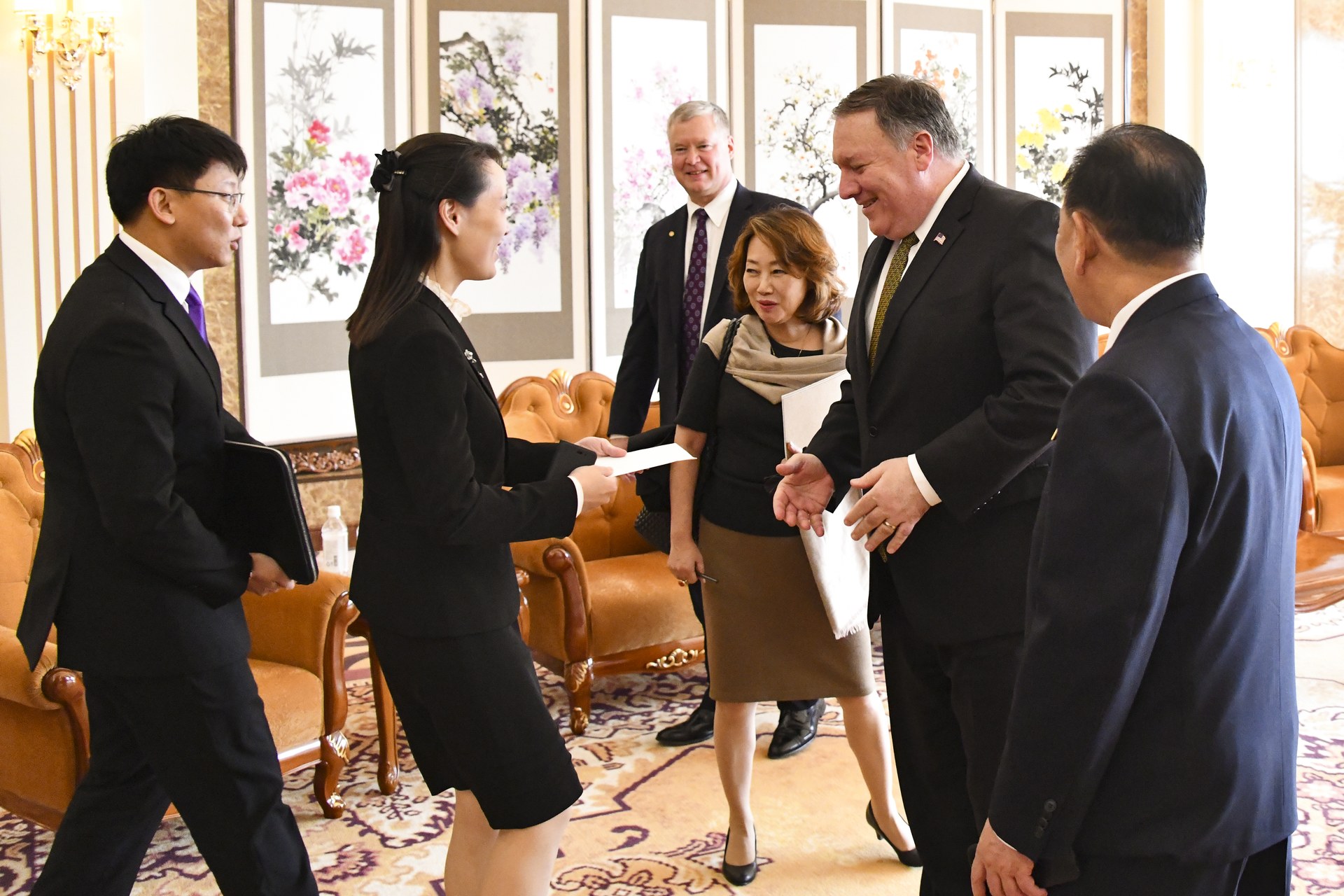
The reason a Kim health rumor can never be merely gossip is that North Korea has no publicly designated successor, and the regime's legitimacy is dynastic. Two figures dominate the speculation that analysts — and it is analysts, offering assessments, not facts — attach to the question. The first is Kim Yo-jong, the leader's sister, a senior party official and the regime's most visible spokeswoman to the outside world, whose statements on South Korea and the United States are read as the leadership's own voice. The second is Kim Ju-ae, the daughter who has been placed beside her father at missile launches and state ceremonies with increasing prominence — including at the museum opening on October 11 — and whose elevation some analysts read as heir-apparent grooming, while others caution that her role may be symbolic theatre about the dynasty's future rather than a succession plan.
That unresolved question is the rumor's fuel and its danger. A fabricated death claim about a leader with a settled succession is a hoax. The same claim about Kim Jong Un touches nuclear command authority, the stability of a state whose collapse scenarios fill classified planning documents in three capitals, and the calculations of every government that would have to respond in the first hours of a real event. It is precisely because the stakes of the true story would be so high that the false one deserves to be dismantled carefully rather than merely ignored.
What happens next
The likeliest resolution is the 2020 one: KCNA publishes dated material of Kim doing something mundane — inspecting a factory, sending a letter, chairing a meeting — and the rumor collapses for want of oxygen. Watch, in other words, for the prosaic. The signals that would change this story are specific and checkable: a South Korean National Intelligence Service or Unification Ministry comment addressing the claims; a Chinese foreign-ministry response to the Beijing-hospital detail; any shift in KCNA's tone or schedule; or, at the outer edge, the mourning signature that has marked real transitions. Until one of those appears, the accurate headline is the unglamorous one: a rumor spread, it was checked, and nothing supports it.
There is a discipline worth keeping for the next time — and there will be a next time, because Kim will go quiet again, and the machine that built this weekend's story is still running. The discipline is simply to ask of any such claim what was asked here: who is the source, what is the evidence, and do the institutions that would have to know — the wires, the governments, the state media of the country concerned — show any sign of it? This weekend, the answers were nobody, nothing, and none. Kim Jong Un was last seen on October 11, opening a museum, looking at his newest missile. Everything after that is not news about his health. It is news about ours — about an information ecosystem that can manufacture a world event out of a graphic, a borrowed name, and eight quiet days.
Related coverage: Trump, Kim and the missile message that tested a "friendship" · North Korea's missile test: what 700km can't prove
Sources
- Fact-check write-ups of the October 17–18, 2026 social-media claims — the cerebral-haemorrhage, Beijing hospital, coma and death claims, the fabricated "1984–2026" memorial graphic and the "R.I.P. Kim Jong-un" Facebook page; the death claim rated false; no credible evidence found for any element.
- The Daily Star, October 2026 — examination of the Ji Seong-ho attribution: no trace of any such interview found; Ji has not spoken to media for several years and stopped posting to his YouTube channel two years ago.
- Reuters, October 13, 2026 — Kim Jong Un opened the Defence Revolution Museum in Pyongyang on October 11 with Ri Sol-ju and Kim Ju-ae, viewing displays including the Hwasong-20 ICBM (per KCNA); the October 10 Workers' Party 81st anniversary performance; KCNA's announcement of an upgraded tactical ballistic missile test around October 12–13; President Trump said he might meet Kim during a planned Asia trip, with Trump expected at the APEC summit in China in mid-November.
- The Sun, October 2026 — analyst Benedict Rogers: past North Korean leader deaths produced an orchestrated public outpouring of grief, none of which has been seen; if the rumors persist, the regime is expected to release proof-of-life material; Kim's health has long drawn outside speculation, with South Korean intelligence previously assessing elevated heart-attack risk.
- Background reporting — the April–May 2020 absence (roughly twenty days amid cardiovascular-procedure rumors, ending with the fertiliser-plant appearance); the 2014 six-week absence (reappearing with a cane); the announcement pattern of Kim Jong-il's death in 2011; analyst debate over Kim Yo-jong's role and Kim Ju-ae's prominence and the "heir apparent" question.