Congo Ebola outbreak 2026
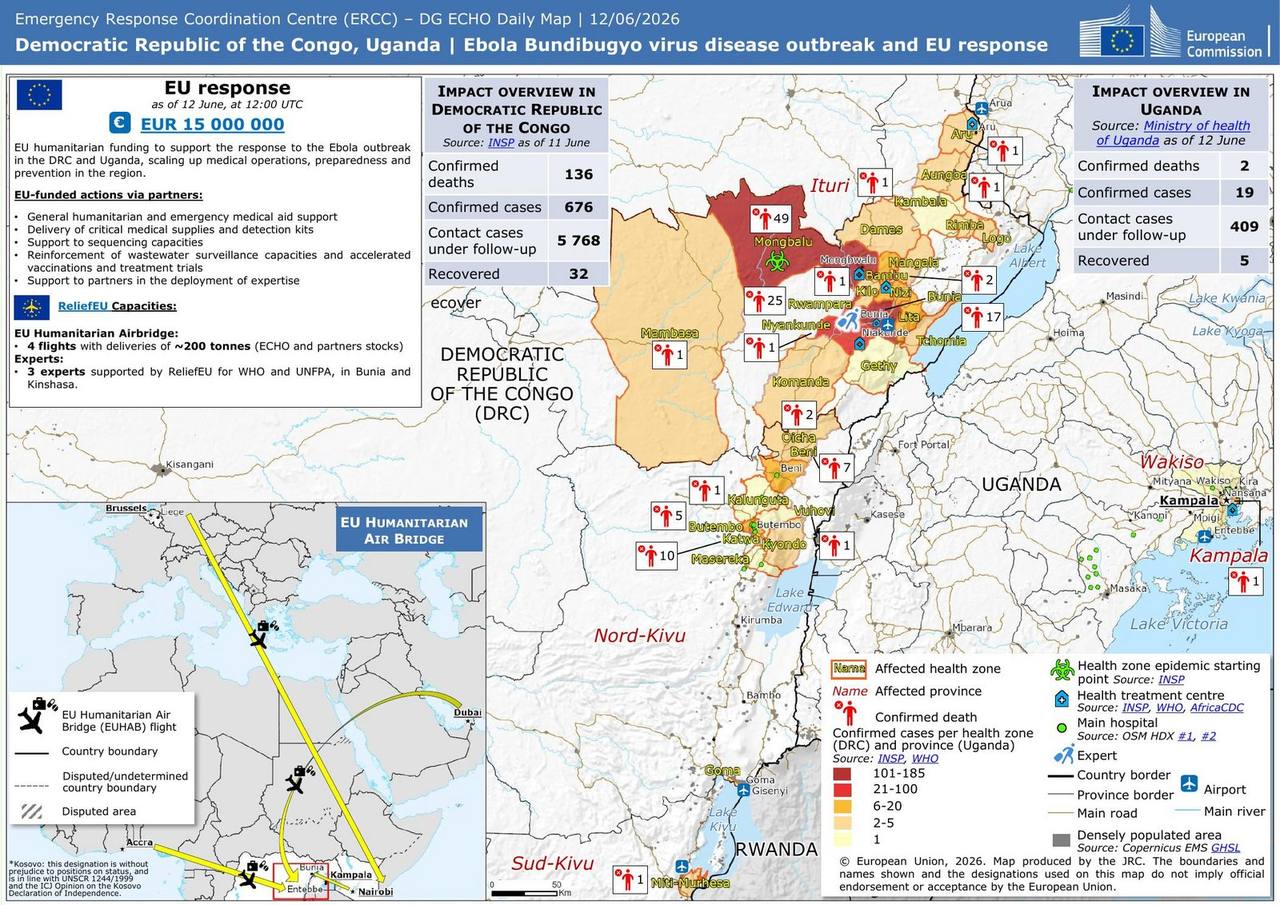
The Congo Ebola outbreak 2026 has found a new engine. In North Kivu province, confirmed cases surged roughly 73% between August 31 and September 20, even as case counts fell 26% in Ituri and 15% in Haut-Uele, according to the World Health Organization. The province now accounts for about a third of all new cases and deaths in an outbreak that has reached 7,890 confirmed cases and 3,799 deaths — already the second-largest Ebola outbreak ever recorded. And behind the shifting geography sits a more alarming failure: the surveillance system meant to catch each new infection before it spreads has effectively collapsed.
The numbers, explained: what 73% up and 26% down really mean
The WHO Ebola Congo update, based on data through September 23, put the national total at 7,890 confirmed cases and 3,799 deaths across 63 health zones in seven provinces. That is a crude case-fatality ratio of 48.1%. Since the agency's September 11 report, the count had risen by 1,133 cases and 532 deaths. Another 1,966 people were recorded as recovered. Each number is a person, but read together they also describe a response that is still being outpaced by transmission.
A second set of figures, drawn from Congolese government data and cited by Reuters on September 25, placed the totals at 7,820 cases and 3,779 deaths as of Tuesday. The difference does not point to a contradiction so much as the friction of epidemic accounting. Provincial reports arrive at different times; suspected cases are confirmed or discarded; deaths are matched retrospectively to laboratory results; and national and international dashboards reconcile on separate schedules. The range should be stated rather than smoothed away. For the national picture, the later WHO dataset is the clearest common benchmark.
The Ebola death toll in DRC is especially severe when compared with the only outbreak larger than this one. The 2014–2016 West Africa epidemic produced roughly 28,600 cases and about 11,300 deaths, a crude fatality ratio near 39%. Congo's reported 48.1% is not evidence that this virus has a fixed lethality of precisely that level. Fatality ratios move with access to care, the speed of diagnosis, the completeness of case finding and the point at which a patient reaches treatment. A high ratio can therefore be read partly as a warning about late presentation and overloaded clinical capacity.
The provincial split is more important than a single national curve. Ituri remains the worst-hit province cumulatively, with 6,032 confirmed cases, compared with 1,480 in North Kivu. Yet Ituri's recent case count fell 26% while North Kivu's rose 73%. Those trends can coexist because one describes the accumulated burden and the other the direction of travel. When the old epicentre slows while a new province accelerates, the fire is moving, not dying. North Kivu's roughly one-third share of new cases and deaths is the signal responders must follow.
Why this matters: the two-metric divergence that signals an outbreak escaping control
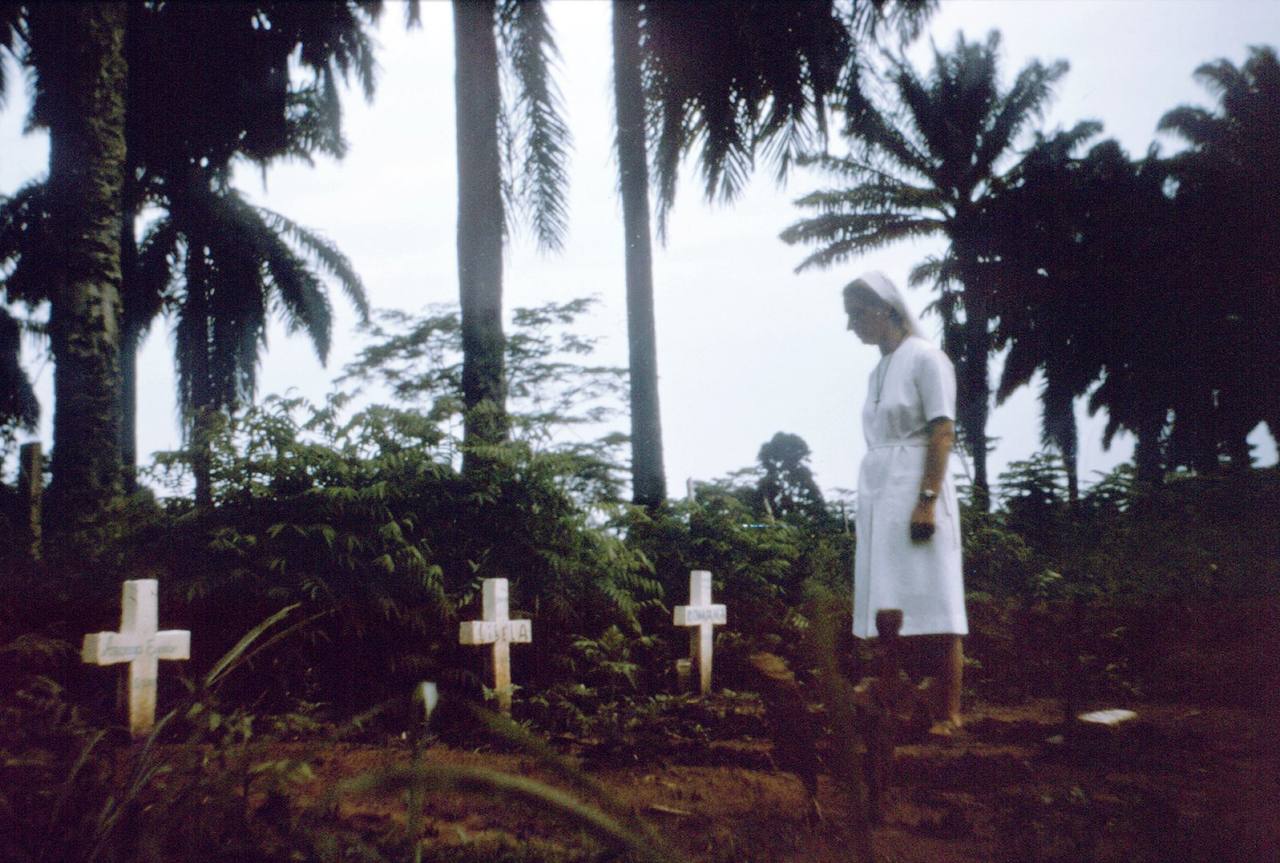
Outbreak control depends on two trends moving together: transmission must fall, and surveillance must see an increasing share of the infections that remain. Congo is showing the dangerous opposite. Transmission is climbing in North Kivu while the contact system is identifying only a fraction of the people who should be monitored. That two-metric divergence is the textbook signature of an epidemic escaping operational control, even if one province's case curve is bending downward.
Marie Roseline Belizaire, a senior official in the WHO emergencies programme for Africa, stated the position plainly at a September 23 briefing: “The outbreak is still not under control.” That assessment matters because control is not a rhetorical label. It means response teams can connect most cases to known chains, reach exposed people before symptoms progress and interrupt transmission faster than new chains appear. The current numbers do not meet that test.
Geography compounds the warning. Cases have appeared in Bulu in Sud Ubangi, in Congo's northwest, and in Dungu in Haut-Uele, near the border with South Sudan. These are not merely extra dots on a national map. They show that the outbreak has reached new territory and an international frontier. North Kivu itself borders Uganda and Rwanda and is crossed by trading, mining and family networks whose normal movement cannot be halted without economic and humanitarian costs.
The Ebola Nigeria high alert illustrates how a national outbreak exports costs before it exports a confirmed case. Nigeria's disease-control agency introduced health declaration forms for travellers arriving from countries affected by Ebola. Uganda, Rwanda and South Sudan must sustain their own screening, laboratory readiness and isolation plans. That vigilance is rational, but it carries expense, anxiety and the risk that broad restrictions substitute for targeted public-health work.
The outbreak was first confirmed in Ituri in May, but health officials believe the virus may have circulated quietly for months. That possibility explains why late detection is so consequential: contact networks expand geometrically while the response still assumes a small, local chain. Aid reductions had already hollowed out surveillance, armed conflict kept teams out of some communities, and population movement carried infections beyond the places where responders were looking. By the time confirmation arrived, the outbreak may already have outrun its original map.
Background: the rare Bundibugyo virus Congo strain and the vaccine gap
The pathogen changes the available playbook. Bundibugyo virus is the rarest of the Ebola viruses known to cause large human outbreaks. The vaccines stockpiled for emergency use, including Ervebo, are designed against Zaire ebolavirus. They cannot simply be assumed to protect against a different species. There is no approved vaccine or approved specific treatment for this Bundibugyo outbreak, leaving isolation, supportive care, safe burials and contact tracing to carry more of the burden.
A Bundibugyo-specific vaccine trial now under way in Congo has therefore shifted from research to emergency strategy. Our earlier report on the race to test a vaccine for the DRC outbreak explains why researchers are working against the clock. A safe, effective candidate could eventually enable ring vaccination around known cases. Yet a trial cannot repair today's surveillance gap, and even a successful product must be manufactured, delivered and accepted by communities before it changes the curve.
Aid cuts, surveillance gaps and armed conflict form a reinforcing triad. Funding losses reduce field teams and transport. Thin surveillance delays detection, allowing infections to spread into insecure areas. Insecurity then blocks investigators and ambulances, producing still larger blind spots. What begins as a medical problem becomes a governance failure: not because one institution caused the virus, but because every weakened link makes the next intervention harder and more expensive.
Butembo's full wards: the human face of the surge
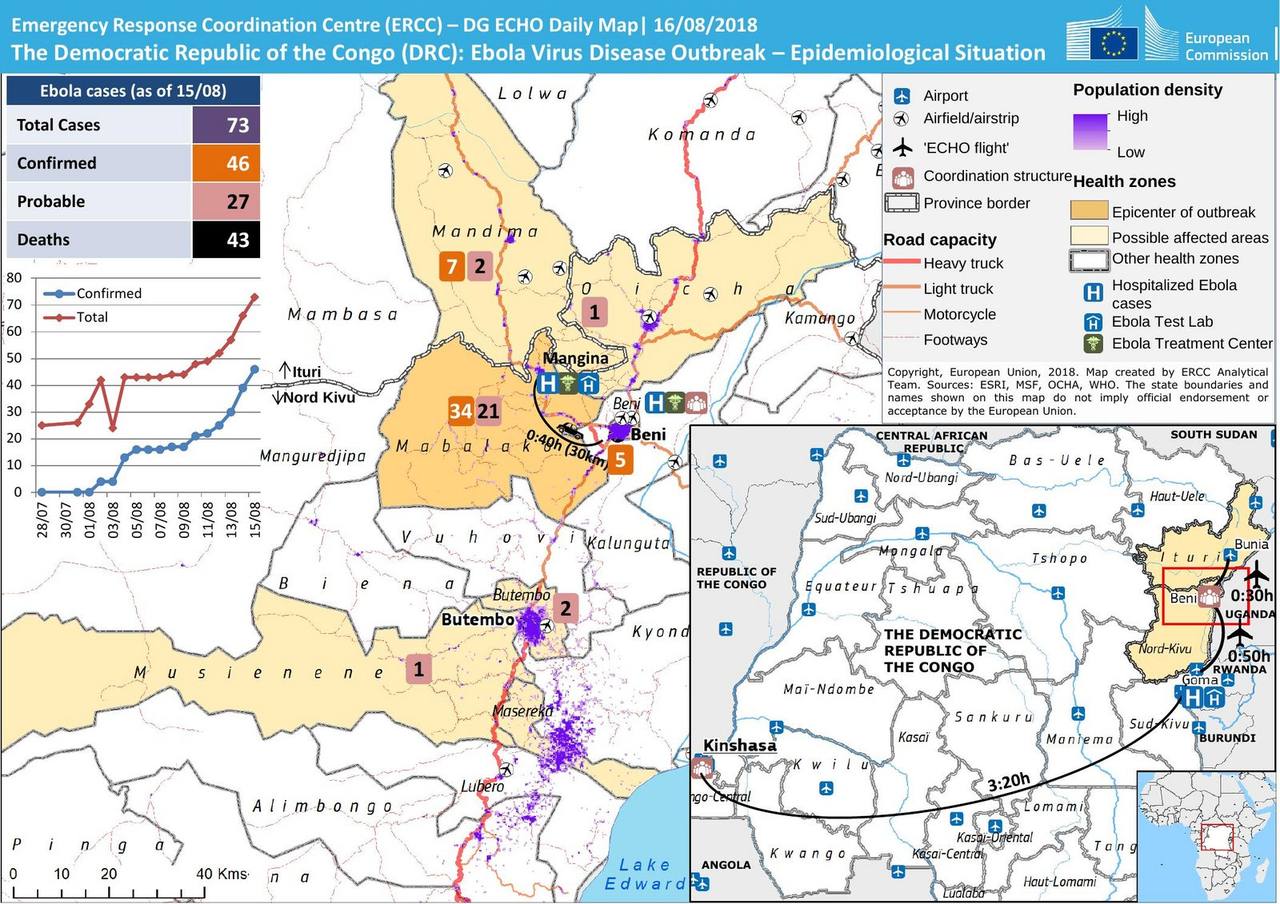
In Butembo, a city of about two million people, the arithmetic of care has become physical. All 29 beds at the Kitatumba Ebola treatment centre, run with Médecins Sans Frontières, were full. Stephanie Hoffmann, the MSF project coordinator, described the impossible threshold at the door: “There are sometimes patients who know they have Ebola but cannot find a bed.” A bed shortage in an ordinary ward is dangerous; in an Ebola centre it can also become a transmission problem, because patients who cannot be isolated must wait, travel or return to households.
Reuters described a critically ill patient on oxygen crying out while masked and gloved staff moved quickly through the centre. On Tuesday, a 10-year-old boy died in triage before he could be admitted. The detail is difficult to read because it should be. Capacity debates can sound abstract until a child reaches a treatment centre and the system's boundary is a full ward rather than a medical decision.
Butembo opened two new treatment centres this week, bringing the city's total to four. MSF had already opened another centre in Beni in August. Across Congo, the organization says it has about 1,400 staff and 400 beds in its centres. Africa CDC's emergency-preparedness leadership has warned that as many as 2,000 additional beds may be required. Those figures expose the scale mismatch: dedicated staff and emergency construction are expanding supply, but the possible requirement is multiples of current capacity.
The Ebola treatment centre Butembo needs is not merely a building with cots. Each additional bed requires trained clinicians, protective equipment, water, waste systems, laboratory turnaround, safe transport and staff rotations that do not spread infection. Opening doors faster than those systems can be staffed risks producing nominal capacity rather than safe care. The measure that matters is not beds announced but patients isolated and treated under full infection-control conditions.
Who wins, who loses
Patients arriving late lose first. Ebola is unforgiving when dehydration, bleeding or organ failure has progressed, and every hour spent searching for a bed narrows the clinical margin. Frontline health workers lose next: crowded wards increase exposure risk and moral injury, forcing teams to decide whom they can admit while knowing that untreated people may infect relatives or caregivers.
North Kivu communities face their second major Ebola crisis in eight years. That history cuts both ways. It leaves local knowledge, experienced workers and treatment infrastructure, but it also carries grief, fatigue and memories of coercive or mistrusted response measures. Public-health teams cannot assume that prior exposure produces automatic compliance. Trust has to be rebuilt in each neighbourhood through transparent information, local leadership and services people can actually reach.
Kinshasa's credibility is also at stake. A government can request international support, but citizens judge control by what happens when an ambulance is needed or a burial team arrives. High-alert countries pay in surveillance costs and trade friction. Nigeria is screening travellers, while Uganda and Rwanda must watch routes tied to North Kivu. Mining and trading communities risk economic strangulation if fear triggers indiscriminate movement bans or buyers retreat from the region.
There are no true winners in an epidemic. The closest thing is the accelerated attention going to developers of a Bundibugyo-specific vaccine. A programme that might once have looked like a scientific side project is now one of the most consequential medical races in central Africa. Success would create both a public good and institutional prestige, but the urgency should not excuse weak trial standards. Communities need a vaccine proved safe and useful, not a promise elevated by desperation.
The 30,000 versus 400,000 gap: how Ebola contact tracing failure became the central risk
Africa CDC Director-General Jean Kaseya supplied the outbreak's starkest ratio on the sidelines of the United Nations General Assembly: roughly 30,000 contacts had been listed, against about 400,000 expected. The expectation assumes around 60 contacts for each case. Even allowing for uncertainty in that rule of thumb, the system is reaching only a small fraction of the people who may need daily monitoring.
More than 80% of newly confirmed cases were detected in people who were not on contact lists. That means surveillance is often discovering infection only after symptoms force someone into care, not because a known exposure prompted early testing and isolation. Kaseya's Africa CDC Ebola warning was blunt: “When the outbreak is at community level, we cannot talk about control.” In practical terms, the response is stumbling over infections after the fact instead of staying one step ahead.
Contact tracing is deceptively simple on paper: identify everyone who had relevant exposure, monitor them through the incubation period and move anyone with symptoms safely into testing and care. In reality it depends on trust, transport, reliable records, enough personnel and access to every place a contact may go. Years of conflict have damaged trust. Trading routes scatter contacts across districts. Armed groups make some areas too dangerous for field teams. Aid cuts thin the workforce just as the list grows fastest.
The cruel economics are that contact tracing is among the least technologically glamorous and most cost-effective tools in epidemic control. It does not require an approved vaccine. It requires people who can knock on doors, speak local languages, protect confidentiality, return every day and connect a sick person to care. Because it is labour-intensive and difficult to showcase, it is often one of the first capacities weakened by funding reductions. In Congo, it appears to have broken before the outbreak's most demanding phase.
Closing the gap will require more than producing 370,000 names. A list is useful only if entries can be reached and monitored. Teams need to prioritize high-risk exposures, link records across provincial boundaries, support families who would otherwise hide symptoms for fear of losing income, and publish measures of follow-up completeness. The question is not how many contacts were entered once, but how many remained under effective observation each day.
What happens next: three scenarios
Analysis, not forecast: the available evidence supports three broad scenarios, and none should be presented as inevitable. The first is containment. New centres in Butembo absorb the surge; laboratory turnaround improves; restored field teams narrow the contact gap; and the Bundibugyo vaccine trial produces a tool that can be used safely in ring vaccination. Under that best case, the North Kivu curve could begin to bend by late autumn. The necessary proof would be fewer unlinked cases, not merely fewer admissions on a single week.
The second is a renewed national wave. If the tracing deficit compounds, infections seed durable chains in places such as Bulu in Sud Ubangi while attention remains fixed on the east. Falling counts in Ituri would then be offset by growth elsewhere, recreating the moving-target pattern on a wider map. This scenario does not require a dramatic mutation or single superspreading event; it requires only enough ordinary, unseen transmission to continue.
The third is a cross-border event. An undetected case reaches South Sudan or Uganda, and a national emergency becomes a regional one. Border screening can help identify symptomatic travellers, but Ebola's incubation period means a person may cross before illness is visible. The strongest defence therefore remains control at the source, paired with rapid notification and ready isolation on both sides of the border.
Two measurable dials should be watched every week. The first is whether the gap between expected contacts and contacts under active follow-up is shrinking. The second is whether North Kivu's share of new cases stops climbing. Bed occupancy, laboratory delay and the proportion of cases linked to known chains add important context, but those two dials together show whether surveillance is catching up with the new geographic engine.
What we know — and what we don't
We know this is the second-largest Ebola outbreak on record. We know North Kivu has become its fastest-growing centre even though Ituri still carries the largest cumulative burden. We know contact tracing has reached only a fraction of the scale Africa CDC believes is necessary, and that more than four in five new confirmed cases were found outside known contact lists. We know there is no approved vaccine or specific treatment for Bundibugyo virus, while a vaccine trial is under way.
We do not know how many infections remain undetected in conflict-affected areas, whether the virus has already crossed a national border, or how quickly new treatment capacity can reduce late presentation. We do not yet know whether the fall in Ituri will hold, whether the western cases will become sustained chains, or whether the North Kivu surge is near a peak. Any projection must carry those uncertainties rather than turning them into false precision.
The central lesson is uncomfortable. An outbreak whose surveillance has failed is an outbreak whose true size is unknown, and that is the most dangerous kind. Beds, laboratories and a vaccine trial matter enormously, but none removes the need to find exposed people before they become the next unexplained case. Congo's response will be judged by whether it can rebuild that basic chain of knowledge faster than the virus builds chains of transmission.
Sources
- Reuters — North Kivu's surge, treatment-centre capacity and the shifting provincial outbreak.
- Reuters — Africa CDC's contact-tracing assessment and regional-risk warning.
Reporting cutoff: September 26, 2026. Case totals use the WHO Disease Outbreak News update with data through September 23; the separate Congolese government figures cited by Reuters are identified above. The scenarios are Signal Post News analysis, not predictions.
Related coverage
- The race to test a Bundibugyo-specific Ebola vaccine in DR Congo
- The WHO leadership contest and the next era of global outbreak response
- UNICEF warns of a surge in child malnutrition across Yemen