U.S. · Politics · Elections 2026
The AP called Georgia for the former Atlanta mayor at 9:24 p.m. on election night — a first-in-American-history win, built on an economy message, against a billionaire opponent who put more than $200 million of his own money into beating her.
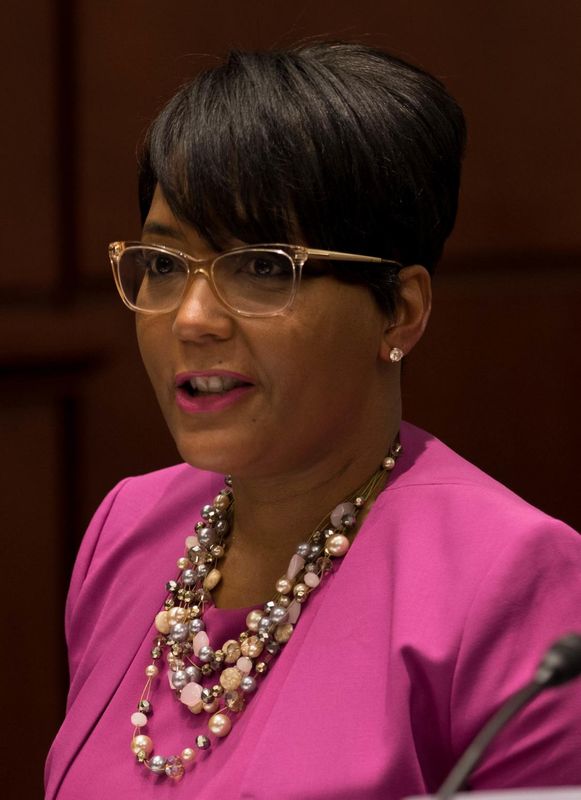
ATLANTA, Georgia — The Keisha Lance Bottoms Georgia governor race ended in history on Tuesday night. The Associated Press called the contest for Bottoms, the Democratic former mayor of Atlanta, at 9:24 p.m. EST on Tuesday, November 3, 2026, with more than 70% of the vote reported — and CNN and NBC News issued the same projection. When she takes the oath in January, Bottoms will become the first Black woman ever elected governor of a U.S. state, Georgia's first woman governor, its first Black governor, and its 84th governor overall.
The scale of the win matched its symbolism. With 99% of the vote counted in the AP tally updated on Wednesday, November 4, Bottoms had 54.3% — 2,268,462 votes — to 45.7% and 1,908,261 votes for Republican Rick Jackson, a margin of 8.6 percentage points in one of the most closely watched swing states in the country. The figures are AP-reported results and remain unofficial until they are certified by Georgia's Secretary of State, but no plausible completion of the count changes the outcome: this was not a squeaker that survived on a late tranche of ballots, but a decisive statewide verdict.
The victory speech: “a governor for all of Georgia”
Bottoms claimed the win in terms designed to widen it. “No matter who you voted for tonight, I will be a governor for all of Georgia,” she told supporters on election night, a line aimed as directly at the 1.9 million Georgians who voted against her as at the crowds celebrating in front of her. She also reached for the history of the moment without making it the whole of her message: “I know I am standing on shoulders made of steel.” The AP reported that she described the victory as belonging to all Georgians — teachers, farmers and entrepreneurs named among them — a coalition list that reads like a governing program in miniature.
That balance was the campaign in microcosm. As the AP noted through the race, Bottoms often sidestepped the barrier-breaking framing of her own candidacy, preferring to talk about an uneven economy — who it rewards, who it leaves behind — and about countering President Donald Trump's administration in Washington. Voters who wanted to make history could; the candidate mostly asked them to hire her. On Tuesday night, both impulses arrived at the same result.
The opponent: Rick Jackson and the $200 million gap
The result is also a case study in the limits of money. Jackson, a billionaire who built his fortune in healthcare staffing, tapped more than $200 million of his own wealth into the race, according to AP reporting — self-funding on a scale that is supposed to purchase inevitability: saturation advertising, a permanent presence on every screen in Georgia, and the ability to answer every attack within the hour. Bottoms won anyway, and not narrowly. One reading of why is that a self-funder's money buys exposure but not biography: Jackson could introduce himself a thousand times, but Bottoms arrived pre-introduced — a former mayor of the state's capital and largest city, and a former senior official in a Democratic president's White House. Another is harsher for the money: in a year when voters told pollsters the economy felt rigged toward the already-wealthy, a candidate spending a personal fortune may have embodied the very unevenness Bottoms campaigned against. What is not in dispute is the arithmetic — a spending advantage measured in the hundreds of millions, converted into a loss of 8.6 points.
From City Hall to the governor's office
Bottoms' route to the race ran through every level of the politics she will now lead. She served on the Atlanta City Council from 2010 to 2017, then won the mayor's office, serving as Atlanta's 60th mayor from 2018 to 2022 — a tenure that put her at the center of the city's policing debates, its pandemic response and its national profile during the 2020 election cycle. She chose not to seek a second term and moved to Washington, where she served President Joe Biden as a senior adviser and director of public engagement in 2022 and 2023. It is an unusual résumé for a governor-elect: city legislator, big-city mayor, White House staffer — each job a different vantage on how government touches daily life, and each one a network she carried into a statewide race in a state where Atlanta's weight is both an asset and, in some counties, a suspicion to be overcome. An 8.6-point margin suggests the overcoming was done.
A Georgia sweep: Ossoff and the statewide ticket
Bottoms did not win alone, and the company she kept on Tuesday is part of the story. The AP called Georgia's U.S. Senate race for Democratic Sen. Jon Ossoff at 7:55 p.m., more than an hour before the governor's call, and the final AP figures gave Ossoff reelection by 59.0% to 41.0% over Republican Mike Collins — a wider margin than Bottoms' own. Georgia Democrats also won the night's other statewide constitutional offices: Josh McLaurin was elected lieutenant governor, Penny Brown Reynolds secretary of state, and Tanya Miller attorney general. Taken together, it was a statewide sweep in a state Republicans have governed from the top for two decades.
The delegation point is worth pausing on. Ossoff is Georgia's first Jewish senator; he serves alongside Raphael Warnock, its first Black senator. Georgia now adds a Black woman as governor to a recent history of barrier-breaking statewide winners — evidence, whatever one's party, that the state's electorate has been rewriting who can win there for several cycles. And Georgia's flip came on a night when Democrats won control of both the U.S. House and the U.S. Senate in the 2026 midterms, as we reported in our coverage of the president's reaction to the midterm results. In the night's other big governor's flip, Gina Hinojosa defeated Gov. Greg Abbott in Texas, ending three decades of Republican rule there — a result that, paired with Georgia, redrew the map of the South in a single evening.

Why this matters
Analysis, labeled as such. Start with the barrier itself, because it is older than the republic's modern form: in roughly 250 years of American statehood, voters had elected Black men as governors — Douglas Wilder in Virginia in 1989, Deval Patrick in Massachusetts in 2006 — and women of many backgrounds, but never once a Black woman. That is not a statistic about Georgia; it is a statistic about all fifty states across the entire history of the office. Bottoms' win retires it. Whatever her governorship becomes, November 3, 2026 is the date after which the sentence “no Black woman has ever been elected governor” stops being true.
Second, the margin is the message. A barrier broken by 300 votes invites a decade of asterisks; a barrier broken by 8.6 points in a swing state — against a self-funding opponent who spent more than $200 million of his own money — reads differently. Georgia was not carried by a quirk of turnout or a fractured opposition. It chose, by a margin wider than most recent presidential results in the state, a Black woman Democrat who campaigned on the economy over a wealthy Republican businessman. Analysts who treat Georgia as a state that leans Republican by default will have to retire that default, as they are having to do this week in Texas as well.
Third, the governorship is power, not symbolism: budgets, appointments, vetoes, disaster response, and the administration of elections in a state whose count the whole country watches. The offices Georgia Democrats won down the ballot — secretary of state and attorney general among them — are the offices that run and litigate those elections, which is why Tuesday's sweep matters to 2028 in ways a single race would not.
Who benefits, who loses — and what each side's critics say
The beneficiaries start with Georgia Democrats, who hold the governor's office for the first time since Roy Barnes — elected in 1998, in office until 2003 — and now hold the statewide ticket around it; with Black women candidates nationally, whose fundraising and recruitment arguments change permanently this week; and with the national Democratic Party, which gains a governorship in a top-tier swing state on the same night it retook Congress. The losers begin with Jackson, whose $200 million purchased a clear, personal defeat; with the Georgia Republican establishment, which loses the mansion and the down-ballot offices in one night; and with the assumption — held in both parties' consulting classes — that sufficient money reliably converts into a governorship.
The critics, fairly stated, cut both ways. Critics of Bottoms argue that she has never run anything the size of a state government, that her Atlanta tenure was contested at home, and that a campaign run against Washington may collide with the unglamorous arithmetic of a state budget and a legislature she does not control. Her supporters answer that a mayoralty of Atlanta is executive experience by any definition, that the White House years added the federal dimension, and that an 8.6-point win is a mandate with room to spare. Critics of Jackson, including Republicans speaking after the fact, argue the self-funding model hollowed out his campaign — money without a grassroots donor base is also a campaign without the volunteers and habits that base builds. His defenders answer that the national midterm environment, which cost his party both houses of Congress, was a tide no Georgia candidate could have swum against, and that the spending nearly nationalized a race his party might otherwise have lost by more. Both arguments can be partly true; the certified record will only ever show the score.
What happens next
The formalities come first. Georgia's results remain unofficial until certified by the Secretary of State — the step that converts the AP's projection and the networks' calls into the legal record. Nothing in the remaining count suggests drama there, but the distinction matters, and this newsroom will report the certification when it lands. The transition follows immediately: Bottoms succeeds term-limited Republican Gov. Brian Kemp, and the handover of agencies, budgets and staffs runs from this week to inauguration day in January 2027, when she is sworn in as Georgia's 84th governor.
Then comes governing, which her campaign defined in advance: an economy she describes as uneven, and a posture toward Washington she describes as counterweight. Both commitments will be tested early — the economy pledge against her first budget, the Washington pledge against the first fight with the Trump administration that reaches a Georgia agency or a Georgia courtroom. Watch the first hundred days for the sequence: who she appoints, what her first budget funds, and which fight she picks first. On Tuesday night, though, the story was simpler and larger. A former Atlanta mayor promised to govern for the Georgians who had voted against her too, and said she was standing on shoulders made of steel. The shoulders, after 250 years, have a new name on them.
Sources
Associated Press, 2026 election results and race calls — the 9:24 p.m. EST call of the Georgia governor's race on November 3, 2026 with over 70% reporting, the November 4 tally at 99% counted (Bottoms 2,268,462 votes, 54.3%; Jackson 1,908,261, 45.7%), the Senate call for Jon Ossoff, and reporting on the campaign, Jackson's self-funding and Bottoms' victory remarks. Atlanta Magazine, November 4 — Georgia results tables from AP data, including Ossoff's 59.0% to 41.0% reelection and the statewide Democratic wins. FOX 5 Atlanta / Atlanta News First (WANF) — election-night coverage of the governor's race and Georgia results. Reuters, November 4 — projections reporting on the Georgia result and the national midterm outcome. Georgia Secretary of State — the official results and certification authority; vote totals cited here are unofficial until certified.