Track it live: Middle East tracker · Live war tracker
What Katz said
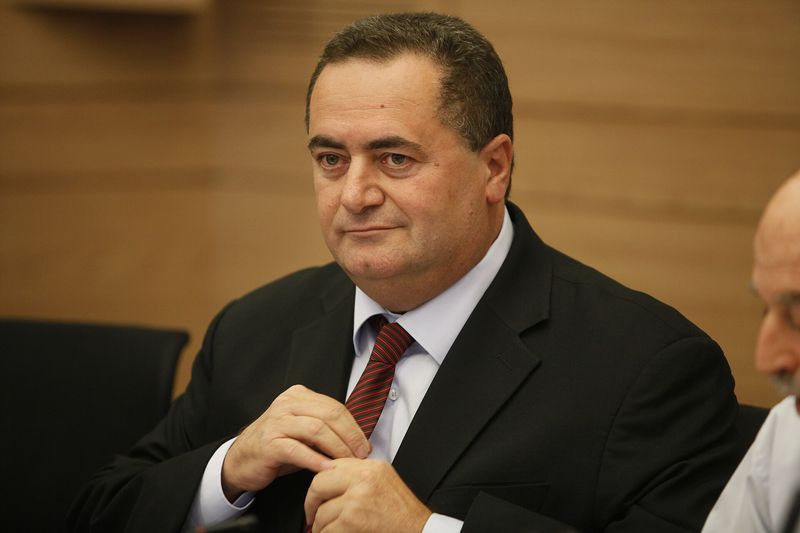
Katz’s statement, reported by AP and Anadolu on Wednesday, was framed not as one minister’s opinion but as settled government policy, adopted in coordination with Netanyahu. Israeli forces, he said, control and operate within security zones in three arenas at once — the Gaza Strip, Lebanon and Syria — and that posture is not temporary. In the statement’s central line, quoted by AP, Katz said: “Israel will not withdraw from the current lines of these security zones, nor will it redeploy its forces.”
The second half of the statement was a warning addressed to all three fronts. If tensions escalate, Katz said, “we are fully prepared to seize additional territory.” Read precisely, that is a declared contingency — a threat held in reserve, tied to escalation — not the announcement of an operation under way, and no new seizure of territory was reported on Wednesday. What changed on Wednesday was not the map but the doctrine: a presence that had been described in operational terms is now described in permanent ones, with the conditions for ending it set out in public and in full.
Katz grounded the policy in what he presented as the lessons of October 7, and in the protection of the Israeli communities closest to the three borders — in the Galilee, facing Lebanon; on the Golan Heights, facing Syria; and in the Negev, facing Gaza. The argument, as stated, is that distance is safety: that armed groups kept away from the border cannot repeat a cross-border assault, and that the zones are the mechanism that keeps them away.
The three conditions for any withdrawal
Katz attached the open-ended hold to three conditions, one for each arena, and withdrawal — on the statement’s own terms — waits on all of them. First, for Gaza: the dismantling of Hamas and the full disarmament of the Gaza Strip. Second, for Lebanon: the disarmament of Hezbollah throughout Lebanon — not only south of the Litani, but across the country. Third, for Syria: the elimination of armed threats originating from Syrian territory. None of the three is within Israel’s sole power to declare complete, and none carries a date. That is the practical meaning of Wednesday’s statement: the zones are held indefinitely not because a timetable slipped, but because the exit conditions are defined in terms that the other parties to each conflict have, so far, rejected.
The Gaza condition lands on a ceasefire already under strain. Israeli operations inside the Strip have continued alongside the truce, including the advance of Israeli tanks along the Salahudeen Road in central Gaza that Signal Post News reported in our coverage of the central Gaza tank advance. The share of Gaza under Israeli control is best stated as a range: roughly 60 to 70 percent of the Strip, with Reuters describing the Israeli-held share as about two-thirds. Hamas, for its part, calls the continuing Gaza operations violations of the ceasefire — a characterisation Israel disputes — and Wednesday’s statement ties any Israeli departure to Hamas’s dismantling, the very outcome the ceasefire’s critics on each side describe in opposite terms.
On the ground in Lebanon on Wednesday
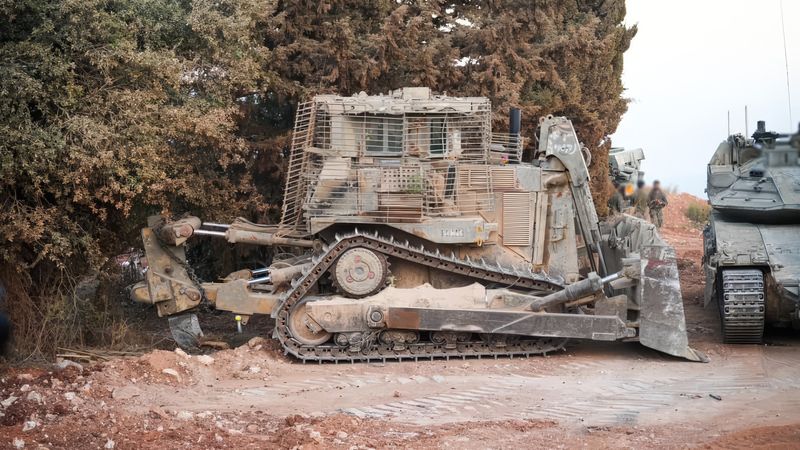
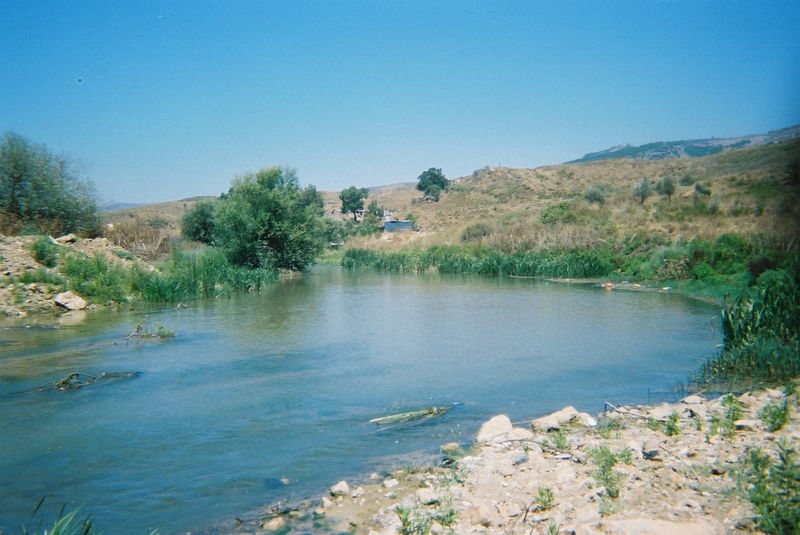
The statement did not arrive in a quiet week on the northern front. Lebanon’s National News Agency reported on Wednesday, in dispatches carried by AP, that Israeli artillery fire was directed toward the towns of Baraachit and Beit Yahoun in the Bint Jbeil district of southern Lebanon, and that Rashaf, Sarbine and the Wadi al-Hujair area were also targeted. The NNA also reported, via AP, that Israeli earth movers demolished residential homes in Zawtar ash-Sharqiyah and in Haddatha. Those reports are attributed to the National News Agency throughout: they were not independently confirmed, and no casualty figure was reported for Wednesday’s artillery fire or demolitions.
The pattern the NNA described — artillery, demolitions, pressure on villages across the south — is the same pattern that has drawn repeated evacuation orders for southern villages, as Signal Post News reported in our coverage of Israel’s evacuation orders for southern Lebanese villages. According to AP’s context reporting, Israel has continued to occupy and attack parts of southern Lebanon up to the Litani River since March 2026, saying it is destroying Hezbollah infrastructure while demolishing civilian homes, and refuses to withdraw while pointing to delayed Hezbollah disarmament under the US/Lebanon/Israel trilateral ceasefire framework launched in April.
Why this matters
Wednesday’s statement matters because it converts three separate military facts into one declared doctrine, and doctrines are harder to negotiate away than deployments. A deployment can be traded in a ceasefire; a doctrine with published conditions becomes the baseline from which any negotiation starts. By naming the conditions himself — Hamas dismantled and Gaza disarmed, Hezbollah disarmed throughout Lebanon, armed threats from Syria eliminated — Katz has also named the price of every future agreement in advance, and each price is one the opposing side has publicly refused to pay. Hezbollah’s secretary-general, Naim Qassem, has rejected disarmament while Israeli occupation and attacks continue; Hamas calls the Gaza operations ceasefire violations. The conditions and the rejections now face each other in the open, which is another way of saying the zones have no scheduled end.
The statement also redraws the diplomatic geometry. The April trilateral framework between the United States, Lebanon and Israel was built around a sequence — disarmament steps in exchange for withdrawal steps. Katz’s formulation keeps the disarmament demand and removes the withdrawal horizon, which leaves Beirut and Washington holding a framework whose Israeli side has just been restated in indefinite terms. And the contingency threat — readiness to seize additional territory if tensions escalate — hangs over all three fronts at once, meaning any local clash, in Gaza, Lebanon or Syria, now carries a declared territorial risk that it did not carry on Tuesday.
Context and background
The Lebanon front has been active, in its current phase, since March 2026, when fighting brought Israeli forces back into parts of the south up to the Litani River. The trilateral ceasefire framework launched in April was meant to manage exactly the problem Katz described: Israel cited Hezbollah’s arsenal as the reason it could not leave, Lebanon and Hezbollah cited the occupation as the reason disarmament could not proceed, and the framework was the attempt to sequence the two. Eight months on, AP reports, Israel still occupies and attacks parts of the south, still demolishes homes it associates with Hezbollah infrastructure, and still refuses to withdraw, citing the delayed disarmament the framework was supposed to deliver.
Gaza’s ceasefire has strained in parallel. Israeli forces hold the larger part of the Strip — roughly 60 to 70 percent, about two-thirds in Reuters’ description — and operations inside the remaining areas continue to draw Hamas accusations of violations. In Syria, the third zone, the Israeli position rests on the argument that armed threats originating from Syrian territory must be eliminated before any withdrawal can be considered. Three different conflicts, three different legal and political settings, one formula applied to all of them on Wednesday.
Multiple angles
The Israeli security argument
As Katz stated it, the case is preventive. October 7 is the founding lesson: an armed group left intact across a fence used the fence as a starting line. On that reading, the zones in the Galilee’s north, on the Golan and around the Negev are not annexations but buffers, held not for their own sake but for the communities behind them, and surrendered only when the threat that justifies them is gone — Hamas dismantled, Hezbollah disarmed, Syrian-origin threats eliminated. Supporters of the policy would add that each condition names an armed capability, not a population, and that a withdrawal made before those capabilities are gone would simply have to be reversed at higher cost.
Sovereignty and the cost of reconstruction
From Beirut, Gaza City and Damascus, the same statement reads as an open-ended hold on other countries’ territory, with the exit keys held by the occupying power’s assessment of threats. The cost is measurable in Lebanon’s case. Anna Bjerde, the World Bank’s managing director of operations, visiting southern Lebanon on Tuesday, November 17, said Lebanon has been slow to use international aid to rebuild — a criticism that lands differently in villages where, according to the NNA reports carried by AP, demolitions were still being reported the following day. The Bank’s Summer 2026 Lebanon Economic Monitor projected Lebanon’s economy to shrink 6.4 percent this year. Reconstruction money does not flow quickly into territory whose status the defence minister of the neighbouring state has just described as indefinitely held, and every month of that status compounds a contraction already measured in whole percentage points of GDP.
The Hezbollah and Hamas responses
The two armed movements named in Katz’s conditions have answered the disarmament demand with a condition of their own. Hezbollah’s Naim Qassem has rejected disarmament while Israeli occupation and attacks continue — the mirror image of Katz’s formula, each side making its concession wait on the other’s first move. Hezbollah has also moved on the material side of the standoff: last month it said it will pay up to $14,000 to families whose homes were destroyed or made uninhabitable, a direct response to the demolitions reported across the south. Hamas, in Gaza, calls the continuing Israeli operations ceasefire violations. Neither response concedes the premise of Wednesday’s statement, and both were on the record before Katz spoke — which is precisely why the conditions he set read, to his critics, less like an exit ramp than like a lock.
Data in context
Three numbers frame the statement’s weight. Lebanon’s economy is projected by the World Bank’s Summer 2026 Lebanon Economic Monitor to shrink 6.4 percent this year — the fiscal backdrop against which reconstruction aid sits unused and demolished villages wait. Hezbollah’s promised payments of up to $14,000 per family whose home was destroyed or made uninhabitable measure the demolition campaign from the other side: a compensation scheme sized to a housing stock being lost faster than it can be rebuilt. And in Gaza, the Israeli-held share of the Strip — roughly 60 to 70 percent, about two-thirds as Reuters describes it — is the territorial fact that Katz’s first condition now governs indefinitely. Behind each figure sits the same structure: a zone held, a condition set, and no date attached to either.
What happens next
Three scenarios follow from the variables Katz himself put on the table. In the first, the statement is the ceiling: the zones hold at their current lines, the April framework is renegotiated around the new baseline, and Washington tests whether partial disarmament steps can buy partial withdrawals even under a doctrine that says neither is owed. In the second, the standoff simply hardens — artillery and demolitions in the south continue at the tempo the NNA reported on Wednesday, Gaza’s ceasefire frays further, and the zones become a permanent feature described in temporary language by everyone except Katz. In the third, the contingency is triggered: an escalation on any one of the three fronts meets a minister who has already said, in advance and on the record, that Israel is fully prepared to seize additional territory — and a local clash becomes a territorial change. Which scenario arrives will be decided less by Wednesday’s words than by whether any party moves on the conditions those words set: a disarmament step in Lebanon, a change in Gaza, or a quiet on the Syrian front durable enough to test the third condition. Until one of those moves, the lines Katz described are the lines that hold.
Facts are attributed to their sources throughout. Defence Minister Katz’s statements and quotations are as reported by AP and Anadolu on November 18, 2026. Wednesday’s artillery and demolition reports from southern Lebanon are Lebanon’s National News Agency reports carried by AP; they were not independently confirmed, and no casualty figure was reported. The Gaza share under Israeli control is given as a range of roughly 60 to 70 percent, as described by Reuters at about two-thirds. Katz’s reference to seizing additional territory was a declared contingency in a policy statement; no new territorial seizure was reported on Wednesday.
Sources
Sources: Associated Press reporting on Defence Minister Israel Katz’s security-zones statement and on Lebanon’s National News Agency reports from southern Lebanon (Nov. 18, 2026); Anadolu Agency reporting on the Katz statement (Nov. 18, 2026); World Bank Summer 2026 Lebanon Economic Monitor and remarks by Managing Director of Operations Anna Bjerde in southern Lebanon (Nov. 17, 2026), as reported by AP; Reuters description of the Israeli-held share of Gaza, as cited in the reporting above.