Kansas Senate poll dead heat
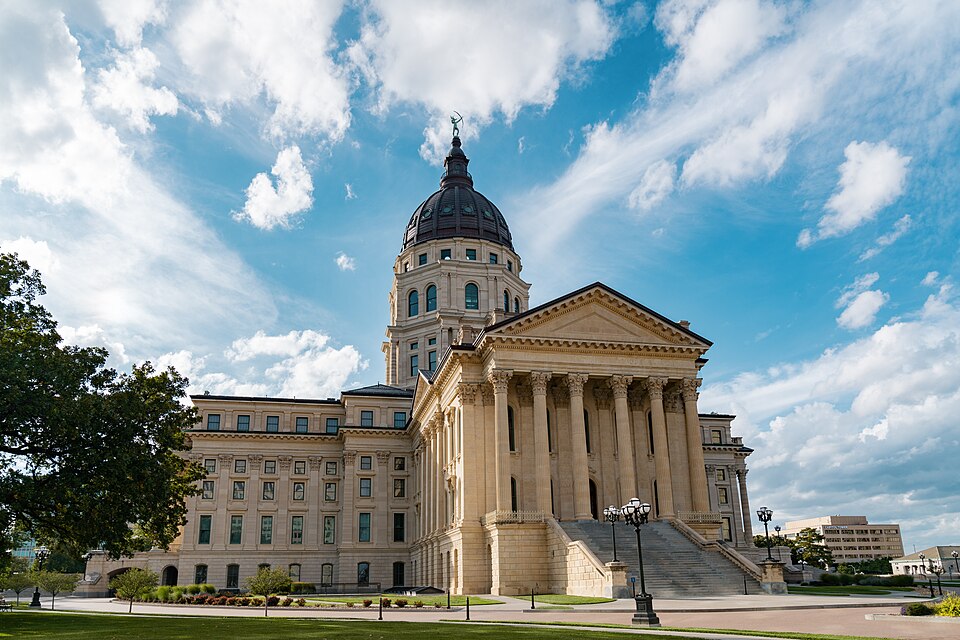
The Kansas Senate poll dead heat is no longer a hypothetical warning for Republicans. A New York Times/Siena College survey has Democrat Adam Hamilton and Republican Sen. Roger Marshall tied at 45 percent each, a result that turns one of the country's longest Republican Senate streaks into a race neither party can afford to ignore.
The survey of 605 likely voters was conducted September 22 through September 30. Libertarian David Graham drew 5 percent and 6 percent were undecided, according to the reported toplines; the figures add to 101 because each share is rounded. The New York Times findings summarized by Kansas Public Radio put the candidates even in a state that has not elected a Democrat to the U.S. Senate since 1932. Political Wire separately reported the 45-45-5 split.
One poll does not settle an election, especially one with a modest statewide sample and meaningful undecided and third-party shares. But it changes the campaign's strategic reality. On October 5, CNN placed Kansas on its list of the 10 Senate seats most likely to flip for the first time. The Republican-aligned Senate Leadership Fund is preparing to direct millions of dollars into the state. That spending decision is the clearest sign that party professionals are treating the risk as real.
Why this matters
Kansas could change the arithmetic of Senate control
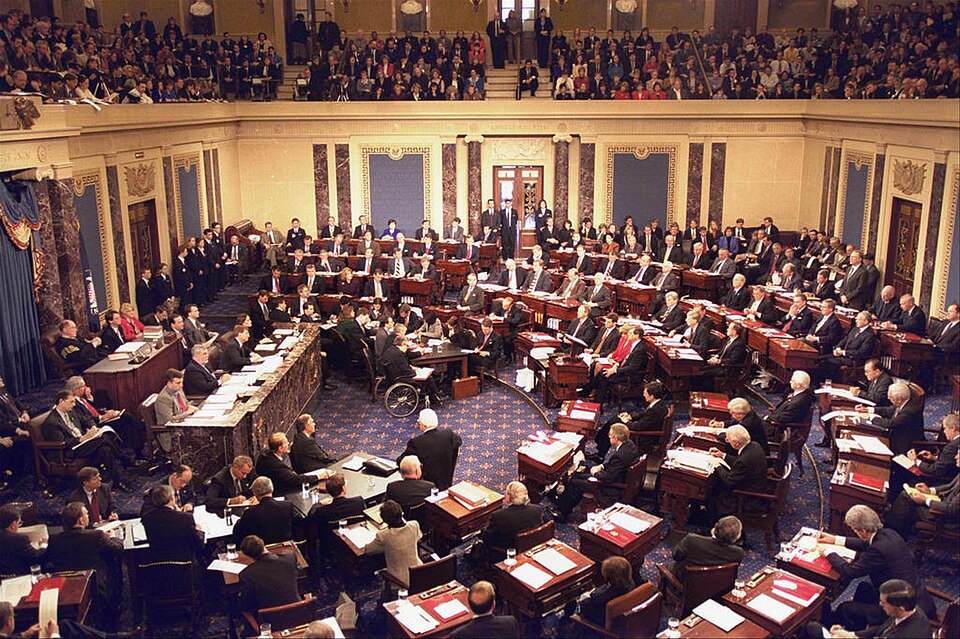
Republicans hold 53 Senate seats. Democrats and the two independents who caucus with them account for 47. That means Democrats must gain at least four Republican-held seats while protecting every seat on their side of the map to secure a majority. Until now, Kansas was not supposed to be central to that path.
A competitive Kansas race gives Democrats another route. Even if Hamilton ultimately falls short, forcing Republicans to spend several million dollars in Wichita and Kansas City media markets can reduce what the party has available for closer-fought races elsewhere. Campaign money is finite; every defensive advertisement in Kansas is an advertisement not purchased in Iowa, Ohio, Alaska or Texas.
The symbolic stakes are just as large. Donald Trump carried Kansas by 16 points in 2024. A tied Senate race therefore shows Marshall running roughly 16 points behind the party's most recent presidential baseline. That is not proof of a permanent realignment. It is evidence that at least some Trump voters, independents and old-line Kansas Republicans are considering a different choice down the ballot.
Signal Post News analysis: If a Democrat can compete in Kansas without the state first becoming competitive at the presidential level, the national lesson is not that Kansas has turned blue. It is that candidate quality, crossover endorsements and localized dissatisfaction can temporarily overpower party identity. That prospect would widen the map in future cycles and make fewer incumbents truly safe.
The numbers behind the shock
A tie, a Libertarian and six percent still choosing
The topline is simple: Hamilton 45, Marshall 45, Graham 5, undecided 6. The campaign implications are less simple. In a two-candidate race, each major-party nominee could focus almost entirely on persuading the remaining undecided voters and turning out supporters. Graham's presence creates another path. A five-point Libertarian bloc can become decisive if it holds, collapses toward Marshall, or splits unevenly in the final weeks.
Marshall's easiest mathematical route is to consolidate voters who prefer a conservative outcome but are currently supporting Graham or withholding a choice. Hamilton's path is to preserve his crossover support while winning enough late deciders to offset any Republican homecoming. Because both major candidates begin at 45 in the poll, neither can win merely by protecting the base measured there.
The sample size also demands humility. With 605 likely voters, small movements in a limited number of interviews can change the apparent leader. Polling error includes more than sampling variation: likely-voter screens can misjudge turnout, late events can reorder priorities and voters can answer surveys differently from how they vote. The responsible reading is “competitive,” not “Hamilton is certain to win” or “Marshall is certain to recover.”
An Emerson College/Nexstar poll cited in a September 29 New York Times opinion piece reportedly gave Hamilton a two-point lead. That secondary result reinforces the possibility of a close race, but it does not eliminate uncertainty. Two close polls can share the same modeling weaknesses, and neither is a substitute for votes counted on November 3.
Ninety-four years of Republican Senate dominance
Why 1932 is more than a trivia point
George McGill's 1932 reelection was the last time Kansas chose a Democrat for the U.S. Senate. The streak survived Democratic presidential landslides, national Republican collapses and generations of political change. Kansas voters have elected Democratic governors, but Senate races have remained a separate expression of the state's red identity.
Marshall entered the Senate after winning the 2020 race by double digits. He brought the profile of a physician and congressman to a state where Republican nominees normally begin with a structural advantage. The 2026 contest was therefore expected to be a defense, not a rescue operation.
Trump's 16-point Kansas win two years ago appeared to confirm that underlying advantage. The new poll does not erase it. Republican registration, rural strength and habitual partisan voting remain powerful. But history is useful only until voters decide the present contest on different terms. Hamilton's campaign is trying to make this race a judgment about Marshall rather than a referendum on the Democratic label.
Hamilton's crossover theory
A Republican-turned-Democrat asking voters to meet in the middle
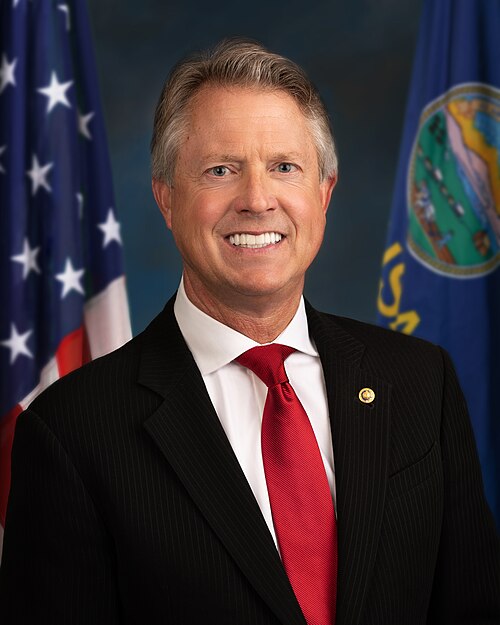
Hamilton is not running as a conventional national Democrat. The Methodist megachurch pastor founded Church of the Resurrection and previously identified as a Republican. His “meet in the middle” message is designed to give center-right voters permission to break with their party without treating that choice as an abandonment of Kansas values.
The endorsements are part of that strategy. Former Republican governors Bill Graves and Mike Hayden have backed Hamilton. Hayden's statement was deliberately personal: “I supported Roger Marshall before. But he has spent his time in the Senate putting party and politics over the people of Kansas.” A single endorsement rarely moves a statewide race by itself. Two former governors from the incumbent's party, however, provide a language of defection that undecided Republicans can adopt.
Hamilton benefits if the election remains candidate-centered. He loses if Republicans successfully nationalize the contest and define him chiefly as a vote for Democratic control of the Senate. That is why the coming advertising battle will likely focus less on biography alone and more on what each candidate would enable in Washington.
Marshall's case and the pressure points
The incumbent can run on representation, seniority and a Republican Senate
Marshall's counterargument begins with the state's partisan record. He can tell voters that a fourth Democratic pickup would not merely change one Kansas seat; it could hand committee control, confirmations and the Senate agenda to Democrats. In a state Trump won comfortably, that is a potent closing message.
He also has an incumbent's platform and a physician's biography. Reporting about his involvement in medical-debt lawsuits has become a Democratic attack line, but Marshall called the coverage a “hit job” at a debate. Voters should distinguish the underlying records from each campaign's characterization: the reporting is a legitimate subject for scrutiny, while Marshall's denial and explanation are part of the record too.
Marshall has also publicly chided Immigration and Customs Enforcement over “mass disruptions to local communities and businesses.” That statement shows the incumbent attempting distance from consequences that can burden Kansas employers and towns even while remaining aligned with Republican immigration priorities. It may help him with business-minded voters; critics can argue it is too little separation from the administration. Both readings will feature in the final month.
The incumbent's greatest asset may be time. Late-deciding voters in reliably Republican states often move toward the familiar party when the choice becomes immediate. His greatest liability is that the race has already crossed the credibility threshold. Outside money, national attention and Republican defectors can now reinforce one another.
The national warning inside five state polls
Kansas is part of a wider pattern, not an isolated surprise
The Kansas result arrived in a five-state Times/Siena batch that was uniformly uncomfortable for Republicans. USA Today reported Democrat Mary Peltola leading Dan Sullivan 50-43 in Alaska, James Talarico ahead of Ken Paxton 51-45 in Texas, Sherrod Brown leading Jon Husted 49-46 in Ohio, and Zach Wahls nearly even with Ashley Hinson, 48-47, in Iowa. Kansas was tied.
Across those five states, Trump's approval stood at 40 percent, while 57 percent viewed him unfavorably, according to the Washington Examiner's account of the polling. The report also said voters in every state were more likely to describe the Democratic candidate as having good character than the Republican.
Those numbers suggest a national environment dragging on Republican nominees, but they should not be flattened into a single story. Alaska, Texas, Ohio, Iowa and Kansas have different electorates and candidates. The common thread is resource pressure. Republicans must now decide whether the same national message can repair several races or whether each state requires a costly local intervention.
Who benefits — and who pays
Democrats gain options; Republicans inherit a must-defend-everywhere map
Democrats benefit first because Kansas gives them redundancy. A path to four flips is easier to build when the party can compete in more than four places. Hamilton also benefits from the validation that comes with national ratings, donor attention and Republican-aligned spending. Voters who doubted he could win now have evidence that professionals in both parties disagree.
The immediate loser is the Republican allocation plan. The Senate Leadership Fund's decision to dedicate millions to Kansas is rational defense, but it reveals a stretched map. A dollar can defend Marshall or attack a Democrat elsewhere; it cannot do both. Candidates in other states may still welcome the protection of the majority, yet each new emergency raises the cost of maintaining it.
Graham, the Libertarian, also gains leverage. At 5 percent, he is more than a protest option in the polling model; he is a potential margin of victory. That does not mean his voters “belong” to Marshall. Some may dislike both major parties, some may be more socially liberal than the Republican coalition and some may not vote if forced into a binary choice. Treating them as automatic Republican transfers would be a mistake.
What the poll cannot tell us
Turnout, persuasion and late consolidation remain unresolved
Polls can be wrong even when they are methodologically sound. A survey is a probability snapshot built from interviews, weighting and a model of who will vote. Kansas's long Republican history gives Marshall a structural reason to believe the tie understates his eventual support. Hamilton can counter that party history is exactly what makes a 45-45 result remarkable.
The undecided share is large enough to decide the race several times over. So is Graham's support. The next wave of advertising may not move many committed voters, but it can change which facts late deciders encounter most often: Hamilton's pastoral biography and Republican endorsements, or Marshall's warning that a Democratic senator could determine control of Washington.
Turnout composition will be decisive. Hamilton needs strong participation in the state's cities and suburbs while limiting Republican margins across rural Kansas. Marshall needs the opposite: a broad rural vote and enough suburban Republicans returning home. Neither campaign can infer those outcomes from one topline.
Four final-month scenarios
How Kansas moves from a tie to a result
Republican consolidation. National and outside groups define the election around Senate control, Graham's support softens toward Marshall and undecided conservatives return to the GOP. Marshall reestablishes a clear lead without needing to repair every personal vulnerability.
Hamilton's crossover coalition holds. Graves and Hayden make a vote for the Democrat feel acceptable to moderates, the “meet in the middle” message survives partisan attacks and suburban movement offsets the Republican advantage in rural counties. Kansas elects its first Democratic senator in 94 years.
The Libertarian decides the margin. Graham retains enough support to deny either major candidate an easy majority. Small changes among voters who prioritize spending, civil liberties or dissatisfaction with both parties become more important than another large rally by either side.
The ad blitz freezes the race. Millions in spending lift negative perceptions of both candidates, leaving turnout rather than persuasion to decide the winner. In that case, field organization, ballot returns and local intensity matter more than the final statewide television spot.
What November 3 would mean
A Kansas flip would be a majority-making event and a political warning
If Hamilton wins, Democrats would gain one of the four Republican-held seats they need and break a Senate drought that reaches back to the Great Depression. The larger message would travel beyond Kansas: Trump's presidential margin would no longer guarantee protection for Republican incumbents whose races become individualized.
If Marshall wins comfortably, Republicans will argue the late alarm reflected survey noise and that partisan fundamentals ultimately prevailed. If he survives narrowly, both parties will learn a different lesson: deep-red seats can still be made expensive, even when they do not flip.
The most cautious conclusion today is also the most consequential. Kansas is competitive enough to command money, attention and national strategy. A 45-45 poll is not a forecast. It is a warning that a seat Republicans have held for nearly a century can no longer be treated as settled before the votes are counted.
Sources
- Kansas Public Radio, October 5, 2026 — summary of the New York Times/Siena Kansas poll, the 605-voter sample and Republican outside spending.
- CNN, October 5, 2026 — Kansas's first appearance on the 10 seats most likely to flip list; candidate histories, endorsements and campaign disputes.
- USA Today, October 3, 2026 — results from the five-state Times/Siena Senate polling batch.
- Washington Examiner, October 3, 2026 — Trump approval and candidate-character findings across the five states.
- Political Wire, October 3, 2026 — Kansas topline including Libertarian David Graham's 5 percent.
Reporting note: Poll results, candidate statements and historical facts are attributed above. Resource-allocation effects, coalition analysis and election scenarios are Signal Post News analysis. Polling is a snapshot, not a prediction.