Culture / For seven decades she was the face British theatre and film turned to when it needed authority, wit and warmth in a single glance. On Thursday, October 22, in her first broadcast interview for her new memoir, Dame Judi Dench told the BBC's Today programme that age-related macular degeneration — diagnosed in 2012 — has now taken the three things her life was built on: the stage, the screen and the printed page. She cannot even see the colour blue.
The Judi Dench eyesight story reached its clearest and saddest statement yet on Thursday, October 22, when the 91-year-old Oscar winner told Emma Barnett on BBC Radio 4's Today programme: "I can't be on stage. I can't do a play anymore. I can't do a film anymore. I can't read anymore." Dench, who was diagnosed with age-related macular degeneration (AMD) in 2012, was speaking at her home in her first broadcast interview since the publication of her memoir, Is It Too Late to Make a Run For It?, written with her close friend, the actor and director Brendan O'Hea. She said she could not see Barnett's face "at all" during the interview, and that the condition now stops her recognising faces, reading scripts and seeing colours she has loved all her life.
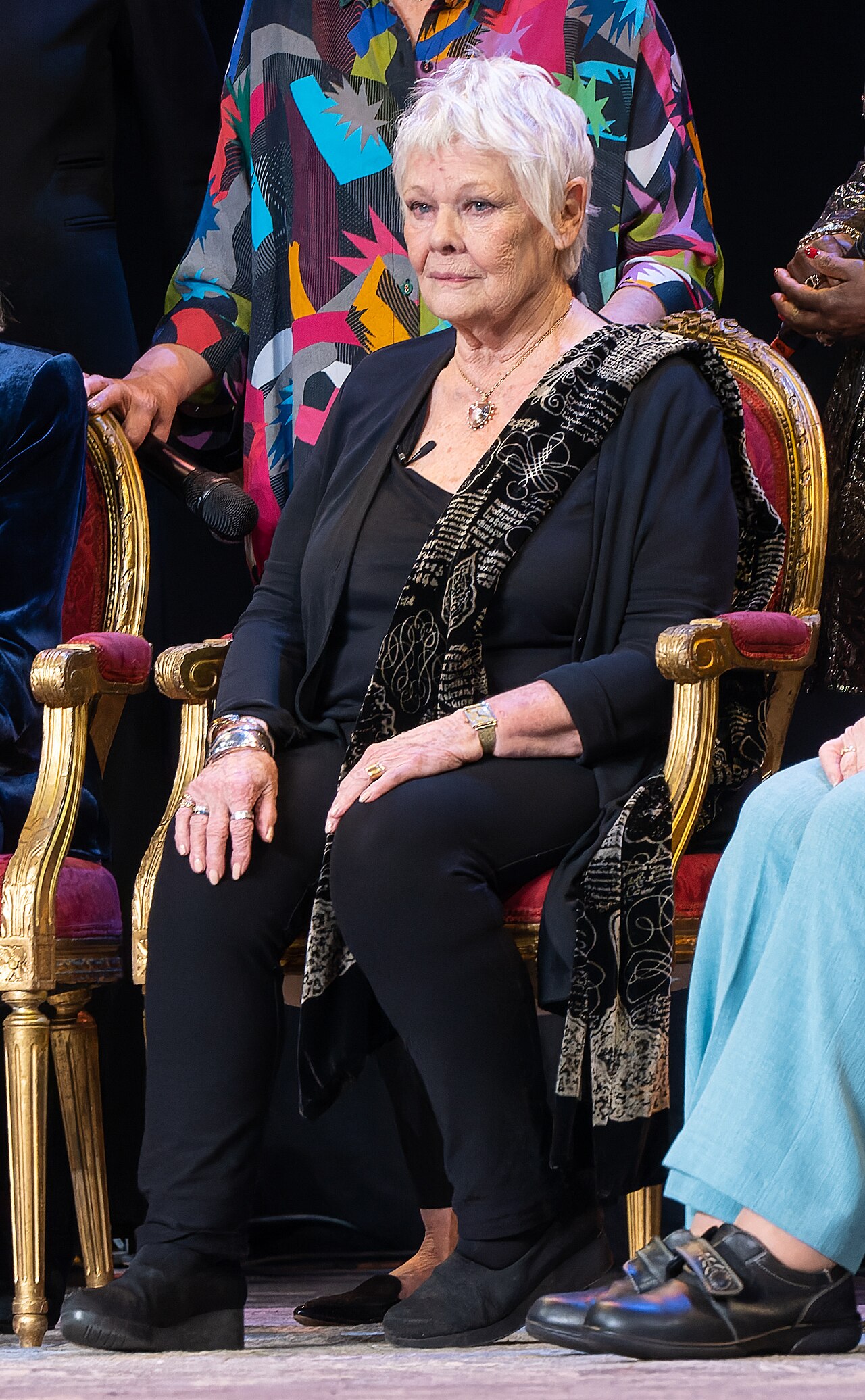
What she told the BBC, in her own words
There was no self-pity in the interview, and no announcement dressed up as retirement — Dench has spent years batting away the word "retire," and she did not use it on Thursday either. What she offered instead was an inventory, delivered in the flattest of terms. "I can't be on stage. I can't do a play anymore. I can't do a film anymore. I can't read anymore," she said. "You've got to adjust to all that, and make allowances for it, and just get on and don't think about it too much."
The details around that inventory are what make it land. Dench explained that she sometimes approaches strangers and "gives them almost a hug" before getting close enough to realise they are not who she thought they were, because AMD has made faces so difficult to recognise. She told Barnett she could not see the presenter's face at all as they spoke. And she described, with O'Hea's help, the loss of a colour: asked two years ago to go and see the bluebells, she had told him, "I can't see the colour blue anymore." This summer, she said, "they said this summer was absolutely sensational with bluebells; I couldn't see one. But I know what my trees look like, and part of it is in my memory and part of it is about hopefully what I can make out." Dench plants trees in memory of people she has lost, and the garden at her home has become one of the places where memory now does the work her eyes once did.
Asked whether ageing has anything to recommend it, she was blunt: "There's nothing to say for it at all. [I] don't think about it too much." She stressed instead the importance of radio in her life — fittingly, for an interview conducted for Radio 4 — and O'Hea described how a woman who can no longer paint the watercolours she loved has invented a new game instead: tearing paper into animals, and challenging everyone around her to make a sheep or a unicorn and hold a competition. "You're not defeated by it," he said. "You're finding another way of expressing yourself."
Why this matters
It matters first because of who is saying it. Dench, born in York on December 9, 1934, has worked for more than seven decades across theatre, television and film. She won the Academy Award for Best Supporting Actress for playing Queen Elizabeth I in Shakespeare in Love — famously, in only a few minutes of screen time — and became a global figure as M, James Bond's boss, a role she first played in GoldenEye in 1995 as the first woman to hold it. Penguin, her publisher, counts an Academy Award, ten BAFTAs and a record eight Laurence Olivier Awards; she was made a Dame in 1988 and a Companion of Honour in 2005. When an actor of that standing says, on the record and in her own voice, that the work itself is now physically impossible, it closes a chapter of British cultural life that has been open since the late 1950s.
It also matters because Dench is doing something rarer than retiring: she is narrating, precisely and without euphemism, what progressive sight loss actually removes from a life — not "vision" in the abstract, but faces, colours, scripts, stages, and the ability to tell a friend from a stranger across a room. Sight-loss organisations have long argued that the condition's damage is as much social as optical. Research published in Ophthalmology (Evans, Fletcher and Wormald, 2007) found depression considerably more common among older Britons with visual impairment than among those with good sight, even after other health problems were accounted for — driven by exactly the losses Dench itemised: independence, hobbies, work, and the confidence to go out and meet people. A voice this famous describing those losses on the country's biggest morning programme does more for public understanding of macular disease than a year of awareness campaigns.
The long timeline: 2012 to today
None of this arrived suddenly; Thursday's interview is the latest marker on a 14-year path that Dench has documented, in fragments, with unusual candour. She revealed the AMD diagnosis in 2012, while still working at full stretch. In 2019 she gave up driving, later calling it "one of the most traumatic moments" of her life: "It was absolutely appalling. But I just know I'll kill somebody if I get behind the wheel of a car now." By 2023 she was telling the Sunday Mirror's Notebook magazine: "I can't see on a film set anymore. And I can't see to read. But you just deal with it. It's difficult if I have any length of a part. I haven't yet found a way. Because I have so many friends who will teach me the script. But I have a photographic memory."
That workaround — friends reading scripts aloud into a famous photographic memory — kept her working years beyond the point at which most actors would have stopped, and it is worth noticing what Thursday's words change. In 2023 the problem was framed as difficulty; in 2026 it is framed as impossibility, across all three of her crafts at once. The progression matches the disease. The US National Eye Institute, quoted in the Press Association's report, explains that AMD "happens when aging causes damage to the macula — the part of the eye that controls sharp, straight-ahead vision," and that the disease does not cause total blindness: peripheral vision remains. That is precisely the world Dench describes — one in which she can make out trees she remembers, but cannot read a page, recognise a face in front of her, or see the blue of bluebells.
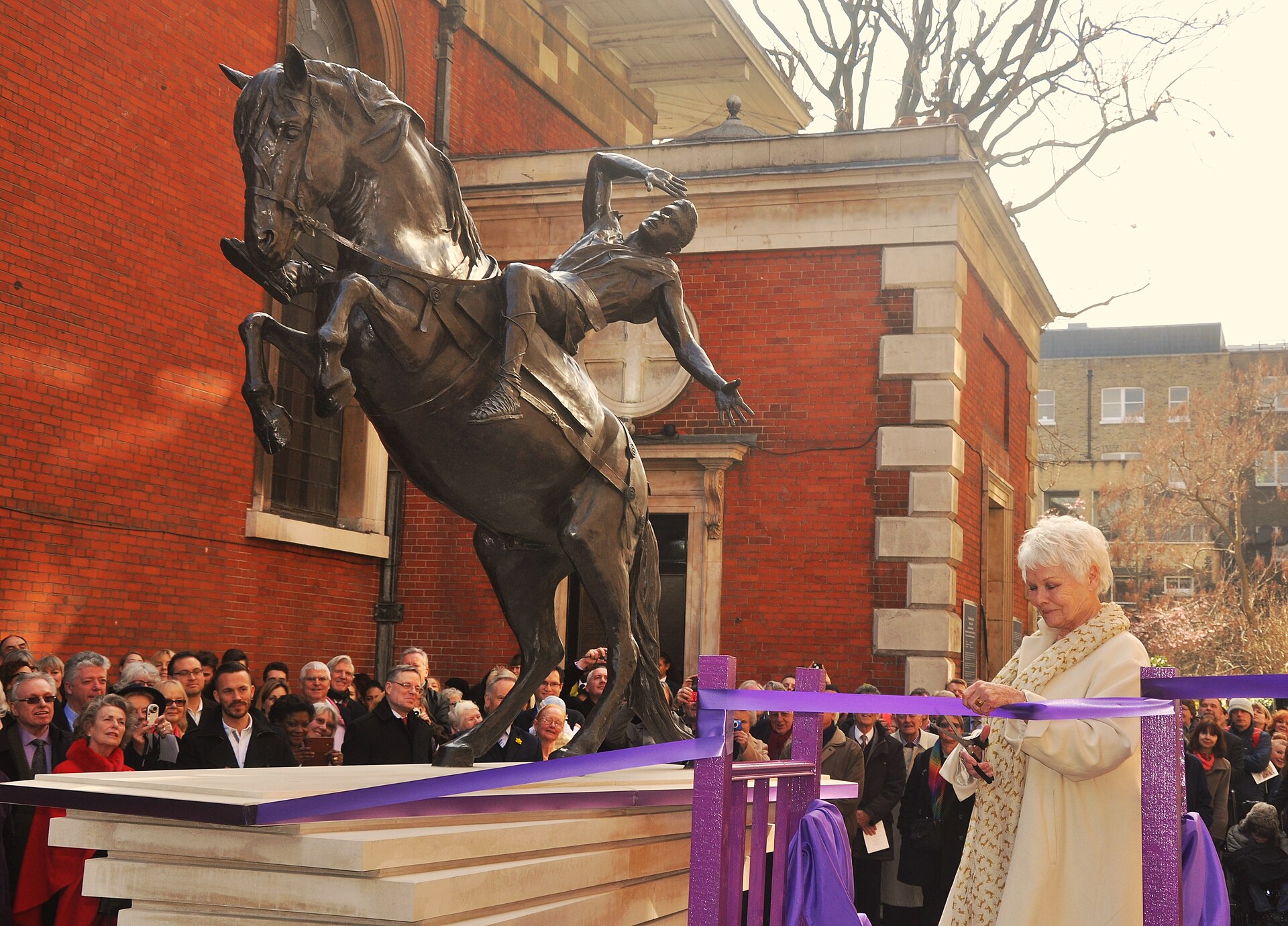
What the numbers say about the condition she is describing
Dench is one of a very large company. The Macular Society, the UK charity for the condition, calls macular disease "the biggest cause of sight loss in the UK and developed world," says nearly 1.5 million people in the UK have macular disease, and puts the number with AMD itself at more than 700,000. The pattern Dench describes — faces, reading, colour, fine detail going first, because all of them depend on the macula's central vision — is the textbook presentation, and her age profile matches the risk curve: AMD generally affects people over 50, and its prevalence climbs steeply past 80. There is no cure; treatments such as injections can slow the wet form of the disease, which is one reason specialists plead for early detection, and why a public figure describing symptoms this recognisably — wavy or missing central vision, faces blurring, colours fading — is clinically useful as well as culturally poignant. Millions of listeners will have heard their own, undiagnosed experience described on Thursday morning.
The memoir: Bond, Cats, and a lunch at MI6
The interview exists because of the book. Is It Too Late to Make a Run For It?, written with O'Hea and published in the UK on October 22, 2026 (Penguin; the US edition follows on November 3), is billed by its publisher as "funny, intimate, surprising, moving and over ninety years in the making" — a life told through pranks, great roles, her joyful marriage to the actor Michael Williams, and, as the BBC's filmed version of the interview puts it, everything from losing her sight to lunch at the real MI6. The extracts trailed this week have shown the same unsentimental register as the interview. Of the Bond film Tomorrow Never Dies, she writes that she found it "more challenging" than her other outings as M. Of Cats (2019), in which she played Old Deuteronomy and which became one of the most mocked films of its decade, she is blunter: a "waste of all that goodwill and talent," adding that she never saw the finished film — "I understand the critics were rather hostile" — and that "nobody sets out to give a poor performance or make a bad film."
There is a poignancy in the timing that neither she nor her publisher could have scripted better. The memoir is, by format, a book she cannot read. Its audiobook — Penguin lists a 621-minute recording, including a bonus conversation between Dench and O'Hea — is therefore not an extra but the edition its author can actually use, and Thursday's interview kept returning to audio as the medium of her life now: radio mattered to her before, she said, and it matters more now. A UK book tour of live conversations with O'Hea is planned, which suits the same reality: she can no longer perform a text, but she can still, formidably, hold a room in conversation.
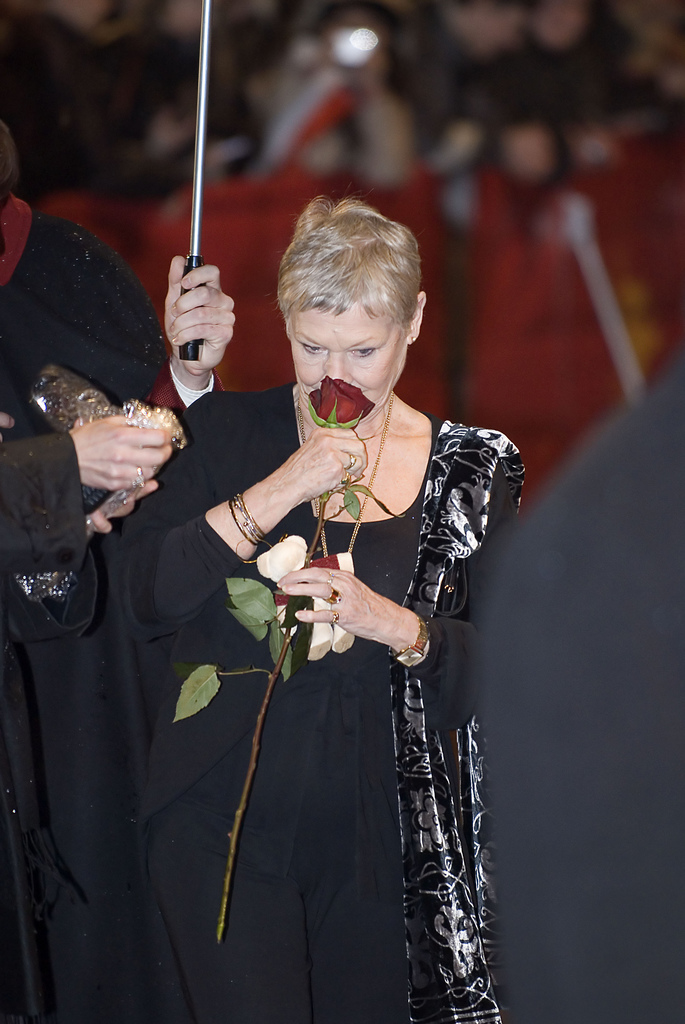
Who gains, who loses, and what critics will say
The theatre loses most, and it knows it: in June 2026 it was announced that London's Shaftesbury Theatre will be renamed the Judi Dench Theatre in February 2027 — an honour usually paid to the dead, being paid instead to a living actor who can no longer tread its stage. Screen loses a presence who proved, alongside a handful of contemporaries, that an actor's most powerful decades can begin after 60; her M reset what authority looked like on film for a generation. Who gains is less obvious but real: the sight-loss charities gain their most articulate witness; audio drama and radio gain a practitioner who has always rated the medium and now depends on it; and readers gain a memoir whose extracts suggest it is funnier and less forgiving — about Cats, about "national treasure," a label she has said she loathes — than the affectionate coverage around her sometimes implies.
The counter-arguments are worth stating plainly. One is that nothing on Thursday was, strictly, news: Dench has described every element of this before, in 2019, 2023 and 2025, and some coverage will treat the interview as a book-publicity stop rather than a turning point. There is something in that — and yet the shift from "I can't see to read" to "I can't do a play, I can't do a film" is the difference between a difficulty managed and a career concluded, and she chose her first broadcast interview in a long while to say it. A second argument is that "ended her acting" overstates a statement she herself refused to frame as retirement: she has not announced a farewell, and if a part could be shaped around audio and memory, nothing she said logically forbids it. That caveat belongs in any honest account, and it is in this one. What she said is that she cannot be on a stage, cannot do a play or a film, and cannot read. We report that as she said it — no more, and no less.
What happens next
Three scenarios now present themselves. The most likely is the conversational career: the book tour with O'Hea, broadcast interviews, honours like the Shaftesbury renaming in February 2027 — a public life conducted entirely in the medium she can still command, her voice. The second is selective audio work: radio drama and narration, where the photographic memory and the voice are assets rather than obstacles, and where her stated love of radio gives her a reason to say yes. The third — a genuine return to stage or screen in some adapted form — cannot be ruled out for an actor who has spent 14 years finding workarounds, but Thursday's flat inventory was clearly intended to lower that expectation, perhaps permanently. What is certain is the direction of the condition: AMD does not reverse, and the woman who told Britain that blue is gone is not going to get it back. "Just get on," she advised, "and don't think about it too much." On the evidence of 91 years, she intends to.
Read more of our culture coverage: the obituary of another Oscar-winning leading lady of her generation, Eva Marie Saint, who has died at 102; our guide to the films of October 2026; and the story of a younger actor lost far too soon, RJ Mitte of Breaking Bad.
Sources
BBC Radio 4 Today programme interview with Dame Judi Dench, conducted by Emma Barnett (October 22, 2026), and BBC News — "Dame Judi Dench on losing her sight, lunch at MI6 and remembering her husband" (October 22, 2026). Press Association report of the interview, including the National Eye Institute's description of AMD and Dench's earlier statements in 2019 and 2023 — "Dame Judi Dench can't 'do a play, a film or read any more' due to health condition" (October 22, 2026). Penguin Books — Is It Too Late to Make a Run For It?, publication details, audiobook length and author biography (awards, DBE 1988, Companion of Honour 2005). Macular Society — "What is macular disease?" (UK prevalence: more than 700,000 people with AMD; nearly 1.5 million with macular disease). Memoir extracts on Cats via Variety reporting, and the Shaftesbury Theatre renaming announcement (June 2026), as reported in search-verified coverage this run.