jaguar type 01 electric car
Jaguar's first production model under its all-electric relaunch is a 5.2-metre, four-door grand tourer with supercar power, a six-figure price and a job much larger than selling cars: proving the brand's radical reinvention can work.
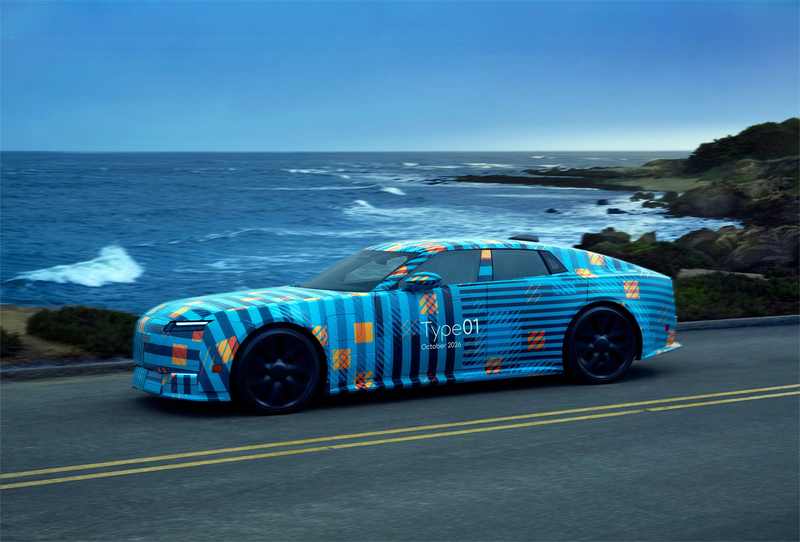
The jaguar type 01 electric car made its production debut in New York on Tuesday, October 6, carrying 1,016 bhp, a $130,500 starting price and the burden of reviving one of Britain's most famous automotive names. Jaguar Land Rover's all-electric four-door grand tourer is not a cautious bridge from the old range. At 5.2 metres long and just 1.4 metres tall, it is deliberately theatrical: an ultra-long bonnet, razor-thin lamps, no rear window, concealed tail-lights and a deployable spoiler. Orders are due to open in early 2027, with production at Solihull in England. The question is not whether the car will be noticed. It is whether attention can become a durable luxury business.
What the Jaguar Type 01 is
Jaguar Type 01 specs: three motors and record power
The engineering case is substantial. Two motors drive the rear wheels and one drives the front, producing up to 1,016 bhp and 1,365 Nm of torque. Jaguar says that makes Type 01 the jaguar most powerful car ever approved for the road. The claimed 0–100 km/h time is 3.2 seconds. Its bespoke Jaguar Electric Architecture operates at 850 volts, allowing high-power charging while giving engineers freedom to place the battery, cabin and motors around the unusual proportions instead of adapting an existing combustion platform.
Jaguar Type 01 range and charging
Jaguar expects up to 644 kilometres on the EPA cycle and says the car can sustain roughly 320 miles at highway speed. On a 350 kW charger, it says 322 kilometres can be added in as little as 13 minutes. Those are competitive long-distance numbers, but they remain manufacturer claims until independent testing begins. For a grand tourer, the important measurement will not merely be the best laboratory result; it will be whether repeated fast charging and motorway speeds make a cross-country journey feel effortless.
Jaguar Type 01 price and release date
The jaguar type 01 price begins at $130,500 in the United States and £130,000 in the United Kingdom. The jaguar type 01 release date is staged rather than immediate: customer orders are scheduled to open in early 2027, followed by Solihull production. That positions the car above mainstream premium EVs and closer to low-volume luxury territory, where design, personalization and ownership experience must justify as much of the price as acceleration or range.
The design story
Jaguar Type 00 vs Type 01: concept drama meets production
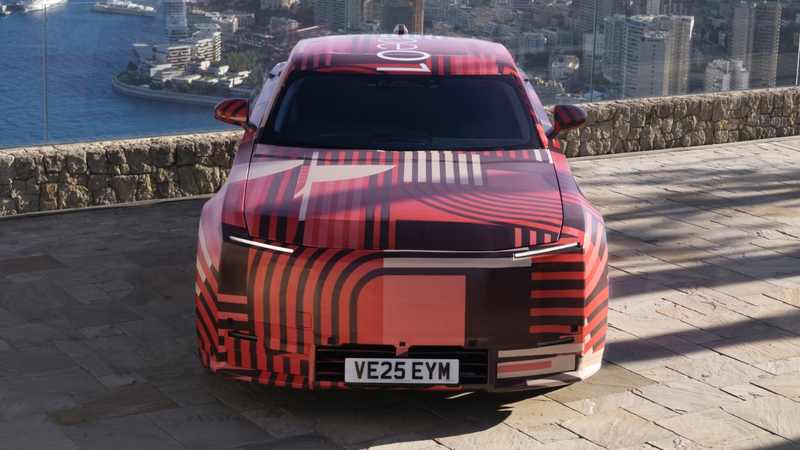
The comparison of jaguar type 00 vs type 01 is the story of provocation becoming metal. The bright pink and blue Type 00 concept shown at Miami Art Week in 2024 advertised a new visual language under the slogan “Copy Nothing.” Type 01 keeps the concept's extreme length, bluff surfaces and cab-rearward stance but converts it into a usable four-door car. The New York launch used silver and muted tones, a deliberate move away from the candy-coloured imagery that had dominated discussion of the rebrand.
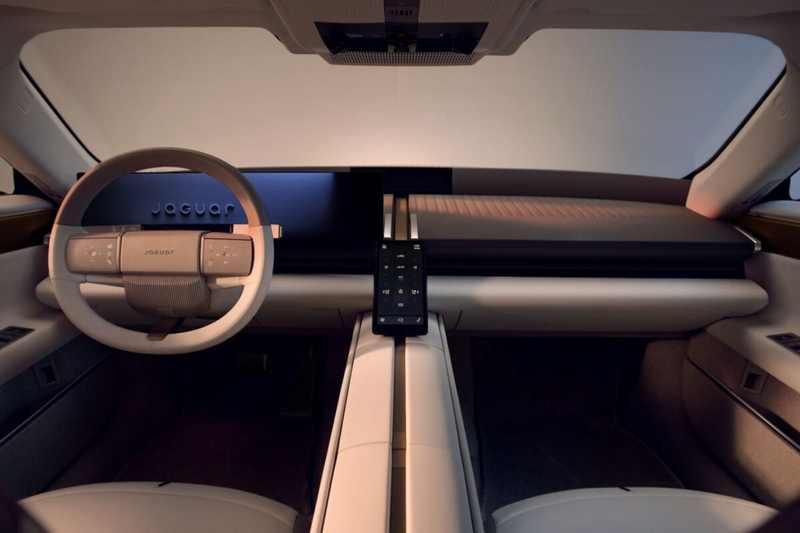
The bonnet is a particularly telling choice. An electric car does not need an E-Type-length engine bay, yet Jaguar uses one because proportion remains part of the brand's emotional vocabulary. The concealed rear lamps and absence of a conventional rear window push in the opposite direction, toward a digital-era object that refuses to look nostalgic. The result will polarize viewers because it is meant to. Indifference would be more dangerous for a brand trying to move from familiar premium saloons to scarce, high-margin luxury products.
Why this matters
This is less a model launch than a survival test. Jaguar's sales weakened for much of the past decade, and its attempt to chase BMW and Mercedes-Benz with conventional crossovers and sedans did not create a sustainable position. Parent company JLR, owned by India's Tata Motors, has responded by moving Jaguar sharply upmarket and making it electric-only. The theory is straightforward: sell fewer cars at much higher margins, avoiding a volume contest that Jaguar has already struggled to win. Type 01 is the first evidence customers can judge rather than a strategy deck or mood film.
The timing raises the stakes. U.S. enthusiasm for EVs is softer than in Europe, yet Jaguar is explicitly courting wealthy American buyers, including the technology fortunes clustered around New York and the West Coast. Europe faces pressure from lower-cost Chinese EVs, tariffs and disruption tied to the U.S.-Israeli war. JLR is also recovering from a cyberattack that stopped production last year and has announced voluntary redundancies that could reduce nearly 10% of its workforce over two years. A halo car cannot solve all of that, but a failed one could make every problem harder.
The Jaguar rebrand controversy
The 2024 campaign intentionally removed the familiar car imagery and replaced it with fashion-led visuals, a new wordmark and “Copy Nothing.” It generated enormous visibility but also anger from enthusiasts and criticism from political figures who saw abandonment rather than renewal. Managing director Rawdon Glover has since described that film as a conceptual world for a conceptual car, while presenting Type 01 as a production vehicle intended for real buyers. At the launch, his compact verdict was: “Jaguar's back.”
That distinction matters. Marketing can borrow the grammar of art and fashion, but a £130,000 machine is judged on range, ride, charging, service and residual values. Jaguar has not reversed course; it has translated the concept into a less confrontational palette. Glover's other formulation — “It's Jaguar first, and it's just enabled by its EV powertrain” — frames electrification as a tool, not the whole identity. Whether customers accept that framing will decide whether the jaguar rebrand controversy becomes a launch chapter or the brand's defining story.
Acclaim, ridicule and the middle ground
Early reaction shows why Jaguar chose a car this emphatic. Journalist Steve Fowler said it “looks incredible” and made him “proud to be British,” while Edmunds' Alastair Weaver credited Jaguar for committing to a genuinely distinctive design even as he called it polarising. Luxury-car consultant Craig Kinnersley reached the opposite conclusion, calling the shape an “unmitigated catastrophe” and comparing it with a hearse. Social posts supplied cruder hybrids, including a comparison to an imagined child of a Cybertruck and a Bentley Continental.
Neither cheers nor jokes establish market demand. The useful middle ground is to recognize that the styling solves one problem — making Jaguar impossible to confuse with a generic executive EV — while creating another: the pool of buyers willing to spend six figures on something conspicuous may be narrow. That is a defensible luxury strategy only if scarcity, margins and customer loyalty compensate for volume.
Who wins — and who carries the risk
The upside for Tata and JLR
If Type 01 works, Tata and JLR gain a global halo product, a dedicated electric architecture and permission to price Jaguar as a modern luxury marque rather than an alternative to the German premium establishment. Solihull gains a technologically ambitious flagship. The win would also validate a form of brand repair based on subtraction: fewer nameplates, fewer compromises and a sharper customer definition.
Rivals and doubters
Luxury rivals cannot dismiss the challenge. Bentley unveiled its first EV last month, while Ferrari's first electric model met criticism earlier this year. A credible jaguar electric gt adds another competitor for affluent buyers who value presence more than traditional engine identity. But the doubters lose only if Jaguar converts curiosity into deposits. If not, rivals inherit evidence that heritage, extreme design and four-figure horsepower are insufficient to overcome EV hesitation at the top of the market.
The numbers in context
The headline specifications are calibrated for a flagship: 1,016 bhp, 1,365 Nm and 3.2 seconds to 100 km/h. Yet electric performance has become easy to advertise and hard to differentiate. The more consequential figures are the 644-kilometre claimed EPA range, the 13-minute 322-kilometre charging claim, and the $130,500 entry price. Together they say Jaguar is selling long-distance confidence, not merely a dramatic stoplight sprint.
The car's 5.2-metre length also deserves context. It provides visual theatre and cabin presence, but narrows the practical audience in dense European cities. The price is high enough to demand a frictionless ownership experience but low enough to sit below the most exclusive coachbuilt products. Jaguar therefore occupies an exposed middle: too expensive for volume, not expensive enough to survive on a few hundred collectors. Execution must carry the argument.
What happens next
Can Jaguar sell six-figure EVs to Americans?
Three scenarios are plausible. In the strongest, Type 01 becomes a low-volume status car for buyers tired of familiar luxury badges; its design earns cultural relevance, and subsequent Jaguar models broaden the business without diluting it. In the middle case, the launch generates attention and respectable orders but remains a halo supported by stronger Land Rover earnings. In the weakest, American EV resistance and the price collide, leaving Jaguar with celebrated engineering, thin demand and a costly bespoke platform.
The early-2027 order book will offer the first meaningful signal, followed by delivery pace, transaction prices and the proportion of first-time Jaguar customers. Independent range and charging tests will matter more than launch-night reactions. So will reliability and dealer service: six-figure buyers forgive experimentation in styling more readily than inconvenience in ownership.
Conclusion: the car must now carry the brand
Type 01 does what a reinvention needs to do first: it makes the new Jaguar tangible. It is powerful, technically ambitious and unmistakable, while its price and proportions reveal how narrow the commercial target may be. The 2024 campaign asked the public to imagine a different Jaguar. The production car now has to make that difference desirable. Its success will not be measured by whether everyone likes it, but by whether enough buyers believe this is worth more than the safer alternatives.
Sources
- Reuters: Jaguar unveils electric-car gamble for wealthy U.S. buyers
- The Wall Street Journal: Jaguar shifts away from pink branding for Type 01
- Dezeen: Jaguar unveils Type 01 electric car
- BBC News: “Jaguar unveils new electric car after 'woke' ridicule,” October 7, 2026.
Reporting note: Performance, range and charging figures are manufacturer claims. Public reaction is attributed to named commentators and reported social posts; analysis and framing are by Signal Post News.