Published and updated October 7, 2026
Jack Smith declassified documents
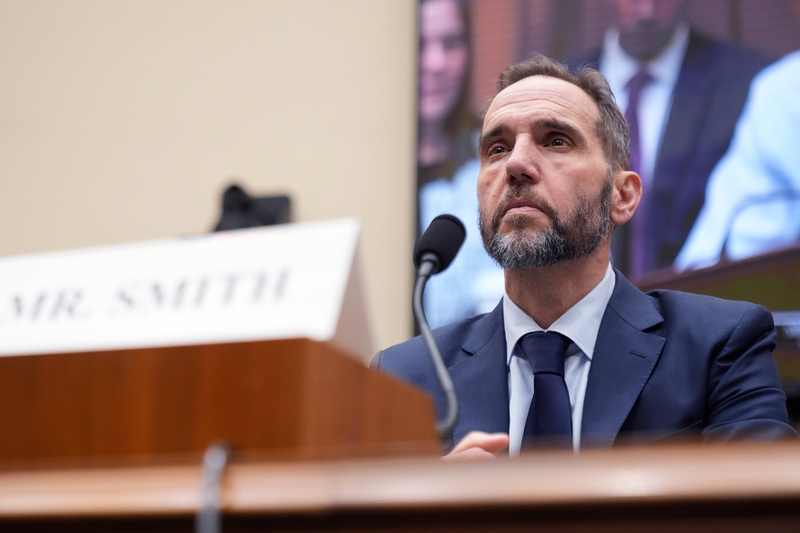
WASHINGTON — Newly declassified Justice Department records released around October 6 show that prosecutors working for former special counsel Jack Smith met former CIA Director John Brennan at CIA headquarters in late 2023 while preparing Donald Trump's classified-documents trial. The disclosure sits uneasily beside answers Smith gave the Senate Judiciary Committee on September 29, when he said he had never met Brennan and did not recall speaking with him.
The conflict is real but narrower than the most explosive political claims. The record cited by Fox News Digital describes a meeting between Brennan and prosecutors on Smith's team, not a face-to-face meeting between Brennan and Smith. Republicans say the broader question covered assistance to the entire team; Smith's lawyers say his personal answers were accurate. That distinction will shape the legal and political fight over what the Jack Smith declassified documents prove.
What the records show
The John Brennan–Jack Smith CIA meeting described in the file
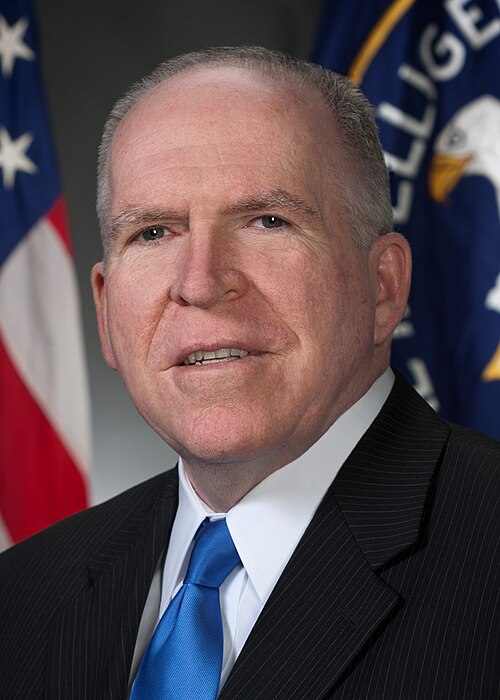
The declassified entry says Smith's prosecutors met Brennan at the CIA “to discuss expert testimony to National Defense Information in the forthcoming trial.” National Defense Information is the term used in Espionage Act cases for closely protected information whose unauthorized disclosure could harm the United States. The meeting came as the special counsel's office prepared the Florida prosecution alleging Trump unlawfully retained classified documents after leaving office and obstructed efforts to recover them.
That purpose matters. Prosecutors preparing a classified-information trial routinely need to understand what testimony can establish sensitivity, national-defense relevance and potential harm without unnecessarily exposing secrets in open court. A former CIA director could be consulted as a possible expert or as a source of institutional knowledge. The newly public record establishes that Brennan provided access to that process; it does not, by itself, establish that he directed charging decisions or met Smith.
What Smith told the Senate
Jack Smith Senate testimony under Chuck Grassley's questioning
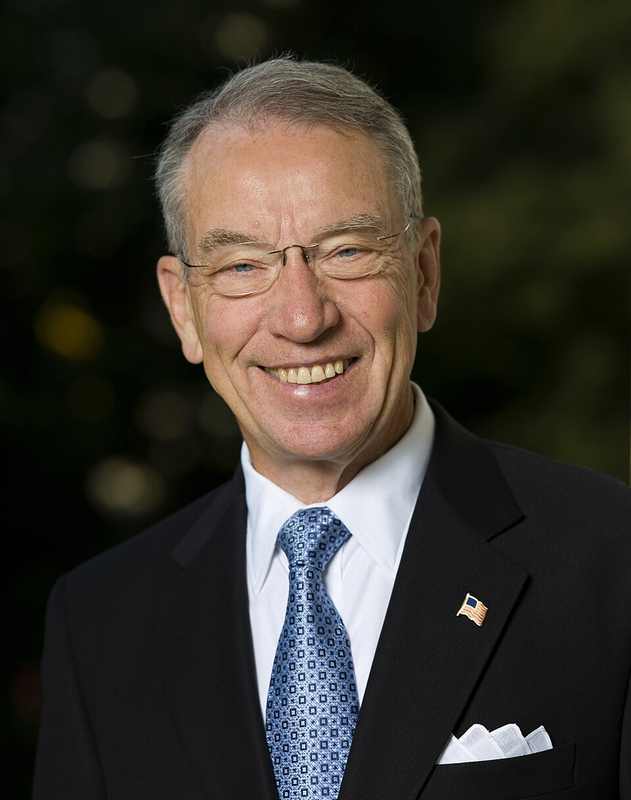
At the September 29 oversight hearing, Chairman Chuck Grassley asked whether Smith had ever received “consultation or counsel” from Brennan during Smith's tenure as special counsel. Smith answered, “I've never met John Brennan.” Pressed later on whether he had ever had a conversation with Brennan, Smith said, “I have no recollection of having a conversation with John Brennan.”
The Senate Judiciary Committee's hearing page and transcript preserve the exchange in context. The first question referred to consultation supplied to Smith during his tenure; the follow-up focused on Smith's own contact. Smith's two answers addressed his personal experience. They did not volunteer that members of his team had met Brennan.
The nuance both sides are fighting over
Did Jack Smith lie to Congress, or answer a narrower question?
Grassley argues that the initial question was broader than whether Smith personally shook Brennan's hand. It asked about consultation or counsel from Brennan to Smith or his team. In comments to Fox News Digital, Grassley said the documented meeting “constitutes consultation or counsel” and called Smith's answers “highly evasive and misleading, at minimum.” On that reading, a technically personal denial sidestepped the substance of the inquiry.
Smith's side has a straightforward response: the record says Brennan met prosecutors, not Smith, and Smith answered questions framed around whether he had met or spoken with Brennan. A witness can be criticized for not expanding an answer without that omission automatically becoming perjury. The precise wording, the witness's understanding and proof of knowing falsity all matter.
A parallel dispute concerns records showing Smith's team reviewed text messages involving 44 members of Congress. House Republicans filed a Jack Smith criminal referral, arguing his testimony misled Congress. Smith's lawyers say he was asked about toll records — metadata such as numbers, dates and call duration — rather than message content, and they describe his answers as “unimpeachably truthful.” The competing accounts turn on categories that sound interchangeable in political debate but are legally distinct.
The phone-records fight behind the hearing
Jack Smith's 44 lawmakers' text messages and Susie Wiles phone records
Grassley also disclosed that the special counsel's team obtained at least 4,782 donor checks, including contributions as small as $1 to $10, along with home addresses and bank-routing information. Smith defended obtaining non-content toll records as relevant to the January 6 investigation and said his office consulted the Justice Department's Public Integrity Section. “I stand by my decisions,” he said, adding, “I made those decisions without regard to President Trump's political association.”
The investigation known as Arctic Frost examined efforts to overturn the 2020 election. Its reach into lawmakers' communications and donor records has become the central Republican case that investigators crossed from legitimate evidence gathering into political surveillance. Smith's defenders answer that communications metadata, financial trails and contacts among participants can be standard tools when prosecutors are reconstructing a coordinated effort.
House Judiciary Chairman Jim Jordan renewed his call for prosecution after records showed the team accessed phone records associated with Susie Wiles, now Trump's chief of staff. Republicans say those records risked exposing attorney-client relationships and that the team “disregarded the separation of powers.” The Star News Network report details Jordan's position. Whether privileged communications were actually obtained, rather than non-content records, remains a key factual and legal distinction.
Why this matters
Credibility, prosecutorial power and the high bar for perjury
Congressional oversight depends on witnesses answering the question asked and correcting a potentially misleading impression when they recognize one. A former special counsel carries unusual credibility: Smith spent years asking juries and judges to trust the accuracy of his representations. If senators conclude he parsed language to conceal relevant activity by his team, the reputational damage could be serious even without criminal liability.
Perjury is harder. Prosecutors generally must prove a materially false statement made knowingly and willfully, not merely an incomplete, evasive or mistaken answer. Ambiguous wording and the difference between “I” and “my team” create obstacles. A political accusation that testimony misled Congress therefore does not settle whether a charge could be proved beyond a reasonable doubt.
The episode also tests oversight of prosecutorial power. Investigators need latitude to follow evidence, especially in cases involving national security and an attempt to disrupt the transfer of power. Yet surveillance touching lawmakers, political donors and lawyers demands rigorous safeguards because the same tools can chill protected political activity.
There is a final caution: these records were selected for declassification by the current administration, whose president was Smith's target. Declassification can reveal genuine misconduct or necessary context, but selective release can also produce a fragmentary narrative. Readers should distinguish what the documents affirm from claims that require the full investigative record.
Background: how we got here
From two Trump cases to the Arctic Frost investigation hearings
Attorney General Merrick Garland appointed Smith in November 2022 to lead two investigations: Trump's handling of classified documents and efforts to overturn the 2020 election. Both produced indictments. Neither reached a trial verdict; after Trump won the 2024 election, Smith moved to dismiss the federal cases under the Justice Department's position that a sitting president cannot be prosecuted.
Smith testified to the House in January and returned for the September 29 Senate Judiciary oversight hearing. Grassley said “this wasn't a normal prosecution,” while Democratic Senator Dick Durbin called the attacks a “smokescreen” intended to distract from the evidence Smith's team gathered. A Washington Examiner account describes the hearing's partisan clash.
Brennan arrives with his own disputes with the Trump administration. He has sued over what he characterizes as “vindictive prosecution,” faced a subpoena, and watched the FBI question CIA officials about the intelligence community's Russia assessment. Those conflicts give Republicans another reason to portray his involvement as political. They also give Brennan's defenders reason to say later scrutiny is retaliatory.
Who benefits, who loses, what critics say
Republican vindication, Democratic skepticism and public uncertainty
Republicans benefit from a document that appears to validate their claim that Smith's team had contacts omitted from his public answer. It strengthens a broader argument that federal law enforcement concealed politically sensitive methods. Jordan and Grassley can use the disclosure to demand more records, interviews and potential referrals.
Smith's defenders lose control of the framing but retain important factual ground. A prosecutorial team consulting a former intelligence chief about expert testimony can be a legitimate trial-preparation step, and the record does not show Smith personally met Brennan. Democrats argue that the focus on phrasing distracts from the alleged conduct at the core of Smith's cases.
The public loses when only selected fragments are available. Without complete interview notes, routing records, legal approvals and testimony preparation, outsiders cannot know whether the Brennan meeting was routine, exceptional or consequential. The honest conclusion is provisional: the new record broadens what was known about the team's contacts, while leaving the disputed intent unresolved.
What happens next
The criminal referral, November court date and midterm backdrop
The House referral asks the Justice Department to examine Smith's testimony; it does not itself file charges. Jordan's prosecution calls increase pressure, but referrals alleging false congressional testimony rarely lead to criminal cases, particularly when the disputed answers depend on pronouns, definitions and memory. Investigators would need the full transcript, supporting records and evidence of Smith's state of mind.
The legal afterlife of the classified-documents case continues separately. The 11th U.S. Circuit Court of Appeals is scheduled to hear argument on November 2 over access to Volume II of Smith's report, as explained in our report on the November 2 oral argument. Any ruling could affect how much additional evidence becomes public.
One day later, voters go to the polls in the November 3 midterm elections. The dispute will feed campaigns already centered on institutional trust, law enforcement and Trump. Our midterm approval analysis explains that wider political backdrop. Brennan's lawsuits and related inquiries will proceed on their own tracks, ensuring that the 2023 meeting remains part of a larger struggle over who investigated whom — and why.
Sources
- Fox News Digital — declassified meeting record and Grassley's response.
- U.S. Senate Judiciary Committee — September 29 hearing page and transcript.
- Washington Examiner — hearing exchanges and competing party arguments.
- The Star News Network — Jordan's prosecution call and Susie Wiles phone-records dispute.