Italy protests: a cost-of-living march in Bologna ended in barricades of overturned rental bikes and 75 injured officers, fires burned in front of Milan’s cathedral the same night, and a truckers’ blockade wave has since emptied supermarket shelves across the south.
World / Europe — one Saturday night of street clashes in the north, a week of blockades in the south, and a cost-of-living crisis testing Giorgia Meloni’s government on both fronts at once
Bologna: a peaceful march, then a barricade of bicycles
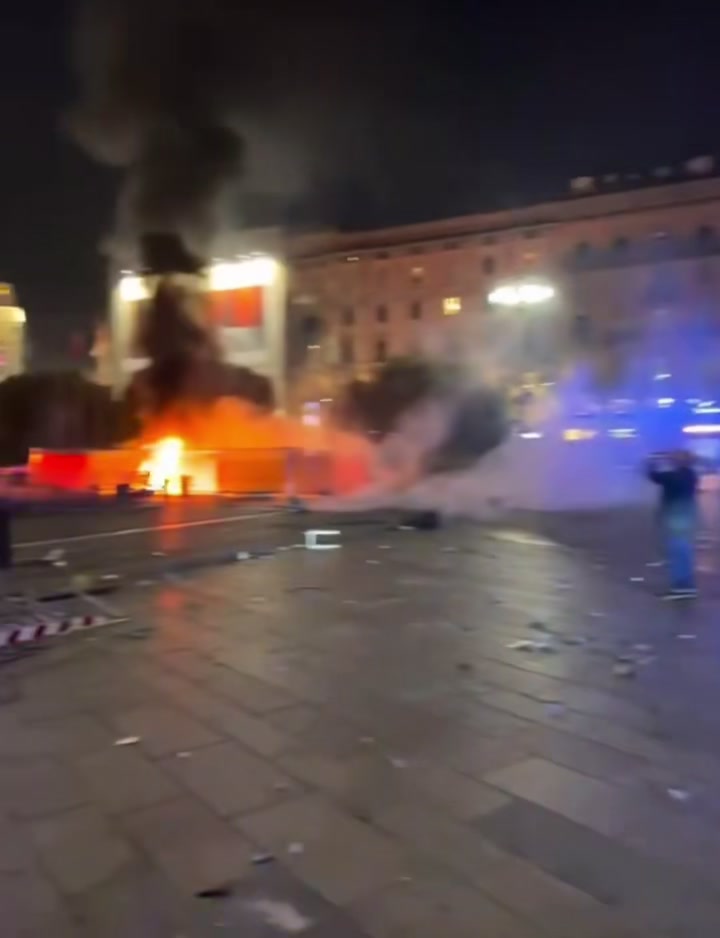
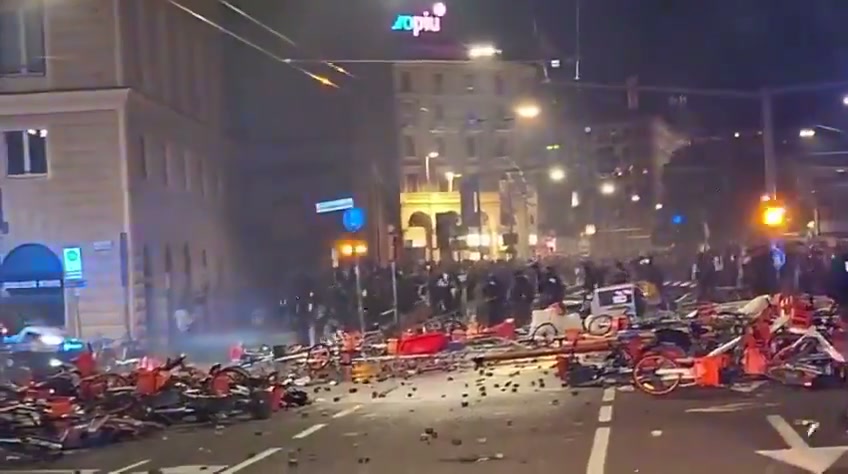
The Bologna march set off from Piazza Minghetti on Saturday afternoon with around 2,000 people, according to police; Corriere di Bologna put the crowd nearer 3,000. It was one of a wave of demonstrations against rising living costs held across northern Italy that day. When the march reached the station area, a breakaway group of a few hundred — many of them masked, many very young — attacked the riot police guarding Piazza Medaglie d’Oro, in front of Bologna Centrale station, hurling stones, glass bottles, smoke bombs, paper bombs, road signs and street barriers.
Dozens of the city’s red Ridemovi rental e-bikes were tipped over and piled into barricades across the streets, and bins were set on fire on Via Indipendenza and the ring road. Police answered with water cannon and, by the police account reported in the Italian press, around 400 tear gas canisters. The fighting spread around the station and the Montagnola park and went on until about 11 p.m. The station was closed as a precaution, and the Basilica of San Petronio, Bologna’s landmark church, was sprayed with graffiti.
The human toll rose as the counts were finalised. ANSA’s running report on the night put 36 officers injured and four minors arrested, with seven people reported to prosecutors; Reuters, citing a police union, later put the injured officers at 56. The Bologna police headquarters’ final toll, reported by Corriere di Bologna and Il Resto del Carlino, was higher: 75 police officers and carabinieri injured, 18 of them facing recovery times of 10 to 30 days, 12 police vehicles damaged, and five people arrested — four of them minors, born between 2008 and 2010 — with about 50 more identified. The first estimate of damage to public property was close to €100,000, split mainly between the Hera waste company and the wrecked rental bikes; Confcommercio Bologna said shops were counting at least €500,000 more.
According to ANSA, Corriere di Bologna and Il Resto del Carlino, young people had been called to Bologna through TikTok and purpose-built Telegram groups, some travelling in from other cities in the region, with the stated aim of copying the riots then sweeping France. The march’s organisers said the demonstration was meant to be peaceful and that they had been overwhelmed by the violent group.
Milan and Turin: the same night, the same script
In Milan, the march degenerated first in Via Broletto and then in the historic centre, around Piazza del Duomo, where hundreds of young people, many dressed in black, threw firecrackers, paper bombs, bottles and stones at police in front of the cathedral. ANSA reported about 50 people detained in Milan, nearly half of them minors. The injury counts vary by source and by the hour they were compiled: Deutsche Welle and ANSA reported at least four police officers and 20 protesters injured, while Euronews reported 25 people taken to Milan hospitals, ten of them police officers, none of them in a condition requiring emergency red-code transport.
Turin saw about an hour of unrest: 12 people were stopped, 10 of them minors, and were found carrying petrol bombs, firecrackers, cobblestones and emergency window-breaking hammers, according to ANSA and local media. Police also reported clashes in Brescia and Bergamo. Rome, by contrast, saw a large and peaceful demonstration organised by the CGIL union confederation — a reminder that most of the weekend’s protest was not violent.
The second front: blockades, dry pumps and empty shelves
While the north was counting broken windows, a slower emergency was building in the south. Truck drivers, protesting diesel prices roughly a third higher than before the Iran war — a temporary diesel tax discount expired earlier this month — had begun blockading roads, motorways and ports in Sicily and the south the previous week. Access to the Eni refinery at Taranto has been blocked since October 12; by October 15, around 150 of Eni’s 270 filling stations in Puglia had run dry. Bari and Brindisi airports advised airlines to refuel elsewhere before flying in, and Reuters reported on Wednesday that two regional airports in Calabria were disrupted because aviation fuel could not be delivered.
By Tuesday, the Associated Press reported, some supermarket shelves and petrol pumps in Naples were empty after protesters blocked loading and unloading at supermarket distribution warehouses near the city. One Naples supermarket taped a note to its empty shelves apologising that “some products may be temporarily unavailable or available in a reduced range” because of the strike. Shortages of fresh pasta, packaged cheeses and meats and of fruit and vegetables were reported in Sicily — partly, AP noted, because shoppers were stockpiling — and partially empty shelves were reported in Calabria and Puglia. In the Foggia area, where the protest began on October 11, mayors of the Gargano towns said the situation was close to collapse. RAI’s Porta a Porta reported shelves partially or completely empty in numerous supermarkets, most severely in the south and increasingly in the centre and north.
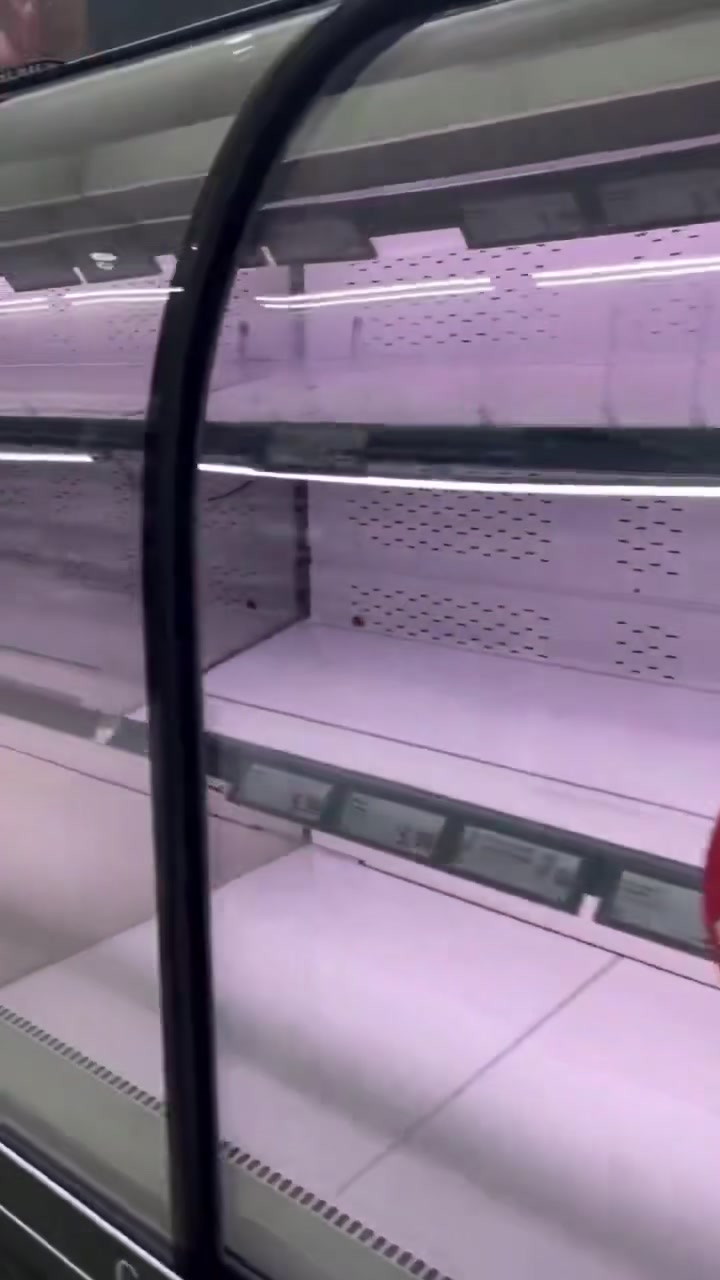
On Wednesday the retailers themselves raised the alarm. Reuters reported that the ANCD-Conad group, representing retailers under the Conad supermarket brand, said large quantities of perishable goods — fruit, vegetables, milk and meat — were stranded on trucks and in warehouses, with fresh produce rotting. “The freedom to protest cannot translate into undermining citizens’ right to receive fresh food or destroying the value created by Italy’s agri-food supply chains,” the group’s president, Maurizio Pelliconi, said. The blockades are reaching factories, too: the pasta maker Rummo, in Campania, suspended production on Tuesday after running out of ingredients, its chief executive Cosimo Rummo told la Repubblica that most producers in Puglia faced the same problem, and the milling industry lobby Italmopa has warned more factories could stop. Italy’s pasta supply chain generated €13.5 billion in revenue last year.
The truckers’ case is about arithmetic, not ideology: they say diesel has wiped out their margins, that funds promised by the government months ago have not arrived, and they are demanding measures including a 15 percent increase in freight rates. Transport Minister Matteo Salvini met the trucking associations on Tuesday and, according to the Unatras group’s president Paolo Uggè, promised tax credits, funds to modernise the fleet and payments beginning Wednesday, with another meeting next week. Salvini has said the government is prepared to consider a cap on diesel prices; Deputy Minister Edoardo Rixi said a package worth more than €150 million would be made available soon, on top of roughly €1 billion set aside this year to help hauliers. The protests, meanwhile, are still spreading — on Wednesday trucks and tractors drove into the main square of Ravenna as farmers added their voices.
Why this matters
Italy is now fighting the same fire on two fronts that burn in different ways. The northern clashes are a story about order: a few hundred masked teenagers, mobilised on TikTok with the explicit aim of imitating France, were able to hold the centre of a major city for hours and injure 75 officers in one night in Bologna alone. The southern blockades are a story about supply: a country whose food moves almost entirely by truck discovered, in about ten days, how quickly just-in-time logistics fail — first the fuel, then the deliveries, then the shelves, then the factories. The two fronts share one fuel: a cost-of-living squeeze driven by energy prices that Italy’s government does not control, landing on households, students and small hauliers at the same time.
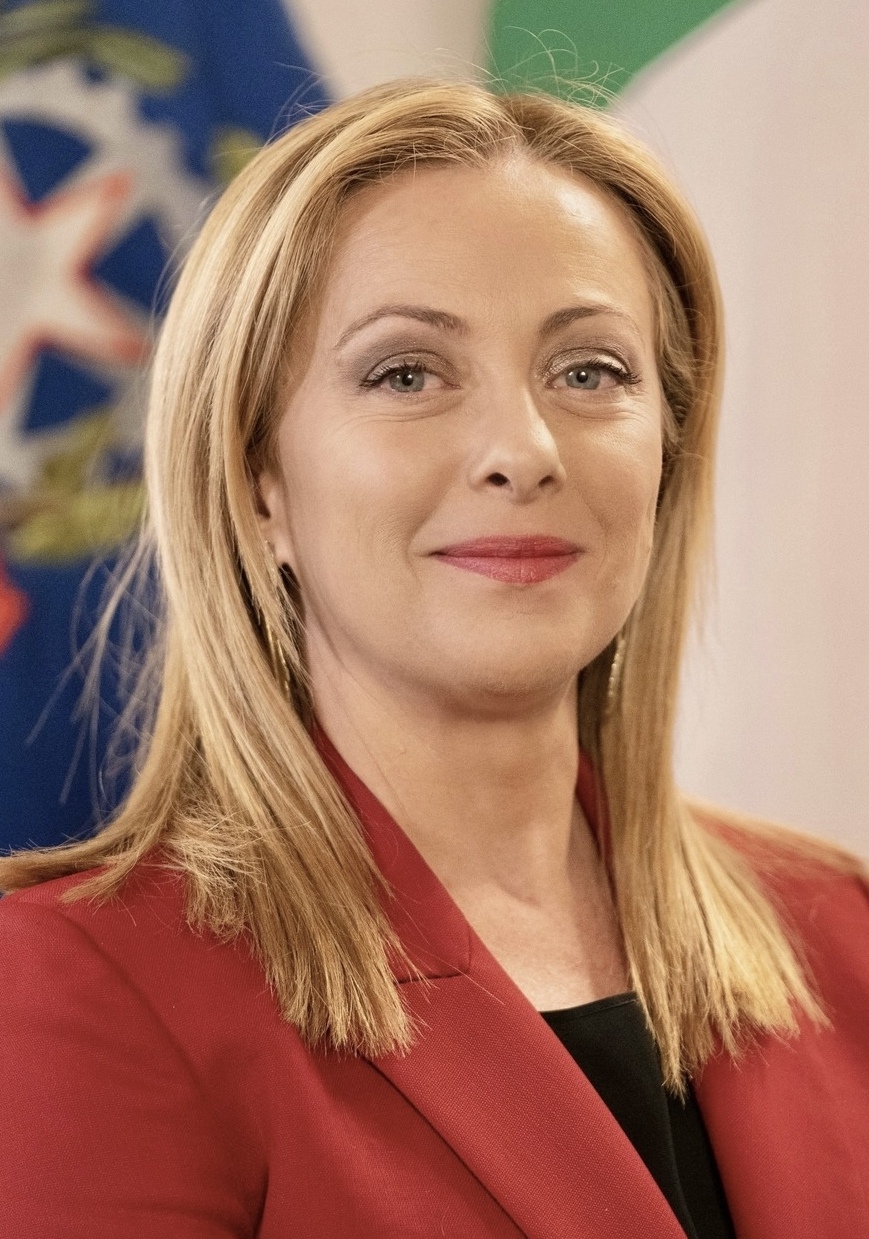
For Prime Minister Giorgia Meloni, the politics are delicate in both directions. Her government was elected on law and order, and it is preparing a security crackdown in response to the weekend’s riots, with harsher penalties for violent protesters under discussion. But the truckers are not her usual opponents — they are small business owners her coalition claims to champion, and their central complaint, that promised money never arrived, is aimed at her own government’s follow-through. Hence the dual response: condemnation for the rioters, cash and concessions for the blockaders.
The European context matters, too. The Bologna mobilisation was openly copycat — an attempt to reproduce in Italy the French unrest that has filled streets there for weeks, which we have covered in our reporting on France’s Yellow Vests Act Two and the political row it triggered, in which President Macron lashed out at foreign leaders commenting on the French protests. What is emerging is a shared European repertoire: platform-organised youth unrest in the cities, producer blockades on the logistics arteries, and governments discovering that the two can run at once.
What each side says
Meloni posted on Saturday evening, as the violence spread: “Demonstrating is a right. Setting our cities ablaze is not.” In a longer statement she expressed “great respect” for the thousands who had protested peacefully, pointed to stones thrown at officers in Milan, cobblestones and hammers seized in Turin and the precautionary closure of Bologna’s station, and wrote: “In the face of scenes like these, the rejection must be unanimous. Any hesitation becomes justification. Silence is not acceptable.” Bologna’s mayor, Matteo Lepore, called the scenes in his city “unacceptable.” Milan’s mayor, Giuseppe Sala, struck a different emphasis, telling the Associated Press: “The reasons for the protests were understandable. The violence against law enforcement and serious damage to the city are not justifiable.”
On the other side, the Bologna march’s organisers disowned the violence and said the breakaway group had overwhelmed a demonstration intended to be peaceful. The truckers and farmers blockading the south say they are not against the public but are being bankrupted by diesel prices and broken promises, and note that medicine deliveries are being let through the blockades. The retailers, caught between the two, make the consumer’s argument: whatever the merits of the protest, a right to demonstrate does not include a right to leave cities without fresh food.
What happens next
The immediate question is whether the government’s money reaches the truckers fast enough to lift the blockades before the shortages deepen — Unatras said payments were pledged to begin on Wednesday, with a further meeting next week, and the hauliers’ threat of a wider national stoppage is still on the table. The second question is whether next weekend brings another round of city-centre clashes, and how the government’s promised security measures — and any arrests arising from the roughly 50 people identified in Bologna and the detentions in Milan and Turin — change the calculation for the young people being recruited on TikTok and Telegram. And behind both sits the variable nobody in Rome controls: the price of diesel, set by a war in the Middle East, which has now emptied shelves in Naples and shut a pasta factory in Campania. Italy’s autumn of unrest began with prices. It will end when prices, or politics, move.
Sources
Reporting based on: Reuters (October 21) on retailers’ food-shortage warnings; Reuters (October 20) on fuel and food running out in the south and the pasta industry; Associated Press on Naples’ empty shelves and pumps; ANSA reporting on the Bologna, Milan and Turin clashes (injuries, arrests and detentions); Corriere di Bologna and Il Resto del Carlino on the Bologna police headquarters’ final toll and damage estimates; Xinhua’s roundup of the northern clashes; and a DW/ANSA/Euronews roundup of the Milan, Bologna and Turin figures. Eyewitness video stills via X; the supermarket clip’s specific store and date could not be independently confirmed.