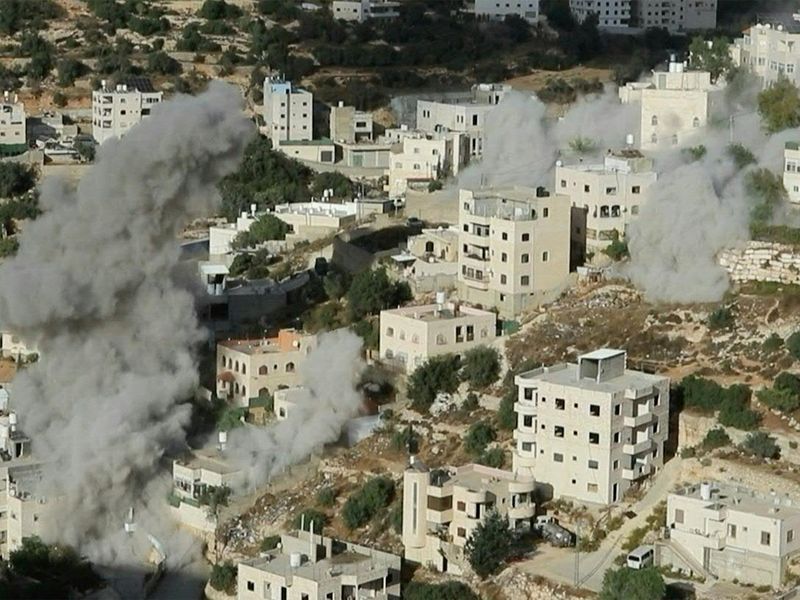
GAZA — Two Palestinians were killed and several others wounded in Israeli strikes across the Gaza Strip on Wednesday, November 18, medical sources told Anadolu Agency, in the latest of the near-daily incidents that have marked the fourteen months since the ceasefire took effect on October 10, 2025. Qatar News Agency (QNA), reporting independently the same day, confirmed the same two deaths — they are the same incidents, not additional ones — and added a third fatality: an 11-year-old boy who succumbed to wounds from a drone strike the previous day in northern Gaza. Neither agency’s report included an Israeli military comment on Wednesday’s incidents, and none is invented here.
Track it live: Israel war map — live tracker · Live wars tracker
What happened on Wednesday
Fadi Nahid Ismail and the Deir al-Balah drone strike
In Deir al-Balah, in central Gaza, Fadi Nahid Ismail, 35, was killed in an Israeli drone strike near the city’s police station in the city centre, a medical source at Al-Aqsa Martyrs Hospital told Anadolu. Witnesses told the agency that a second quadcopter drone dropped a bomb on a parked vehicle near the same site. QNA’s account, citing medical sources, describes a strike near the entrance to the Deir al-Balah police station that also hit a parked vehicle — the same incident reported by both agencies.
Thaer al-Wadiyeh and the Sheikh Ajlin Gaza City attack
In Gaza City, the body of Thaer al-Wadiyeh — full name Thaer Ismail al-Wadiyeh, 32 — arrived at Al-Shifa Hospital together with several wounded people, following an Israeli attack in the Sheikh Ajlin area, southwest of the city, a medical source told Anadolu. QNA located the Sheikh Ajlin strike near the Marine Club, in the same southwestern district. The two agencies’ accounts agree on place and outcome; they are reporting one attack, and this article counts it once.
The third death: a boy wounded on Tuesday
QNA also reported that an 11-year-old boy died of wounds sustained in an Israeli drone strike on Tuesday, November 17, in the Bir al-Najja area of northern Gaza. Deaths of the wounded days or weeks later are a steady component of the ceasefire-era toll: they rarely make headlines of their own, but they are part of why the ministry’s cumulative figure climbs even on days when no strike is reported.
Maghazi homes demolished by drones, and fire east of Khan Younis
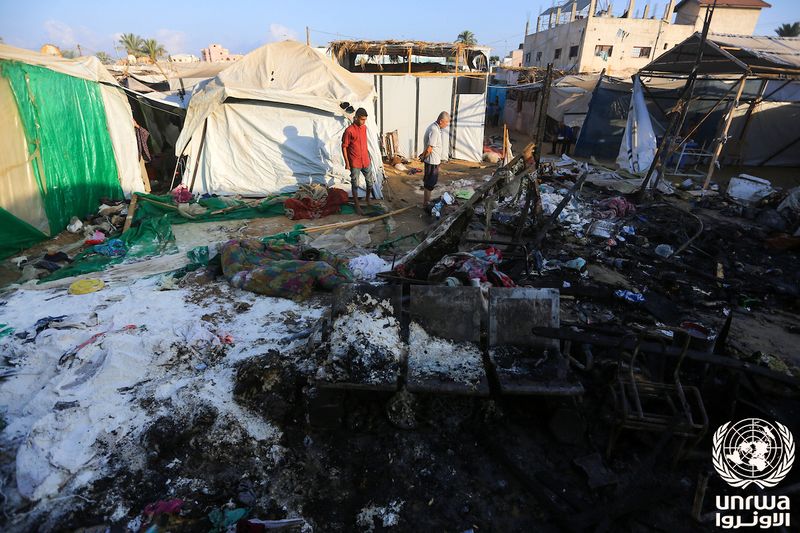
Beyond the two strikes, Anadolu reported a large-scale demolition of homes east of the Maghazi refugee camp in central Gaza, carried out — according to local sources — with explosive-laden boxes dropped by quadcopter drones and detonated remotely. The tactic itself is not new: it was reported earlier this week elsewhere in Gaza. Wednesday’s reporting places it in a new location, east of Maghazi. Anadolu also reported that Israeli military vehicles opened heavy fire toward homes and tents east of Khan Younis, in the south, according to local sources. Both accounts rest on local sourcing relayed by the agency and are presented as such.
The Gaza ceasefire violations death toll, in context
Gaza’s Health Ministry, as reported by Anadolu, puts the Gaza Health Ministry 1,650 killed since ceasefire figure at at least 1,650 Palestinians killed and 5,975 injured in what it records as ceasefire violations since the truce took effect on October 10, 2025. QNA, citing the ministry’s cumulative accounting, reports the totals since October 2023 at 74,702 killed and 176,105 injured. These are the ministry’s figures, attributed to it throughout; Israel disputes aspects of the ministry’s accounting and says its operations target militants, but neither agency report on Wednesday’s incidents carried an Israeli military statement, so no Israeli account of these specific strikes is available to set alongside them.
The arithmetic deserves a moment, because it is the story underneath the daily items. Four hundred days, give or take, separate October 10, 2025 from November 18, 2026. A toll of 1,650 over that span averages a little over four deaths a day, every day, under a ceasefire — not in a single catastrophe that forces a diplomatic reckoning, but in ones and twos: a man near a police station, a driver in Sheikh Ajlin, a boy who dies of Tuesday’s wounds on Wednesday. Attrition at that rate does not produce the political shock of a single large strike. It produces something quieter and, for the agreement’s guarantors, harder to answer: a ceasefire whose violation count is now measured in thousands while its name remains unchanged.
Why this matters
A ceasefire is, in part, a claim about the future: that the killing has stopped, that what follows is politics. Fourteen months on, Gaza’s is being tested less by any single breach than by accumulation. Three dynamics stand out. First, the instrument: the Israeli strikes Gaza November 2026 reporting describes — quadcopters dropping small bombs on vehicles, explosive boxes lowered onto houses — is cheap, precise and deniable in scale, and each of those qualities lowers the threshold for using force on any given day. Second, the geography: Wednesday’s incidents span Deir al-Balah’s city centre, Gaza City’s southwest, Maghazi’s eastern edge and the area east of Khan Younis — a strip-wide pattern, not a single flashpoint on a demarcation line. Third, the audience: every cumulative milestone — 1,500, now 1,650 — is a data point the ceasefire’s guarantors must either act on or absorb, and absorption has so far been the visible pattern. Signal Post News has tracked that pattern before, in its explainer on why Israel strikes Gaza despite the ceasefire and in its one-year assessment of the stalled Trump Gaza plan; Wednesday’s incidents fit the pattern those pieces describe, and extend it.
Context: a truce that froze the war, not the fire
The ceasefire that took effect in October 2025 ended the large-scale war that began in October 2023 — the war whose totals QNA now gives as 74,702 killed and 176,105 injured on the Palestinian side, per the Health Ministry. What it did not produce was quiet. Israeli fire has continued at a low but lethal tempo, and Palestinian deaths under the truce have accumulated month by month; earlier this month, Signal Post News reported Israeli fire killing six people, including a child, in Deir el-Balah. Each side reads the same incidents through its own frame: Palestinian officials and the Health Ministry record violations of the agreement; Israel has generally described its Gaza operations as responses to threats or militant activity, though — to repeat the point, because precision matters — it offered no comment in either agency’s reporting of Wednesday’s strikes. Between those frames sits the population of Gaza, for whom the distinction between war and ceasefire is increasingly an administrative one.
What happens next
Scenario one: attrition continues, and the number does the arguing
The base case is the present, extended: drone strikes, demolitions and gunfire at roughly the recent tempo, the ministry’s since-ceasefire toll climbing by hundreds per quarter, and the agreement surviving in name because no party gains from formally ending it. Under this scenario the next milestones — 1,750, 2,000 — arrive as statistics in agency copy, exactly as 1,650 did.
Scenario two: the guarantors enforce
The ceasefire’s backers could convert monitoring into consequence: public attribution of specific incidents, conditions attached to the agreement’s next phases, or pressure for an accounting of individual strikes such as Wednesday’s. Nothing in Wednesday’s reporting indicates such a step is imminent; the test of this scenario is whether any guarantor names an incident — Deir al-Balah, Sheikh Ajlin — and attaches a cost to it.
Scenario three: a single incident breaks the frame
Attritional systems fail suddenly when one strike kills enough people, or the wrong people, to force a response neither side can defer. A ceasefire that has absorbed 1,650 deaths in ones and twos has demonstrated a high tolerance; it has not demonstrated an unlimited one. The demolitions east of Maghazi and the fire east of Khan Younis matter here too: patterns that push populations and redraw facts on the ground are the kind of slow change that, discovered late, tends to be contested all at once.
For now, the verified record of Wednesday is narrow and should be kept narrow: two men killed in two strikes reported consistently by two agencies, a boy dead of the previous day’s wounds, homes reported demolished east of Maghazi, fire reported east of Khan Younis, and a ministry toll — 1,650 — that turned those individual facts into an indictment of the ceasefire’s name. What the guarantors do with that number is the next story.
Read next: Israeli fire kills six in Gaza, including a child in Deir el-Balah · Why Israel strikes Gaza despite the ceasefire, explained · Trump’s Gaza plan, one year on: a ceasefire stalled
Sources
Sources: Anadolu Agency, “Israeli drone strikes kill 2 Palestinians in Gaza despite ceasefire,” November 18, 2026 (medical sources at Al-Aqsa Martyrs Hospital and Al-Shifa Hospital; witness accounts of the second quadcopter strike in Deir al-Balah; Maghazi demolitions and Khan Younis fire via local sources; Gaza Health Ministry figures of 1,650 killed and 5,975 injured since the ceasefire); Qatar News Agency (QNA), via Fana News, “Three Palestinians Martyred, Several Injured in Israeli Strikes on Gaza,” November 18, 2026 (the Sheikh Ajlin and Deir al-Balah deaths — the same incidents reported by Anadolu, counted once here — the 11-year-old boy who died of wounds from the November 17 Bir al-Najja drone strike, and the cumulative totals since October 2023 of 74,702 killed and 176,105 injured). Casualty figures are those of Gaza’s Health Ministry as reported by the two agencies; neither agency report included an Israeli military comment on Wednesday’s incidents.