War · Gaza · Israel · Ceasefire
At least six Palestinians have been killed in two Israeli drone strikes in the Gaza Strip — four government employees at a checkpoint post in al-Mawasi, in the south, on Wednesday, and two people in a vehicle near the entrance to Maghazi refugee camp, in central Gaza, on Thursday — according to Gaza officials and medics cited by wire reports. The strikes land more than a year into a ceasefire that took effect on October 10, 2025, and they push the reported Palestinian death toll since that truce began past 1,500, on figures published separately by Gaza’s government media office and its health authorities.
Track it live: Israel–Gaza war map and live tracker
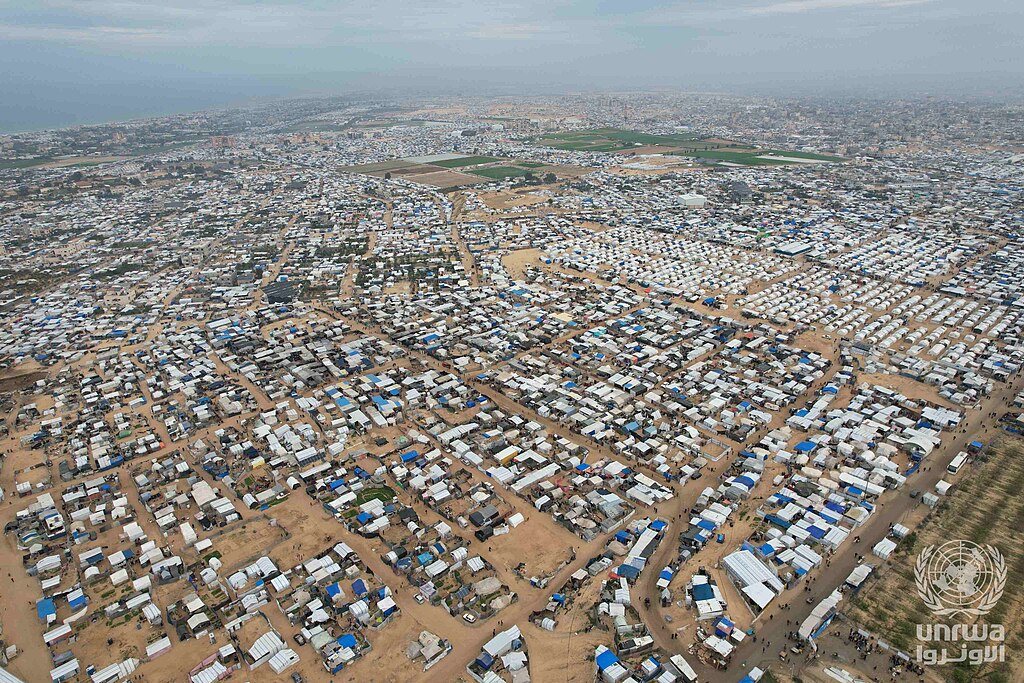
The two strikes were reported a day apart, in different parts of the Strip, and the reporting does not line up perfectly — a fact worth stating plainly. Mawasi was reported on Wednesday, its toll rising from three dead to four; Maghazi was reported on Thursday. Together, Gaza officials say, they killed at least six people. A seventh person was reported killed in a separate Khan Younis strike on Wednesday, according to the Rest of World Report’s October 29 morning edition — relayed here with attribution, not counted among the six above.
What happened at Mawasi: a drone strike on a crossings checkpoint
The deadliest of the two strikes hit a Ministry of Economy post in al-Mawasi, west of Rafah in southern Gaza, according to Anadolu’s wire report of October 29 and AFP reporting citing Gaza Civil Defence spokesman Mahmoud Bassal. An Israeli drone struck the post, killing government employees who staffed it and wounding 30 people, six of them critically, according to those reports. AFP, via Civil Defence spokesman Bassal, initially put the toll at three killed; the figure rose to four when one of the wounded died of his injuries, bringing the Mawasi toll to four dead and 30 wounded.
What the post does matters. According to the reports, the checkpoint monitors trucks entering Gaza through the Kerem Shalom crossing — the Strip’s main commercial goods crossing — and the dead worked for the agriculture, economy and general petroleum and gas authorities. The checkpoint is run by the Crossings and Borders Authority, under the Hamas-run administration in Gaza; the Palestine Chronicle likewise described the dead as government employees killed at the post. On those accounts, the people killed were public-sector staff attached to the machinery that inspects goods entering the enclave.
Israel’s account, as reported, is different. The Israeli military said it had struck “terrorists in the area,” according to the reporting carried by the wires. That formulation — brief, and not accompanied in the reports by names, affiliations or evidence made public — is the extent of the Israeli statement on Mawasi available in the sourcing for this story. The two characterisations of the same strike, civilian inspectors on one side and terrorists on the other, cannot both be verified from the public record as it stands, and Signal Post News presents both as attributed claims rather than as settled fact.
What happened at Maghazi: a vehicle hit at the camp entrance
On Thursday, an Israeli drone strike hit a vehicle near the entrance to Maghazi refugee camp in central Gaza, on Salah al-Din Street, killing two people, according to Anadolu and the Rest of World Report’s October 29 morning edition, which drew on Al Jazeera, France 24, RTÉ and Arab News. The bodies of the two dead were taken to Al-Aqsa Martyrs Hospital, the main hospital serving the central Gaza area, according to those reports.
Reporting on Maghazi is thinner, and this article says so explicitly: no fuller IDF statement specifically addressing the Maghazi vehicle strike was available at the time of publication, and who the two people in the vehicle were, and why it was targeted, had not been established in the reports.
The wider fire: Khan Younis, Deir al-Balah, Gaza City and Jabalia
The two drone strikes did not occur in isolation. Over the same period, Anadolu reported heavy Israeli vehicle fire northeast of Khan Younis and east of Deir al-Balah, artillery fire northeast of Gaza City, and fire directed toward tents east of Jabalia, in the area of the Halawa camp. The Rest of World Report’s morning edition separately reported a seventh person killed in a strike in Khan Younis on Wednesday. Signal Post News has covered this pattern before: in late September, Israeli strikes killed seven people in Gaza City as the ceasefire death toll passed 1,400, and in October, an airstrike on a Gaza City apartment killed five more. Each incident is individually disputed or explained by the side that carried it out; cumulatively, they describe a tempo of fire that has never fully stopped since the truce began.
What each side says
Gaza’s government media office said the Mawasi strike hit civilian public-sector employees whose work was inspecting goods and preventing the entry of drugs and prohibited materials into the Strip, and it urged the ceasefire’s mediators to intervene. That office also published its cumulative count of the ceasefire period: 1,574 Palestinians killed and 5,687 wounded since the ceasefire took effect on October 10, 2025, on its figures.
Gaza’s health authorities publish a separate series, and the two should not be merged. On their figures, 1,568 Palestinians have been killed and 5,649 wounded since the ceasefire, within a total toll since October 7, 2023 of 74,564 killed and 175,770 wounded. The small gap between the series — six deaths, 38 wounded — reflects different offices publishing at different times. Both series, independently maintained, now place ceasefire-period deaths above 1,500.
On the Israeli side, the public record in the sourcing is the military’s statement that it struck “terrorists in the area” in connection with the Mawasi strike, and — as noted — no fuller IDF statement on Maghazi was available. Israel maintains that its operations in Gaza during the ceasefire target militants and military infrastructure, and that Hamas itself violates the truce; Hamas and Gaza officials maintain that the near-daily strikes are themselves the violations. Neither claim is adjudicated by the mediators in public, and neither is settled here.
Why this matters
The Mawasi strike matters beyond its toll because of who the dead are said to be. Crossings staff are part of the administrative machinery a ceasefire is supposed to make possible: goods inspected, fuel allocated, trucks waved through. If, as Gaza’s media office says, the dead were inspectors working that machinery, the strike hit the truce’s own plumbing. If, as the Israeli military says, the target was terrorists in the area, the strike sits inside Israel’s stated doctrine that militant activity forfeits the truce’s protection. The distance between those accounts — with no independent investigation announced for either strike — is the space in which this ceasefire has been eroding for a year.
The numbers tell the same story at a different scale. The health authorities’ ceasefire-period toll of 1,568 dead is roughly 2 percent on top of the 74,564 cumulative dead since October 2023. That arithmetic cuts two ways: the killing has slowed by orders of magnitude from the war’s height, yet a ceasefire under which more than 1,500 people die in a year — several deaths a day, sustained for twelve months — is better described as a lowered level of war than as peace. Signal Post News examined that stalemate on the truce’s first anniversary in our report on a year of the Gaza ceasefire deal.
Background: a ceasefire that took effect on October 10, 2025
The ceasefire took effect on October 10, 2025, ending the most intense phase of a war that began on October 7, 2023. In the year since, it has survived hostage and prisoner disputes, arguments over aid and crossing operations, and a steady drumbeat of strikes and counter-claims, without either side formally renouncing it. Near-daily incidents have become the truce’s normal condition rather than its exception. Mawasi and Maghazi are the latest entries in that ledger, distinguished by the civilian administrative role Gaza officials attribute to the Mawasi dead and by the cumulative toll both strikes now push past another threshold.
What happens next
Three paths are visible, each travelled before in the past year. The first is familiar mediator pressure: Qatar, which has led the mediation channel between Israel and Hamas, presses both sides for explanations and restraint, and the incident is absorbed into the truce’s long list of unresolved disputes — the outcome that has followed most strikes of this scale. The second is escalation by accumulation: a strike senior enough or deadly enough to force a retaliation neither side currently appears to want. The third is formal erosion: one side declares the other in material breach and treats the ceasefire as void — a step both have threatened and neither has taken, because the framework still delivers each side things it values, from crossings operations to international standing.
For the families of the four employees killed at Mawasi and the two people killed at Maghazi, those abstractions resolve into funerals and hospital wards: 30 wounded at Mawasi alone, six of them critical, on the figures reported by AFP and Anadolu. Whether the mediators will treat this week’s strikes as another incident to absorb, or as the point at which enforcement has to change, is the question the next days will answer. Signal Post News will update this story if the IDF issues a fuller statement on either strike, or if the mediators respond publicly to the Gaza appeal.
Sources
- Anadolu Agency wire report (October 29, 2026, 12:32Z) — the Mawasi Ministry of Economy post strike (four killed, 30 wounded, six critically; Kerem Shalom truck monitoring; agriculture, economy and petroleum and gas authority staff; Crossings and Borders Authority), the Maghazi vehicle strike (two killed, bodies to Al-Aqsa Martyrs Hospital), and the wider fire near Khan Younis, Deir al-Balah, Gaza City and Jabalia.
- AFP, via Gaza Civil Defence spokesman Mahmoud Bassal (reported by PressTV) — the initial Mawasi toll of three killed, before a wounded victim died and the toll rose to four.
- Rest of World Report, October 29 morning edition (sourcing Al Jazeera, France 24, RTÉ and Arab News) — the Maghazi strike and the seventh person reported killed in a separate Khan Younis strike on Wednesday.
- Palestine Chronicle — report on the Mawasi strike and the government employees killed at the post.
- Gaza government media office — statement on the Mawasi strike and its cumulative ceasefire-period toll of 1,574 killed and 5,687 wounded since October 10, 2025.
- Gaza health authorities — cumulative series: 1,568 killed and 5,649 wounded since the ceasefire; 74,564 killed and 175,770 wounded since October 7, 2023.