Israel strikes Gaza October 2026
DEIR AL-BALAH, Gaza Strip — An Israeli airstrike hit a civilian vehicle in Al-Hawouz, south of Deir al-Balah, on Sunday morning, killing one Palestinian and wounding at least 10, according to medical sources cited by Anadolu. Officials at Aqsa Martyrs Hospital separately told the Associated Press that one person was killed and at least 11 were wounded. The two reports agree on the death and place the vehicle-strike injury toll in a narrow range.
Israel's military said it targeted a known Hamas militant in the vehicle, according to the AP report carried by The Daily Reflector. That statement establishes Israel's account of the target; it does not by itself identify the person killed or independently verify who else was in the vehicle. Gaza medical officials described the vehicle as civilian. Signal Post News could not independently inspect the strike site.
The Al-Hawouz attack was one part of a wider Sunday pattern. Medical sources said shelling directed at an individual near the Engineers Syndicate headquarters in northwest Gaza City wounded five people, one critically. Eyewitnesses reported artillery fire in eastern Al-Maghazi refugee camp and southern Khan Younis; gunfire from Israeli military vehicles toward southern and eastern Khan Younis and northern Beit Lahia; and naval fire toward the Rafah and Gaza City coastlines. Local sources also reported large-scale demolitions of buildings and facilities in eastern Gaza City. Those incidents were detailed in an Anadolu dispatch carried by Newsbeep.
Why one Sunday matters
The importance of the day is not only the casualty count. In a matter of hours, reports described nearly every instrument in Israel's post-ceasefire campaign: a precision airstrike, artillery, armored-vehicle fire, naval fire and demolition activity. Each has a different stated military function. Together, they show that the ceasefire has reduced neither the geographic spread nor the variety of force used inside Gaza to zero.
Israel says it acts against Hamas members and attempts to rearm, and it describes its strikes as responses to truce violations or imminent threats. Hamas and Gaza authorities call the attacks violations of the agreement and accuse Israel of using enforcement claims to hollow out the truce. Neither framing, on its own, resolves whether a particular target was lawful or whether civilian harm was proportionate. That requires evidence about the target, precautions taken and expected harm in each incident.
The distinction matters because a ceasefire can survive isolated incidents while still failing in practice through cumulative attrition. Near-daily strikes, small-unit fire and demolition work may not produce the visual signature of a resumed full-scale offensive. But for residents near Al-Hawouz, Al-Maghazi, Khan Younis, Beit Lahia, Rafah and eastern Gaza City, the operational map can still feel active across the enclave.
The numbers, and what they do not settle
Gaza's Health Ministry said 1,445 Palestinians had been killed and 5,072 injured by Israeli fire since the U.S.-brokered ceasefire took effect on October 10, 2025, figures cited by both reports. The ministry's totals are treated as generally reliable by U.N. agencies and independent experts, according to the AP account, although they do not distinguish civilians from combatants in the headline count. Israel disputes aspects of Gaza casualty reporting and says Hamas embeds military activity in civilian areas.
At least seven Israeli soldiers have been killed since the ceasefire, according to the AP report. That sharp asymmetry in reported deaths does not answer the legal or military questions surrounding any individual incident. It does, however, describe the distribution of human cost during a period officially defined as a truce.
The ministry says more than 74,000 Palestinians have been killed and more than 175,000 injured since October 2023. On those figures, the 1,445 post-ceasefire deaths equal about 2 percent of the total war death toll. The broader total covers roughly two years of intense warfare; the post-ceasefire figure covers just under one year. That later toll is below the crude whole-war monthly average, but it exceeds the toll of many lower-intensity months and is incompatible with an ordinary understanding of quiet.
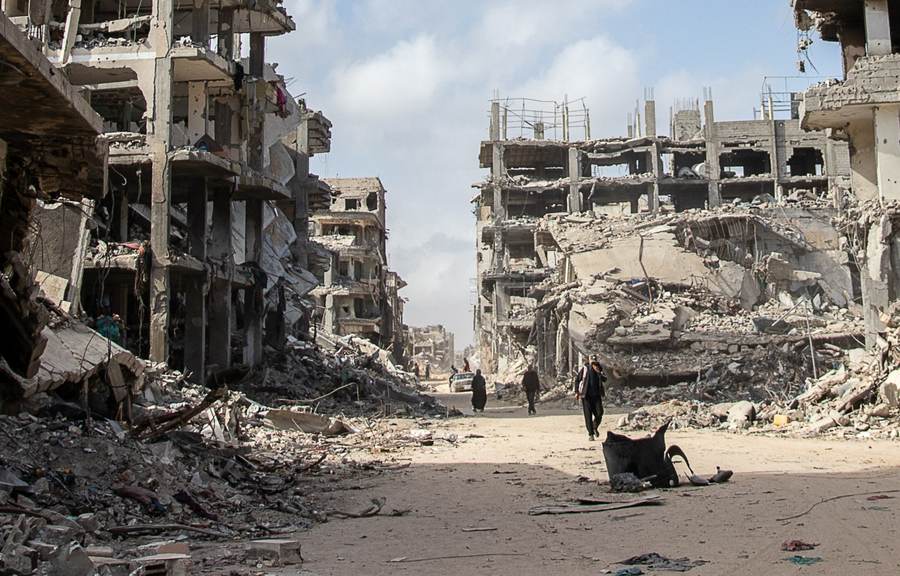
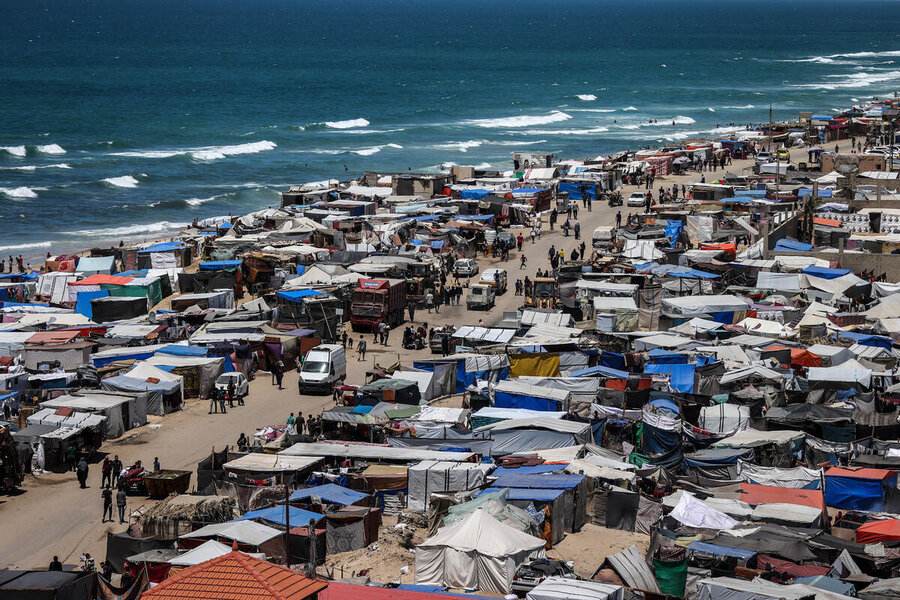
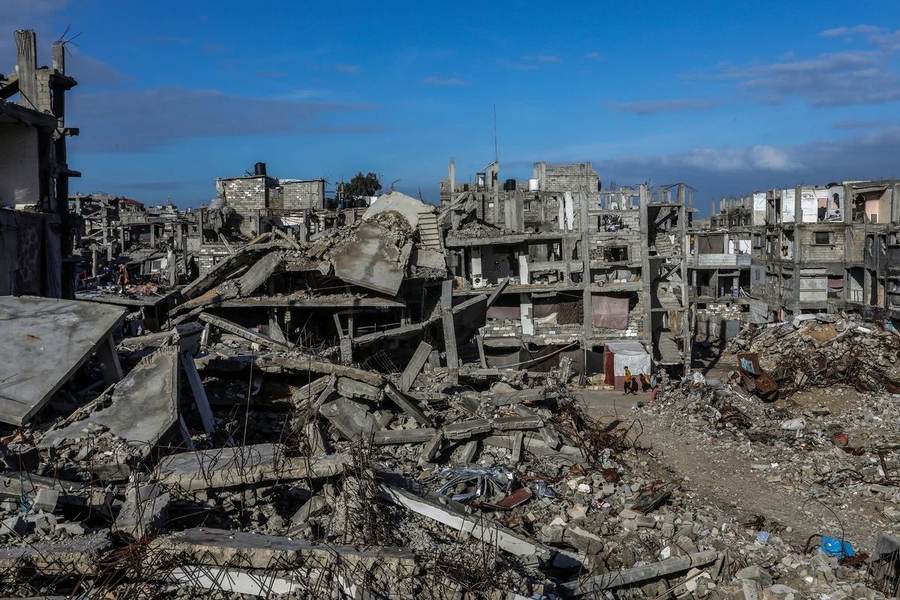
Anadolu also cited Gaza authorities' estimate that about 90 percent of the enclave's infrastructure has been destroyed. Such system-wide estimates depend on definitions — whether partial damage counts, and whether the unit is a building, road segment or service network. The exact percentage should therefore be read as an estimate. The visible strategic fact is less disputed: housing, utilities, roads, hospitals and public facilities have suffered damage at a scale that limits where displaced people can safely return.
Demolitions and the geography of control
The least dramatic report from Sunday may be the most consequential: large-scale demolitions in eastern Gaza City. An airstrike is a moment. Demolition changes the terrain. If buildings and facilities are being systematically razed near lines held by Israeli forces, the activity may signal a wider buffer zone, an effort to deny Hamas cover, preparation for a different security perimeter, or some combination of those goals.
Israel argues that cleared areas can protect troops and border communities by removing tunnels, weapons positions and firing cover. Critics say broad demolition can prevent civilian return and turn a temporary military deployment into lasting territorial control. The legal assessment depends on military necessity and the status of each structure, but the political effect can arrive before a court or investigation: every cleared block narrows the physical space available for reconstruction and makes phase-two withdrawal more difficult.
That is why the pace and location of demolition matter more than a single daily count. A widening belt of destroyed structures would suggest the ceasefire is freezing a new map rather than restoring the old one. A slowdown paired with verified withdrawals would point in the opposite direction.
What naval fire on two coastlines implies
Reports that Israeli naval vessels fired toward both Rafah in the south and Gaza City in the north point to pressure along two separated sections of coast. Naval fire can be used to enforce maritime exclusion zones, suppress suspected activity near shore or support land operations. It can also make fishing and coastal movement more dangerous even when no landing operation is under way.
For Gaza's civilian economy, the sea is not an abstract front. Fishing is a source of food and income, and coastal roads and shelter areas hold displaced families. Repeated fire can keep those spaces functionally closed. For Israel, the same coastline is a potential route for smuggling, infiltration or weapons movement. The tension between those security claims and civilian access will remain one of the least visible tests of whether the truce changes daily life.
How the ceasefire reached this point
The October 10, 2025 agreement stopped the prior phase of large-scale fighting but left the hardest questions for phase two: Hamas's disarmament, the scope and sequence of Israeli withdrawal, a transitional governing authority and the role of a multinational force. Those negotiations stalled. In the gap, both sides have increasingly described their own actions as responses to the other's violations.
Saturday's strike on a Gaza City apartment illustrated the pattern. Gaza officials said five people, including four women, were killed. The Israeli military said it targeted Ali al-Amoudi, identified as a senior Hamas political-office figure, and said the outcome remained under review. Hamas denied violating the truce and accused Israel of undermining it. Read Signal Post News's report on Saturday's apartment strike and the explainer on the rival ceasefire claims.
The central diplomatic problem is circular. Israel says it cannot withdraw fully while Hamas retains weapons and rebuilds military capacity. Hamas says it will not disarm while Israeli forces remain and strikes continue. Mediators can propose sequencing, monitors and guarantees, but Sunday shows why implementation is harder than drafting: each reported incident becomes evidence for one side's claim that the other cannot be trusted to move first.
Who gains, who loses
Israel may gain tactical freedom by striking individuals it identifies as militants, keeping pressure on suspected rearmament networks and reshaping areas around its forces. The cost is strategic: every civilian casualty and every demolition deepens international skepticism that the truce is moving toward withdrawal and reconstruction. If attacks continue without visible phase-two progress, allies may find it harder to defend the arrangement as a functioning ceasefire.
Hamas can use continued Israeli operations to argue that disarmament would leave Palestinians exposed. That argument may strengthen its resistance narrative, but continued militarization can also invite further strikes and delay reconstruction. Gaza's civilian population bears the immediate burden either way: death and injury, movement restrictions, lost homes, disrupted fishing, and uncertainty about whether an area deemed safe today will remain so tomorrow.
Mediators also lose leverage when violations become routine. A ceasefire is not only a legal text; it is an expectation that restraint will be rewarded. If one side believes it can strike without diplomatic consequence and the other believes it can rearm without enforcement, the agreement risks becoming a label attached to persistent low-level war.
What happens next
Scenario one: continued attrition
The most likely near-term path is more of the same: targeted strikes, intermittent fire, demolitions and claims of reciprocal violations without a formal return to full-scale war. This can persist because neither side has to declare the ceasefire dead. It is also dangerous because cumulative casualties and territorial changes can eventually make phase two politically impossible.
Scenario two: renewed negotiating pressure
A concentrated wave of incidents could push U.S. and regional mediators to demand clearer rules: verified target notifications, geographic limits on demolition, restored coastal access, reciprocal monitoring and a dated withdrawal sequence. Such measures would not solve disarmament, but they could reduce the space for competing claims about what the agreement permits.
Scenario three: a trigger ends the ambiguity
A high-casualty strike, the death of a senior leader, a major attack on Israeli troops or evidence of large-scale rearmament could move the conflict back toward open war. The danger is not that Sunday's events alone compel that outcome. It is that a wide operational footprint creates more opportunities for miscalculation.
The indicators to watch are concrete: whether demolitions in eastern Gaza City accelerate; whether naval activity restricts the Rafah and Gaza City coasts for days rather than hours; whether Israel identifies the person it says was targeted in Al-Hawouz; whether casualty accounts converge; and whether mediators announce movement on phase two. Without progress on those measures, the word “ceasefire” will continue to describe diplomacy more accurately than conditions on the ground.
Sources and reporting notes
- Anadolu via Newsbeep, October 4 — Al-Hawouz casualties, Engineers Syndicate shelling, artillery, armored fire, naval fire and demolitions
- Associated Press via The Daily Reflector, October 4 — Aqsa Martyrs Hospital casualty account and Israeli military statement
Verification note: Two independent reports confirm one death and at least 10 injuries in the vehicle strike. The broader incidents are attributed to medical, eyewitness and local sources quoted by Anadolu. Israel's identification of the vehicle target as a known Hamas militant is presented as the military's statement, not as an independently established fact. All photographs are dated file images and do not depict Sunday's events.