War · Middle East · Israel / West Bank
Palestinians returned to damaged homes in Hebron on Monday after Israeli forces withdrew at the end of a 10-day operation that the UN says displaced more than 3,000 people, as schools and universities reopened for the first time since the siege began.
Track it live: Israel–Gaza war map, live — Signal Post News tracker · Live war tracker
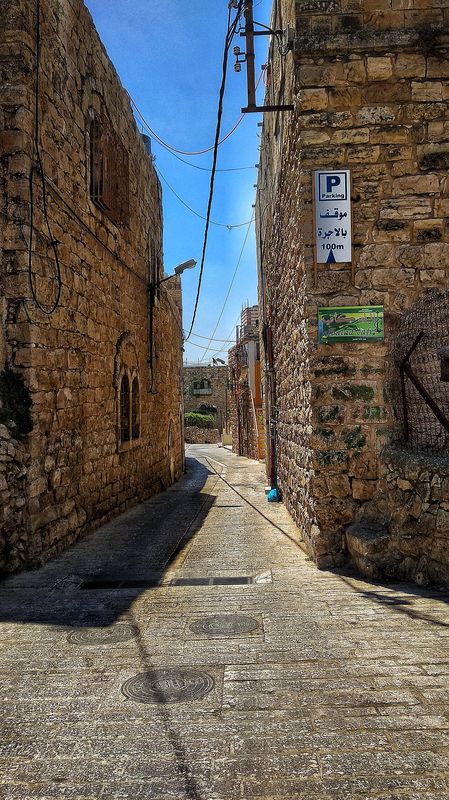
Israeli forces withdraw from Hebron — after ten days of siege, searches and demolitions, the Israeli military concluded its operation in the West Bank’s largest city on Monday, and Palestinians who had been forced from their homes began returning to buildings many found damaged, ransacked or marked as searched. Reuters reported that Palestinians returned to damaged homes in Hebron on Monday after the military concluded a 10-day operation that the United Nations says displaced more than 3,000 people. The withdrawal closes the operation Prime Minister Benjamin Netanyahu ordered after two Palestinian gunmen killed two Israeli soldiers at a Hebron checkpoint on October 23 — the attack Signal Post News covered in its report on the Hebron checkpoint shooting and the West Bank closure that followed. What residents came back to, and what the ten days have changed, is now the story: a city reopening its schools while families pick through broken furniture, and officials on every side publishing numbers that do not quite match.
What happened on Monday
The sequence of Monday’s withdrawal was described in pieces by officials on both sides, and the pieces broadly agree. An unnamed Israeli military official said soldiers withdrew on Monday after thorough searches of multiple locations, detaining and questioning suspects, and locating and confiscating four weapons, several vests and additional military equipment. The military said counterterrorism operations continue across the West Bank — territory it referred to, in AFP’s reporting, as Judea and Samaria. On the Palestinian side, Hebron Governor Khaled Dudin said Palestinian security forces have taken full control following the withdrawal and that authorities are arranging families’ safe return, according to Al Jazeera. Mayor Youssef al-Jaabari said the municipality was informed at 6 a.m. that the operation was ending. “For the first time in 10 days, schoolchildren are going to their schools,” the mayor said, with five universities that had been closed also reopening. On the streets, Reuters reported, a bulldozer cleared rubble and earth barricades, while Palestinian civil defence workers and security forces cordoned off a damaged building. The return, in other words, was not a single moment but a handover: Israeli forces out, Palestinian security forces in control, municipal crews clearing the physical traces of the siege, and families walking back into homes they had not seen for ten days.
The operation those families were returning from began on October 24, the day after the checkpoint attack. Signal Post News reported its first phase in the October 24 account of an operation that displaced some 1,200 people as it began, and its punitive peak on Friday, October 30, when the military demolished the two assailants’ family homes — the demolitions covered in the report on how Israel demolished the gunmen’s homes as displacement passed 3,000. Both gunmen were killed at the scene of the October 23 attack; several reports also counted three other soldiers wounded. Monday’s withdrawal ends the operation as a siege. It does not, on the military’s own account, end Israeli operations in the West Bank.
‘They blew up the door’: returning families’ accounts
What the return looked like inside individual homes comes from the residents themselves, speaking to Reuters, AFP and Al Jazeera on Monday, and their accounts share a pattern: doors forced, rooms searched, belongings scattered. Tamara Obeid told Reuters she returned to broken furniture and her children’s toys scattered across the home, and she described the raid that began the family’s displacement on October 23: “They blew up the door and went in… They handcuffed my husband and took him outside.” AFP reported that returning residents found many buildings spray-painted with black X marks indicating they had been cleared and searched. Muhannad al-Tamimi returned to a home that soldiers had occupied to find furniture and clothing strewn, mattresses overturned and a child’s bicycle broken. City council member Reem al-Sharif told AFP the operation covered two neighbourhoods and that municipal workers were helping residents clean up.
Al Jazeera’s feature reporting added a longer account of the same arc. Nour al-Natsha, of the al-Jalada neighbourhood, was given 20 minutes to leave on October 24, taking only money, gold and documents. He returned on Monday to doors standing wide open and a house turned upside down, with belongings missing — including his young daughter’s pet bird. Other returning residents told Al Jazeera that soldiers had wrecked the interiors of homes used as military posts and that money and belongings were taken. Those are residents’ accounts, reported here as they were given to Al Jazeera; the Israeli military’s Monday account described searches, detentions and weapons seizures, and did not address the residents’ claims about property. What is not in dispute is the physical record residents described consistently across three news organisations: forced doors, searched rooms, and homes that families now have to make habitable again before anything resembling normal life resumes.
The numbers, and why they differ
The withdrawal produced a fresh set of figures, and — as throughout this operation — the honest way to present them is as a series, counted by different authorities measuring different things. The displacement count grew with the operation itself: about 1,200 people on its first day, October 24; more than 3,000 displaced in the United Nations’ formulation by the time of Friday’s demolitions; and, in the Hebron Governorate’s figures reported by Al Jazeera and WAFA, 537 families — more than 3,300 people — displaced or otherwise affected, concentrated in the Al-Jalda and Ein Deir Baha areas. The governorate counted 15 homes and other structures demolished. Local officials have said other homes, shops, roads and factories were also demolished beyond the two assailants’ houses demolished on Friday, with the scale of that wider demolition unclear. The shop closures carry two different counters, and they should not be merged: the governorate’s figures put at least 317 shops forced to close, while the municipality has put closed businesses at 327. Behind all of these sit the closures themselves: checkpoint closures during the operation affected the wider governorate of about 800,000 people, and schools and five universities stayed shut for the full ten days until Monday’s reopening. The differences between the counts are not necessarily contradictions. A governorate counting displaced families, a UN agency describing people forced from their homes, and a municipality counting shuttered businesses are measuring three different harms from the same ten days.
Israel’s case
Israel’s stated case begins where the operation began: on October 23, two Palestinian gunmen killed two Israeli soldiers at a Hebron checkpoint, and both assailants were killed. Prime Minister Netanyahu ordered the operation that followed, and the military presents it as a counterterrorism response to that attack and to the threat of further attacks planned from the city. The evidence the military offered on Monday was specific: thorough searches of multiple locations, suspects detained and questioned, and four weapons, several vests and additional military equipment located and confiscated. The demolition of the two assailants’ homes on Friday sits inside Israel’s long-standing deterrence argument — that a prospective attacker who knows his family’s home will be demolished may be deterred, and that the policy therefore protects soldiers at checkpoints and civilians beyond them. The military’s closing position was equally explicit: the Hebron operation has concluded, but counterterrorism operations continue across the West Bank. On Israel’s account, Monday was not a concession but a completion — objectives searched, weapons seized, suspects questioned, and the force withdrawn because the mission, as the military defines it, was done.
The critics’ case
Critics of the operation describe the same ten days in opposite terms. Ramallah-based researcher Ibrahim Rabaia told Al Jazeera the operation was part of a collective-punishment system, and he identified what he sees as its novelty: a shift toward targeting entire urban neighbourhoods, rather than only attackers’ families or refugee camps. That criticism echoes the concern the UN human rights chief, Volker Türk, raised earlier during the operation phase, when he expressed “grave concerns of unnecessary and disproportionate use of force” — an earlier statement, made while the siege was still under way, that Palestinian officials and rights advocates have continued to cite as the families return. The critics’ argument rests on scale: whatever the operation’s target, its effects fell on 537 families, on hundreds of closed shops, on schoolchildren kept home for ten days and on a governorate of some 800,000 people living behind closed checkpoints. Residents’ accounts of wrecked interiors and missing belongings, reported by Al Jazeera, feed the same case. Israel disputes the collective-punishment characterisation of its operations, and the two cases rest on different premises — one on deterrence and prevention after a lethal attack, the other on the rights of the far larger number of people who carried out no attack at all.
Why this matters
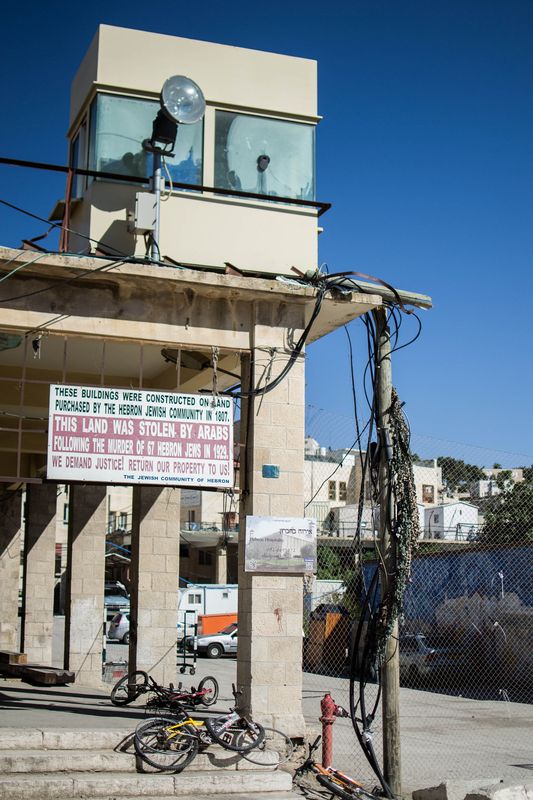
Three things make Monday’s withdrawal matter beyond Hebron. The first is precedent. Large-scale operations that empty urban areas have, in the recent West Bank pattern, been concentrated in the northern refugee camps — Jenin, Tulkarem and Nur Shams — where displacement announced as temporary has in past operations lasted far longer than the operations themselves. Hebron is not a camp; it is the West Bank’s largest city, and an operation that displaced more than 3,300 people from ordinary city neighbourhoods, searched homes street by street and marked cleared buildings with painted X’s tests whether the camp model is becoming a city model. Rabaia’s criticism is, at its core, a claim about exactly that shift, and Monday’s withdrawal will be measured against it: a ten-day operation that ends with families back in their homes is a different precedent from one whose displacement hardens into permanence. The second is Hebron itself. No other West Bank city is divided as Hebron is, with an Israeli settler presence and military checkpoints embedded in its old city under arrangements that long predate this operation — which means any large operation there reverberates through the most sensitive geography in the territory, and any withdrawal has to be policed, as Monday’s was, by a Palestinian security handover in the areas Israel vacated. The third is the difference between return and restoration. Most displaced families have a home to return to, however damaged. The families of the two assailants do not: their homes were demolished on Friday, and local officials say other homes and structures were demolished too, on a scale not yet established. For those families, Monday changed nothing except the identity of the authority controlling the street outside the rubble. A withdrawal can be complete while its consequences are not, and Hebron’s cleanup — bulldozers clearing barricades, municipal workers helping residents, in AFP’s account — is the beginning of that longer reckoning, not its end.
What happens next
The immediate work is assessment. Municipal and governorate teams that spent Monday clearing rubble and cordoning damaged buildings now have to establish the full damage count — how many of the 15 demolished structures the governorate counted are homes, what the wider demolitions described by local officials actually comprise, and what the searched-and-marked homes need before they are habitable. Watch, next, the checkpoints and entrances: Governor Dudin said Palestinian security forces have taken full control and are arranging families’ safe return, but whether every closure that affected the governorate’s 800,000 people fully reopens — and stays open — is the simplest daily test of whether the siege has genuinely ended or merely loosened. Compensation and legal claims follow from the damage assessments: residents who told reporters of wrecked interiors and missing property, and families whose homes were demolished, will press claims through Palestinian authorities and the courts that have historically been the venue for contesting demolitions, and the numbers those processes produce will either confirm or revise the figures published this week. Beyond Hebron, the military has said its counterterrorism operations across the West Bank continue, so further raids elsewhere in the territory would be consistent with its stated position rather than a departure from it. And in Jerusalem, the operation’s ten days — ordered by Netanyahu after a lethal checkpoint attack, ended with a withdrawal and a weapons haul the military can point to, and shadowed throughout by international criticism — now form part of the background to Israel’s post-election coalition talks, in which West Bank policy and the government’s security record are live questions. Hebron’s schoolchildren went back to their classrooms on Monday. Whether the city’s return holds is the next story.
Sources
- Reuters, “Displaced Palestinians return to damaged Hebron quarter as Israeli troops withdraw,” November 2, 2026 — reuters.com (the withdrawal and return to damaged homes; the UN’s figure of more than 3,000 displaced; Tamara Obeid’s account; the bulldozer clearing rubble and barricades; civil defence workers and security forces cordoning a damaged building).
- Al Jazeera, reporting of November 2, 2026 (Governor Khaled Dudin on Palestinian security forces taking full control and arranging families’ safe return; Mayor Youssef al-Jaabari on the 6 a.m. notification, schoolchildren returning and five universities reopening; the Hebron Governorate figures of 537 families and more than 3,300 people, 15 homes and structures demolished and at least 317 shops closed, reported with WAFA; Nour al-Natsha’s account; residents’ accounts of wrecked interiors and missing belongings; Ibrahim Rabaia’s analysis).
- AFP, reporting of November 2, 2026 (the unnamed Israeli military official on the withdrawal, searches, detentions and the confiscation of four weapons, vests and equipment; the military on continuing counterterrorism operations; the black X marks on cleared buildings; Muhannad al-Tamimi’s account; council member Reem al-Sharif on the two neighbourhoods and the municipal cleanup).
- WAFA and the Hebron Governorate, figures as reported November 2, 2026 (537 families — more than 3,300 people — displaced or otherwise affected in Al-Jalda and Ein Deir Baha; the municipality’s separate count of 327 closed businesses; checkpoint closures affecting a governorate of about 800,000 people).
- Signal Post News, prior coverage: the October 23 checkpoint attack, the October 24 displacement and the October 30 demolitions.
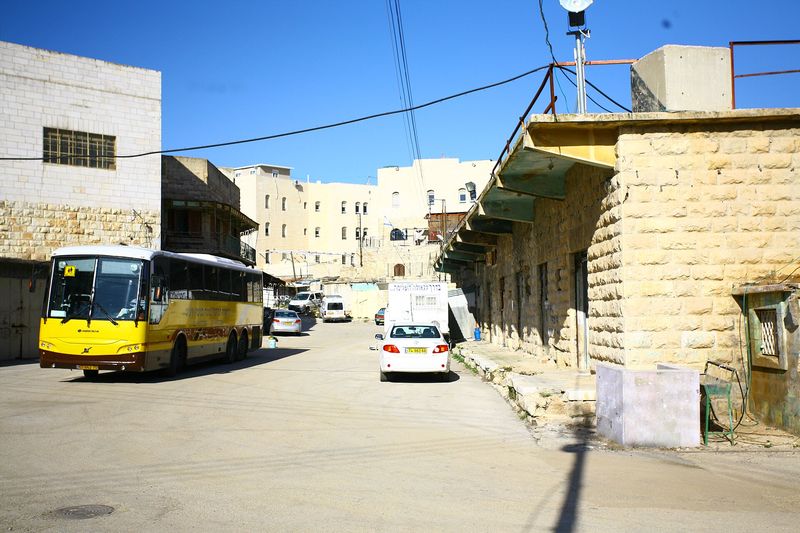
- Photos: Mohammad Nabeel07 (CC BY-SA 4.0), Travel 2 Palestine (CC BY) and Sete Ruiz (CC BY 3.0), via Wikimedia Commons, as credited in the captions. All three are file photographs of Hebron — its old city, the Avraham Avinu neighbourhood and the Tel Rumeida / Shuhada Street area — and none is a photograph of the October–November 2026 events reported here.