War · Middle East · Israel / West Bank
Israeli forces demolished the Hebron family homes of the two gunmen who killed two soldiers at an October 23 checkpoint on Friday, as a week-long operation that has forced more than 3,000 Palestinians from their homes entered its second week with the city's entrances mostly closed.
Track it live: Israel–Gaza war map, live — Signal Post News tracker · Live war tracker
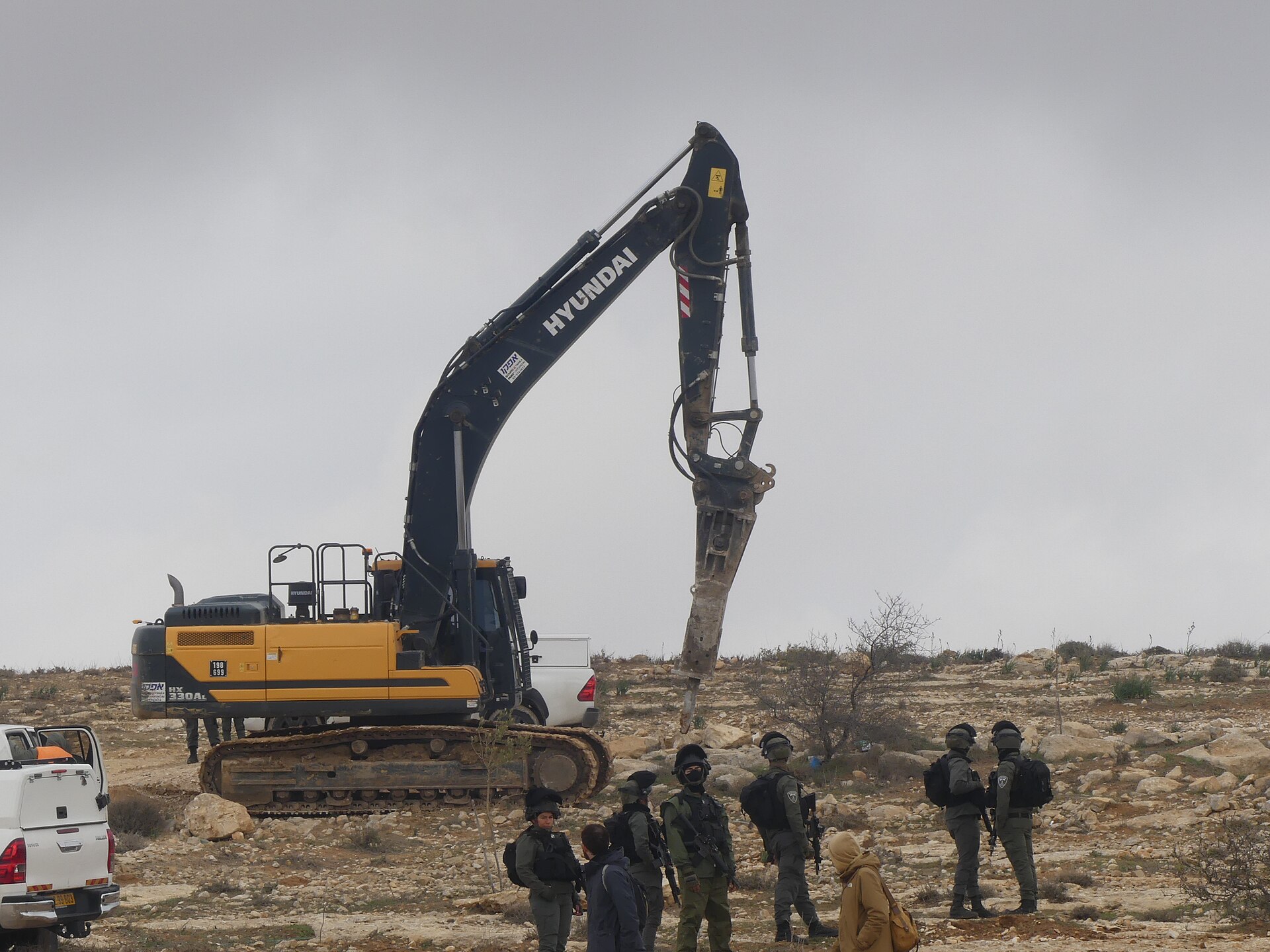
Israel demolishes homes in Hebron — on Friday, October 30, the Israeli military demolished the Hebron homes of the two Palestinian gunmen who killed two Israeli soldiers at a checkpoint on October 23, carrying out the punitive step that the operation launched the following day had announced. The demolitions, reported by Reuters and announced by the Israeli military in its own statement, came as the operation entered its second week, with Reuters putting the number of Palestinians forcibly displaced by the campaign at over 3,000 and most of the entrances to the West Bank’s largest city still closed. The two gunmen were killed at the scene of the October 23 attack; Friday’s demolitions fell instead on the homes their families had lived in. Signal Post News has followed the sequence from the October 23 checkpoint attack that killed the two soldiers, through the October 24 operation that displaced some 1,200 people in its first phase, to a lockdown that has now emptied whole neighbourhoods.
What happened on Friday
The military said its forces demolished the homes of the two gunmen in Hebron on Friday, a step Israel presents as part of its response to the checkpoint attack. According to local residents cited by Reuters, the homes had been occupied by the gunmen’s wives and children before residents were forced out over the past week as the operation expanded through the city’s neighbourhoods. The families were therefore not inside when the buildings came down on Friday; they were among the thousands who had already left their homes under the operation’s orders and closures. Reuters also reported that, according to local officials, further demolitions of homes, shops, roads and factories have taken place in Hebron since October 23, with the exact scale of that wider destruction unclear. What is documented is the pattern of the operation itself: forces still working through the city, entrances mostly closed, and access — including medical access — restricted in ways residents and aid agencies say are shaping daily life as much as the demolitions themselves.
How many Palestinians have been displaced in Hebron? The numbers, and why they differ
“How many Palestinians displaced Hebron” is answered by a series of counts rather than one number — counts made by different counters, on different days, measuring different things. Presented in order, they describe an operation that kept growing. On October 24, the operation’s first full day, the figure reported was about 1,200 people displaced from Hebron city neighbourhoods. By October 24–25, Defence Minister Israel Katz put the number forced out at about 2,000, while Hebron Mayor Yousef al-Ja’bari put it at 2,200, according to Al Jazeera. On Monday, Governor Khaled Dudin raised the total to 3,171 people across the governorate — 488 families, 3,043 of them within Hebron city itself. On Thursday, the governor’s figure, carried by the WAFA news agency, stood at 3,361 people from 537 families forced from their homes. Alongside those, the Hebron Municipality counted about 4,969 people from 780 families as affected by the operation, a broader measure that includes residents still in their homes but living under siege conditions. Reuters, reporting Friday’s demolitions, used its own formulation — over 3,000 forcibly displaced — while UNRWA’s Roland Friedrich put the total at nearly 5,000 displaced. These are not rival claims to be averaged or merged. The governor counts people forced out; the municipality counts everyone affected, including the besieged; the counters work to different boundaries, city against governorate, on different days of an operation that was still expanding between each count. The honest summary is the series itself: roughly 1,200 on day one, and more than 3,000 forced out — by the narrowest official definition — a week later.
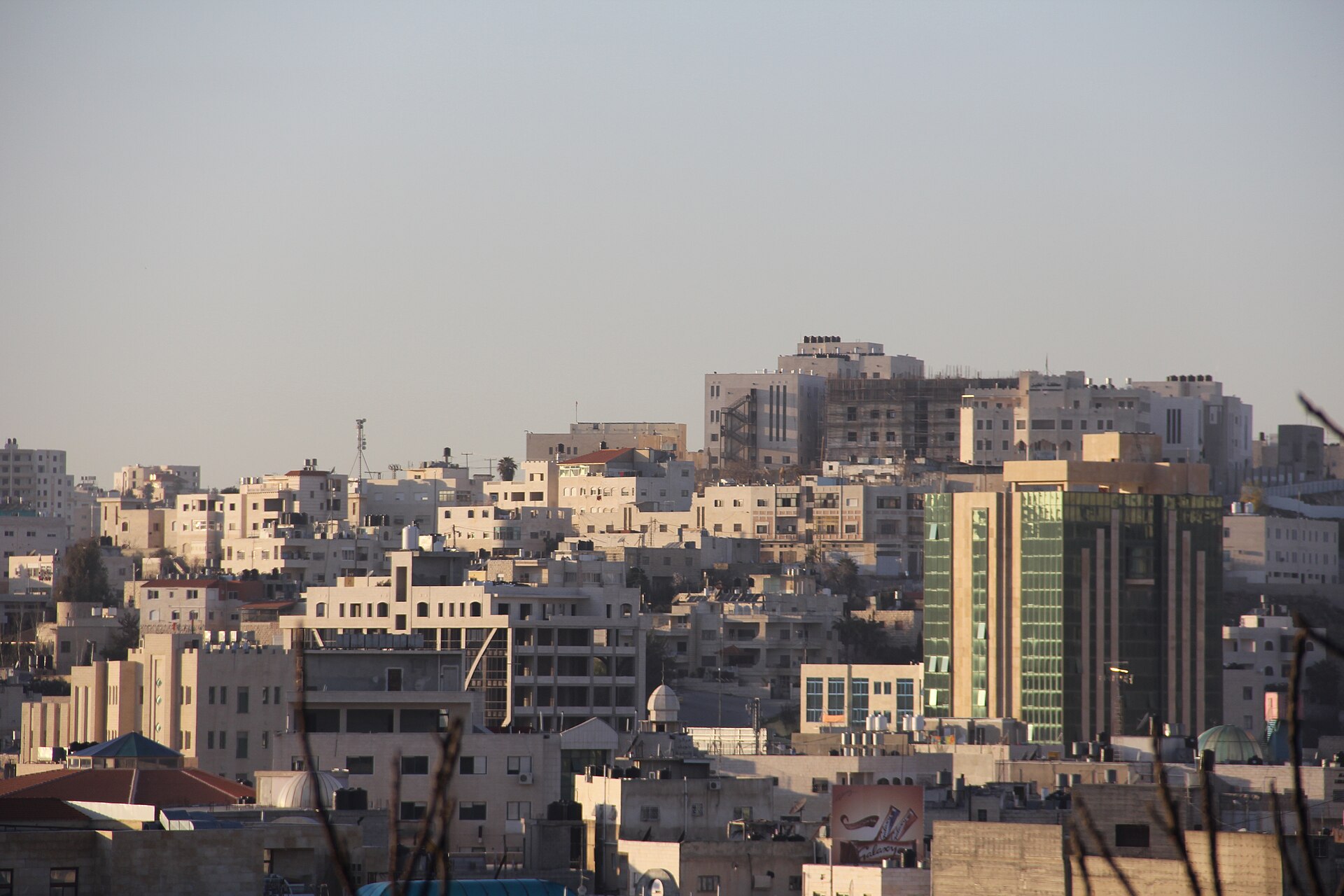
Who the displaced are
The governor’s Thursday breakdown, reported by WAFA, gives the displaced a composition as well as a count. Among the 3,361 people forced from their homes were 232 infants, 326 older people, 147 pregnant or breastfeeding women and 213 people with chronic illnesses — groups for whom a week away from home, medication and routine care carries risks that a headline number hides. The displacement sits inside a much wider disruption. Officials said about 262,000 students across 589 schools in the governorate have had their education disrupted, with schools moved to remote learning. Economic losses from the closure and the operation were estimated by officials at 10 to 12 million shekels a day — roughly $3.2 million to $3.9 million — as shops, workshops and factories stood shut or cut off. The Palestinian Prisoners’ Society said 110 Palestinians were detained in the governorate between Friday and Wednesday. And the demolitions were not confined to Hebron city: on Thursday, WAFA reported, forces demolished a house in the town of Tarqumiya, west of Hebron — the home of Fadi Abu Hjeisheh and his family of seven. Most of the displaced, the UN says, are staying with relatives rather than in shelters, which spreads the cost across family networks that are themselves living under the same closures.
The UN response: ‘grave concerns,’ and a warning about erasure
The United Nations’ human rights chief, Volker Türk, said the displacement in Hebron raised “grave concerns of unnecessary and disproportionate use of force.” He went further: “Threats to empty and erase entire neighbourhoods also raise serious concerns of ethnic cleansing.” The UN humanitarian office, OCHA, said Israeli forces were still operating in the city, blocking access and disrupting livelihoods, education and healthcare, noted that most displaced people were staying with relatives, and called for further displacement and demolitions to be prevented. UNRWA, the UN agency for Palestine refugees, issued its own warning through Roland Friedrich, who described the operation in collective-punishment terms and pointed to the precedent set in the northern West Bank: more than 34,000 Palestine refugees from the Jenin, Tulkarem and Nur Shams camps remain displaced more than a year after the operation Israel launched there in early 2025. That precedent is the context in which every new Hebron figure is now read — displacement first announced as temporary that, in the north, has not yet been reversed.
Israel’s case
Israel’s stated case begins with October 23: two of its soldiers were killed at a checkpoint by two Palestinian gunmen, who were also killed. The operation in Hebron, the military says, is a response to that attack and to the threat of further attacks from the city. In its Friday statement announcing the demolitions, the military said it would “continue to operate proactively and offensively” to thwart attacks and “protect residents in the area.” Defence Minister Katz, speaking earlier in the operation, set the condition for any return in remarks reported by Kan and carried by Al Jazeera: the displaced “will not be allowed to return to their neighbourhood until we’ve finished dealing with all the Hamas issues in Hebron.” Punitive home demolition specifically is defended by Israel as deterrence: the argument, made by Israeli governments for decades, is that a prospective attacker who knows his family’s home will be demolished may be deterred, and that the policy therefore saves lives — the lives of soldiers at checkpoints and of civilians beyond them. On that view, the demolitions are not punishment of the families but a preventive measure aimed at the next attack, and the wider operation is a security necessity in a city the military describes as a Hamas stronghold.
The Palestinian officials’ case
Palestinian officials reject that framing entirely. Their charge is collective punishment: that wives, children, infants and elderly parents who committed no attack are being made homeless for the acts of relatives, and that emptying neighbourhoods goes far beyond any response to a single shooting. Governor Dudin and other Palestinian officials have also made a political accusation, reported by Reuters: that Prime Minister Benjamin Netanyahu is using the operation to build political support during Israel’s election period. That is an accusation, attributed here to Palestinian officials via Reuters, and Israel disputes such characterisations of its motives. Palestinian officials and the UN agencies cited above argue the operation’s real-world effect — thousands displaced, a city sealed, schools and commerce shut — falls on the population as a whole, whatever its stated target. The two cases cannot both be wholly right, and they rest on different premises: Israel’s on deterrence and prevention, its critics’ on the rights of people who were not the attackers.
Kafr Malik and the olive harvest
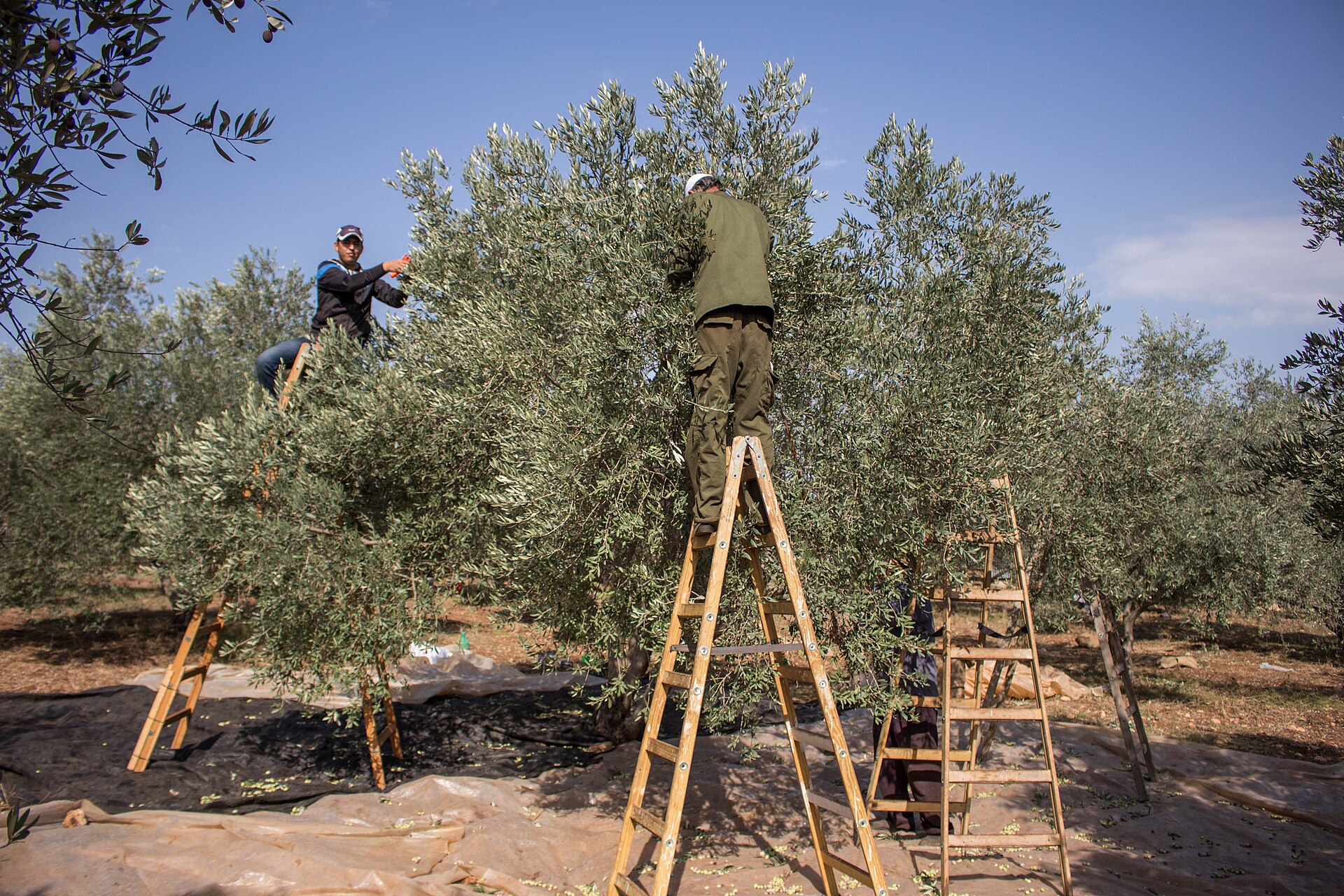
The Hebron operation is not the week’s only West Bank flashpoint. On Friday, near the village of Kafr Malik, outside Ramallah, Israeli settlers confronted Palestinians during the olive harvest — and here, too, there are two accounts, and this report settles neither. Reuters witnesses documented settlers shoving Palestinians and blocking the olive harvest while soldiers were present; the Reuters witness present did not observe Palestinians throwing stones. The Israeli military said it had responded to settler reports of Palestinian stone-throwing and arrested two Palestinians, and it did not address the reports of settler attacks. Both accounts are on the record; they conflict on who initiated the violence. The incident fits a documented pattern for this harvest: the Israeli human rights group Yesh Din counted at least 135 physical attacks on the olive harvest as of October 23. The harvest, which runs from late September to November, is the economic and cultural centre of the West Bank’s agricultural year, and its disruption has been a running story of this autumn — including the detention of New York City comptroller Brad Lander at a harvest event that Signal Post News covered in its report on how he was detained by the IDF during the West Bank olive harvest.
Why this matters
Punitive demolition is one of the oldest and most contested tools in Israel’s West Bank policy. Its legal roots lie in the emergency regulations of the British Mandate period, and Israel has used it since 1967. What makes Friday’s demolitions significant is not only their target but the argument about whether the policy works at all — an argument on which the evidence is genuinely split. A 2005 internal IDF review concluded that attacks increased after demolitions and recommended ending the practice. A separate study by researchers at Northwestern University and the Hebrew University, examining a different period, found that prompt punitive demolitions were followed by a short-term drop in suicide attacks. Both findings are real; they cover different eras, different kinds of attack and different methods, and each side of the debate cites the study that supports it. The legal argument is equally divided. Critics, including UN officials, cite the Fourth Geneva Convention’s prohibition on collective punishment and its ban on destroying property except where absolutely necessary for military operations. Israel disputes that characterisation of the policy, arguing demolitions are a lawful deterrent measure rather than punishment. Beneath both debates sits the counting dispute documented above, and it matters more than it may appear: whether the people of Hebron’s emptied neighbourhoods are described as evacuated or as displaced, and whether their absence is framed as days or as open-ended, shapes what return will mean when — and if — it is permitted. Katz’s condition ties return to an objective — “all the Hamas issues in Hebron” — whose completion the military itself will judge, while the northern precedent, 34,000 camp residents still displaced after more than a year, shows how a temporary absence can harden. Finally, there is Hebron itself: the West Bank’s most populous governorate, some 800,000 people, its commercial heart. A week-long operation there is not a local raid; it is an event in the life of the territory’s largest population centre, and its aftershocks — educational, economic, political — will outlast the operation itself.
What happens next
Return for the displaced remains, on Katz’s stated terms, conditional on the military’s aims being completed, and the military’s Friday language — that it will continue to operate “proactively and offensively” — signals that further action, potentially including further demolitions, should be expected rather than ruled out. Watch for four things: any court challenges to the demolitions or the closures, which have historically been the main legal venue in which the policy is contested; OCHA’s updated displacement counts, which will show whether the governor’s 3,361 continues to climb; the olive harvest, which ends in November and with it the season in which confrontations like Kafr Malik’s recur; and any change in the status of the city’s entrances, the simplest daily measure of whether the operation is winding down or settling in. Until those move, Hebron’s displaced remain where this week put them: in relatives’ homes, in a closed city, waiting on a condition set in terms only the military can declare met.
Sources
- Reuters, “Israel demolishes gunmen’s homes in West Bank operation that has displaced thousands,” October 30, 2026 (the Friday demolitions and the Israeli military’s statement; residents on the gunmen’s wives and children; over 3,000 forcibly displaced; other demolitions according to local officials, exact scale unclear; Volker Türk’s remarks; the Kafr Malik incident and both accounts; Yesh Din’s count of at least 135 harvest attacks as of October 23; harvest timing).
- Al Jazeera, “More than 2,000 forced from homes in Hebron amid Israel’s West Bank raids,” October 24–25, 2026 (about 2,000 forced from homes confirmed by Defence Minister Israel Katz; 2,200 per Mayor Yousef al-Ja’bari; Katz’s no-return condition via Kan).
- Al Jazeera / WAFA reporting, October 28–29, 2026 (Governor Khaled Dudin’s figures — 3,171 across the governorate on Monday and 3,361 people / 537 families forced from their homes on Thursday, with the breakdown of infants, older people, pregnant or breastfeeding women and people with chronic illnesses; Hebron Municipality’s 4,969 people / 780 families affected; schools and student disruption; economic-loss estimates; OCHA; the Palestinian Prisoners’ Society’s 110 detentions; Thursday’s Tarqumiya demolition, WAFA).
- Al Jazeera, “Israeli forces press West Bank raids as Hebron lockdown enters sixth day,” October 28, 2026 (UNRWA’s Roland Friedrich; nearly 5,000 displaced; the northern West Bank precedent of more than 34,000 refugees still displaced from the Jenin, Tulkarem and Nur Shams camps).
- Photos: Mediterranea Saving Humans (CC0), CarlSerafino (CC BY-SA 4.0) and TrickyH (CC BY-SA 3.0), via Wikimedia Commons, as credited in the captions. All three are file photographs: a February 2025 demolition in the South Hebron Hills, downtown Hebron, and a November 2015 olive harvest in the Jenin area — none is a photograph of the October 2026 events reported here.