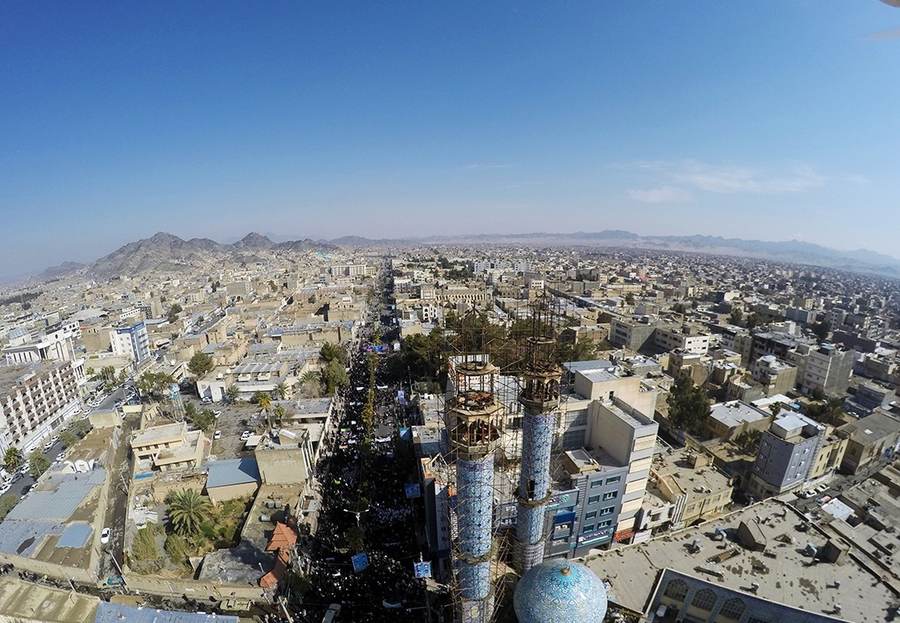
IRGC kills six militants Zahedan was the central claim in an announcement from Iran's Islamic Revolutionary Guard Corps on Thursday. The IRGC said its forces killed six people in the southeastern city's Manzel-Ab district and dismantled what it described as a cell preparing an attack. The early-morning raid, announced by the IRGC Ground Force's Quds Base, came as Tehran awaited Washington's response to its latest proposal for reviving a collapsed Gulf ceasefire and prepared for the possibility of renewed American attacks.
Zahedan raid October 2026: what happened
According to the Quds Base public-relations office, the cell was identified early Thursday after reports from residents and what the statement called precise intelligence work. The IRGC said six members of a “Takfiri terrorist” group were killed, explosive devices were found and clearance of the hideout was continuing. Iran's IRNA state news agency carried the statement but did not identify those killed or provide evidence of the alleged plan.
Reuters reported the account through IRNA and added two separately attributed details. Haalvsh, a rights group that monitors Sistan-Baluchistan province, said fighting between security forces and armed people began Thursday morning. Fars news agency, citing Zahedan's administrative office, reported that an explosion was heard Wednesday without causing damage. Those reports establish that violence occurred, but they do not independently verify the identities, affiliations or intentions of the dead.
Why this matters for the Iran US ceasefire Gulf track
The raid was publicized as Reuters reported that Iran was weighing Washington's answer to a proposed revival of the Gulf ceasefire while preparing for renewed large-scale attacks. Seven months after the US Iran war February 2026 began with U.S.-Israeli strikes on February 28, Tehran faces external military pressure and a persistent internal-security challenge.
Announcing seized explosives and an ongoing clearance operation serves several purposes. It reassures a domestic audience that the state can police its periphery, warns would-be attackers that the security apparatus is alert and gives Tehran a framework for explaining any subsequent bombing. None of that proves the cell or plot was fabricated; Haalvsh's report of fighting indicates a real confrontation. It does mean the choreography of the announcement should be separated from the still-unverified details.
Sistan Baluchestan attacks and Jaish al-Adl Iran
Sistan-Baluchistan borders Pakistan and Afghanistan and has endured insurgency, smuggling and state repression for decades. The province is one of Iran's poorest; its Baluch population is largely Sunni in a Shia-majority state. Its position on trafficking routes from Afghanistan supports illicit networks that can also provide militant logistics.
Jaish al-Adl, or Army of Justice, has claimed repeated attacks on Iranian security forces, and Tehran accuses the group of using sanctuary across the Pakistani border. Iranian reports said IRGC intelligence forces clashed with Jaish al-Adl members on September 17, killing two and wounding and arresting a third. That recent episode is important context for Baluchistan militancy Iran Pakistan, but the IRGC did not identify Thursday's dead as Jaish al-Adl members. The broader history cannot substitute for evidence about this specific raid.
The IRGC's use of “Takfiri” is also significant. Iranian officials employ the label broadly for Sunni extremist organizations and other armed Sunni opponents. It describes Tehran's view of the threat, not a confirmed affiliation.
What we know — and what remains unverified
The available record supports a limited ledger. A security operation took place in Manzel-Ab on Thursday morning; the IRGC reported six deaths and seized explosives; Haalvsh reported fighting; and Fars reported a Zahedan explosion on Wednesday. The names, ages and affiliations of those killed have not been released. Nor has independent evidence established that they were preparing an attack, belonged to a named group or possessed the devices described by the IRGC.
Iran's security institutions frequently announce disrupted plots without releasing material that independent investigators can test. The term “terrorist” has been applied in Iranian official discourse to armed separatists, criminal groups and political opponents. That history is not proof that Thursday's account is false. It is a reason to treat the official version as a claim awaiting corroboration and to look for names, evidence photographs, court records or follow-up arrests.
The Iran internal security crackdown behind the raid
The IRGC counterterrorism operation fits a wider wartime pattern. Tehran is balancing the external military threat, a sanctions campaign targeting weapons procurement, stress on aviation and the Hormuz energy corridor, and diplomatic efforts that include UN General Assembly contacts and phased-deal proposals. The September 17 clash, Wednesday's explosion and Thursday's raid indicate a quickening security tempo in the southeast.
Governments under external attack often intensify searches for infiltrators and saboteurs. Sometimes that reflects genuine threats; sometimes it also lowers the threshold for detention and force against dissent. Iran plainly faces militant violence in Sistan-Baluchistan. The unresolved question is how the war emergency is changing state conduct in a province where rights groups already describe heavy-handed policing.
Who gains, who pays — and what critics say
The IRGC gains the clearest institutional benefit. A publicized success reinforces its claim to be the country's shield at a time when conventional deterrence has not prevented months of U.S. and Israeli strikes. Iran's civilian government gains evidence that state institutions still function while the wider conflict continues.
Civilians in Sistan-Baluchistan carry the largest risk. They live between militant recruitment and a security apparatus that treats much of the province as a counterterrorism theater. Rights monitors, journalists and other skeptics point to the convenient timing, missing identities and broad label applied to the dead. Withholding judgment is not a denial that militants operate there; it is the appropriate response when the state is the primary source for its own claimed victory.
Washington and Jerusalem are another audience. The subtext is that Tehran retains internal control and approaches the Tehran Washington ceasefire proposal from a position of discipline rather than desperation. Whether foreign governments accept that message will depend less on this announcement than on the next military and diplomatic moves.
What happens next
Three scenarios matter. If Washington responds positively and the Gulf track restarts, the Zahedan operation may return to the background of a long-running counterinsurgency. If talks stall and strikes resume, internal-security operations are likely to intensify in Sistan-Baluchistan, Kurdistan and Khuzestan as authorities search for infiltrators. If Tehran links the cell to networks in Pakistan, the raid could add pressure to an already tense frontier.
The most useful indicators will be whether the six dead are named, whether the claimed clearance operation produces arrests or another announcement, and whether Haalvsh or other monitors report civilian harm in Manzel-Ab. Those details may show whether Thursday's raid was primarily a counterterrorism success, a wartime signal, or both.
Related coverage
Sources and reporting notes
- Reuters — “Iran's Revolutionary Guards kill six ‘terrorists’ in restive region, IRNA news agency reports” (October 1, 2026).
- PressTV — “IRGC dismantles terrorist team, kills 6 in southeastern Iran” (October 1, 2026), carrying the Quds Base statement.
Reporting note: The IRGC and IRNA are the sources for the alleged plot, seized explosives and description of those killed. Reuters separately cited Haalvsh on Thursday's fighting and Fars on Wednesday's explosion. Signal Post News has not independently verified the identities or intent of the dead.