War · Iran · Shipping
Iran’s Revolutionary Guard says a tanker struck a mine in a southern passage of the strait, a supertanker caught fire in the eastern sector and a tugboat burned while fighting the blaze — a Strait of Hormuz tanker fire claim that no independent source has confirmed, for which the Guard has named no vessel and given no casualty or damage figures.
Track it live: War tracker — the conflicts behind the Hormuz standoff · Oil price tracker — what the strait means for crude markets
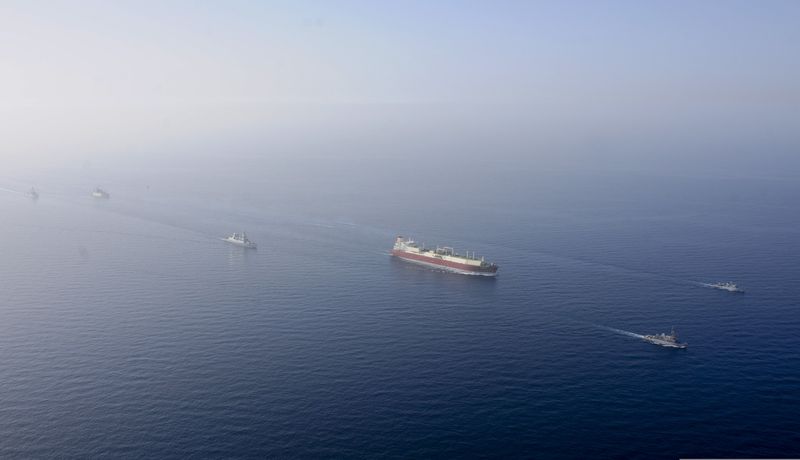
CAIRO — Iran’s Islamic Revolutionary Guard Corps said on Thursday that two oil tankers and a tugboat had caught fire in separate incidents overnight after attempting to use unauthorised routes through the Strait of Hormuz, Reuters reported. The Strait of Hormuz tanker fire claim is, at this stage, exactly that — a claim. It rests on an IRGC statement carried by Iran’s official IRNA news agency; it has not been independently verified; and the Guard provided no vessel names, no casualty figures and no account of the damage, according to AnewZ’s reporting on the statement. Signal Post News reports the claim as a claim throughout this article, because nothing firmer exists to report.
What the Guard described, in Reuters’ account, was a night of three connected fires. One tanker struck a mine while attempting to cross a passage south of the strait. Another vessel — a supertanker — caught fire while exiting the route in the eastern part of the waterway. And a tugboat that approached the second vessel to help extinguish the fire also caught fire, the IRGC said. If the statement is accurate, it would be one of the most serious nights of the war for commercial shipping. Whether it is accurate is precisely what cannot yet be established: Anadolu Agency, whose report on the statement was carried by The Chronicle, noted plainly that the claims could not be independently verified.
What the IRGC says happened
The Guard’s statement, as carried by IRNA and reported by Anadolu, said a large oil tanker struck a mine late on Wednesday night while using an unauthorised route south of the strait; the tanker caught fire and came to a halt. Reuters reported the same mine strike in a passage south of the strait, and added the second incident: a supertanker that, the IRGC said, caught fire while exiting the route in the eastern part of the waterway. A tugboat that approached that vessel to help fight the fire then also caught fire, the Guard said. Al Jazeera’s version of the statement, carried by LaPresse via the Fars news agency, matched the same sequence: a mine strike in the southern channel during the night, a supertanker fire in the eastern sector, and a tugboat engulfed while intervening.
The statement went beyond the fires. The Guard said its navy’s electronic-warfare unit gained control of two aircraft it described as Lucas-type — the US LUCAS drones — which it called intruding aircraft, forced them to land and seized them intact, according to Anadolu; Al Jazeera, via LaPresse, carried the same claim of two US Lucas-type drones captured intact by Iranian electronic-warfare units. The Guard also accused the United States of encouraging vessels to break restrictions and pass through a mined route, and argued that the resulting damage would impose heavy insurance costs on American taxpayers and on regional allies, Anadolu reported. The Guard said its navy continued to hold control over the Strait of Hormuz.
What has not been verified
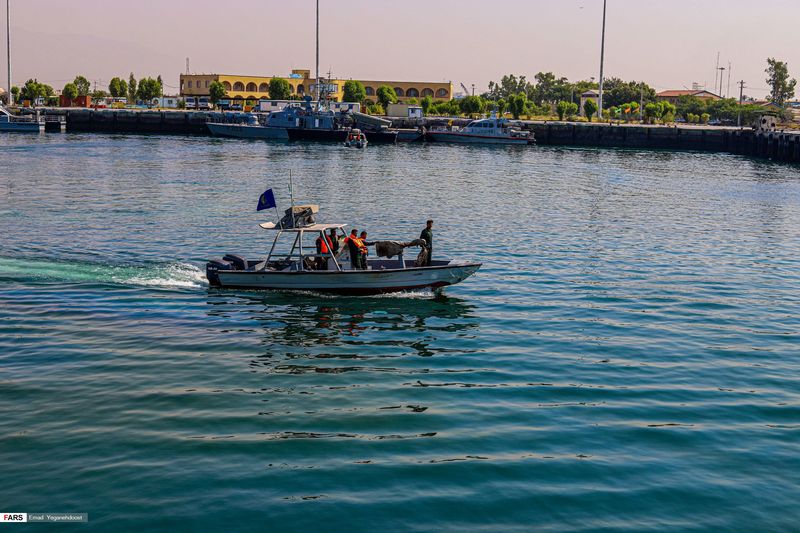
Begin with what the Guard itself did not provide. For Thursday’s incidents, the IRGC gave no details on casualties, the extent of damage or the identities of the vessels, AnewZ reported — no ship names, no flags, no owners, no crews. No independent body had confirmed any of the three fires in the reporting available when the statement circulated: Anadolu stated that the claims could not be independently verified, and no maritime-safety authority’s account of three burning vessels accompanied the wire reports on which this article is based. The drone claim stands in the same position: the Guard says two US Lucas-type aircraft were taken over electronically, forced down and seized intact, but the reports carried no US acknowledgment and no imagery of captured aircraft.
That absence matters for a specific reason. Three vessel fires in one night in the world’s most watched waterway would normally generate corroboration quickly — distress calls, satellite heat signatures, port-state reports, an advisory from the UK Maritime Trade Operations (UKMTO) centre that monitors the strait. None of that appears in the initial reporting. It does not prove the claim false; verification in a war zone lags, and the strait has seen real attacks throughout this conflict. But until some of it arrives, the evidentiary position is the one Anadolu stated: an assertion by one belligerent, unconfirmed by anyone else. Readers should hold the story in exactly that frame, and so does this article: every fire, mine and drone in the sections above is something the IRGC says happened.
A second night of claims
Thursday’s statement was not the first of its kind this week — it was the second in two nights. On Wednesday, November 4, the IRGC had claimed that four oil tankers were destroyed after striking naval mines on a prohibited route south of the strait, that the four tankers remained ablaze and that two other vessels had been seized, according to AnewZ’s summary of the earlier claim. The UKMTO centre separately reported on Wednesday an incident in which a vessel was struck by unknown projectiles northeast of Lima, Oman — and it is unclear whether that UKMTO report relates to the vessels the IRGC referenced, AnewZ noted. Those are two different kinds of statement: a belligerent’s claim of four destroyed tankers, and a safety authority’s report of one vessel hit by projectiles at a named location. They may describe overlapping events, or none of the same events; the available reporting does not connect them.
The tempo is itself part of the story. Two consecutive nights of Guard statements have now described, in total, seven vessels burning or destroyed and two seized, plus two captured drones — none of it independently confirmed in the initial reporting. The claims also land on a diplomatic track running in the opposite direction: as Signal Post News reported earlier this week, Iran has told mediators in Doha that the strait could reopen within two days under a deal, with a draft proposal circulating. A waterway can be, in Tehran’s presentation, simultaneously ready to reopen on a 48-hour clock and lethally dangerous to any ship that crosses it on the wrong route. Both messages serve the same negotiation, as the analysis below sets out.
Why this matters
An unverified claim about burning tankers is not economically weightless — in the Strait of Hormuz, a claim does work even before anyone establishes whether it is true. Marine war-risk insurance is priced on perceived danger, and underwriters cannot wait for confirmation that may never come: a statement asserting that tankers are striking mines on particular routes forces owners, charterers and insurers to reprice those routes immediately, or to pause and wait, which is itself a cost. The Guard’s statement makes that mechanism explicit rather than hiding it. By its own account, via Anadolu, it argued that pushing vessels through a mined route would impose heavy insurance costs on American taxpayers and regional allies — which is another way of saying that the insurance bill is not a side effect of the claim but, in Tehran’s framing, part of its purpose. A route that underwriters treat as mined is, for commercial purposes, close to mined, whether or not a mine was ever struck there.
The pattern compounds the effect. A single dramatic claim can be discounted; a nightly rhythm of claims cannot be ignored by anyone whose business is pricing risk, because each new statement resets the question before the last one has been answered. October supplies the backdrop that makes the claims hard to wave away: UKMTO recorded more than 35 incidents in the waterway during October 2026, the highest monthly tally since the conflict began, according to a Region Alert summary of UKMTO data published on November 5. Our reporting on the October tanker attack wave recorded by UKMTO tracked that escalation week by week. Against a verified baseline of more than one incident a day, a claim of three fires in a night is an escalation of tempo, not a departure from reality so large that markets can dismiss it outright — and that is exactly the grey zone in which the Guard’s statements operate.
Timing sharpens the leverage. The claim arrives days after the US midterm elections, in the same week that Tehran is presenting itself in Doha as ready to reopen the strait on a two-day timeline. Read together, the two messages define Iran’s negotiating position: the strait opens quickly and safely on Iran’s terms, or it remains a waterway where, by the Guard’s account, tankers burn when they ignore Iran’s rules. The mine — claimed or real — is the enforcement story behind the diplomatic offer.
The numbers behind the claim
Set the claim tempo against the verified record and the gap becomes measurable. UKMTO’s October tally of more than 35 incidents works out to roughly 1.1 recorded incidents a day across the month — the worst month of the war for shipping, as our coverage of October’s record-high ship attacks in the strait documented. The Guard’s two statements this week describe seven vessels burning, destroyed or seized in about 48 hours — a claimed tempo several times October’s verified daily rate. If even part of that were confirmed, November would already be on course to eclipse October’s record. If none of it is confirmed, the statements still mark a step-change in the information war over the strait. Either way, the number to watch is the one that has not moved: the count of independently confirmed incidents, which the initial reporting leaves, for Thursday’s claim, at zero.
The market context cuts the other way, and it is part of why an unverified claim still matters. Oil had already fallen sharply after the US midterm results: Brent crude futures fell below $94 a barrel on the morning of November 5, after a drop of nearly 9 percent in the previous session, according to a Business Tech Africa market roundup, as traders weighed hopes of diplomacy in the Iran war. In other words, the market was pricing the Doha track — de-escalation, a possible reopening — at the moment the Guard issued a statement describing tankers on fire. Signal Post News does not attribute any price move to the claim, and none is established in the reporting; the point is structural. When traders are paying for diplomacy and insurers are being told about mines, the spread between the two prices is where the claim does its damage, and closing that spread requires the verification that has not yet arrived.
Background: the chokepoint and the war
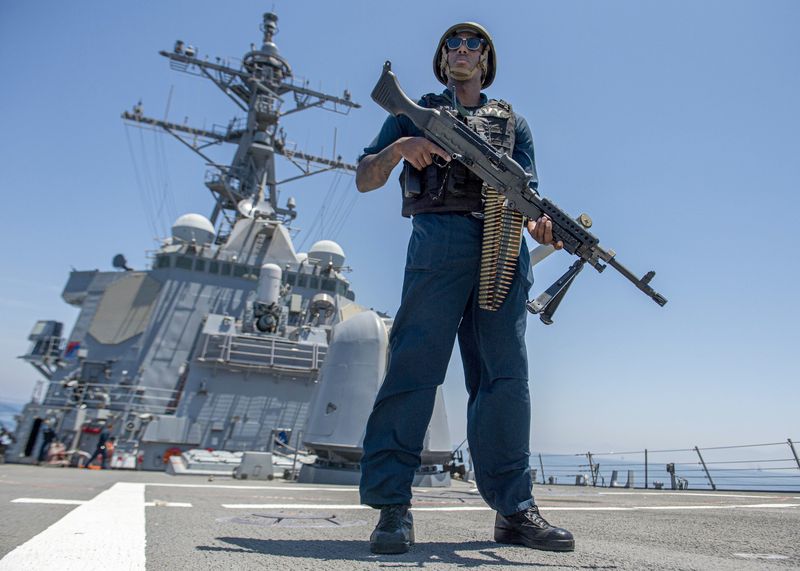
The strait, between Iran and Oman, is the world’s most important oil chokepoint: the narrow waterway connecting the Persian Gulf with the Gulf of Oman, through which a substantial share of the world’s seaborne oil and liquefied natural gas normally passes. There is no maritime alternative for Gulf exporters — oil that cannot cross Hormuz mostly cannot reach market by sea at all — which is why control of the strait has been the war’s central economic fact since hostilities involving Washington, Israel and Tehran began on February 28, as Anadolu’s report recounts.
The methods reported in and around the strait have broadened as the war has gone on. The Wall Street Journal reported on November 4 that Iranian units have used underwater explosive drones, rocket-propelled grenades fired from fast attack craft and limpet mines in the strait, according to a Region Alert summary of the reporting — a toolkit of deniable, hard-to-attribute weapons well suited to a waterway where the line between an attack and a claim about an attack is strategically useful. Naval mines sit at the top of that list for insurers: they are cheap, persistent, difficult to prove or disprove from a distance, and they threaten every hull in a channel rather than one targeted ship. A claimed mine strike therefore carries more economic weight than a claimed missile strike, and the Guard’s statements this week have leaned on mines on both nights.
Who benefits, who loses — and what the critics say
On the Guard’s own telling, the beneficiary is supposed to be Iran and the bill-payer the United States and its allies: Tehran says Washington encouraged vessels onto a mined route and that the damage will show up as insurance costs for American taxpayers and regional partners. If the claim raises war-risk premiums or deters unauthorised transits, Iran gains twice — its routing rules gain force without a shot fired, and its Doha negotiators gain a sharper illustration of what defying those rules costs. The clear losers, claim or no claim, are shipowners and insurers, who must price a risk they cannot verify, and Gulf exporters whose cargoes become more expensive to move every time the strait’s danger is asserted anew.
The counterweight is the verification gap, and critics of the Guard’s account will press on its shape: vessels described but never named, fires asserted without imagery, drones captured without photographs, and a second consecutive night of claims arriving while the first night’s claims remain unconfirmed. A claim that cannot be checked also cannot be cashed in as fact — and the one hard, independent data point in the same news cycle, UKMTO’s Wednesday report of a vessel struck by unknown projectiles northeast of Lima, Oman, has not been linked to the Guard’s narrative by anyone. Supporters of Tehran’s position answer with October: a month of more than 35 recorded incidents is not a record that makes new attacks inherently implausible. Both things are true at once, and they do not cancel out — a plausible claim is still an unverified one.
What happens next
The first branch is confirmation. A UKMTO advisory, a US Central Command statement, a flag-state or port report, commercial satellite imagery or a named vessel’s owner speaking publicly would move any part of this story from claim to incident, and would likely move insurance pricing and the Doha talks with it. The second branch is silence: if the days pass with no corroboration, Thursday’s statement joins Wednesday’s in the ledger of assertions that shipping had to price but no one could prove — and the question for the next statement becomes why the tempo of claims is rising while the verified record is not.
The third arena is the insurance market itself. War-risk underwriters reviewing the strait this week must decide what two nights of IRGC claims are worth in premium terms, and their answer will be visible in behaviour before it is visible in any statement: transits paused, routes shifted to the Guard’s authorised channels, or premiums raised for those who sail anyway. And over all of it sits Doha, where the draft reopening proposal described in our earlier reporting now has to survive contact with a week in which the strait’s controlling power has described seven vessels burning in two nights. A two-day reopening clock means little if the waterway’s risk is repriced nightly; watch whether the follow-up talks proceed, and what either capital says about verification — inspections, UKMTO-monitored corridors, named safe routes — because verification is the currency this week’s claims are short of.
For now, the honest summary is narrow. Iran’s Revolutionary Guard says two tankers and a tugboat caught fire overnight in the Strait of Hormuz, that one tanker struck a mine, and that its forces seized two US drones intact. No vessel has been named, no casualty or damage figures exist, and no independent source has confirmed any of it. The claim is unverified — and, in a waterway where perception is priced by the hour, it is already consequential. Do you think shipping should treat the Guard’s claims as fact until disproved, or sail on until someone confirms them? Tell us in the comments, like this story if it helped you separate the claim from the record, and follow Signal Post News for the first confirmed account of what happened in the strait overnight.
Sources
- Reuters, November 5, 2026 (reporting by Ahmed Tolba, Cairo) — the IRGC statement that two oil tankers and a tugboat caught fire in separate incidents after attempting unauthorised routes through the Strait of Hormuz: the mine strike in a passage south of the strait, the supertanker fire in the eastern part of the waterway, and the tugboat that caught fire while helping to fight the blaze.
- The Chronicle / Anadolu Agency, November 5, 2026 — the IRGC statement as carried by IRNA: the tanker that struck a mine late Wednesday night and came to a halt, the electronic-warfare unit’s claim to have forced down and seized two Lucas-type drones intact, the accusation that the US encouraged vessels onto a mined route and the insurance-cost argument, the Guard’s claim of continued control of the strait, and the note that the claims could not be independently verified.
- AnewZ, November 5, 2026 — the IRGC gave no details on casualties, damage extent or vessel identities for Thursday’s incidents; context on Wednesday’s claim of four tankers destroyed on mines, two further vessels seized, and UKMTO’s separate Wednesday report of a vessel struck by unknown projectiles northeast of Lima, Oman, with the relationship between the reports unclear.
- LaPresse / Al Jazeera, November 5, 2026 — the same IRGC statement via Fars: mine strike in the southern channel, supertanker fire in the eastern sector, tugboat engulfed while intervening, and the capture of two US Lucas-type drones intact by Iranian electronic-warfare units. UKMTO October incident figures and the Wall Street Journal tactics reporting are cited in the text as reported tallies via Region Alert’s November 5 summary; the Brent price context is from Business Tech Africa’s November 5 market roundup. Related Signal Post News coverage is linked in the text above.