World · Iran · Nuclear · Civil Defense
The Times reports that Iran is distributing iodine tablets to communities living within two to three kilometres of its nuclear facilities, quoting a health ministry official who tied the precaution directly to fears of an American strike on Pickaxe Mountain, the granite-buried complex near Natanz. Two things must be said in the same breath: no strike has taken place and no radiation has been released — and the report of a new rollout, so far, rests on a single source.
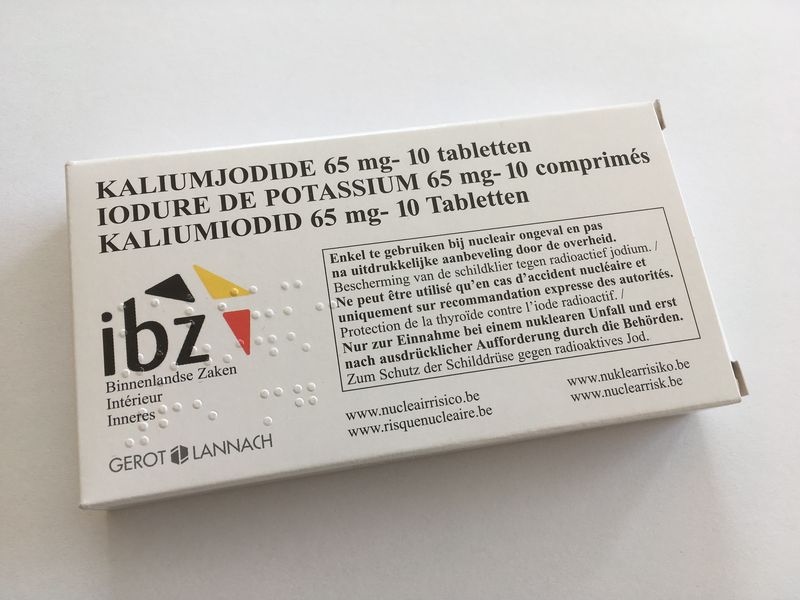
TEHRAN, November 6, 2026 — The most revealing sentence in Middle East security this week may be a short one spoken to a British newspaper. “Yes, we are distributing iodine,” an Iranian health ministry official told The Times, in a report published on Friday. “During every war, we have tried to distribute it within a two-to-three-kilometre radius of nuclear facilities. Trump can no longer be trusted. He may go through with this crime.” The tablets, the official said, are being handed out to communities near Iran’s nuclear facilities as a precaution against possible radiation exposure — the kind of exposure that would follow an attack on those sites, at a moment when Tehran openly fears that the United States is preparing to strike the fortified complex known as Pickaxe Mountain.
Track it live: the Iran war tracker — live map, strikes and developments as they happen.
Iodine distribution is a small administrative act with a very large meaning. Governments do not hand out potassium iodide because they expect a quiet month. They hand it out when their planners have run a scenario in which radioactive material escapes a nuclear site and drifts over the homes nearby, and have decided that the people in those homes should hold a cheap, partial shield in a kitchen drawer before the scenario ever becomes a headline. Iran has done this before, most recently around its Bushehr power plant earlier this year. What is new in Friday’s report is the stated reason: not a reactor accident, but a feared American bomb, aimed at the one facility in Iran that Washington talks about most and knows about least.
What The Times reported — and what has not been confirmed
Because this story will travel fast, its foundations deserve to be stated plainly. The report of a new distribution rests, as of Friday, on one source: The Times of London, quoting one Iranian health ministry official who was not named. No second major news organisation has independently confirmed a new rollout. No broad Iranian state announcement of a new nationwide distribution has been made. Coverage elsewhere traces back to the same Times reporting; repetition is not corroboration, and readers should not mistake the echo for a second witness.
What The Times did obtain is unusually direct: not a rumour of distribution, but an official of the ministry responsible describing it in the present tense, giving its geographic rule — a radius of two to three kilometres around nuclear facilities — and attaching it explicitly to the threat of an American strike. That is a stronger foundation than an anonymous social-media claim, which is how the story first ricocheted around X on Friday morning, stripped of its sourcing. But it remains one interview in one newspaper. The responsible way to hold the story is the way this article holds it throughout: Iran is distributing iodine tablets near its nuclear sites according to a health ministry official speaking to The Times, as a precaution, in a week when no attack has occurred and no radiation of any kind has been released.
Iranian officialdom, it should also be noted, has argued with itself about iodine before. In remarks reported on June 23, 2025, during the twelve-day war with Israel and the United States, health ministry official Mohsen Farhadi pointed out that sites such as Natanz, Fordow and Isfahan are enrichment facilities, not operating fission reactors, and said the public did not need to take potassium iodide. And Abbas Abedi, spokesman for Isfahan province’s pre-hospital emergency services, has cautioned the public against taking iodine tablets without medical advice. Friday’s reported distribution therefore sits inside a live internal debate about how much protection enrichment sites actually warrant — and the fact that the distribution side of that argument appears to be winning, if The Times’ official is accurate, is itself a measure of how seriously Tehran is taking the current threat.
Pickaxe Mountain: the facility at the centre of the fear
The name in the background of every line of this story is Kuh-e Kolang Gaz La — Pickaxe Mountain. The complex is hewn into granite a little over a mile south of the Natanz uranium-enrichment plant in central Iran, and its halls lie some 80 to 100 metres underground, a depth widely assessed as beyond the reach of even the most powerful conventional bunker-busting bombs in the American arsenal. What actually happens inside it is not publicly known: inspectors have not been given access, and claims that Iran has moved advanced centrifuges there have not been independently established. That combination — a facility that may matter enormously and cannot be watched — is precisely why it dominates threat planning in both capitals. Signal Post News examined the site’s fortification in September: Pickaxe Mountain: Inside Iran’s Granite Nuclear Fortress.
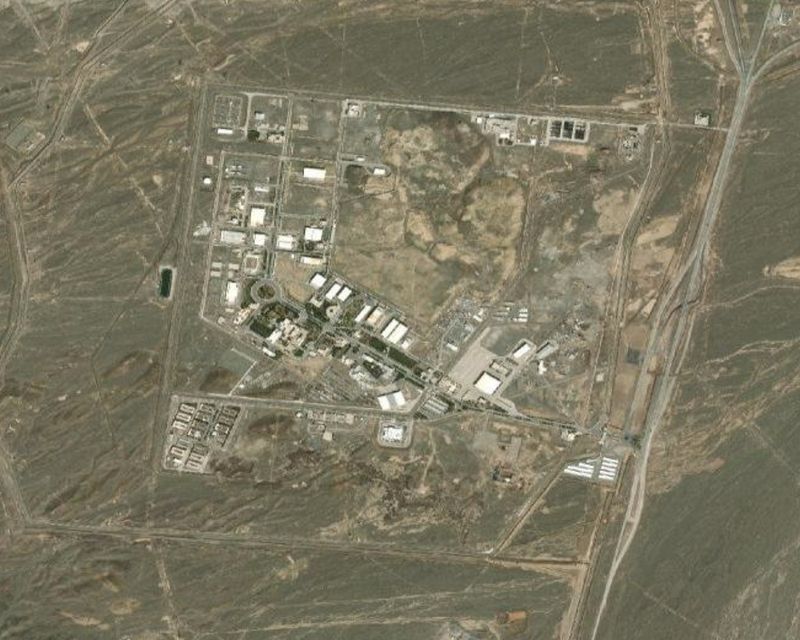
President Donald Trump has returned to Pickaxe Mountain repeatedly in his public threats against Tehran. In an October 16 interview he said the United States might have to strike the facility to prevent Iran from obtaining a nuclear weapon; in September, Reuters reported that he had warned Tehran over activity at the site. A video now circulating on Iranian social media, examined by The Times, walks viewers through exactly the scenario the iodine is meant for: it asks them to imagine a nuclear explosion at Pickaxe and lists the distances to the cities in its shadow — roughly 17 miles to Natanz, 25 to Kashan, 117 to Isfahan and 223 to Tehran — and warns that an attack on an underground facility could throw radioactive earth and rock into the atmosphere, to be carried by the wind for hundreds of miles. The video belongs to a wider wave of Iranian civil-defence material that Signal Post News covered on November 3, when survival guidance linked to the Revolutionary Guards was already spreading across Iranian screens. The iodine report and the video are two halves of one picture: a state preparing its public, at the level of the individual household, for an attack it says may be coming.
The science: what an iodine tablet can and cannot do
Potassium iodide — KI — is one of the most specific medicines in the civil-defence cabinet, and its limits matter as much as its uses. In a nuclear accident or attack, one of the hazardous materials released is radioactive iodine, iodine-131. The human thyroid gland cannot distinguish it from ordinary iodine and absorbs it greedily, concentrating the dose in a small organ and raising the risk of thyroid cancer, above all in children. A potassium iodide tablet floods the thyroid with stable iodine first, effectively filling every seat in the theatre so the radioactive isotope cannot get in. Taken shortly before or within the first hours of exposure, it can sharply reduce the thyroid’s uptake of iodine-131.
Everything beyond that sentence is outside the tablet’s power. Potassium iodide does not shield the body from external radiation. It does nothing against caesium, strontium, plutonium or any other isotope. It is not a general “anti-radiation pill,” and taking it unnecessarily or at the wrong dose carries its own risks, particularly for people with thyroid conditions — which is why officials like Isfahan’s Abedi warn against self-medicating, and why distribution programmes worldwide, from Belgium’s 65 mg boxes to Japan’s post-Fukushima stockpiles, pair the tablets with strict instructions: take them only when the authorities say the plume is coming. The honest summary is that iodine is a narrow, genuinely useful tool aimed at one organ and one isotope. A government that distributes it is not claiming it can protect its people from a nuclear strike. It is claiming something more modest and more sobering: that if the worst happens, it wants the children living closest to its nuclear sites to have at least this much.
Bushehr: the precedent from earlier this year
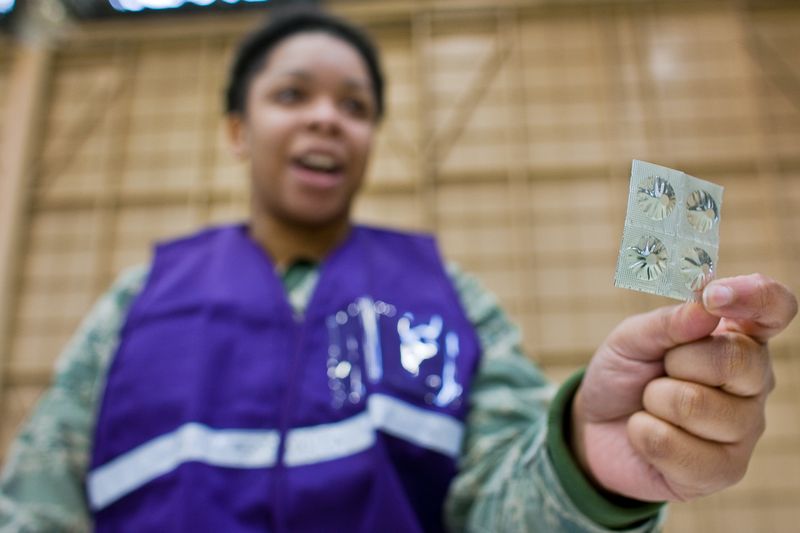
The strongest reason to take The Times’ report seriously is that Iran has already done, on the record, almost exactly what the official described. Around Bushehr, on the Gulf coast, home to Iran’s only operating nuclear power plant, officials distributed some 180,000 iodine tablets earlier this year — a programme Iranian health officials themselves confirmed. Fars News Agency carried a statement from the health deputy of Bushehr University of Medical Sciences saying the local rollout had begun before the twelve-day war of June 2025, prioritising the areas around the plant; Iran International, citing the state-run Young Journalists Club, reported in April that 180,000 tablets had been distributed in Bushehr. Distribution near nuclear sites in wartime is, in other words, documented Iranian practice, not a novelty invented for this week’s headlines. The official’s own framing to The Times — “during every war, we have tried” — matches the record.
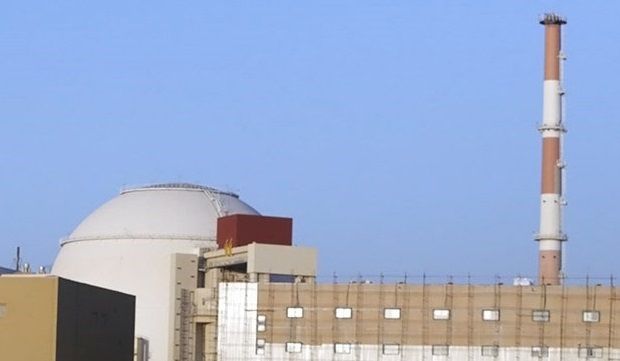
But the Bushehr precedent also sharpens the puzzle in Friday’s report. Bushehr is a power reactor: a machine whose core, if breached, could release exactly the iodine-131 the tablets exist to counter. Natanz, Fordow and Isfahan are enrichment and conversion sites — facilities that process uranium but do not run a fission reactor’s core — which is why Farhadi could argue in June 2025 that the public around them did not need potassium iodide. If distribution is now extending on a two-to-three-kilometre rule around nuclear facilities generally, Tehran’s planning assumptions have moved: either officials judge that a strike on buried enrichment infrastructure could throw up enough radioactive material to matter to the villages nearby — the very scenario the circulating survival video describes — or the distribution is doing double duty as a message, to Washington and to Iran’s own public, that the leadership is preparing in earnest. Both readings can be true at once. Preparedness measures in a crisis almost always are.
A region quietly rehearsing the unthinkable
Iran is not the only state in the region behaving this week as if the map of risks has changed. On Thursday, Iraq’s nuclear regulator, the I-NRC, announced that its emergency room has response plans prepared and activated for a range of scenarios, with early-warning radiation monitoring along the Iranian border linked into international networks — a precaution Baghdad framed carefully, noting that no strike has occurred, no abnormal radiation has been recorded, and any fallout reaching Iraq is expected to be limited. Signal Post News reported that move in full: Iraq Switches On Its Nuclear Emergency Plans — Before a Single Bomb Has Fallen on Iran. Read together, the two stories describe neighbours on opposite sides of the frontier quietly doing the same thing: rehearsing, in public, for a radiological emergency neither says is imminent.
The military temperature behind the civil-defence activity is rising on every front at once. This week Tehran has coupled its preparations with open threats of retaliation: a senior Iranian parliamentarian warned that if America uses its bases in Europe to attack Iran, Iranian missiles will be fired toward Europe, and the Islamic Revolutionary Guard Corps promised a response “without geographical limits” to any new attack — a posture Signal Post News detailed in Iran Puts Europe in Its Missile Sights. Washington, for its part, keeps the threat of strikes on the table and repeats that Iran will not be allowed a nuclear weapon. None of this makes a strike inevitable, and both governments have stepped back from the brink before. But civil-defence bureaucracies are poor liars: when iodine moves toward the villages around Natanz at the same moment Iraq switches on its border sensors, the region’s planners are telling the world what probability they privately assign to the worst case — and it is not zero.
Why this matters
Preparedness is a signal that cannot be spun
Diplomatic language in this crisis is cheap and deliberately ambiguous; every capital says it seeks peace while preparing war. Logistics are harder to fake. A state that prints survival videos, posts distance-to-target graphics and walks iodine tablets door to door within a three-kilometre ring of its nuclear sites is spending real administrative effort on a specific future, and adversaries read that spending the way they read satellite photos of missile deployments. Washington will note that Tehran is behaving like a government that rates an American strike as a live possibility rather than a bluff. Tehran, in turn, knows Washington will note it — and may welcome the inference, since a state seen preparing its population for attack is also a state signalling that an attack will not find it psychologically unprepared. The tablets are medicine. They are also a message, delivered in the one diplomatic language that is never entirely insincere: preparation.
The gap between the medicine and the fear
Set the science beside the politics and an uncomfortable gap opens. The facilities at the centre of the strike debate are enrichment sites whose own health officials have said pose no iodine risk to the public; the genuinely iodine-relevant site, Bushehr, was covered months ago. Extending distribution around the enrichment complex therefore buys limited medical protection — children near Natanz would gain a real but narrow shield against one isotope in one kind of release — while purchasing a great deal of something else: demonstration. That is not a criticism unique to Iran; every state that has ever distributed iodine, from Belgium to Japan, has mixed protection with reassurance and deterrence in the same blister pack. But it does mean Friday’s report should be read on two levels at once: as a health measure with modest, real value to a few thousand households, and as a barometer of official fear that is far more sensitive than any statement the foreign ministry will issue.
One source, and why the discipline matters
Finally, this story is a live demonstration of how crisis information now moves, and why sourcing discipline is a safety issue rather than a nicety. By Friday morning the claim had already mutated on social media from “a Times report quoting an unnamed official” into an apparently settled fact, complete with stock photographs presented as if they showed the distribution itself. In a week when publics in three countries are quietly being handed radiation precautions, the difference between “confirmed” and “reported by one good newspaper” is not pedantry; it is the difference between information that helps people judge a threat and content that merely amplifies one. The Times is a serious newspaper and its official’s quote is specific, falsifiable and consistent with Iran’s documented Bushehr practice. That earns the story publication — with its foundations printed on its face, as here. What it has not yet earned is the removal of the words “The Times reports.”
What happens next
The coming days will either harden this story or shrink it. The first thing to watch is Tehran itself: a confirmation, elaboration or pointed silence from the health ministry or the Atomic Energy Organization of Iran will set the story’s status far more reliably than any further repetition abroad. The second is geography — credible reporting of tablets actually reaching named communities around Natanz, Fordow or Isfahan, of the kind Iranian outlets produced for Bushehr in April, would convert an official’s description into an observed programme. The third is Washington: any softening or hardening of the administration’s language on Pickaxe Mountain will be read in Tehran against the preparations now under way, and Iran’s own threats against American bases in Europe give every statement a second audience. And behind all of it sits the question the iodine cannot answer: whether the strike Tehran is preparing for is one Washington intends to launch, or one both sides are merely determined to be seen preparing for. Civil defence can rehearse the aftermath. It cannot schedule the event — and, on the record of this week, neither capital appears eager to be the one that does.
Sources
The Times, November 6, 2026 — the health ministry official’s confirmation of iodine distribution within a two-to-three-kilometre radius of nuclear facilities, the Pickaxe Mountain survival video and its distance figures, and the facility’s assessed depth of 80 to 100 metres. Reuters, September 2025 — President Trump’s warning to Tehran over activity at Pickaxe Mountain; the president’s October 16, 2026 interview remarks on striking the facility. Fars News Agency, carrying the Bushehr University of Medical Sciences health deputy’s statement, and Iran International citing the Young Journalists Club, April 2026 — the Bushehr distribution of some 180,000 tablets, begun before the June 2025 twelve-day war. IRNA, via regional reporting — Isfahan emergency spokesman Abbas Abedi’s caution against taking iodine tablets without medical advice; remarks by health ministry official Mohsen Farhadi, June 23, 2025, on enrichment facilities and potassium iodide. Signal Post News reporting, November 3–6, 2026 — the Iranian civil-defence survival material, Iraq’s nuclear-emergency activation, and Iran’s missile threats concerning European bases.