War · Iraq · Iran · Nuclear
Iraq’s nuclear regulator said Thursday that its emergency room for nuclear and radiological incidents has prepared response plans for a range of scenarios, that early-warning stations along the border with Iran are tracking background radiation for any unusual change, and that detection equipment has been positioned across the provinces. No abnormal radiation has been recorded, no strike has taken place, and Baghdad’s own assessment is that any fallout impact on Iraq would likely be limited. The plans are a precaution — and a measure of how seriously governments around Iran are now taking Washington’s threats against its nuclear sites.
Track it live: Live Global Trackers — Wars
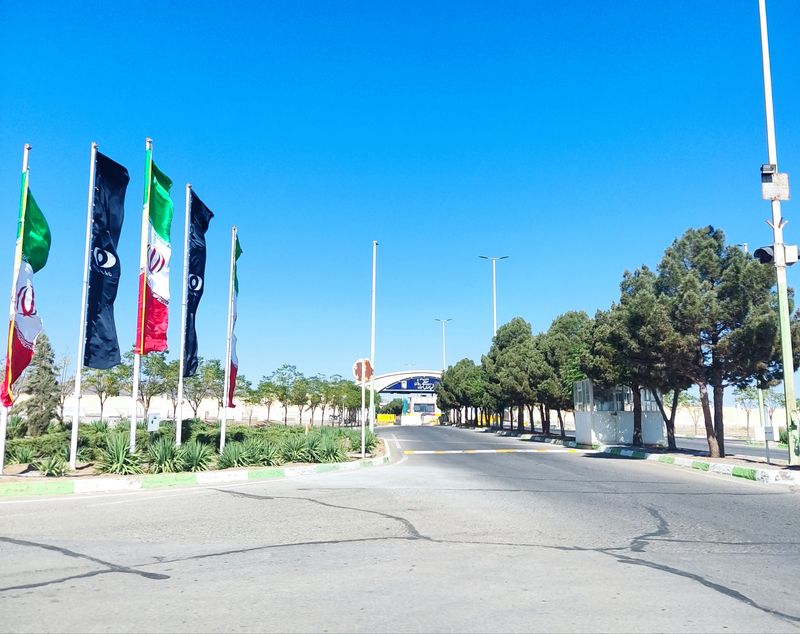
BAGHDAD, November 6, 2026 — Iraq has activated the machinery it built for a day it hopes never comes. The National Commission for Nuclear, Radiological, Chemical and Biological Regulation (I-NRC) said on Thursday that its emergency room for nuclear and radiological incidents has prepared response plans for a range of scenarios, developed in coordination with other government agencies and with the International Atomic Energy Agency (IAEA). Early-warning stations along Iraq’s border with Iran are linked into international monitoring networks and are tracking background radiation for unusual changes, and radiation detection equipment has been positioned across Iraq’s provinces. Prime Minister Mohammed Shia’ Al-Sudani has chaired a meeting of the country’s Nuclear Radiation Emergency Operations Room. And the regulator was at pains to say what has not happened: no direct radiation threat has been detected, no abnormal radiation has been recorded, and no strike on Iran has taken place.
The announcement, reported by Shafaq News and Kurdish outlets on November 5–6, is a preparedness move, not a reaction to an event. That distinction matters, and Baghdad made it deliberately. Iraq is not responding to an attack; it is positioning itself, publicly and technically, for the possibility of one — specifically, for the possibility that the United States carries out the threats President Donald Trump has made against Iran’s nuclear facilities, including the deep-buried complex at Pickaxe Mountain near Natanz. Iraq’s message to its own public was two-handed: the state is ready, and the danger, if it comes, would probably be smaller than feared. Both halves of that message are worth examining, because together they explain how the countries around Iran are quietly re-pricing the risk of a war they do not control.
What Baghdad announced: plans prepared, early-warning stations live, detectors in the provinces
The substance of the announcement, as the I-NRC set it out, has four parts. First, the regulator’s emergency room for nuclear and radiological incidents has prepared response plans covering a range of scenarios, worked up with other Iraqi government bodies and in coordination with the IAEA — the UN’s nuclear watchdog, whose own monitoring and emergency-assistance frameworks are the international standard countries plug into when radiation crosses borders. Second, early-warning stations along the border with Iran are operating as part of international monitoring networks, continuously measuring background radiation so that any unusual change registers immediately rather than being discovered after the fact. Third, radiation detection equipment has been positioned across Iraq’s provinces, so the watch is national, not only frontier-based. Fourth, the posture has political ownership at the top: Al-Sudani has chaired the Nuclear Radiation Emergency Operations Room, the body that would run Iraq’s response if monitoring ever stopped being precautionary.
Fadhil Hawi Mizban, the head of the monitoring authority, set out the operational picture in the terms regulators use when they want to be believed: instruments, networks and baselines. The border stations are linked to international monitoring networks; they track the background radiation that is always present in the environment; and they exist to catch deviations — the unusual changes that would signal that something across the border had released material into the air. Nothing in the announcement described a deviation. The system, in other words, is switched on and reporting normal values, which is precisely what a monitoring network is for in the days before a possible event: the baseline has to be established and trusted before anyone can say, credibly, that it has changed.
The threat Iraq is bracing for: Trump’s warnings and the mountain at Pickaxe
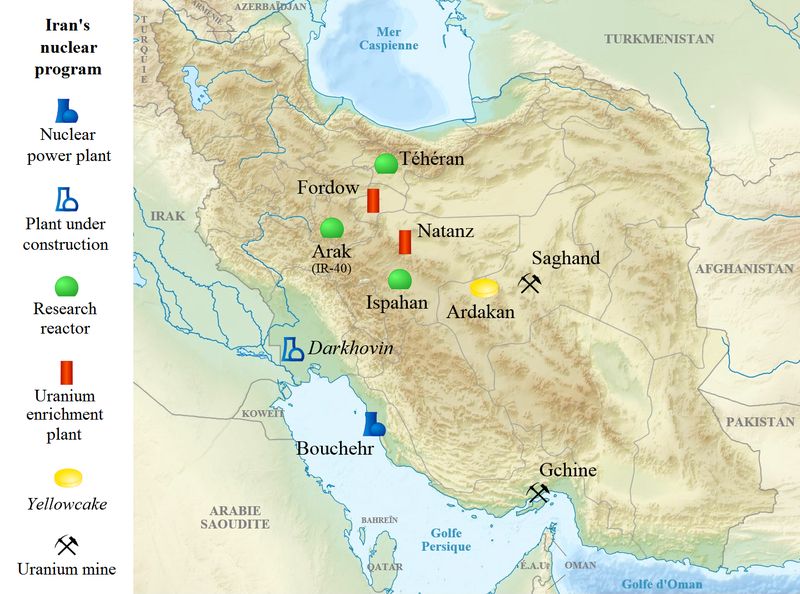
Iraq’s preparations have a named cause. President Trump has threatened limited strikes on Iranian nuclear sites, and reporting in the United States has focused on the hardest target set in Iran’s programme: the established enrichment plants at Natanz and Fordow, and the newer complex tunnelled into Pickaxe Mountain near the Natanz site — a facility buried so deep that even the largest conventional bunker-busting weapons may not reach its halls. Around those threats has swirled speculation in some US media that Washington could, in an extreme scenario, use a nuclear weapon against Iran’s deepest facilities. Iraq’s announcement does not repeat that speculation as fact, and neither does this article: what is established is that the threats of strikes are real, that the speculation exists, and that a neighbouring government has decided the combination warrants switching on its radiological emergency machinery.
Tehran’s position, stated repeatedly by Iranian officials, is that Iran’s nuclear programme is peaceful, that its facilities are under IAEA safeguards, and that attacks on them would be unlawful and would bring retaliation. Washington’s position is that Iran must never obtain a nuclear weapon and that its buried facilities are designed to survive exactly the kind of strike now being discussed. Iraq sits between those positions physically as much as diplomatically: a US or Israeli strike campaign on Iran’s nuclear sites would happen in the skies and seismographs of Iraq’s neighbourhood, and any radiological release would be measured first by the neighbours, whatever the belligerents said about it. That is the practical logic of Baghdad’s monitoring posture — if anything ever does happen, Iraq intends to have its own numbers, from its own stations, rather than relying on the accounts of the countries doing the striking or being struck.
Why Iraq thinks the danger would likely pass it by: 500 kilometres, granite, and the wind
The second half of Baghdad’s message was reassurance, and it was specific rather than soothing. Iraq’s assessment, as Hawi set it out, is that any fallout impact on Iraq would likely be limited. The reasoning has three legs. Distance: the principal sites are hundreds of kilometres from Iraq’s border — Natanz and Fordow roughly 500 kilometres away — and radioactive material dilutes as it travels, so the dose at the frontier would be a small fraction of the dose near a damaged site. Depth: some of the facilities are buried deep inside granite mountains, and a strike that collapses tunnels into rock could contain much of the debris underground rather than lofting it into the atmosphere — the material has to get into the air before the wind can carry it anywhere. Wind: the prevailing winds, especially at altitude, would likely carry any airborne fallout away from Iraq rather than toward it. None of that is a guarantee, and the regulator did not offer it as one; it is a probabilistic judgement, and it explains why the same announcement can credibly contain both activated emergency plans and a calm public line.
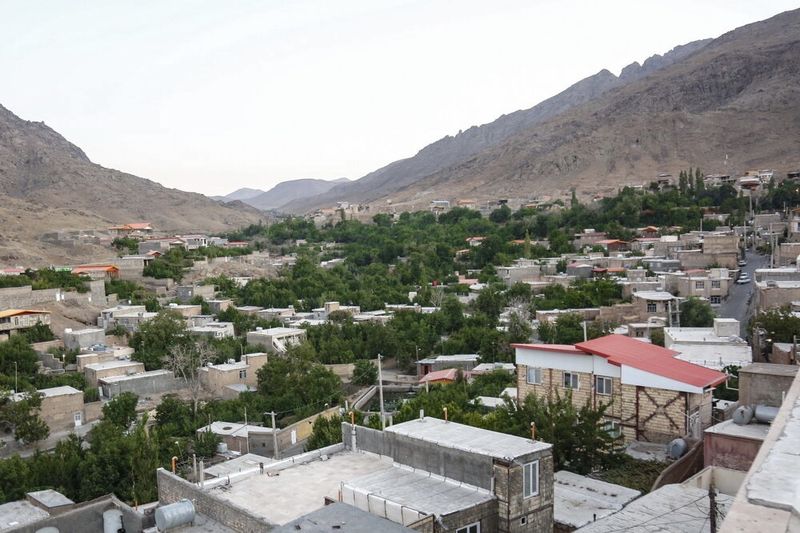
Read carefully, the reassurance is also a message to a domestic audience that has reasons to be jumpy. Iraqis live with the region’s most direct memories of what radiological fear does to a country — and with an information environment in which rumour moves faster than any plume. In recent days, social-media claims have circulated that Iraqi airspace would face restrictions between November 7 and 11 in connection with the crisis. That claim is unverified, carried by a single chain of social-media posts, and has not been confirmed by any Iraqi authority; the regulator’s own guidance in its announcement was the opposite of rumour — rely on official sources. Signal Post News treats the airspace claim as unconfirmed and reports it only to mark it as such. Baghdad’s whole communication strategy on Thursday was to occupy the ground before rumour does: instruments on, plans ready, numbers normal, sources official.
Why this matters
Preparedness announcements are the region’s new tell
Governments do not activate radiological emergency machinery casually, because the announcement itself is a signal that adversaries, markets and publics all read. When a state like Iraq — which has spent years trying to keep itself out of the US–Iran confrontation — publicly switches on nuclear emergency plans and border radiation monitoring, it is telling everyone watching that it now prices a US strike on Iran as a live possibility worth spending credibility on. Preparedness warnings have become one of the most reliable indicators in this crisis: they are issued by institutions with instruments and reputations to protect, not by commentators. Iraq’s move belongs in the same ledger as every embassy advisory, airline rerouting and civil-defence instruction issued around Iran this year — the quiet, bureaucratic sound of a region bracing.
Iraq has the most to lose from a war it cannot control
No country is more exposed to a US–Iran war than the one that shares a 1,600-kilometre border with Iran, hosts both American forces and Iran-aligned armed groups, and imports electricity and gas across the frontier its detectors now watch. Baghdad’s strategic nightmare is not fallout; it is becoming the arena — the place where retaliation lands, where militias freelance, where its airspace and soil are used by both sides. A radiation-monitoring posture is one of the few moves available to a government in that position that is purely defensive and entirely within its own control: it cannot stop the strike, but it can own the measurement of the strike’s consequences, protect its population with facts rather than rumours, and establish itself as the calm technical actor in a crisis made by others. That is worth more diplomatically than it costs.
The monitoring network is also an argument
There is a subtler function to Thursday’s announcement. By publicising that its stations are linked to international monitoring networks and its plans coordinated with the IAEA, Iraq is pre-registering the credibility of its future statements. If radiation levels ever do change, Baghdad will speak with data that the international system has already vouched for — and if they do not change, Iraq can say so with the same authority, against panic, against rumour, and against any party tempted to exaggerate or minimise. In a crisis where the first casualty is usually the shared factual picture, the country that owns trusted instruments owns a piece of the narrative. Iraq has spent two decades as the subject of other countries’ intelligence claims. This time, it is building the record itself.
Background: a young regulator in a country with a long nuclear shadow
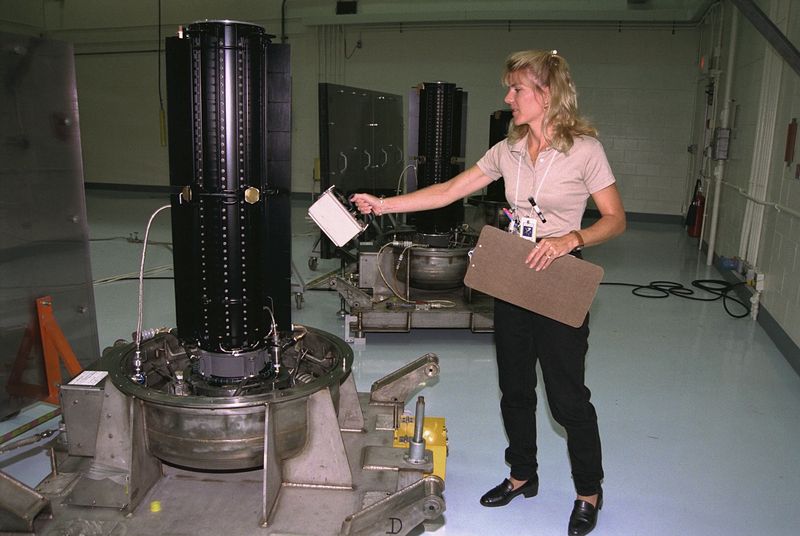
The I-NRC is Iraq’s post-2003 answer to a problem with a long history. Iraq’s nuclear story began with research reactors at Tuwaitha near Baghdad and the French-built Osirak reactor, which Israel destroyed in a 1981 airstrike — the region’s founding example of a preventive strike on a nuclear facility, and a precedent that hangs over every current discussion of striking Iran. After 2003, Iraq rebuilt its regulatory institutions from the ground up, working with the IAEA to account for legacy sites, contaminated facilities and radioactive sources scattered by war and looting. The commission’s remit — nuclear, radiological, chemical and biological regulation — reflects that inheritance: Iraq’s radiological risks have historically come as much from its own damaged legacy infrastructure as from anything across a border. A national network of monitoring stations and a standing emergency room are the mature form of that system, and Thursday’s announcement is the first time it has been publicly postured against an external threat of this scale.
The geography the network watches is unforgiving in both directions. Iraq’s frontier with Iran runs from the Kurdish mountains in the north to the Shatt al-Arab waterway in the south, through provinces whose populations live within sight of Iranian territory. Natanz and Fordow, at roughly 500 kilometres, are far; but Iran’s western facilities, missile bases and air defences are close, and any strike campaign would be fought partly in the airspace Iraqis can see. The monitoring stations cannot change that geography. What they can do is convert it from a source of dread into a source of data — which, in the economy of public fear, is the difference between a population that panics at every rumour and one that waits for the reading.
What happens next
The immediate watch is on the instruments, and the expected reading is nothing. If Iraq’s stations continue to report background levels — as the I-NRC says they do now — Thursday’s announcement will recede into the background noise of the crisis: noted by specialists, forgotten by markets. Its significance would only invert if the readings ever changed, or if Washington’s threats converted into action; in either case, Iraq’s pre-positioned network and pre-registered IAEA coordination mean Baghdad’s first statement would carry unusual weight. Watch, in the meantime, for three things: whether the monitoring posture becomes permanent and publicly reported on a schedule, which would suggest Baghdad expects a long crisis; whether other neighbours — Jordan, Kuwait, the Gulf states — make parallel announcements, which would mark a regional consensus that a strike is coming; and whether the IAEA begins publishing its own regional monitoring posture, the step that would internationalise the watch Iraq has started on its own.
And watch Washington. Iraq’s announcement is, in the end, a measurement of American credibility: a friendly government has looked at the president’s threats against Pickaxe Mountain and Natanz and decided they are plausible enough to prepare for radiological consequences on its own soil. Governments issue preparedness warnings when they believe the event is possible and the cost of being unprepared is high. Baghdad has now said, with instruments and meetings rather than rhetoric, that it believes both. The bombs, if they come, will be aimed at Iran. The first government to have organised itself around their consequences is Iraq.
Sources
Shafaq News, November 5–6, 2026, as carried by Hatha Alyoum — the I-NRC’s announcement that its nuclear and radiological emergency room has prepared response plans in coordination with government agencies and the IAEA; early-warning stations on the Iran border linked to international monitoring networks; detection equipment positioned across the provinces; and the regulator’s assessment that any fallout impact on Iraq would likely be limited, attributed to the monitoring authority’s head, Fadhil Hawi Mizban. Kurdistan24, November 5–6, 2026 — Prime Minister Mohammed Shia’ Al-Sudani’s chairing of the Nuclear Radiation Emergency Operations Room and the regulator’s call to rely on official sources. Signal Post News treats the social-media claim of Iraqi airspace restrictions for November 7–11 as unverified and unconfirmed, and reports no abnormal radiation reading, no detected threat and no strike, consistent with the regulator’s own statement. Photos: Wikimedia Commons, as credited in the captions; all are file photographs, and no photograph of Iraq’s monitoring deployment has been published.