iowa interstate shooting suspect
U.S. News / Crime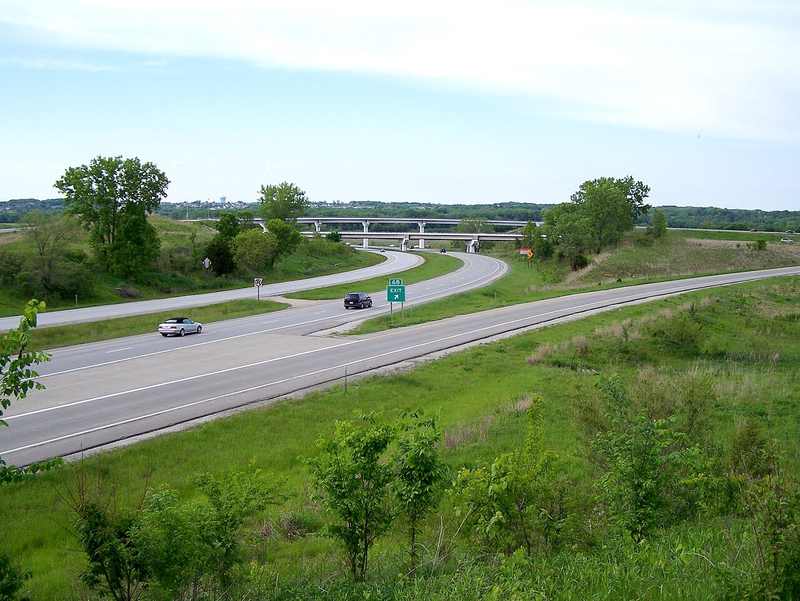
Shortly after 3:30 on Monday afternoon, October 5, 2026, the northbound lanes of Interstate 35 in Warren County, Iowa, became the scene of something drivers fear but almost never expect: a gunman firing on strangers from a moving car. Iowa interstate shooting suspect Andrew Darrick Tanaka, 27, of West Des Moines, is accused of shooting into three vehicles along a four-mile stretch of the interstate — striking a woman driving a Subaru Outback in the left shoulder — before officers found him standing on the highway shoulder near mile marker 60 with a handgun in his hand. The criminal complaint filed the next day in Warren County District Court says that when law enforcement asked him why, he gave a five-word answer that has chilled the state: "I had to kill people today."
What happened on I-35
According to the Iowa Department of Public Safety's October 6 press release and the criminal complaint and affidavit filed in Warren County District Court, the first 911 calls came in around 3:31 p.m. Monday: a driver on northbound I-35 near mile marker 56 was firing from a moving vehicle.
Investigators allege the shooter was Tanaka, driving a black Chevrolet Equinox. The account in the court filings describes a rolling sequence of violence: after the black BMW ahead of him passed a Subaru Outback, Tanaka allegedly fired at least two rounds through the driver's-side window of the Subaru. The woman behind the wheel was struck in the left shoulder. Her injuries, authorities said, were not life-threatening.
Tanaka then allegedly fired another round through the driver's-side window of the black BMW. He continued north, where he rear-ended a gray Nissan Altima carrying two people. When the Nissan's occupants got out to check on him after the crash, the complaint says, Tanaka got out holding a handgun and fired at least one round into the Altima's windshield.
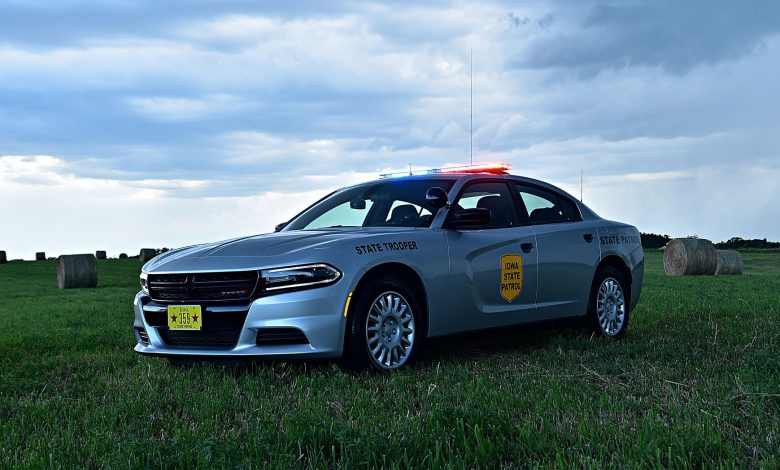
Officers caught up with him near mile marker 60, where he was standing on the shoulder of the interstate holding a handgun. He was taken into custody without further incident. Interstate 35 was shut down for hours while investigators processed a crime scene that stretched across roughly four miles of one of Iowa's busiest corridors. The Iowa DPS said the Warren County Sheriff's Office, the Iowa State Patrol, and the Division of Criminal Investigation all responded.
The charges — and the statement that defines the case
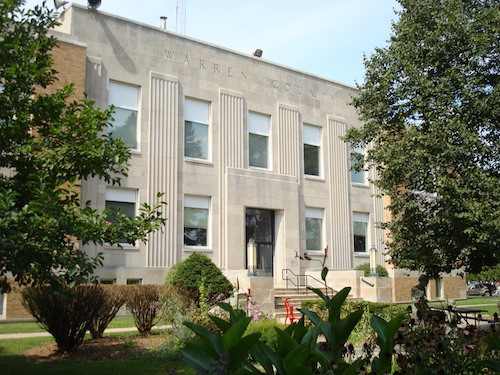
On Tuesday, October 6, prosecutors charged Tanaka with four counts of attempted murder — a Class B felony under Iowa law. A judge set bond at $1 million, cash only. A preliminary hearing is scheduled for Friday, October 16.
The detail that has defined national coverage is the alleged statement to law enforcement: "I had to kill people today." Five words, quoted in the complaint, that convert a terrifying afternoon into something harder to comprehend — an apparent admission of intent to kill strangers for no stated reason at all.
Two caveats matter enormously, and the Iowa DPS press release states both plainly: the investigation is continuing, and a criminal charge is merely an accusation — Tanaka is presumed innocent until and unless proven guilty in a court of law. What the complaint alleges is not what a jury has found.
Why this matters
Every American driver makes the same unspoken bargain: the person in the next lane is a stranger, but the shared rules of the road — the lane lines, the speed limits, the mutual interest in getting home alive — make that stranger safe enough to ignore. A shooting like the one alleged on I-35 doesn't just endanger the people in the targeted cars. It attacks the bargain itself.
That is why random highway violence lands differently from other crime. A burglary has a place; a bar fight has a context. A driver firing into the cars around him at highway speed has neither — which means, for everyone who heard the story on Monday night, the threat had no address and no profile. Any car. Any driver. Any mile marker.
The other reason this case matters is what it revealed about response. Multiple 911 callers, a multi-agency dragnet, an arrest on the shoulder within the same afternoon: the system, in its emergency posture, worked quickly. The harder question — the one no 911 dispatcher can answer — is what, if anything, could have worked earlier.
Highway shootings in America: how we got here
The United States has lived with bursts of highway gun violence for decades. The most notorious episode came in 2015, when a shooter terrorized drivers along Interstate 10 in Phoenix, Arizona — a case that drew national attention precisely because the victims were random and the corridor was ordinary. Southern California's freeways have logged repeated waves of shootings in recent years.
The pattern in these episodes is grimly consistent: they are difficult to predict, difficult to stop in progress, and they generate fear far out of proportion to their body counts, because every commuter can picture themselves in the targeted car. Iowa, with its long rural interstate stretches and high-speed corridors connecting Des Moines to the rest of the state, is not the landscape most Americans associate with this kind of violence — which is part of why Monday's events have drawn national coverage from outlets like Fox News and the New York Post alongside Iowa's own press.
Three angles on the same afternoon
Start with law enforcement's angle, because it is the most straightforward: whatever else is true, the response on October 5 was fast. Warren County deputies, Iowa State Patrol troopers, and state investigators converged on a moving, armed suspect and took him into custody alive, without further shots fired. In a scenario with every ingredient for a worse ending — a moving gunman, crowded lanes, panicked drivers — that counts.
Then the harder angle: motive. As of this writing, authorities have not publicly offered one, and the investigation continues. The alleged statement — "I had to kill people today" — reads less like a grievance than like a compulsion, which is why mental-health professionals watching the case will be careful, and should be careful, about drawing conclusions from a single quoted sentence. A complaint is a charging document, not a diagnosis.
And then the angle that will inevitably follow: firearms access. Every random shooting in America reignites the same debate, and this one will be no exception — one side pointing to the ease with which a person in crisis can arm himself, the other pointing out that the alleged crimes were already illegal under the strictest reading of any statute. Both arguments will be made loudly in the coming days. Neither is settled by the facts currently on the public record, and readers should be wary of anyone who claims otherwise this early.
The numbers, in context
Strip the case to its figures and a few stand out. Four counts of attempted murder — one for each person investigators believe was targeted — each a Class B felony carrying up to 25 years in Iowa. At least four rounds fired at occupied vehicles, plus a rear-end collision used, allegedly, as a prelude to another shooting. One person wounded, and by the thin margin of a shoulder wound rather than something worse. A crime scene spanning mile markers 56 to 60 — four miles of interstate closed for hours on a Monday afternoon, with all the economic and logistical friction that implies. And a $1 million cash-only bond, a figure judges reserve for defendants they consider a serious flight risk, a serious danger, or both.
The most important number may be the one that isn't there yet: a motive, on the public record, explaining any of it.
What happens next
The next public milestone is the preliminary hearing on Friday, October 16, where a judge will weigh whether the state has enough evidence to hold Tanaka for trial, and where defense counsel will begin to take shape around the case. Expect the affidavit's details to get fuller public airing there — and expect close attention to whether prosecutors disclose anything about motive, the firearm's origins, or Tanaka's background.
Beyond that, the path is the familiar machinery of a major felony prosecution: discovery, possible plea negotiations, and — if no deal is reached — a trial in which the state must prove intent to kill beyond a reasonable doubt for each of the four counts. Each Class B felony count carries up to 25 years under Iowa law, meaning a conviction on all counts could keep Tanaka in prison for the rest of his life. Watch, too, for the questions that orbit every case like this: whether competency or mental-health evaluations are ordered, whether the bond is revisited, and whether the investigation surfaces a digital trail — social media, messages, search history — that explains what five chilling words have not.
Iowa's interstate is open again. The drivers who were on it Monday afternoon will not forget what happened there. Neither, it seems safe to say, will anyone else who heard those five words.