toddler brings loaded gun daycare
CANTON TOWNSHIP, Mich. — The toddler brings loaded gun daycare case reads like a scenario engineered to test every layer of Michigan's child-access and safe-storage laws at once. On Monday, September 28, at about 8:55 a.m., a 3-year-old boy inside a classroom at the Children's World Early Learning Center at 7437 Sheldon Road in Canton Township pulled a loaded handgun — still in its holster — from his backpack and passed it around to his classmates. A teacher saw what was happening, intervened, and secured the weapon. No one was hurt. That much is a testament to the staff, whom Canton Police Chief Joseph Bialy publicly praised.
The criminal case that followed is what makes this story nationally significant. On October 1, Wayne County prosecutors charged both parents, who were arraigned in Plymouth's 35th District Court before Judge Joe Barone. The father, Brandon John Ely, 28, is a Detroit police officer — eight years on the force, four as a detective and four in special operations — and he was charged with one count of fourth-degree child abuse, a one-year misdemeanor. The mother, Rabab Ibrahim Al Zayad, 27, was charged with unsafe storage, a 93-day misdemeanor that applies because the gun was not fired. Both were barred from possessing firearms while the case is pending and released on $10,000 unsecured personal bonds. Their next court date is October 30.
The officer's paradox: nine guns, three safes, one toddler's backpack
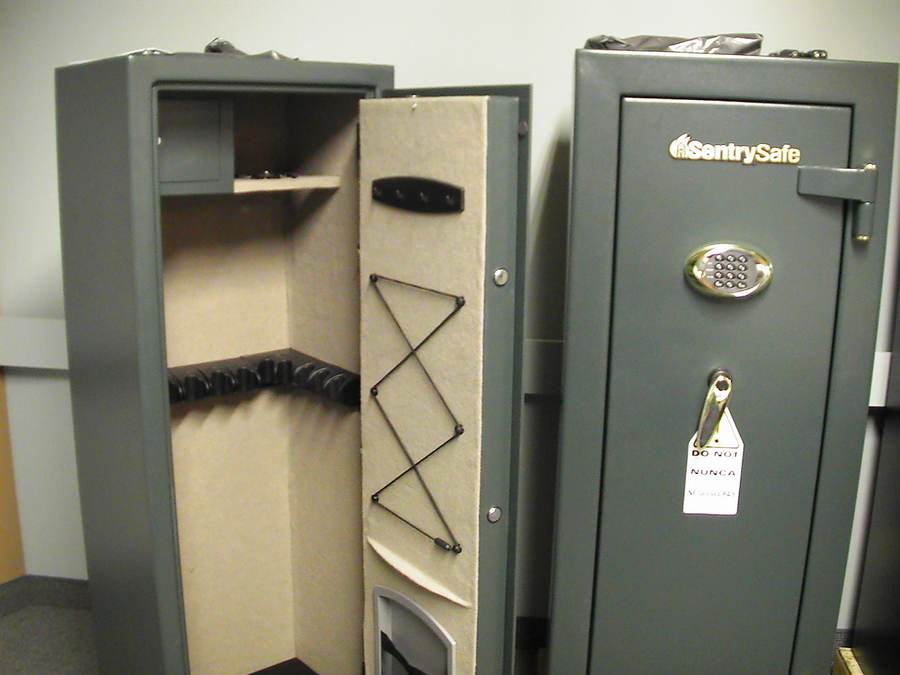
Ely told the court he owns nine firearms stored in three safes. The loaded handgun the boy carried to daycare was not Ely's service weapon, but the detail hardly reassures. Here is a man professionally trained in firearms handling — a detective and special-operations veteran — who owned multiple safes and still had a loaded gun accessible enough for a 3-year-old to take. The court denied his request to keep a duty firearm while the case proceeds, and he has been placed on administrative duty with a concurrent internal-affairs investigation.
This is the detail that elevates the case from a local parenting failure to a policy stress test. If a police officer with eight years of experience and dedicated gun storage can't keep a loaded weapon away from a toddler, then the argument that safe storage is simply a matter of personal responsibility starts to look thin. Storage laws exist precisely because good intentions fail — because safes get left unlocked, because routines break down, because a morning's chaos is enough for a small child to find the one gap in an adult's system. The Ely case is the scenario safe-storage statutes were written for, and it arrived wearing a police uniform.

Why this matters: accountability wears a badge this time
Child-access gun cases are depressingly common in American news, and they usually end the same way: a private citizen faces charges while the public moves on. The accountability stakes are different when the defendant is a sworn officer. Police departments train their people to be the adults in the room on firearms — the ones who model safe handling for everyone else. When an officer's own household becomes the cautionary tale, it damages the department's credibility on every gun-safety message it will ever deliver, and it invites a harder question: how does the Detroit Police Department's internal culture handle an officer whose negligence nearly armed a preschool classroom?
The internal-affairs investigation matters as much as the criminal case. Departments have historically been uneven about disciplining their own for off-duty negligence, and the public will be watching whether administrative duty is a holding pattern or the beginning of real consequences. The parallel proceedings — criminal court and internal affairs — create a double exposure that most defendants never face, and how each resolves will be read as a statement about whether the badge comes with higher standards or a protective shield.
Background: Michigan's safe-storage obligations
Michigan's legal framework treats unsecured firearms around children as a distinct and serious failure. The unsafe-storage charge against Al Zayad — a 93-day misdemeanor when the gun is not fired — reflects a tiered approach: the law punishes the negligence itself, not only the tragedy it might cause. Ely's fourth-degree child-abuse charge, carrying up to a year, reflects the added gravity prosecutors attach when the child's access stems from an adult's sustained failure to supervise and secure.
The daycare's response completes the institutional picture. The Children's World Early Learning Center disenrolled the family and announced it would add backpack checks — a reactive measure that raises its own questions. Backpack checks are security theater unless they're consistent, and they shift the burden from the gun owner to the classroom. The more durable question is what the center's policies said before September 28, and whether Michigan's licensing regime requires daycares to have any plan at all for a child arriving with a weapon. The honest answer, in most states, is that nobody plans for this because the planning is supposed to happen at home.
Multiple angles: deterrence, daycare security, and the department
The deterrence-versus-punishment debate is unavoidable. Misdemeanor charges against parents who clearly didn't intend harm will strike some as scapegoating — the parents are already living with the knowledge that their child could have killed a classmate. But the counterargument is the whole point of child-access laws: without prosecution, safe-storage statutes are suggestions. The charges here aren't about vengeance; they're about making the next parent who owns nine guns double-check the safe. Whether a 93-day misdemeanor moves that needle is an open empirical question, but the alternative — no consequences for a loaded gun in a preschool — is a policy of hoping for the best.
On daycare security, the backpack-check announcement deserves scrutiny. It is the kind of measure that reassures parents without addressing the root risk: a determined or curious 3-year-old can defeat any screening that isn't invasive, and no daycare can function as a TSA checkpoint for toddlers. The real lesson is upstream, in the homes where the guns live.
On the department angle, the optics are brutal and the substance is serious. A special-operations veteran whose loaded gun reached a daycare raises questions that extend beyond one household: what does the department's off-duty storage policy require, how is it audited, and how many other officers' homes would fail the same test? Internal affairs investigations rarely answer those questions publicly, but the public will ask them anyway.

The numbers, in context
The incident's own numbers tell a complete story of near-catastrophe: one loaded gun, one 3-year-old, one classroom of children within arm's reach of it, zero injuries. The zero is the only number that matters and the least reassuring one, because it was luck — a teacher's alertness and a holster that happened to stay on — not design. The criminal numbers are modest by design: one year maximum for the father, 93 days for the mother, $10,000 unsecured bonds, firearms barred pending trial. These are misdemeanor stakes for what could have been a mass-casualty event, and that gap between potential and punishment is the central tension of child-access law everywhere.
Put against the broader pattern, the case is simultaneously exceptional and routine. Exceptional: a police officer defendant, a daycare setting, charges within three days. Routine: a child found an unsecured loaded gun at home, because children are better explorers than adults are storers. The exceptional parts are why it's news; the routine parts are why it's a policy failure.
What happens next
The October 30 court date is the next milestone, and the cases' trajectories will be watched for what they signal. A plea, a trial, or a dismissal each tells a different story about how seriously Michigan prosecutes child-access negligence — and how seriously it prosecutes it when the defendant is a cop. The internal-affairs investigation runs on its own clock, but its outcome will determine whether Ely's career survives the incident that put a loaded gun in a preschool.
Beyond the courtroom, the policy ripple is the real prize. Legislators cite cases like this when they tighten storage laws; police departments cite them when they audit off-duty weapons policies; daycares cite them when they write emergency plans. The September 28 classroom in Canton Township got lucky. The question for every institution in the chain — the household, the department, the daycare, the legislature — is what it does with that luck before the next backpack opens.
Sources
- Detroit Free Press — "Canton daycare gun: parents Brandon Ely, Rabab Al Zayad charged," October 1, 2026.
- Detroit Free Press — "Parents arrested after toddler brings loaded gun to Canton daycare," September 30, 2026.
- Police1 / Detroit News — "Mich. officer charged with child abuse after toddler allegedly brings loaded gun to daycare," October 1, 2026.
- Associated Press via NBC 5 Dallas-Fort Worth — reporting on the charges and arraignment, October 1, 2026.