Business / Tech — Instacart sale talks Uber DoorDash became the story of the trading day on Friday, October 23, 2026, after The Information reported that Instacart — the grocery-delivery company formally known as Maplebear — is exploring a possible sale and has held preliminary discussions with potential buyers including Uber and DoorDash, according to people familiar with the matter cited by Reuters. Instacart’s shares closed about 9 percent higher, valuing the company at roughly $12 billion. But the reports do not fully agree: Bloomberg, citing its own source, reported that Uber recently walked away and is no longer in discussions. No company has confirmed anything, and there is no guarantee any deal happens.
Track it live: Live markets tracker — indexes, movers and deal news

Start with what is actually known, because on a story like this the distance between “reported” and “real” is the whole story. Reuters, reporting The Information’s account on Friday, said Instacart is exploring a possible sale, has held preliminary discussions with potential buyers including Uber Technologies and DoorDash, and is working with an investment bank to weigh its options, per a Bloomberg summary of The Information’s reporting. The discussions were described as ongoing, with no guarantee that they lead to a transaction. Instacart declined to comment to Reuters in one account; in another version, all three companies did not immediately respond to requests for comment. No company has announced a sale, a process, or an agreement.
Investors, characteristically, did not wait for confirmation. Instacart shares closed about 9 percent higher on Friday — up as much as 9.2 percent at the session’s peak — and rose about a further 1 percent in extended trading, lifting the company’s market value to about $12 billion. The would-be buyers moved the other way: Uber closed down nearly 3 percent and DoorDash fell more than 4 percent, a split reaction that tells its own story about who the market thinks would be paying, and who would be getting paid. The move capped a busy week for the stock, which also featured in our coverage of Instacart’s $5 million Justice Department settlement earlier this week.
The conflicting accounts: is Uber in, or out?
The most important disagreement in Friday’s reporting concerns Uber, and this article does not resolve it, because the sources do not. The Information, as reported by Reuters, placed Uber among the potential buyers with whom Instacart has held preliminary discussions, and described the discussions as ongoing. Bloomberg, reporting independently at 21:18 UTC on Friday and citing a person familiar with the matter, agreed that Instacart has explored a potential sale in a process that included discussions with Uber — but added that Instacart recently shopped itself to Uber, that Uber walked away, and that the two sides are no longer in discussions. Bloomberg also noted that The Information had previously reported preliminary talks with DoorDash as part of a potential sale process.
Read together, the two accounts agree on the core fact — Instacart has explored selling itself, and Uber was part of that exploration — and conflict on the live question of whether Uber is still at the table. Both cannot be describing the same moment accurately. It is possible the reporting captures different points in a fast-moving process; it is also possible one source is simply wrong, or is describing the process in a way that suits an interest. What readers should not do is treat “Uber is negotiating to buy Instacart” as established. It is not. The honest summary is: a sale exploration is reported by two independent outlets; Uber’s current status is contested and explicitly unresolved.
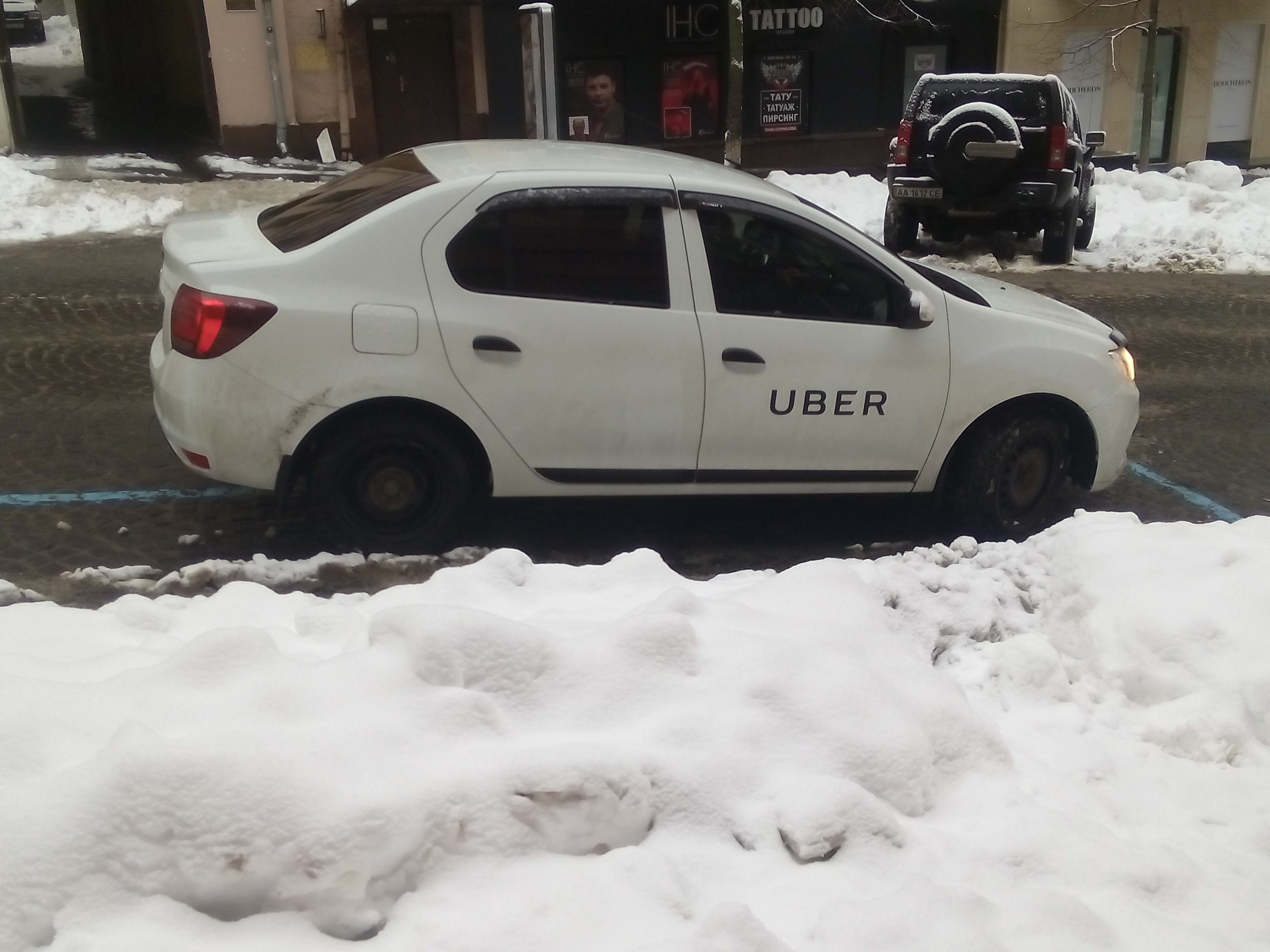
The numbers in context: $12 billion now, $39 billion then
Instacart’s roughly $12 billion market value after Friday’s jump frames how far the company has travelled from its pandemic peak. In 2021, as a private company riding the lockdown grocery boom, Instacart was valued at $39 billion. That same year, according to The Information’s reporting recalled on Friday, DoorDash held talks to acquire Instacart at a valuation of $40 billion to $50 billion; the talks fell apart partly over antitrust concerns under the Biden administration. A deal discussed at $40–50 billion in 2021 is now being discussed, hypothetically, at a small fraction of that.
The $16–17 billion figure circulating with Friday’s reports needs the same care. It is not an offer price and no bidder has proposed it. It is arithmetic: a typical takeover premium of 30 to 40 percent applied to Instacart’s current market value of about $12 billion produces a hypothetical value of roughly $16–17 billion. Premiums in that range are conventional in takeovers, which is why the calculation is worth reporting — but a convention is not a bid, and shareholders reading the higher number as a promised price would be getting ahead of every confirmed fact in this story.
Why this matters
Grocery is the last big delivery category that has not consolidated, and Instacart is its independent centre of gravity. Restaurant delivery has already rolled up: in July, Uber struck a nearly $15 billion deal to buy Germany’s Delivery Hero, creating the largest food-delivery group outside China. A takeover of Instacart by either Uber or DoorDash would extend that consolidation into the supermarket aisle, bolstering the buyer’s grocery ambitions with Instacart’s retailer relationships, its shopper network and its advertising business — and it would remove the standalone company that many grocers rely on precisely because it is not one of the giants.
That is also why the antitrust question is not a footnote. The 2021 DoorDash talks died partly on antitrust concerns in a different political era; a 2026 deal would be tested by regulators asking whether combining a leading restaurant-delivery platform with the leading grocery-delivery intermediary narrows competition for restaurants, grocers, couriers and shoppers. Supporters of a deal would argue grocery delivery remains fiercely contested by Walmart, Amazon and the supermarkets’ own channels. Critics would answer that independent grocers would lose their main neutral partner and face a gatekeeper on both sides of the delivery market. Both arguments were already visible in outline in Friday’s share moves: the target up, both rumoured buyers down — the market pricing in a large cheque, a long review, or both.
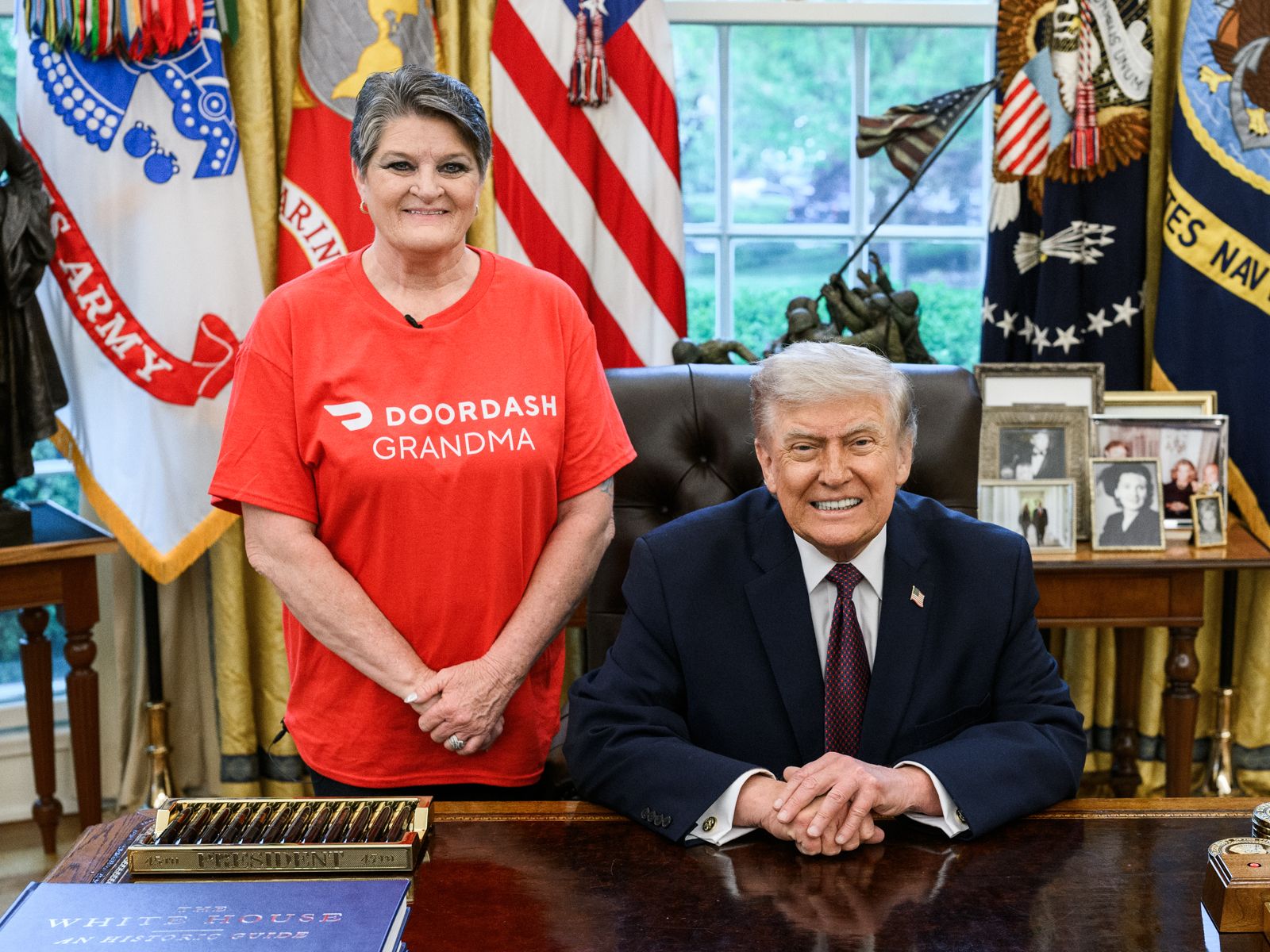
How we got here: a 14-year run
Instacart was founded in 2012 and spent its first years as a promising grocery-delivery startup before the pandemic turned it, almost overnight, into essential infrastructure. That boom produced the $39 billion private valuation, a generation of imitators, and eventually a public listing under its corporate name, Maplebear, as ordering habits normalised and growth slowed. The years since have been a long repricing: from $39 billion private, to about $12 billion on the public market even after Friday’s 9 percent pop. Friday’s reports suggest the board is at least willing to ask whether the next chapter is worth more inside a larger platform than alone — a question every maturing delivery company eventually faces, and one Uber answered for Delivery Hero in July and DoorDash nearly answered for Instacart itself five years ago.
Who wins, who loses
If a sale happens at anything like the hypothetical premium, Instacart shareholders win first and most visibly — Friday’s rally was the market pre-paying part of that outcome. A buyer wins grocery scale it would take years to build: retailer integrations, shopper density and a high-margin advertising business. The losers, potentially, are independent grocers whose bargaining power shrinks when their delivery partner is owned by a platform that also competes for their customers, and rival delivery services that would face a combined competitor in both restaurant and grocery delivery. Consumers sit in the genuinely uncertain column: consolidation can mean better coverage and lower fees through scale, or less competition and higher fees once it is complete. And if the reports dissolve — as the Bloomberg account of Uber’s exit warns they might — the immediate loser is anyone who bought Friday’s 9 percent as if a deal were signed.
What happens next
Three scenarios cover most of the plausible paths. First, a real process: the investment-bank work Reuters described produces a formal auction, other buyers emerge beyond the two named, and the contested Uber question resolves itself in a headline. Second, a single-buyer negotiation: if Bloomberg’s source is right that Uber has left, DoorDash — or an unnamed party — becomes the live track, and the 2021 antitrust debate replays with 2026’s regulators. Third, nothing: explorations like this end quietly all the time, the companies’ silence hardens into a non-story, and Instacart remains independent at a valuation its shareholders will measure against Friday’s brief $12 billion and the hypothetical $16–17 billion that never arrived. Watch for any company statement moving beyond no-comment, any regulatory filing, and whether the shares hold Friday’s gains when trading resumes — the tape, as the October 23 market close showed on a day the Dow fell 653 points, is quick to reprice a rumour. For live index and mover data, see our markets tracker.
Sources
- Reuters, October 23, 2026 — reporting The Information, citing people familiar with the matter (Instacart exploring a possible sale; preliminary discussions with potential buyers including Uber and DoorDash; shares closed about 9 percent higher, up about 1 percent in extended trading; market value about $12 billion; Uber closed down nearly 3 percent, DoorDash fell more than 4 percent; Instacart declined to comment / companies did not immediately respond in another version; discussions ongoing, no guarantee of a deal; typical 30–40 percent premium implying roughly $16–17 billion; antitrust scrutiny; Uber’s nearly $15 billion Delivery Hero deal in July; 2021 DoorDash talks at $40–50 billion, Instacart privately valued at $39 billion, talks fell apart partly over antitrust concerns): https://www.reuters.com/business/instacart-talks-sale-information-reports-2026-10-23/
- Bloomberg Law / Bloomberg, October 23, 2026, 21:18 UTC — “Instacart rallies on report of sale talks with Uber, DoorDash” (independent source: Instacart explored a potential sale in a process that included discussions with Uber; Instacart recently shopped itself to Uber, Uber walked away, the two sides are no longer in discussions; The Information previously reported preliminary talks with DoorDash; shares up as much as 9.2 percent; DoorDash figures in Bloomberg’s account differ slightly from Reuters’): https://news.bloomberglaw.com/mergers-and-acquisitions/instacart-rallies-on-report-of-sale-talks-with-uber-doordash
- The Information, October 23, 2026 — original reporting of the sale exploration and preliminary discussions (named as the original reporter; no URL asserted here).