Dow Falls 653 as Oil Tops $100 and Selling Spreads Beyond Tech
Track it live: live markets tracker — indexes, yields, oil and gold
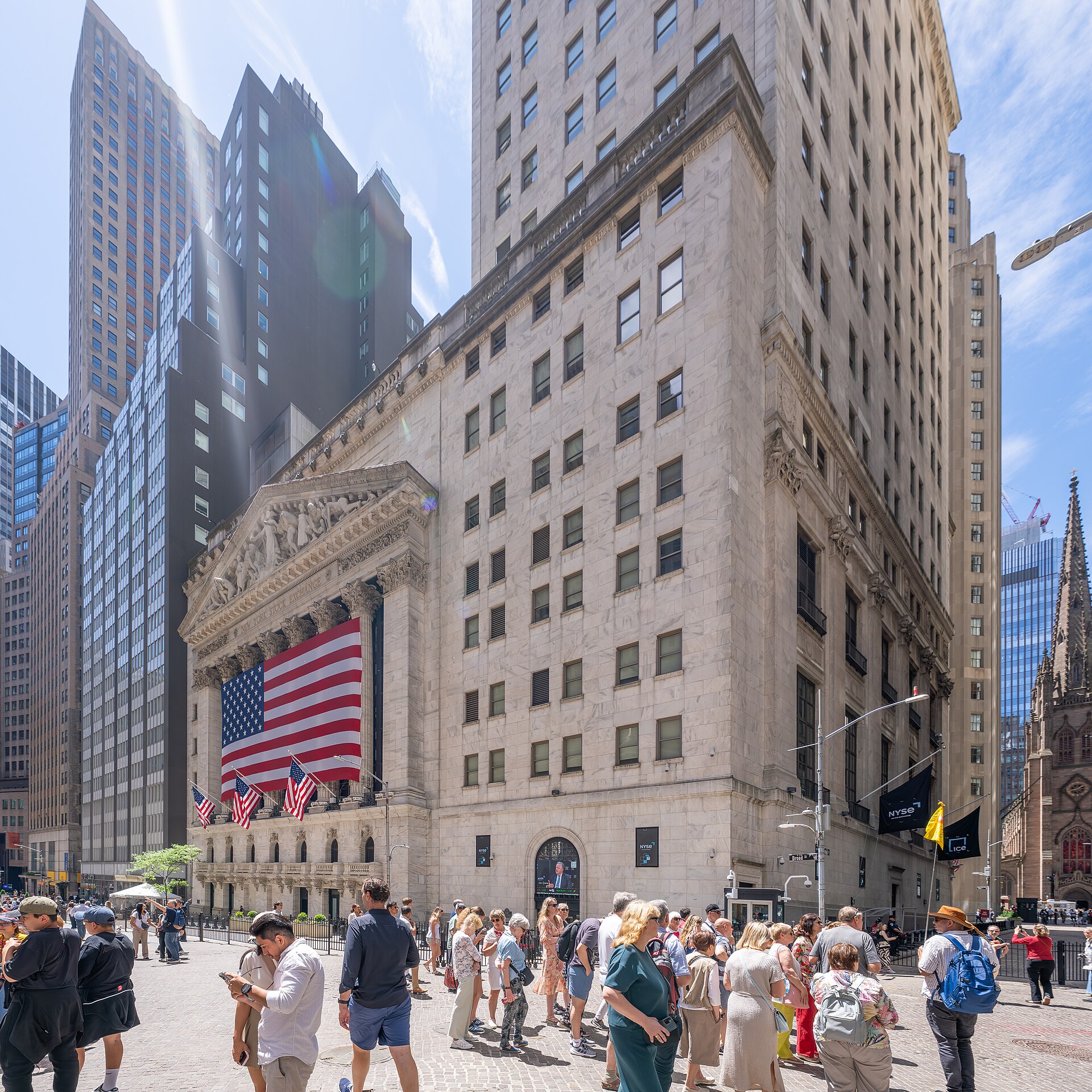
Friday's decline was the mirror image of Thursday's. A day after doubts about artificial-intelligence spending knocked the Nasdaq down 2.6 percent in its worst session since early June, the selling rotated out of technology's shadow and into the defensive corners of the market — the food, drink, household-goods, bank and consumer stocks investors had spent two weeks sprinting into for safety. Twenty-seven of the Dow's 30 stocks fell. The Dow Jones Industrial Average dropped 652.82 points, or 1.23 percent, to 52,215.16, its worst day since August. The S&P 500 lost 0.52 percent to 7,623.68, and the Nasdaq Composite, cushioned by recovering chip stocks, slipped just 0.21 percent to 25,955.34. The small-company Russell 2000 eased about 0.3 percent to finish near 2,780. Breadth was weak well before the close: in a midday snapshot, only 155 of the S&P 500's 503 stocks were higher on the session. Above it all sat the price that explained the mood — crude oil, back above $100 a barrel and climbing.
The close in numbers
- Dow Jones Industrial Average: 52,215.16 — down 652.82 points, or 1.23 percent; worst day since August, but a third straight weekly gain of 0.64 percent.
- S&P 500: 7,623.68 — down 0.52 percent; a second straight weekly loss, down 0.22 percent for the week.
- Nasdaq Composite: 25,955.34 — down 0.21 percent; a second straight weekly loss, down 0.45 percent for the week.
- Russell 2000: near 2,780 — down about 0.3 percent on the day, but up about 2.1 percent for the week, its first weekly win since early September.
- 10-year Treasury yield: 4.99 percent, up 3 basis points Friday after Thursday's plunge of about 19 basis points. 30-year: 5.31 percent, up 2 basis points. 2-year: about 4.69 percent.
- WTI crude oil: settled near $103 a barrel, up about 3.9 percent — above $100. Brent crude: near $116.70, up about 2.9 percent, with an intraday high of $117.41, its highest since April 30.
- Gold: about $4,010 an ounce, down about 1.2 percent Friday after briefly dipping below $4,000 to $3,989.10; down about 3.5 percent for the week. Silver fell about 4.9 percent for the week.
- U.S. dollar index (DXY): 101.79, up 0.17 percent. Bitcoin: near $81,700, up modestly, about 0.4 percent. VIX volatility index: 19.45, up 2.2 percent.
Why markets moved
For two weeks, the market's playbook had been simple: sell the artificial-intelligence trade, buy safety. Thursday's rout — the Dow essentially flat at 52,867.98 while the S&P 500 fell 1.21 percent and the Nasdaq dropped 2.60 percent — was that playbook working exactly as drawn. Friday it stopped working, because there was almost nowhere left to hide. Consumer staples, the classic shelter, fell 1.93 percent on the XLP fund measure; consumer discretionary lost 1.29 percent and financials 1.06 percent, and utilities and health care declined as well. What rose instead was the thing causing the problem: energy stocks, up 2.97 percent on the XLE fund, riding the oil price higher, alongside a partial rebound in the technology and semiconductor names that had been sold hardest the day before — the Philadelphia Semiconductor Index gained 0.44 percent to 10,779.46, with 17 of its 30 components higher, and real estate edged up.
Jed Ellerbroek of Argent Capital Management told CNBC that investors had spent two weeks sprinting from tech and data-center stocks into safety and were running out of room to keep sprinting — and that strong technology earnings had given them a reason to rotate back toward the sector they had fled. "Emotion and fear play a really big role," he said. Friday's tape bore that out in both directions at once: fear of $100-plus oil pushed money out of almost everything that uses fuel, credit or consumer spending, while the fear of missing the next leg of the chip trade pulled some of it back into semiconductors. It is also worth keeping the week in proportion. Third-quarter earnings remain, on the numbers so far, remarkably strong: the blended growth rate for S&P 500 profits is now forecast at about 32.3 percent, according to LSEG data cited by Reuters. Friday was not a verdict on corporate America's earnings. It was a verdict on how much uncertainty — about oil, about rates, about the Middle East — investors are willing to hold over a weekend.
Oil above $100 changes the math
West Texas Intermediate crude settled near $103 a barrel, up about 3.9 percent, closing above $100, while Brent crude settled near $116.70, up about 2.9 percent, after touching $117.41 — its highest level since April 30, a five-month high — and heading for a third straight weekly gain. The drivers were physical, not speculative: Houthi attacks on Saudi energy sites, including an Aramco facility at Yanbu; Saudi Aramco's evacuation of its Dhahran headquarters; a tanker oil spill off the United Arab Emirates; and persistent fears of renewed U.S. strikes on Iran. Iranian officials, Reuters reported, said subsea-cable strike plans had been drawn up if Iran is attacked again — a reminder that the conflict's escalation ladder now runs through the infrastructure the world economy depends on. In Washington, President Trump on Thursday signed a Defense Production Act memorandum declaring petroleum production and refining essential to national defense, with $150 million directed toward refining capacity. You can follow the crude benchmarks on our live oil price tracker and forecast.

Why does the $100 line matter so much to a stock market that mostly trades in software and services? Because oil is an input to nearly everything else. Sustained crude above $100 raises the cost of moving goods, making chemicals, flying passengers and heating buildings; it feeds directly into the inflation statistics the Federal Reserve watches; and it acts like a tax on households, whose gasoline and utility bills rise faster than their wages. Companies then face a squeeze from both sides — higher costs coming in, more cautious customers going out — and it is that squeeze, arriving with the Fed about to meet, that Friday's selling in staples, retailers and banks was really pricing. Energy producers are the exception that proves the rule: SLB, Halliburton, Chevron, Exxon Mobil and their peers gain revenue with every dollar on the crude price, which is why the energy sector could lead the market on a day almost everything else fell.
Yields near 5% and a Fed meeting that suddenly matters
The bond market spent Friday digesting one of its strangest weeks of the year. On Thursday, the 10-year Treasury yield fell about 19 basis points — its biggest one-day drop in more than two years — closing below 5 percent for the first time in a month as frightened money piled into Treasuries. On Friday it backed up just 3 basis points to 4.99 percent, a remarkably calm follow-through, with the 30-year yield up 2 basis points to 5.31 percent and the two-year near 4.69 percent. A yield near 5 percent on the 10-year is the gravity everything else is priced against: it anchors mortgage rates, corporate borrowing costs and the valuation investors will pay for a dollar of future tech earnings, and it is a large part of why the week's rotation into safety could not hold — cash itself, in Treasury bills, still pays handsomely to wait.
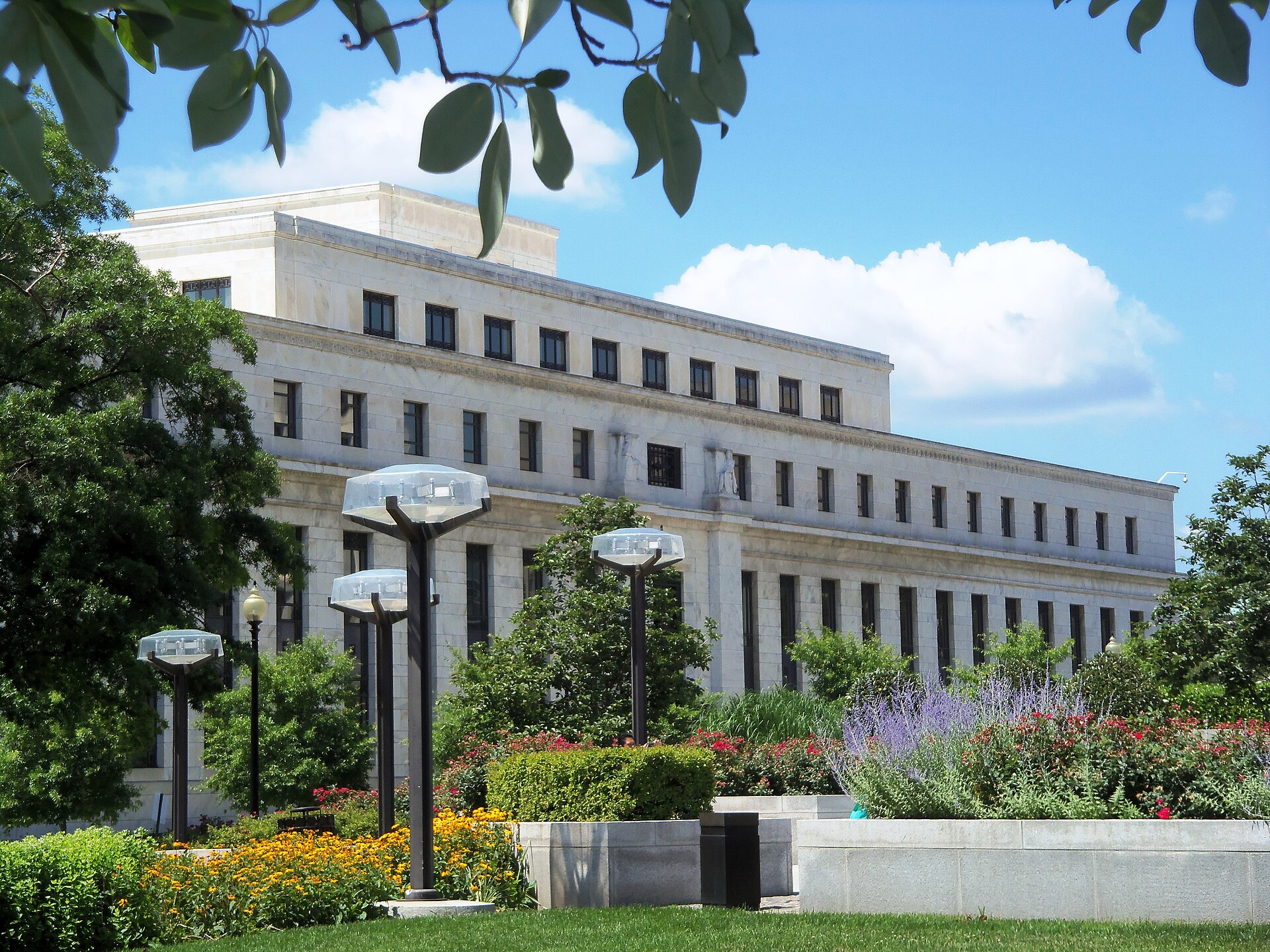
Friday's economic data gave the Federal Reserve no help at all. S&P Global's flash composite purchasing managers' index printed 57.6 — manufacturing at 56.0 beat the 55.5 forecast, services came in at 57.9, and the prior composite was 58.4 — all firmly in expansion territory, but with two details the Fed cannot ignore: businesses raised their selling prices at the fastest pace since August 2022, and new orders grew at their fastest in about four and a half years. The final University of Michigan consumer sentiment reading for October was 48.0, better than the 46.3 expected, yet consumers' year-ahead inflation expectations rose to 4.7 percent from 4.6 percent and five-year expectations reached 3.5 percent — both the highest since May — while 69 percent of consumers said they expect interest rates to rise in the year ahead, the most since April 2023. A strong economy with re-accelerating prices and households braced for higher rates is close to the hardest possible backdrop for a central bank. The Federal Open Market Committee meets Tuesday and Wednesday, October 27–28, with the decision due Wednesday at 11:00 a.m. Pacific and a press conference to follow. The target range stands at 3.75 to 4.00 percent and rates are widely expected to stay unchanged — CME FedWatch on Friday put only about a 10 percent chance on an October hike — but futures markets price roughly a 71 percent chance of a hike by December. That is market pricing, not a forecast, and it can move violently on a single data release; what it signals today is that traders no longer treat the direction of rates as settled, which is precisely why a meeting that looked like a formality a month ago suddenly matters.
Winners, losers and the SpaceX shock
The day's biggest single-stock stories ran in unexpected directions. CrowdStrike jumped 8.25 percent to $257.57 after a critical PHP security vulnerability took multiple European government websites offline; seven cybersecurity professionals told Reuters that AI-driven vulnerability discovery makes more large outages likely, a dynamic that argues for bigger security budgets — and Palo Alto Networks and Okta rose alongside. The S&P 500's top gainer was Crown Castle, up about 9 percent, with American Tower up about 3 percent, after Bloomberg reported that SpaceX is in talks to access roughly 80,000 U.S. cell sites — including Crown Castle's towers — for a Starlink-based mobile network; no deal has been confirmed, but the same report knocked the incumbent carriers, with AT&T down about 6 percent and T-Mobile and Verizon also lower. In energy, SLB rose roughly 7 percent on a third-quarter beat — adjusted earnings of 64 cents a share against 62 cents expected, on revenue of $9.45 billion, up about 6 percent year over year — and Halliburton, APA, Devon Energy, ConocoPhillips, Chevron and Exxon Mobil all gained with the crude price. In the chip rebound, Micron rose about 3 percent and AMD about 2 percent, and Microsoft ticked higher by roughly half a percent to 0.8 percent.
The losers' list was led by a Dow heavyweight having, on paper, a record quarter. American Express fell about 3.7 percent — one of the Dow's biggest drags — despite record quarterly revenue of $20.1 billion, up 9 percent, and a raised full-year outlook, after it announced it will cut about 5 percent of its global workforce, roughly 3,500 jobs, to "prepare for AI." Caterpillar fell about 2 percent and Goldman Sachs lost more than 1 percent. Bloom Energy dropped about 11 to 12 percent in a sell-the-news slide despite record third-quarter revenue of $1.236 billion, up 138 percent year over year, and guidance raised to $4.4 to $4.6 billion — investors focused instead on negative cash flow and record capital spending. Deckers Outdoor fell sharply on a weak outlook, and Comfort Systems and Globe Life also fell hard on guidance news. Read together, Friday's movers told one story: investors rewarded companies standing in front of the two forces reshaping the economy — expensive energy and ubiquitous AI — and punished nearly everyone standing in their path, whatever the quarter just printed.
The week that was
For all of Friday's damage, the week's scoreboard was more orderly than the headlines suggest. The Dow rose 0.64 percent for the week, a third straight weekly gain, even after surrendering 653 points on Friday. The S&P 500 slipped 0.22 percent and the Nasdaq 0.45 percent — a second straight weekly loss for both — as Thursday's AI-spending shock and Friday's oil shock bookended the week. The week's quiet winner was small-cap America: the Russell 2000 rose about 2.1 percent, its first weekly gain since early September, suggesting the rotation out of mega-cap technology was also a rotation into the domestic economy rather than out of stocks altogether. Oil was the week's defining asset, with Brent on track for a third straight weekly gain; gold, down about 3.5 percent for the week and briefly below $4,000 on Friday, was its mirror image, as investors took profits on the year's great haven trade.
What this means for regular people
For anyone with a 401(k) or an index fund, the honest context for a 653-point Dow day is that the major indexes remain near historically high levels after a strong run — the Dow, even after Friday, is up for the week and the month — and that one turbulent week is a normal feature of long-horizon investing, not an event that by itself changes a retirement plan measured in decades. What a week like this does change is the price of everyday life around the edges. A 10-year Treasury yield at 4.99 percent keeps borrowing costs elevated, so mortgage rates stay high and refinancing stays out of reach for most households. If crude holds above $100, gasoline and diesel prices follow it up with a lag, squeezing household budgets and the small businesses that deliver, drive and build. The same high yields have a kinder side for savers: cash in Treasury bills and high-yield savings accounts still earns returns that were unthinkable a few years ago, so money parked safely is being paid to wait. And Friday carried a reminder that this market's central theme reaches beyond portfolios: American Express's plan to cut about 3,500 jobs to "prepare for AI" is the artificial-intelligence story arriving in ordinary workplaces, weeks before the Fed decides whether the economy it is reshaping needs higher rates or lower ones. None of this is a reason to trade on a headline — it is a reason to understand what the headlines are actually pricing.
What to watch next
The calendar now runs straight at the questions Friday left open. On Tuesday, October 27, investors get durable goods orders and consumer confidence — and the Federal Reserve begins its two-day meeting. On Wednesday, October 28, the Fed announces its decision at 11:00 a.m. Pacific, followed by the chair's press conference; after the close, Microsoft and Alphabet report earnings that will be graded, above all, on their AI spending plans. Thursday, October 29, brings the first estimate of third-quarter GDP and the September PCE inflation report at 5:30 a.m. Pacific — the Fed's preferred inflation gauge, landing the morning after its decision — plus Amazon's earnings. Friday, October 30, closes the week with the Employment Cost Index, the broadest measure of wage pressure. And on Monday, November 2, Apple reports, completing the mega-cap earnings gauntlet. Between now and then, the market's two live wires remain the same ones that sparked Friday: a barrel of Brent, and whatever happens next between Washington, Riyadh and Tehran.
Sources: CNBC, Oct. 23, 2026 (closing index levels, Treasury yields, crude settlements, sector moves and the Ellerbroek interview); TradingKey and Schaeffer's Research, Oct. 23, 2026 (closing-report corroboration); Reuters (cybersecurity professionals on AI-driven vulnerability discovery; Iranian subsea-cable statement; LSEG blended Q3 earnings growth of about 32.3 percent); Bloomberg (SpaceX cell-site talks report); S&P Global (flash October PMI); University of Michigan Surveys of Consumers (final October sentiment and inflation expectations); CME FedWatch (rate probabilities). Related on Signal Post News: our October 22 market report · the October 20 market report.